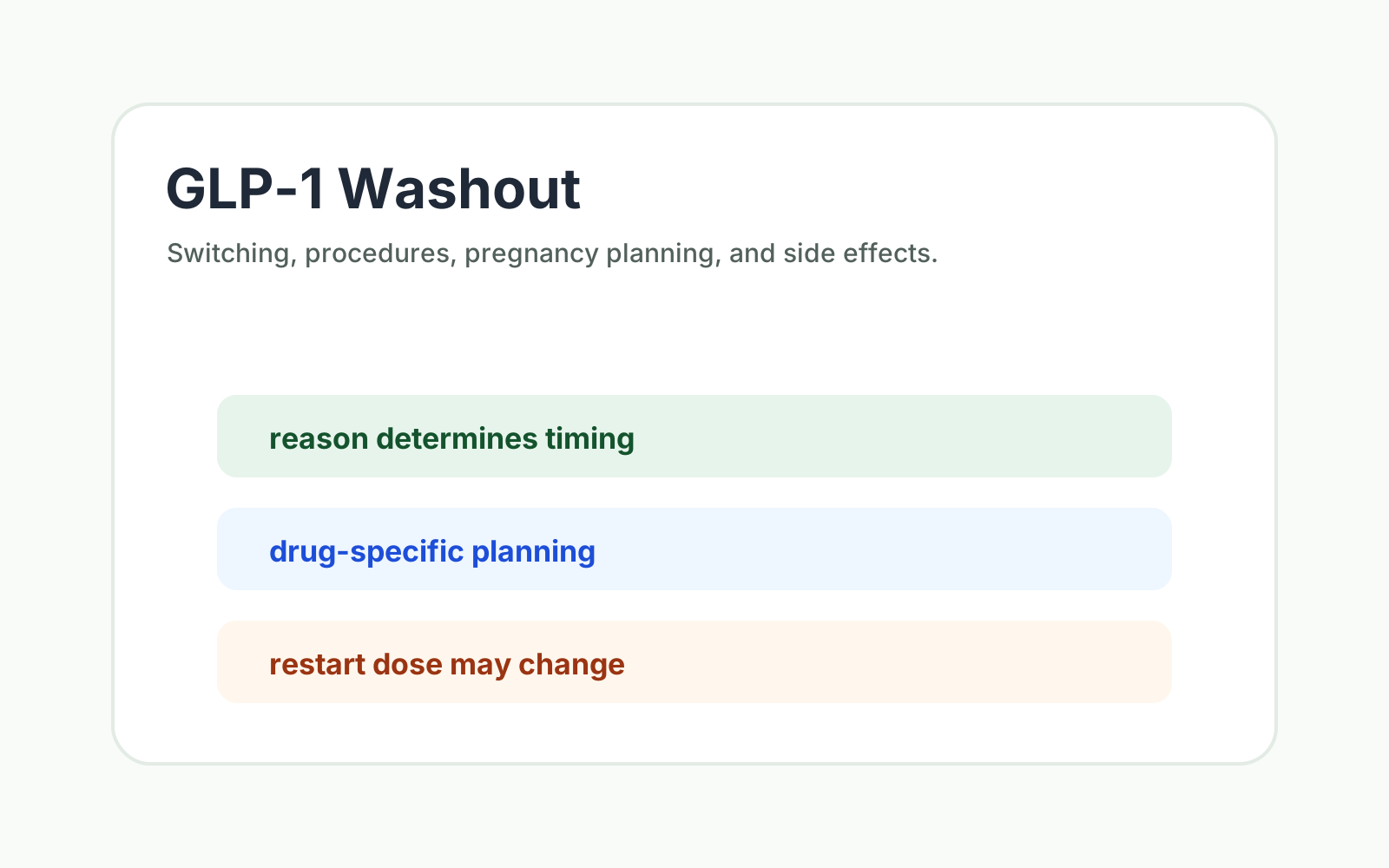
A GLP-1 washout is a planned pause after stopping a medication so its effects decline before the next step.
Short answer: washout timing depends on the medication, dose, reason for stopping, side effects, diabetes status, procedure plan, pregnancy planning, and what medication may come next. Do not use a universal wait time without clinician guidance.
When Washout Comes Up
| Scenario | Why timing matters |
|---|---|
| Switching medications | Avoid overlapping side effects |
| Surgery or anesthesia | Delayed stomach emptying and aspiration planning |
| Pregnancy planning | Product-specific discontinuation guidance |
| Severe side effects | Safety may require stopping or evaluation |
| Long gap in therapy | Restart dose may need adjustment |
Questions to Ask
- What is the reason for washout?
- How long does this specific medication stay active?
- Should diabetes medications change during the pause?
- What symptoms require urgent care?
- What dose should be used if restarting?
Internal Reading Path
Why This Is Not a DIY Timing Decision
For stopping GLP 1 washout, the main risk is treating a medication transition like a simple calendar swap. GLP-1 medications can have long half-lives — semaglutide's is roughly one week, so its effects taper over several weeks — along with overlapping effects and dose-escalation schedules designed to reduce side effects. If the switch happens too aggressively, nausea, vomiting, dehydration, reflux, constipation, or glucose changes can become harder to manage.
The prescriber needs to know the exact current medication, dose, last dose date, side effects, reason for switching, diabetes medications, pregnancy or procedure plans, and whether the new product is already approved by insurance.
Stopping is also a weight question, not only a timing one. In the STEP 1 trial extension, participants regained about two-thirds of their lost weight in the year after once-weekly semaglutide was withdrawn, which is why discontinuation plans usually emphasize sustained lifestyle support rather than a simple stop date.

Transition Planning Table
| Question | Why it matters |
|---|---|
| Why switch now? | Plateau, cost, supply, side effects, or indication changes the plan |
| How long since the last dose? | A long gap may require restarting lower |
| Were side effects active? | Switching during active GI symptoms can compound problems |
| Is diabetes medication involved? | Insulin or sulfonylureas can change hypoglycemia risk |
| Is there a procedure or pregnancy plan? | Washout guidance may be different |
| What is the backup plan? | Supply gaps and intolerance are common practical problems |
What to Monitor After the Change
The first several weeks after a change should be treated as a monitoring period. Track appetite, nausea, vomiting, bowel pattern, reflux, hydration, dizziness, glucose readings if relevant, weight trend, and whether protein intake is falling. The point is not to overreact to every symptom. The point is to catch patterns early enough to slow escalation or adjust the plan before symptoms become severe.
Questions to Bring to the Prescriber or Pharmacist
- Does my current dose and timing match the official label or my prescription?
- Are my symptoms or concerns expected at this stage, or do they suggest changing the plan?
- Should I delay escalation, restart lower, hold steady, or be evaluated before continuing?
- Are any of my other medications increasing risk, especially insulin, sulfonylureas, blood pressure medication, diuretics, or drugs affected by delayed gastric emptying?
- What exact symptoms should make me call urgently or seek same-day care?
- If cost or supply interrupts therapy, what is the safest backup plan?
Bottom Line for Stopping GLP-1 Washout: How Long It Takes and When a Pause Matters
The practical answer is rarely just one number, food list, or yes-or-no rule. For stopping GLP 1 washout, the safest approach is to combine the direct answer with the variables that change it: product type, dose, timing, side effects, storage history, other medications, and the person's medical context. When those variables are unclear, the best next step is to ask the prescriber or pharmacist before acting.
Additional Scenarios Readers Commonly Compare
| Scenario | How to think about it |
|---|---|
| Symptoms started after a dose increase | Treat escalation as a likely contributor and ask whether to hold the dose longer |
| The plan changed because of supply | Confirm whether a restart or lower dose is safer after the gap |
| Advice online conflicts with the label | Use the label, pharmacy, and prescriber as the authority |
| The medication is compounded | Verify concentration, BUD, storage, sterility, and dose instructions directly with the pharmacy |
| The goal is maintenance | Prioritize sustainable intake, resistance training, monitoring, and follow-up |
More FAQ
Why do different websites give different answers?
Most differences come from assuming different products, concentrations, patient goals, dose histories, or risk tolerance. A chart or tip can be mathematically correct but still wrong for a specific prescription.
What information should I keep in my notes?
Keep the medication name, dose, date taken, pharmacy label, concentration if vial-based, side effects, food and fluid changes, weight trend, and any clinician instructions. This makes follow-up safer and more specific.
When is it better not to troubleshoot at home?
Do not troubleshoot at home when symptoms are severe, rapidly worsening, involve chest pain or fainting, include repeated vomiting or dehydration, suggest allergic reaction, or involve a possible dosing or storage error.
Detailed Reader Scenarios
A stronger page for stopping GLP 1 washout needs to answer the situations people actually bring to search. The same keyword can represent a careful planner, someone with active symptoms, someone whose pharmacy instructions are confusing, or someone who is trying to decide whether the issue is urgent. The sections below turn the topic into practical scenarios without replacing medical judgment.
Scenario 1: Switching because of side effects
If nausea, vomiting, reflux, constipation, dizziness, or under-eating is active, the switch should usually be slower and more cautious. A new medication does not erase the body's current GI state. Ask whether symptoms should settle before starting the next product and whether the starting dose should be conservative.
Scenario 2: Switching because of a plateau
A plateau is not automatically a dose-conversion problem. It may reflect adaptation, inconsistent protein, reduced activity, constipation, sleep disruption, alcohol, medication access gaps, or a dose that cannot be escalated because of side effects. Before switching, review the last eight to twelve weeks of weight trend, dose adherence, side effects, and nutrition.
Scenario 3: Switching because of insurance or supply
Coverage-driven switches are common, but they are not always clinically clean. If there has been a gap, the prescriber may restart lower than the old dose-equivalent chart suggests. If the pharmacy only has a higher dose available, that does not mean it is safe to start there.
Scenario 4: Diabetes medications are involved
Insulin, sulfonylureas, and other glucose-lowering medications change the risk profile. Appetite suppression can reduce carbohydrate intake, and a stronger or newly started incretin medication can change glucose patterns. Ask whether glucose checks or other medication doses should change during the transition.
Transition Visit Checklist
| Bring this | Why it helps |
|---|---|
| Last dose date | Prevents accidental overlap or too-fast restart |
| Current dose and duration | Shows tolerance history |
| Side-effect log | Guides escalation speed |
| Weight and glucose trend | Shows whether the current plan is working |
| Insurance approval details | Avoids a plan that cannot be filled |
| Backup plan | Prepares for shortages or intolerance |
Why Online Conversion Charts Should Be Treated Carefully
Conversion charts can be useful conversation starters, but they are not prescriptions. They often blend clinical practice patterns, trial dose ranges, and assumptions about tolerance. They may not account for missed doses, severe side effects, diabetes medications, older age, kidney disease, pregnancy planning, surgery, or the exact product being used.
Edge Cases That Change the Answer
For stopping GLP 1 washout, the usual advice can change when there is a long medication gap, a recent dose increase, active vomiting or diarrhea, diabetes medications that can cause low blood sugar, kidney disease, pregnancy planning, surgery or anesthesia, a compounded vial, or uncertainty about the exact product. Those details should be treated as decision points, not footnotes.
A practical way to handle edge cases is to pause and sort the issue into one of three buckets. The first bucket is routine planning: questions about meals, timing, cost, or what to ask at the next visit. The second bucket is same-week clinical guidance: persistent side effects, repeated missed doses, uncertain conversions, or a plan that cannot be filled. The third bucket is urgent evaluation: severe pain, chest symptoms, fainting, allergic reaction symptoms, dehydration, confusion, or a possible large dosing error.
| Bucket | Examples | Best next step |
|---|---|---|
| Routine planning | Meal changes, mild symptoms, coverage questions | Bring notes to the next visit |
| Prompt guidance | Persistent symptoms, switch timing, unclear label, storage uncertainty | Call prescriber or pharmacist |
| Urgent care | Severe pain, fainting, chest pain, allergic symptoms, dehydration | Seek same-day or emergency care |
Practical Takeaway
If a reader remembers only one thing from this page, it should be that stopping GLP 1 washout is context-dependent. The safest answer comes from matching the general information to the exact medication, dose, timing, symptoms, product label, and medical history. When those details are incomplete, the right move is to ask before acting.
One More Safety Layer
For stopping GLP 1 washout, the safest publishing stance is to avoid making the reader feel that a single table replaces individualized care. If there is an active symptom, an unclear prescription, a storage excursion, a compounded vial, or a switch between medications, the reader should leave with a concrete next step: check the label, write down the timeline, contact the pharmacy or prescriber, and avoid repeating or changing a dose until the plan is clear.
This extra caution is not filler. It matches the real search intent behind these terms: people are often anxious, mid-decision, or trying to prevent a mistake. A useful article should reduce that risk while still giving enough structure to make the next conversation easier.
Summary
GLP-1 washout is situation-specific. It should be tied to the drug, the reason for stopping, and the next planned medical step.
References
- Wilding JPH, et al. Weight regain and cardiometabolic effects after withdrawal of semaglutide: the STEP 1 trial extension — Diabetes, Obesity and Metabolism, 2022 (PubMed)
- Glucagon-Like Peptide-1 Receptor Agonists — StatPearls, NCBI Bookshelf (pharmacology and half-life)
- Clinical Consequences of Delayed Gastric Emptying With GLP-1 Receptor Agonists and Tirzepatide — National Institutes of Health (PMC), on perioperative aspiration risk