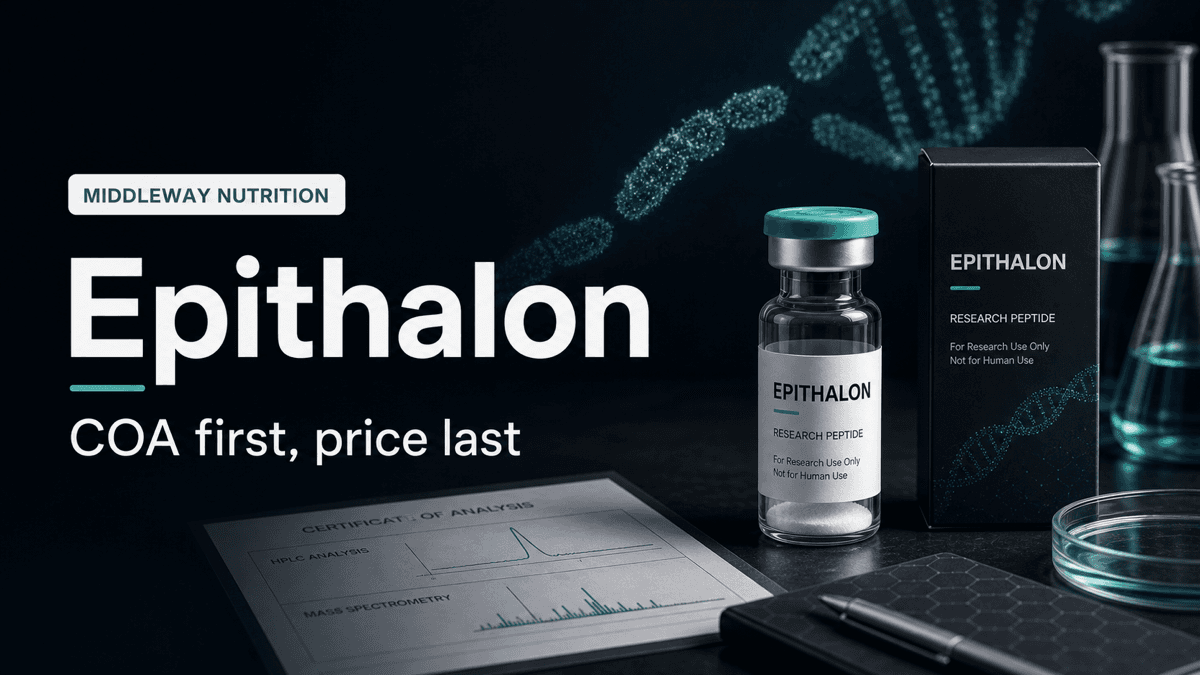
Epithalon for sale runs from roughly $30 for a bare 10mg vial to about $50 or more for one that arrives with full batch documentation. The number that matters more is whether the vendor can hand you a batch-specific certificate of analysis tied to the lot code on your label. Epithalon is a four-amino-acid peptide that is cheap to synthesize, margins are thin, and testing is the first cost a lazy vendor cuts. A pinch of white lyophilized powder looks identical whether it contains Epithalon, a different tetrapeptide, or plain bulking agent.
Key Takeaways
- Current market: roughly $30 to $55 for a 10mg vial, $85 to $95 for 25mg. Far below that band usually means testing was skipped.
- Epithalon is not an FDA-approved drug. No regulator checks what is in the vial, so you are the quality control department.
- A COA only counts if its lot number matches the one printed on your vial. Product-level certificates prove nothing.
- Ask for HPLC purity and mass spectrometry identity. HPLC alone can show a very pure sample of the wrong compound.
- Most research traces back to a single Russian group, so treat longevity claims as preliminary and any vendor who does not as a warning.
Epithalon Price and Specs
Ascension Peptides pricing as of 27 September 2026. Prices will move.
| Spec | Detail |
|---|---|
| Vial size | 10mg |
| Price | $50.00 USD |
| Cost per mg | $5.00/mg |
| Purity | >98% by HPLC (certificate pass mark), every batch tested by a third-party lab |
| COA | Batch-specific, from Kovera Labs on current batches |
| Label check | Public library of 85 batch-specific certificates |
| Panels published | HPLC purity, LC-MS identity, net content, endotoxin, sterility screen, heavy metals |
| Shipping | US only, free over $250 |
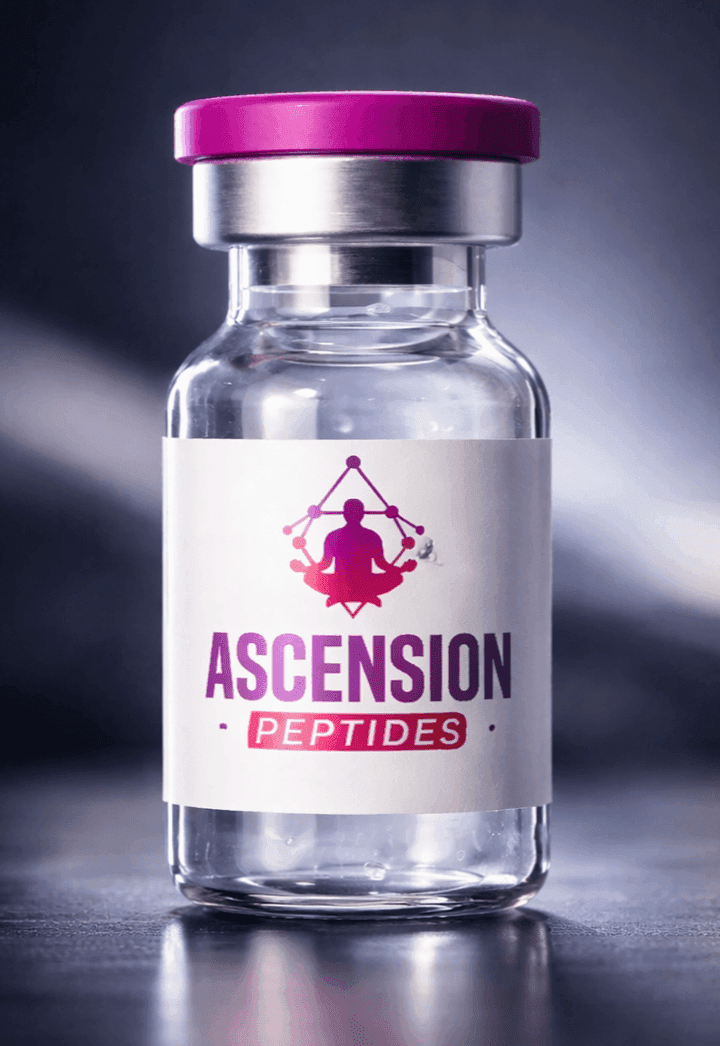
The vendor we point people to is Ascension Peptides. What is verifiable about them is the documentation: every batch is tested by an independent third-party lab (currently Kovera Labs), and 85 batch-specific certificates sit in a public certificate library rather than one recycled product-level PDF. The certificates cover HPLC purity, LC-MS identity, net content, endotoxin, a rapid sterility screen and heavy metals, with a pass mark of >98% purity. We checked one Kovera report (KVR-2026-410047, for DSIP) against the lab's own records, and it matched. New customers get 50% off with code PEPTIDEDECK.
If you want a side-by-side vendor comparison instead of a single pick, our where to buy Epithalon guide covers that.
Price Sanity Check
Epithalon is one of the cheaper research peptides, so a low price is not automatically suspicious the way it would be for a GLP-1 compound. But there is a floor:
- 10mg vial: about $30 to $55
- 25mg vial: about $85 to $95
- 50mg vial: priced above the 25mg tier, with per-milligram cost falling as vial size rises
Larger vials show the widest spread, because some sellers openly list a lower-purity option at a discount alongside a higher-grade product. That transparency is a good sign. What is not is a large vial priced below a smaller one from the same catalog, carrying a high-purity banner and no accessible certificate. Independent HPLC and mass spec cost real money per batch.
Price is a weak positive signal and a strong negative one. Paying more does not buy quality, but a price undercutting the cost of testing tells you testing did not happen.
How to Read an Epithalon COA
Most buyers glance at a certificate, see a big number next to "purity," and stop. Here is the real checklist.
Match the lot number and date. Your vial has a lot code on the label; the certificate should reference that code and carry a test date near the synthesis run. If it has no lot number, a different one, or a date years older than your order, it describes a batch you did not receive. Plenty of vendors post one PDF and reuse it indefinitely.
Look for a real chromatogram, not just a number. A legitimate HPLC report includes the trace: a main peak with retention time, plus impurity peaks and percentages. "Purity: 99.2%" in a text box is trivially forged. A vial can be 99% pure by HPLC and still be underfilled, which is why fill weight and identity matter as much as the headline percentage.
Find the mass spec. This is the step people skip and the one that matters most. HPLC tells you how pure the sample is; mass spectrometry tells you what it is. A supplier substituting a cheaper powder can still produce a beautiful HPLC figure, because the impurity content of the wrong compound can be genuinely low. Only mass spec catches identity fraud, and you want a molecular ion near 390 g/mol.
Identify the lab. The certificate should name the testing facility. Independent labs such as Kovera, Janoshik, or Colmaric Analyticals issue report IDs that can often be verified directly. A named lab plus a batch number beats an unsourced purity percentage every time.
Third-Party Testing, and Why In-House Does Not Count
The phrase "lab tested" does enormous unearned work here. Three tiers exist and vendors blur them. Tier one: the raw material factory sends a certificate and the vendor republishes it. Tier two: the vendor tests in-house, so the party with the financial incentive runs the assay. Tier three: an independent lab with no stake in the sale tests a sample from the shipped batch under its own name.
Only tier three is evidence, and the tell is specificity: tier-three vendors name the lab, publish the report ID, and tie the chromatogram to a lot code. Tier-one vendors write "third-party tested" in a banner and link to nothing.
What You Are Actually Buying
Epithalon, also spelled Epitalon, is a synthetic tetrapeptide, sequence Ala-Glu-Asp-Gly (C14H22N4O9, molecular weight roughly 390 g/mol, CAS 307297-39-8). It derives from epithalamin, a pineal gland extract studied at the St. Petersburg Institute of Bioregulation and Gerontology under Vladimir Khavinson.
The mechanism that made it famous is telomerase activation: laboratory work reported that Epithalon could induce telomerase activity in human somatic cells that normally do not express the enzyme. Related work describes effects on melatonin rhythm and antioxidant markers in aging models. The caveat: that literature comes from one institute with thin independent replication, and none of it changes the regulatory status.
When a site lists Epithalon for sale, it is not a pharmacy but a chemical supplier: sold for research or analytical purposes only, not for human consumption. No prescription pathway exists, so a site implying otherwise is lying. No agency inspects the product, so if a run comes out well below what the label claims, nothing external catches it. The vendor's testing is the entire control system, which makes your ability to confirm it independently the only variable that matters.
What Physically Arrives
A sealed glass vial with a rubber stopper and crimped aluminum cap, containing lyophilized powder. On a 10mg vial the quantity often looks like a thin film or a few flakes rather than a satisfying pile. That is normal, not underfilling. The label should carry the compound name, milligram quantity, and a lot number; without one, the COA can never be tied to what you received.
Lyophilized Epithalon is stable stored cold, dark, and dry, and most vendors specify freezer storage long-term. Reconstituted, it needs refrigeration and a far shorter shelf life. Nothing shipped to you is sterile-filtered or prepared for human use, which is why reputable sellers decline to give dosing guidance.
Red Flags That Mean Walk Away
- No lot number on the vial. Verification is structurally impossible.
- A COA image with no chromatogram. Purity as a bare number is an assertion, not a measurement.
- The same certificate across multiple products or years. One PDF covering a catalog is a template.
- Health claims on the product page. A seller claiming Epithalon reverses aging will say anything.
- Crypto or wire only. No payment reversal means no recourse.
- No company identity. A contact form and an Instagram account is not a business you can pursue.
- Refusal to send a COA on request. A legitimate vendor answers that email in a day; deflection is your answer.
Legal and Safety Reality
Epithalon is not a controlled substance in the US, and buying it as a research chemical is not itself illegal. Selling it for human consumption is, which is why compliant vendors carry research-use-only language. There is no human safety profile from large controlled trials, no approved dosing, and no monitoring standard. Endotoxin, heavy metal, and residual solvent contamination are real risks in unregulated synthesis; extra panels for them on a COA are a meaningful quality signal.
Pre-Purchase Checklist
- Batch-specific COA available before you order, not "on request after payment"
- Lot number on the certificate matches the lot on the vial
- HPLC purity with a visible chromatogram and peak table
- Mass spectrometry confirming identity near 390 g/mol
- Named independent lab, ideally with a verifiable report ID
- Price within the realistic band for the vial size
- Card payment, a stated refund policy, and research-use-only labeling
- US domestic shipping, and a real company identity you can contact
Frequently Asked Questions
How much does Epithalon cost?
Roughly $30 to $55 for a 10mg vial and $85 to $95 for 25mg. Ascension Peptides sits near the top of that band at $50.00 for 10mg. That is $5.00 per milligram, roughly what independent batch testing and a published per-batch certificate cost. Prices well below the market band usually indicate a vendor not paying for independent batch testing.
Is Epithalon legal to buy?
Yes. In the US it is legal to buy Epithalon as a research chemical, and it is not a controlled substance. Selling it for human consumption or marketing it as a treatment is not permitted, which is why vendors label it research use only.
How do I know Epithalon is real?
Documentation is the only practical check. Get a batch-specific certificate whose lot number matches your vial, showing HPLC purity with a chromatogram plus mass spectrometry confirming a molecular weight near 390 g/mol, from a named independent lab.
Do I need a prescription for Epithalon?
No, and none exists. Epithalon is not an FDA-approved drug, so there is no prescribing pathway and no pharmacy stocks it. Any seller implying a medical route is misrepresenting what it sells.
Where to Buy
The buying decision reduces to one question: can you independently confirm what is in the vial before you open it? For most listings, no. Our pick is Ascension Peptides at $50.00 for 10mg, with a batch-specific third-party certificate in a public library, a >98% HPLC purity pass mark, identity, net-content and endotoxin testing, and free US shipping over $250. All sales are final, but damaged or incorrect items are replaced if reported quickly. On a compound this cheap to fake, verifiable documentation is the only quality signal that survives scrutiny.
Medical Disclaimer: Epithalon is sold as a research chemical for laboratory use only. It is not an FDA-approved drug and is not intended to diagnose, treat, cure, or prevent any disease. This article is informational, not medical advice, and nothing here recommends human use. Consult a qualified healthcare professional before any health-related decision.