GHK-Cu for Skin & Hair: What the Research Actually Shows
The beauty industry sells GHK-Cu as a fountain of youth in a bottle. They promise erased wrinkles, reversed aging, and lush hair growth. What they don't tell you is that most of these claims come from cell studies in petri dishes or tiny human trials that wouldn't convince a skeptical scientist. Let's cut through the marketing noise and look at what the actual research demonstrates.
What GHK-Cu Actually Does at the Cellular Level
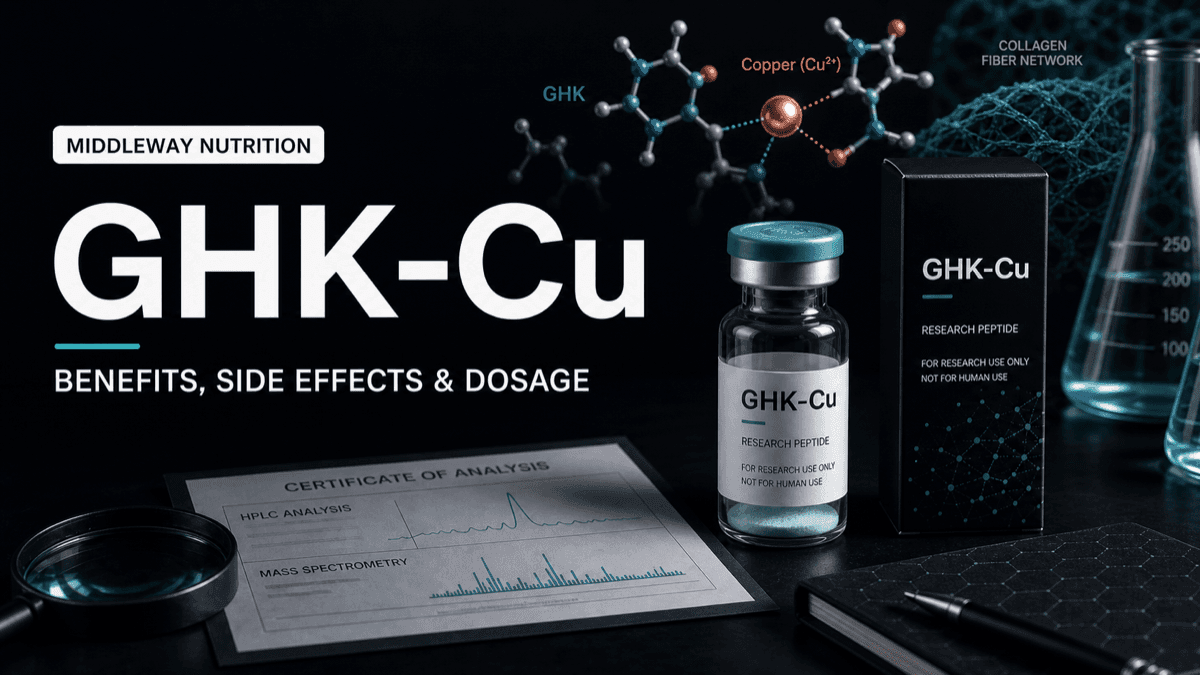
GHK-Cu is a naturally occurring copper peptide found in human plasma. Levels drop as we age - from about 200 ng/mL at age 20 to 80 ng/mL by age 60. This decline correlates with reduced skin repair capacity.
At the cellular level, GHK-Cu works through several mechanisms:
- It delivers copper ions to cells, which are essential cofactors for enzymes like lysyl oxidase that cross-link collagen and elastin
- It stimulates collagen production by activating TGF-beta pathways in fibroblasts
- It regulates matrix metalloproteinases (MMPs), the enzymes that break down collagen during aging and sun damage
- It increases glycosaminoglycan synthesis, which helps skin retain moisture
- It has antioxidant and anti-inflammatory properties
These actions make sense biologically. Copper is vital for skin health. The question isn't whether GHK-Cu can work in theory - it's whether topical application delivers enough to create meaningful changes in human skin.
Skin Anti-Aging: What Controlled Studies Show
Most anti-aging claims rely on two types of evidence: in vitro studies (cells in dishes) and small open-label human trials without placebo controls.
A 2015 study in the International Journal of Cosmetic Science tested a 0.01% GHK-Cu cream against placebo in 71 women with photodamaged skin. After 12 weeks, the active group showed:
- 35.1% improvement in skin roughness (vs 20.9% placebo)
- 26.7% improvement in skin elasticity (vs 12.3% placebo)
- 24.3% improvement in skin thickness (vs 8.9% placebo)
These are modest improvements. Notice they didn't measure wrinkle depth directly - they used surrogate markers like roughness and elasticity. The study was double-blind and placebo-controlled, which gives it credibility, but the sample size was small and duration short.
Another 2008 study in the Journal of Cosmetic Dermatology looked at facial application of GHK-Cu for 6 weeks. Participants reported improved skin firmness and reduced appearance of fine lines, but objective measurements showed only minor changes in collagen density.
The pattern repeats across studies: GHK-Cu shows statistically significant improvements in some skin parameters, but the clinical significance - whether you'd actually notice the difference in the mirror - remains questionable.
Wrinkle Reduction: The Realistic Numbers
If you're hoping for dramatic wrinkle erasure, adjust your expectations. The best studies show:
- 10-30% reduction in fine line visibility after 8-12 weeks of consistent use
- Most improvement appears in superficial lines rather than deep wrinkles
- Results vary wildly between individuals based on baseline skin condition, age, and genetics
No study has shown GHK-Cu eliminates wrinkles or provides results comparable to retinoids or procedural treatments like lasers. Think of it as a mild skin conditioner that might slow visible aging slightly, not a reversal agent.
Wound Healing vs Anti-Aging (Different Evidence Levels)
Here's where GHK-Cu has stronger evidence: wound healing. Multiple studies confirm it accelerates healing of surgical wounds, burns, and skin ulcers.
The mechanism makes perfect sense. GHK-Cu attracts immune cells to the wound site, stimulates angiogenesis (new blood vessel formation), and promotes keratinocyte migration - all critical for tissue repair.
This robust wound healing data often gets extrapolated to anti-aging claims. But healing an acute wound and reversing chronic aging damage are fundamentally different processes. Just because something helps a cut heal faster doesn't mean it will erase years of sun damage.
Hair Growth: What's Actually Known vs What's Extrapolated
Hair loss claims for GHK-Cu primarily stem from two observations:
- Copper peptides stimulate vascular endothelial growth factor (VEGF), which improves blood flow to follicles
- GHK-Cu extends the anagen (growth) phase of hair follicles in rodent studies
Human evidence is sparse. A 2015 comparison study against 5% minoxidil found similar increases in hair count after 6 months, but the study lacked a placebo group and had methodological limitations.
Most "evidence" for GHK-Cu and hair comes from:
- Mechanistic plausibility (it could work based on known biology)
- Small uncontrolled trials
- Extrapolation from wound healing data (healthier scalp = better hair growth)
If you're dealing with hair loss, GHK-Cu might offer mild benefits as part of a broader approach, but it's not a proven standalone treatment like minoxidil or finasteride.
Topical vs Oral vs Injectable for Skin (Which Route Actually Works)
Topical application dominates the market, but does it penetrate deeply enough?
Skin acts as a barrier. Peptides like GHK-Cu are large, hydrophilic molecules that struggle to pass through the stratum corneum. Some studies using tape stripping show minimal penetration beyond the epidermis.
Oral GHK-Cu faces digestion challenges. Peptides get broken down by stomach acid and enzymes before reaching circulation. No studies demonstrate oral GHK-Cu increases skin copper levels or provides cutaneous benefits.
Injectable GHK-Cu bypasses absorption issues but introduces risks. Microinjection techniques used in some clinics carry infection, bruising, and potential granuloma formation risks. Long-term safety data for repeated injections is lacking.
For beauty goals, topical remains the only practical route despite penetration limitations. Formulation matters - liposomes, penetration enhancers, and lower molecular weight derivatives may improve delivery, but evidence is preliminary.
The Beauty Industry Problem (Copper Peptide Serums Are Everywhere - Are They Effective?)
Walk into any Sephora or browse Amazon and you'll find dozens of GHK-Cu serums priced from $20 to $200+. Most make identical claims despite wildly different formulations.
The dirty secret? Many products contain minuscule amounts of GHK-Cu - sometimes as little as 1 ppm (0.0001%). Others use unstable forms that degrade quickly in solution. Without third-party testing, you have no way to verify what's actually in the bottle. If you are buying the raw peptide rather than a finished serum, our GHK-Cu for sale guide covers vial specs and what a usable certificate of analysis looks like.
Even when formulated correctly, topical peptides face stability issues. They can oxidize, bind to other ingredients, or simply sit on the skin surface without penetrating. A peptide that works in a lab dish may do nothing in your expensive serum.
Dosage for Skin (What the Studies Used)
Effective studies typically used:
- 0.01% to 0.1% concentration (10-100 ppm)
- Twice daily application
- 8-12 week minimum duration
Most consumer products fall within this range, but concentration alone doesn't guarantee results. Formulation, pH, and complementary ingredients significantly impact effectiveness.
Oral studies used 1-3 mg daily, but again, oral bioavailability for skin benefits remains unproven.
Side Effects and Copper Toxicity Risk
Topical GHK-Cu appears well-tolerated. Reported side effects are rare and mild:
- Temporary redness or irritation (usually from formulation, not the peptide itself)
- Rare allergic reactions
- Metallic taste if applied near lips
Systemic copper toxicity from topical use is theoretically possible but practically unheard of. You'd need to apply massive amounts to damaged skin to absorb enough copper to worry about toxicity.
The bigger risk is wasting money on ineffective products while neglecting proven treatments like sunscreen, retinoids, or medical procedures when appropriate.
Realistic Expectations vs Instagram Results
Instagram shows dramatic before/after photos with flawless lighting, professional makeup, and often undisclosed procedures. Realistic GHK-Cu results look different:
- Subtle improvement in skin texture and hydration
- Slightly increased firmness you might notice when pinching skin
- Possibly slower progression of fine lines with consistent long-term use
- No dramatic wrinkle elimination
- No overnight transformations
Think of GHK-Cu as a gentle skin supporter - like a good moisturizer with some biological activity. It won't replace proven actives but might complement a comprehensive skincare routine focused on sun protection, antioxidants, and retinoids where appropriate. For a closer look at sourcing, see where to buy GHK-Cu, which walks through batch testing and how to compare sellers before you order.
Route Comparison Table
| Method | Pros | Cons | Evidence Level |
|---|---|---|---|
| Topical Cream/Serum | Non-invasive, easy to use, good safety profile | Limited penetration, formulation dependent, modest effects | Moderate (some RCTs show mild benefits) |
| Oral Supplement | Systemic delivery, easy dosing | Poor bioavailability for skin, digestion breakdown, no proven skin benefits | Low (no quality skin studies) |
| Injectable | Bypasses absorption barriers, precise dosing | Invasive, infection risk, cost, limited long-term safety | Very low (mostly anecdotal) |
Dosage Reference Table
| Application | Typical Effective Range | Notes |
|---|---|---|
| Topical Cream | 0.01% - 0.1% (100-1000 μg/g) | Twice daily, 8-12 week minimum |
| Oral Capsule | 1-3 mg daily | Unproven for skin benefits, potential GI upset |
| Injectable | 0.1-0.5 mg per session | Clinical settings only, not for home use |
Frequently Asked Questions
Q: How long until I see results from GHK-Cu?
A: Most studies measure changes at 8-12 weeks. Some users report softer skin sooner, but measurable changes in collagen or elasticity typically require consistent use for 2-3 months.
Q: Can I use GHK-Cu with vitamin C or retinoids?
A: Yes, but separate applications by time (morning vitamin C, evening GHK-Cu/retinoid) or wait 30 minutes between layers to prevent potential peptide degradation.
Q: Is GHK-Cu safe for sensitive skin?
A: The peptide itself is unlikely to cause irritation, but check the full formula. Fragrances, preservatives, or penetration enhancers in the product may trigger reactions.
Q: Will GHK-Cu help with acne scars?
A: Possibly through its wound healing and collagen remodeling properties, but no strong studies specifically target acne scarring. Results would be gradual and modest.
Q: Does GHK-Cu work for hair thinning?
A: Preliminary evidence suggests it might support follicle health, but it's not a proven hair loss treatment. Consider it a potential adjunct, not a primary therapy.
Q: How does GHK-Cu compare to retinol for anti-aging?
A: Retinol has decades of evidence showing significant collagen stimulation and wrinkle reduction. GHK-Cu shows milder effects. They work through different mechanisms and can be complementary.
Q: Should I worry about copper buildup from long-term use?
A: Topical use presents negligible risk of copper overload. Your body tightly regulates copper absorption, and skin acts as an effective barrier.
Q: Can GHK-Cu reverse sun damage?
A: It may help with some aspects of photoaging by supporting repair processes, but it won't erase significant sun damage. Prevention through sunscreen remains paramount.
Internal Links
- GHK-Cu Capsules - For systemic support
- Wolverine Stack - Advanced recovery protocol
Final Thoughts
GHK-Cu represents an interesting molecule with plausible biological actions and some encouraging preliminary data. But the gap between laboratory potential and real-world cosmetic results remains wide. Approach it as a modest skin supporter rather than a miracle cure. Your expectations will thank you. If you are building a broader routine, our guide to glow peptide benefits for skin, hair, and recovery covers complementary options.
Start your journey with third-party-tested GHK-Cu at Ascension Peptides
References
- Pickart L, Margolina A. Regenerative and Protective Actions of the GHK-Cu Peptide in the Light of the New Gene Data. Int J Mol Sci. 2018 (PubMed)
- Pickart L, Vasquez-Soltero JM, Margolina A. GHK Peptide as a Natural Modulator of Multiple Cellular Pathways in Skin Regeneration. BioMed Research International. 2015 (PubMed)