
Direct answer: Retatrutide vials — reta, as forums and group chats shorten it — are sold as lyophilized (freeze-dried) powder in standard sizes of 5mg, 10mg, 15mg, 20mg, and 30mg. The number on the label is the total milligrams of peptide in the vial, not per dose. The most common research-purchase sizes are 10mg and 20mg; 5mg and 6mg vials suit conservative starters; 15mg, 16mg, and 30mg suit maintenance-dose users running 8–12mg weekly. Vial size affects cost-per-mg and reconstitution math, not the drug itself.
Key Takeaways
- Vial size = total mg of peptide. A 10mg vial contains 10 milligrams of retatrutide powder. You decide the per-dose amount by how much BAC water you add and how much you draw.
- Most common sizes: 10mg (entry tier), 20mg (mid-tier), 30mg (best $/mg at higher doses).
- Niche sizes: 5mg (microdosing or single-month trials), 15mg/16mg (irregular suppliers), 24mg (uncommon).
- "RUO" labeling ("Research Use Only") appears on 10mg and 20mg vials from most reputable suppliers — it's a regulatory designation, not a quality marker.
- Cost-per-mg drops as vial size increases, but by less than most buyers assume. In the August 2026 price check further down this page, the largest vial on the supplier's menu came out about 25% cheaper per milligram than the entry-tier 10mg vial, not 50%.
- All sizes use the same drug. Vial size doesn't change the molecule, half-life, mechanism, or efficacy — only the math you do to draw your dose.
What "Retatrutide 10mg" Actually Means
When you see "retatrutide 10mg" or "retatrutide 20mg" on a vial label, the number refers to the total milligrams of lyophilized peptide powder inside the vial before reconstitution. It does NOT mean:
- A 10mg per-dose injection
- A 10mg weekly dose
- A specific dosing schedule
The clinical dose you actually inject is determined by how much bacteriostatic water you add (which sets the concentration) and how much solution you draw (which sets the dose). A 10mg vial can yield:
- 40 weeks of 0.25mg microdoses
- 20 weeks of 0.5mg starting doses
- 10 weeks of 1mg early-escalation doses
- 2.5 weeks of 4mg mid-escalation doses
- ~1 week of an 8–12mg maintenance dose
Same vial, dramatically different durations — based on where you are in your titration.
How the Unit Math on This Page Works
Every "units" figure below assumes a U-100 insulin syringe, where 100 units = 1mL and 10 units = 0.1mL, and bacteriostatic (BAC) water added in the volume stated.
- Concentration (mg/mL) = vial mg ÷ mL of BAC water added
- Volume to draw (mL) = dose mg ÷ concentration
- Units to draw = volume in mL × 100
Two limits follow from that. Anything over 100 units does not fit in one 1mL U-100 syringe and has to be split into two draws or drawn with a larger syringe. And the diluent has to fit the glass: check the vial's stated capacity before planning 4mL or 6mL of BAC water, and if the listing does not state it, ask the supplier.
Retatrutide 5mg Vial
Who it's for: Microdosers, first-month triallists, anyone running a 0.5mg or 1mg starting dose for 4–8 weeks before deciding to continue.
Reconstitution math:
- 1mL BAC water → 5mg/mL concentration. 0.5mg dose = 10 units on a U-100 syringe.
- 2mL BAC water → 2.5mg/mL concentration. 0.5mg dose = 20 units (easier to draw accurately).
Typical lifespan: At a 0.5mg/week starting dose, a 5mg vial lasts 10 weeks. At 1mg/week (first escalation), it lasts 5 weeks.
Cost note: 5mg vials typically cost 55–70% of a 10mg vial's price despite containing half the peptide — $50 against $89 in the price check below, or 56% — which makes them the worst $/mg option on any menu. Best use case is genuinely uncertain users who want to try retatrutide for 4–6 weeks without committing.
Retatrutide 10mg Vial
Who it's for: The default entry-tier vial. Suits anyone on starting doses through mid-escalation (0.5mg–4mg weekly).
Reconstitution math:
- 1mL BAC water → 10mg/mL concentration. 1mg dose = 10 units, 2mg = 20 units, 4mg = 40 units.
- 2mL BAC water → 5mg/mL concentration. 1mg dose = 20 units, 2mg = 40 units, 4mg = 80 units.
- 3mL BAC water → 3.33mg/mL concentration. Less common, used when only insulin syringes ≥ 100u are available.
Most users prefer 2mL of BAC water (5mg/mL) because dose draws land on cleaner unit marks.
Typical lifespan: 10 weeks at 1mg/week, 5 weeks at 2mg/week, 2.5 weeks at 4mg/week.
"What is retatrutide 10mg"? Just the 10-milligram vial size — the same drug as 5mg or 20mg vials, in a different package quantity.
RUO labeling: Most 10mg vials sold in the US carry "For Research Use Only" labeling because retatrutide is not FDA-approved. "Retatrutide RUO 10mg" is the same molecule as any other 10mg vial; the RUO label is a regulatory tag, not a purity or quality flag.
Retatrutide 15mg & 16mg Vials
Who it's for: Users on 6–12mg maintenance doses who want a single vial to last ~2 weeks.
Reconstitution math (15mg):
- 1.5mL BAC water → 10mg/mL. 6mg = 60 units, 8mg = 80 units, 12mg = 1.2mL, which is 120 units — past the end of a 1mL U-100 syringe, so it takes two draws.
- 3mL BAC water → 5mg/mL. 6mg = 1.2mL = 120 units, again over a single U-100 barrel. That is the reason 10mg/mL is the practical mix for a 15mg vial at maintenance doses.
Reconstitution math (16mg): Same approach scaled — most users add 1.6mL or 3.2mL BAC water for 10mg/mL or 5mg/mL respectively.
Note: 15mg and 16mg vials are less standardized than 10mg/20mg/30mg sizes. Some suppliers offer them; others don't. Verify availability before planning a multi-month protocol around them.
Retatrutide 20mg Vial
Who it's for: Mid-tier users on 4–8mg weekly. The 20mg vial is the second-most-common purchase after 10mg.
Reconstitution math:
- 2mL BAC water → 10mg/mL. 4mg = 40 units, 6mg = 60 units, 8mg = 80 units.
- 4mL BAC water → 5mg/mL. 4mg = 80 units; 6mg = 1.2mL = 120 units, which overflows a 1mL U-100 syringe. Confirm the vial actually holds 4mL before you add it — research vials are not all the same size, and the capacity, not the peptide mass, is what limits diluent volume.
Typical lifespan: 5 weeks at 4mg/week, 3 weeks at 6mg/week, 2.5 weeks at 8mg/week.
RUO labeling: 20mg vials carry the same "Retatrutide RUO 20mg" research-use-only designation as 10mg vials — same drug, same regulatory tag.
Cost-per-mg: cheaper per milligram than a 10mg vial, but do the division on the listing in front of you. In the August 2026 price check below, adjacent vial sizes were only 3–15% apart per milligram, nowhere near the 30–40% that gets repeated.
Retatrutide 24mg Vial
Who it's for: Uncommon vial size; some compounding pharmacies use 24mg as a non-standard fill.
Reconstitution math:
- 2.4mL BAC water → 10mg/mL. Same draw math as 10mg/mL from a 10mg vial.
- 4.8mL BAC water → 5mg/mL. Likely exceeds vial headroom; not recommended.
Why 24mg? Most often this size shows up when a supplier batches non-standard fills. The drug is identical; the vial size is just less convenient than 20mg or 30mg.
Retatrutide 30mg Vial
Who it's for: Maintenance-dose users running 8–12mg weekly. Best cost-per-mg option for sustained use.
Reconstitution math:
- 3mL BAC water → 10mg/mL. 6mg = 60 units, 8mg = 80 units, 10mg = 100 units (a full 1mL U-100 barrel), 12mg = 120 units, which needs a second draw.
- 6mL BAC water → 5mg/mL. Six millilitres will not fit in most research vials — check the capacity on the vial before adding, and ask the supplier if it is not stated.
Typical lifespan: ~4 weeks at 8mg/week, ~3 weeks at 10mg/week, ~2.5 weeks at 12mg/week.
Cost-per-mg: the best efficiency tier for long-term use, though the gap is smaller than the folklore. In the price check below, the largest vial on the menu ran about 25% cheaper per milligram than the 10mg vial, not 50%.
Retatrutide Vial Size Comparison Table
| Vial Size | BAC Water (10mg/mL) | Doses per Vial @ 4mg/wk | Doses per Vial @ 8mg/wk | Best For |
|---|---|---|---|---|
| 5mg | 0.5mL | 1.25 | 0.6 | Microdosing, single-month trial |
| 10mg | 1mL | 2.5 | 1.25 | Entry tier, titration phase |
| 15mg | 1.5mL | 3.75 | 1.9 | Niche mid-tier |
| 20mg | 2mL | 5 | 2.5 | Mid-escalation, maintenance |
| 24mg | 2.4mL | 6 | 3 | Uncommon supplier fill |
| 30mg | 3mL | 7.5 | 3.75 | Long-term maintenance |
How Much Is a Vial of Reta? What It Costs by Size
A vial of reta is priced on total milligrams in the vial, not per dose, so the number that decides value is dollars per milligram — not the sticker price. Two vials at the same price can be twice as expensive as each other in the only unit that matters.
Here is a real snapshot rather than a range pulled from memory. These are the published listing prices for retatrutide at one US research supplier (Polaris Peptides), read from its public product listings on 20 August 2026. Dollars per milligram is our own arithmetic: price ÷ vial mg.
| Vial size | List price | Price on the day | $ per mg | Notes |
|---|---|---|---|---|
| 5mg | $70 | $50 | $10.00 | Worst $/mg on the menu |
| 10mg | $120 | $89 | $8.90 | Entry tier |
| 15mg | $160 | $130 | $8.67 | Only 2.6% better per mg than the 10mg |
| 35mg | $320 | $275 | $7.86 | Out of stock at the time of check |
| 60mg | $400 | $400 | $6.67 | Best $/mg, and the only size not discounted |
Three things in that table are worth more than the numbers themselves. The per-mg discount for going bigger is real but modest — 25% from the 10mg to the 60mg, and only 3–15% between adjacent sizes, not the 45–55% that circulates in forum threads. Almost everything is permanently "on sale," so treat list prices as decoration and compare the price you actually pay. And this supplier's menu is 5, 10, 15, 35 and 60mg — no 20mg, no 30mg. Vial-size menus differ by supplier, so plan your protocol around what you can actually buy.
Turning a Vial Price Into a Weekly Cost
Weekly cost = vial price × (weekly dose ÷ vial mg). Using the two prices above:
| Weekly dose | From a 10mg vial at $89 | From a 60mg vial at $400 |
|---|---|---|
| 2mg | $17.80 | $13.33 |
| 4mg | $35.60 | $26.67 |
| 8mg | $71.20 | $53.33 |
| 12mg | $106.80 | $80.00 |
That is peptide cost only. Bacteriostatic water, insulin syringes, alcohol swabs and shipping are separate line items, and a vial you throw out because you mixed more than you could use inside its stability window costs full price too.
One caution the arithmetic cannot cover: price tells you nothing about what is in the vial. A cheap vial that is underfilled or degraded is not cheap, it is worthless, and the only thing standing between those two outcomes is a batch-specific certificate of analysis whose lot number matches your vial. The prices above are a single supplier on a single day, recorded to show the shape of the market — not a recommendation, and not a quote you should expect to still be live when you read this.
Vial Size vs Dose: They're Different Things
A common confusion: "I need 8mg, so I'll buy an 8mg vial."
That's not how this works. Vial size is total peptide in the vial, not per dose. An 8mg vial wouldn't even be a standard size — and if you found one, you'd reconstitute it and draw an 8mg dose just once, which is wasteful.
The right framing:
- Pick your weekly dose (e.g., 4mg).
- Estimate how long you'll be at that dose (e.g., 4 weeks before next escalation).
- Calculate total mg needed (4mg × 4 weeks = 16mg).
- Buy a vial that covers it. A 20mg vial suits this case; a 30mg vial gives buffer for the next escalation tier.
You'll typically rotate through multiple vial sizes across a 6–12 month protocol: a 10mg vial for the 0.5–2mg titration weeks, a 20mg or 30mg vial for maintenance.
RUO Labeling: What "Retatrutide RUO 10mg" Means
You'll see "RUO" — "For Research Use Only" — on retatrutide vials from most US suppliers. It appears in product listings as "retatrutide RUO 10mg" or "retatrutide RUO 20mg".
What RUO means:
- The product is sold for laboratory research, not human consumption.
- The supplier is not making medical claims about the product.
- The drug itself is not FDA-approved for any human indication.
What RUO does NOT mean:
- Lower purity than clinical-grade product
- Different molecular structure
- Different drug
Reputable RUO suppliers publish HPLC purity certificates (usually ≥98%) and Certificate of Analysis documents. The RUO designation is a legal regulatory tag, not a quality indicator.
Where to Buy Each Vial Size
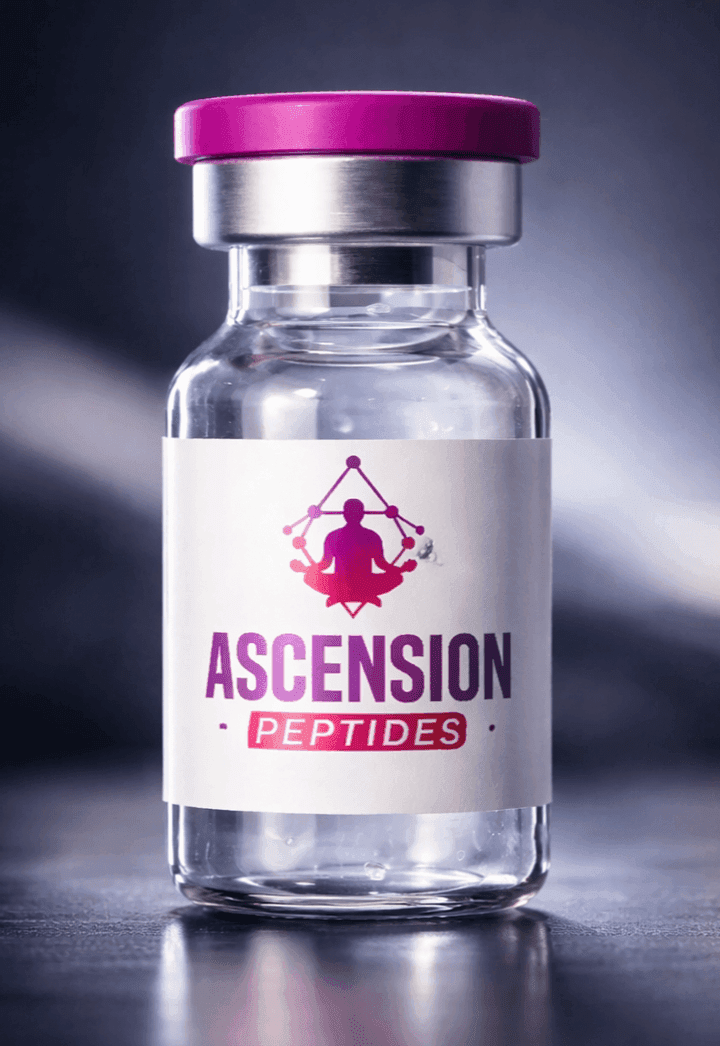
All five standard vial sizes (5mg, 10mg, 15mg, 20mg, 30mg) are available from research peptide suppliers, though no single menu carries all of them. Our recommended source in the US market, Ascension Peptides, sells two: Ascension's R-10 (retatrutide, 10 mg) at $80.00 and Ascension's R-30 (retatrutide, 30 mg) at $200.00 USD. That works out to $8.00 and $6.67 per milligram, so the 30mg vial matches the per-mg cost of the largest vial in the price check above. Every Ascension batch is independently tested by a third-party lab (currently Kovera Labs), and batch-specific certificates covering HPLC purity, LC-MS identity, net content and endotoxin are published in a public certificate library.
Confirm current vial sizes and stock before you order either way — research-supplier menus and inventory change from month to month, and the size you planned around may not be listed when you go to buy. For the full sourcing analysis, see our retatrutide where to buy guide. For UK-specific availability, see retatrutide UK.
Frequently Asked Questions
How much is a vial of reta? It depends entirely on the vial size, because reta is priced by total milligrams. In a 20 August 2026 check of one US research supplier's published listings, a 5mg vial was $50, a 10mg vial $89, a 15mg vial $130, a 35mg vial $275 and a 60mg vial $400 — which is $10.00 down to $6.67 per milligram. Convert any listing to the same unit before comparing: price ÷ vial mg. Then multiply by your weekly dose to get what you actually spend per week.
What size retatrutide vial should a beginner buy? A 10mg vial. It's the most flexible size for the 0.5–2mg titration weeks where you don't yet know how you'll tolerate the drug. A 10mg vial lasts 5–10 weeks at starting doses — long enough to assess fit without overcommitting to a 20mg or 30mg purchase.
Is a 5mg retatrutide vial enough for one month? At a 1mg/week starting dose, yes — a 5mg vial covers 5 weeks. At a 2mg/week start (faster Phase 2 protocol), a 5mg vial covers 2.5 weeks, which is less than one full titration phase. Most users find a 5mg vial too small for a real trial; a 10mg vial is the more practical entry size.
What is the difference between retatrutide 5mg and 10mg vials? The difference is total peptide quantity — 5mg vials contain half the peptide of 10mg vials. The drug, concentration math, injection technique, and clinical effect at the same per-dose milligrams are all identical. The choice between 5mg and 10mg is purely about how long you want the vial to last and what cost-per-milligram you accept.
What is a 5mg, 10mg, 15mg retatrutide vial size pack? Some suppliers sell starter packs that include 5mg, 10mg, and 15mg vials in a bundle — covering the titration phase (5mg or 10mg) and the early maintenance phase (15mg). These packs are convenience purchases, not medical kits — the drug in each vial is identical to standalone vial purchases.
Are retatrutide 100mg kits of 10 vials available? Yes — bulk research kits with 10× 10mg vials (100mg total) are sold by some research peptide suppliers. They're typically used by long-term maintenance-dose users running 8–12mg weekly. Cost-per-mg in these kits is often the best you'll find, but vial freshness depends on storage discipline since you're committing to 10 vials at once.
What does "retatrutide ruo 10mg" or "ruo 20mg" mean? "RUO" stands for "Research Use Only" — a regulatory designation indicating the product is sold for laboratory research, not human consumption. "Retatrutide RUO 10mg" is the same drug as "clinical-grade retatrutide 10mg"; the RUO label reflects legal classification, not purity or potency.
Does retatrutide 8mg or 12mg refer to vial size? No. 8mg and 12mg refer to weekly doses, not vial sizes. Standard vial sizes are 5mg, 10mg, 15mg, 16mg, 20mg, 24mg, and 30mg. An 8mg dose is drawn from a 10mg or larger vial; a 12mg dose is drawn from a 15mg or larger vial.
Which retatrutide vial size has the best $/mg? Whatever the largest vial on that supplier's menu is. In the August 2026 price check on this page, the 60mg vial worked out to $6.67/mg against $8.90/mg for the 10mg vial, about 25% cheaper per milligram, and the 5mg vial was worst at $10.00/mg. The ranking is dependable; the size of the gap is not, so recalculate it on the listing you are buying from.
Medical Disclaimer: Retatrutide is an investigational compound and is not FDA-approved for human use. The information above describes vial sizing and reconstitution math for educational purposes. Always consult a qualified healthcare provider before beginning any peptide protocol.
References
- Jastreboff et al., New England Journal of Medicine (2023) — Triple-hormone-receptor agonist retatrutide for obesity, a phase 2 trial — confirms retatrutide is an investigational agonist of the GIP, GLP-1, and glucagon receptors, with up to ~24% mean weight loss at 48 weeks on the 12-mg weekly dose.
- Polaris Peptides published retatrutide product listings (5mg, 10mg, 15mg, 35mg, 60mg), prices read from the supplier's public catalogue on 20 August 2026. Listed here as a price observation only, deliberately unlinked; research-supplier pricing changes frequently.