
A peptide for weight loss is a short chain of amino acids that copies a gut hormone — almost always GLP-1 — and is engineered to keep working for days instead of minutes. The ones with real evidence behind them are prescription drugs, nearly all of them injected: semaglutide (Ozempic, Wegovy) and tirzepatide (Mounjaro, Zepbound) at the top, liraglutide, exenatide and dulaglutide behind them. Their headline numbers come from separate trials rather than a shared one: semaglutide 2.4 mg averaged 14.9% body weight loss over 68 weeks in STEP 1, and tirzepatide 15 mg averaged 20.9% over 72 weeks in SURMOUNT-1. The single trial that ran the two drugs against each other, SURMOUNT-5, came out 20.2% for tirzepatide and 13.7% for semaglutide at 72 weeks. Everything else marketed as a "fat loss peptide" — AOD-9604, tesamorelin, 5-Amino-1MQ, grey-market retatrutide — sits in a different category with different evidence, and is covered further down.
The best peptides for weight loss are no longer fringe tools. They are now the center of the obesity treatment conversation, and for good reason. Drugs like semaglutide and tirzepatide have produced the kind of weight loss numbers that used to be associated mostly with bariatric surgery, not weekly injections.
| Stat | Value |
|---|---|
| Semaglutide 2.4 mg, STEP 1, 68 weeks | 14.9% mean body weight reduction, vs 2.4% on placebo |
| Tirzepatide 15 mg, SURMOUNT-1, 72 weeks | 20.9% mean body weight reduction, vs 3.1% on placebo |
| The two drugs head to head, SURMOUNT-5, 72 weeks | 20.2% tirzepatide vs 13.7% semaglutide |
| Dosing for the weekly injectables (semaglutide, tirzepatide, dulaglutide) | 1 injection per week |
Key Takeaways
- A peptide is a short amino-acid chain, not a drug class of its own. The weight loss ones are manufactured copies of the hormone GLP-1, which is why most of them are injected rather than swallowed — the oral exceptions need a chemical trick to survive digestion.
- GLP-1 medications dominate the category because they reduce appetite, slow gastric emptying, and improve blood sugar regulation at the same time.
- Semaglutide and tirzepatide lead the field for overall weight loss outcomes.
- Ozempic is semaglutide, but the branding and approved indications differ from Wegovy.
- Tirzepatide is not technically just a GLP-1 agonist, because it also activates GIP receptors.
- Older options like liraglutide, exenatide, and dulaglutide still matter, especially in diabetes care, but they are not as strong for weight loss as the newer agents.
- Results depend on dose escalation, adherence, diet, side effect tolerance, and duration of treatment, not just the molecule itself.
There is a lot of noise in this space. Some people throw every injectable peptide into one bucket. Others talk about Ozempic as if it is a magic shortcut. Neither view is useful. If you want a clear picture of which peptides actually help with weight loss, how they work, what separates them, and what the science really says, this guide will do the job.
What Is a Peptide for Weight Loss?
A peptide is a short chain of amino acids — the same building blocks proteins are made from, just far fewer of them. Chains of roughly 50 amino acids or fewer are usually called peptides; longer ones are proteins. Your body already runs on them. Insulin is a peptide. So is glucagon. So is GLP-1, the hormone this whole drug class was built to imitate.
A weight loss peptide, in the sense that has trial data behind it, is a manufactured version of one of those hormones, redesigned to last. Native GLP-1 is destroyed within minutes of being released. Semaglutide is modified in three places so that it resists the enzyme that breaks GLP-1 down and binds to albumin in the blood, which stretches the same signal across about a week. That is the whole trick: identical message to the brain and the gut, delivered for days instead of minutes.
The molecular weights on the FDA labels show where the category boundary now sits:
| Drug | What the molecule is | Molecular weight | Form |
|---|---|---|---|
| Semaglutide (Wegovy) | GLP-1 peptide analog, peptide backbone grown by yeast fermentation | 4,113.58 g/mol | Weekly injection or daily tablet |
| Tirzepatide (Zepbound) | Modified peptide based on the GIP sequence | 4,813.53 Da | Weekly injection |
| Orforglipron (Foundayo) | Small molecule, not a peptide | 902.0 g/mol (as the calcium salt) | Daily tablet |
Orforglipron is the instructive counterexample. It activates the same GLP-1 receptor and carries the same chronic weight management indication, but chemically it is nothing like semaglutide. "GLP-1 drug" and "weight loss peptide" have stopped being interchangeable terms.
Why Peptides Have to Be Injected
Swallow a peptide and your digestive enzymes treat it like food, cutting it apart before it reaches the bloodstream. That is why the first generation of these drugs is injectable, and why a "peptide pill" was a hard problem for decades.
There is a workaround. Oral semaglutide tablets are co-formulated with an absorption enhancer, salcaprozate sodium (SNAC), that helps some of the peptide cross the stomach wall. The price of that is a strict routine: take it on an empty stomach in the morning with no more than 4 ounces of water, swallow it whole, then wait at least 30 minutes before food, other drinks or other medicines.
Three oral semaglutide products now exist, and they are not substitutable on a milligram-for-milligram basis. Rybelsus and Ozempic tablets are labeled for type 2 diabetes and cardiovascular risk reduction, not for weight management. Wegovy tablets are the exception: approved on 22 December 2025, they carry the same chronic weight management and cardiovascular indications as the Wegovy injection at a 25 mg once-daily maintenance dose, and in the 64-week trial behind that approval they produced 13.6% mean weight loss against 2.4% on placebo. The peptide pill is no longer a diabetes-only proposition, but it is still one molecule taken under one very narrow set of conditions.
Two Very Different Things Get Called "Weight Loss Peptides"
- Prescription GLP-1 medicines. Semaglutide, tirzepatide, liraglutide, exenatide and dulaglutide. FDA-approved, made under inspection, dosed off a label, and tested in trials with thousands of participants. This guide is mostly about these.
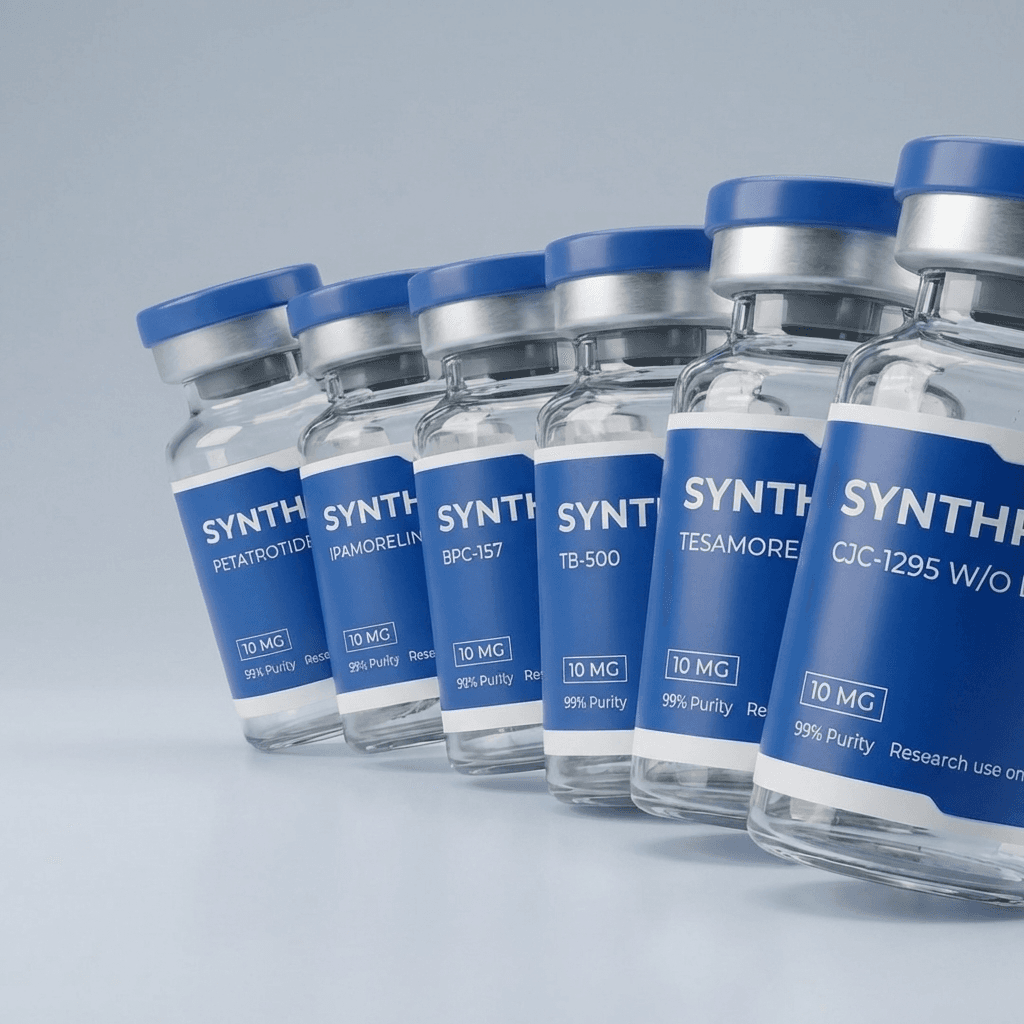
- Research-market peptides. AOD-9604, tesamorelin, ipamorelin, CJC-1295, 5-Amino-1MQ, grey-market retatrutide — typically sold as powder labeled "not for human consumption." None of them is FDA-approved for weight loss, and some are not even peptides: 5-Amino-1MQ is a small molecule, not an amino-acid chain.
Tesamorelin is the case worth understanding, because it is the one vendors cite as proof that research peptides burn fat. It is genuinely FDA-approved — as EGRIFTA WR, for reducing excess abdominal fat in HIV patients with lipodystrophy — and its own label says it "is not indicated for weight loss management as it has a weight neutral effect." It shifts visceral fat. It does not make you lighter. AOD-9604 has no approved weight loss indication at all; when it was nominated as a pharmacy compounding ingredient, FDA placed it in the significant-safety-risk category and recorded that it had found "no, or only limited, safety-related information" on the substance.
The one research-market name with genuine phase 3 numbers is retatrutide, a triple agonist that produced 28.3% average weight loss at 80 weeks on the 12 mg dose, against 2.2% on placebo, in Eli Lilly's TRIUMPH-1 trial. It is still investigational, has no approved product and no legal pharmacy supply — Lilly's own wording is that retatrutide "is legally available only to participants in Lilly's clinical trials" — so everything sold online under that name is unregulated. See how to get retatrutide and the TRIUMPH trial results for where that actually stands.
What Is GLP-1 and How Do GLP-1 Agonists Work?
GLP-1 stands for glucagon-like peptide-1. It is an incretin hormone released by the gut after you eat. Its job is to help coordinate the metabolic response to food. That includes stimulating insulin release when glucose rises, suppressing glucagon, slowing stomach emptying, and sending satiety signals to the brain.
That last part is where the weight loss story really takes off.
GLP-1 receptor agonists are drugs that mimic this natural hormone, but in a much more durable way. Natural GLP-1 has an extremely short half-life. These drugs were engineered to stay active long enough to create a meaningful clinical effect.
Key Mechanisms of GLP-1 Agonists for Weight Loss
The weight loss effect comes from several overlapping mechanisms:
- Reduced appetite through central nervous system signaling
- Slower gastric emptying, which keeps you full longer
- Lower calorie intake because hunger and food noise often decrease
- Better glycemic control, which can support appetite regulation and metabolic stability
That is why these drugs feel different from stimulant-based appetite suppressants. They are not revving people up. They are changing satiety biology.
Semaglutide: A Game-Changer in Weight Loss
Semaglutide changed the commercial and clinical conversation around obesity treatment.
Originally developed for type 2 diabetes, semaglutide became the active ingredient behind Ozempic and later Wegovy. The molecule is the same, but the approved uses and dosing strategies differ depending on the brand and indication.
What made semaglutide stand out was not just that it worked. It was the magnitude of effect. In the STEP 1 trial, adults with obesity or overweight who received semaglutide 2.4 mg weekly plus lifestyle intervention lost an average of 14.9% of body weight at 68 weeks, compared with 2.4% in the placebo group — 1,306 people on the drug and 655 on placebo.
That was the moment the market realized these were not just diabetes drugs with a mild slimming side effect.
Semaglutide works well because it is potent, long-acting, and relatively straightforward to use. Weekly dosing improves compliance. Appetite suppression is often strong. Some patients describe it as the first time in years that food stopped dominating their mental bandwidth.
The downside is that gastrointestinal side effects can be rough during titration. Nausea, constipation, vomiting, and reflux are common enough that dose escalation has to be handled carefully.
Ozempic: A Dual-Purpose Peptide
Ozempic is one of the most recognized names in this category, but the brand recognition has created some confusion.
Ozempic is semaglutide, specifically approved for type 2 diabetes, though it became widely known because of its off-label weight loss use. In practice, when people say “Ozempic” they are often talking about semaglutide as a whole, not just the branded diabetes product.
That matters because there are two conversations here:
- the brand and its regulatory indication
- the molecule and its biological effect
From a weight loss standpoint, the real subject is semaglutide. Ozempic just happens to be the name most people know.
If your interest is body weight reduction, it is more useful to think in terms of semaglutide dose, tolerability, and outcomes than branding alone.
Tirzepatide: The Revolutionary Dual-Agonist
If semaglutide changed the conversation, tirzepatide pushed it even further.
Tirzepatide is the active ingredient in Mounjaro and Zepbound. Unlike semaglutide, it is not just a GLP-1 receptor agonist. It is a dual GIP/GLP-1 receptor agonist. That second incretin pathway appears to matter a lot.
In SURMOUNT-1, a 72-week trial in 2,539 adults, tirzepatide produced mean weight reductions of 15.0%, 19.5% and 20.9% at the 5 mg, 10 mg and 15 mg doses, against 3.1% on placebo. That is an extraordinary number for a non-surgical obesity treatment.
This is why tirzepatide became such a strong competitor to semaglutide so quickly. Many clinicians now view it as the most effective injectable option for pure weight loss outcomes, assuming the patient can tolerate it and has access.
Tirzepatide still comes with the familiar GI baggage. Nausea, diarrhea, constipation, and reduced appetite can all be significant. But when it works, it works hard.
Comparing Semaglutide, Ozempic, and Tirzepatide
This is where most people really want clarity.
| Drug | Main Action | Typical Use | Weight Loss Strength |
|---|---|---|---|
| Semaglutide | GLP-1 agonist | Obesity and type 2 diabetes | Very strong |
| Ozempic | Brand of semaglutide | Type 2 diabetes, often discussed for weight loss | Very strong because it is semaglutide |
| Tirzepatide | GIP + GLP-1 agonist | Obesity and type 2 diabetes | Strongest of the approved drugs, including head-to-head |
The simplified version:
- Semaglutide is one of the most proven and widely used weight loss peptides
- Ozempic is semaglutide under a specific brand identity
- Tirzepatide beat semaglutide in the one trial that gave both drugs to the same population: in SURMOUNT-5, an open-label 72-week trial in 751 adults with obesity and without diabetes, tirzepatide averaged 20.2% weight loss against 13.7% for semaglutide. Every other comparison between the two is assembled from separate trials with different participants and different follow-up lengths
Additional Peptide Medications for Weight Loss
Semaglutide and tirzepatide get most of the attention, but they are not the whole field.
Liraglutide (Victoza, Saxenda)
Liraglutide was one of the earlier major GLP-1 drugs to establish that this mechanism could drive meaningful body weight reduction. It is a once-daily injectable, which already puts it at a convenience disadvantage compared with weekly agents.
In the SCALE Obesity and Prediabetes trial, a 56-week study in 3,731 adults without diabetes, liraglutide 3.0 mg produced a mean loss of 8.4 kg against 2.8 kg on placebo, with 63.2% of the liraglutide group losing at least 5% of body weight versus 27.1% on placebo. It helped pave the way for semaglutide, but in practice it now feels like an older generation product.
Exenatide (Byetta, Bydureon)
Exenatide was one of the earliest GLP-1 receptor agonists on the market. It remains important historically, but from a pure weight-loss perspective it has been outclassed — and much of the product line is gone. The twice-daily form, Byetta, is still marketed; the once-weekly extended-release versions, Bydureon and Bydureon BCise, are listed as discontinued in Drugs@FDA.
It can still produce modest weight reduction, especially in people with type 2 diabetes, but Byetta's label covers glycemic control in type 2 diabetes only, with no weight-loss indication behind it, and very few people looking at obesity treatment in 2026 would view exenatide as the front-runner.
Dulaglutide (Trulicity)
Dulaglutide is another once-weekly GLP-1 receptor agonist used primarily in diabetes care. It can contribute to weight loss, but its effect tends to be less dramatic than semaglutide and tirzepatide, and its label covers type 2 diabetes and cardiovascular risk reduction rather than weight management.
This is a good reminder that not all GLP-1 medications are interchangeable. Same broad drug class, different clinical strength.
Classification of GLP-1 Agonists
These drugs can be grouped in a few useful ways:
- Shorter-acting vs longer-acting
- Daily vs weekly dosing
- Pure GLP-1 agonists vs dual incretin agonists
- Diabetes-first vs obesity-first branding and positioning
That classification matters because patients often ask for “a GLP-1” as if the whole category performs identically. It does not.
Comparative Effectiveness for Weight Loss
If the question is bluntly “which one works best for weight loss?” the current hierarchy looks something like this:
- Tirzepatide
- Semaglutide
- Liraglutide
- Dulaglutide / Exenatide, depending on context
That is an oversimplification, and it comes with a caveat worth stating plainly: apart from tirzepatide versus semaglutide in SURMOUNT-5, none of these drugs has been tested against another in the same obesity trial. The ranking is assembled from separate studies with different participants, doses and follow-up lengths.
The Cultural Impact and the Ozempic Revolution
There is also a social layer here that matters.
The explosion of Ozempic conversations changed public perception of obesity treatment. Suddenly millions of people who had never cared about incretin biology were talking about weekly injections, celebrity weight loss, shortages, and face changes. The “Ozempic revolution” was not just clinical. It was cultural.
That level of attention created hype, backlash, misinformation, and a lot of unrealistic expectations. But it also forced a useful correction: obesity is not simply a failure of discipline. Biology matters. Hormones matter. Appetite signaling matters.
The Discovery of GLP-1 and the Development of Semaglutide
GLP-1 research did not start with the current obesity craze. It grew out of incretin biology and diabetes research. The discovery that gut hormones influence insulin secretion opened the door to an entirely new therapeutic class.
Once researchers understood that native GLP-1 was too short-lived to be clinically practical, the race was on to build longer-acting analogues and agonists. That led to exenatide, liraglutide, dulaglutide, semaglutide, and eventually tirzepatide’s dual-incretin model.
Semaglutide’s success was not an accident. It was the product of decades of work refining half-life, receptor activity, dosing convenience, and tolerability.
Side Effects and Management
This is where the glossy success stories run into real life.
Common Gastrointestinal Side Effects
The most common side effects are gastrointestinal:
- nausea
- vomiting
- constipation
- diarrhea
- bloating
- reflux
- early fullness
Most of the time, these symptoms are worst during titration and improve with slower escalation. But for some people, they are strong enough to stop treatment.
Ozempic Face and Cosmetic Concerns
The phrase “Ozempic face” is more media shorthand than medical diagnosis, but the underlying issue is real. Rapid weight loss can change facial fullness. That is not specific to semaglutide. It is a consequence of losing body fat quickly, especially in the face.
Rare but Serious Side Effects
Serious concerns include:
- gallbladder disease
- pancreatitis
- dehydration from severe GI symptoms
- potential worsening of diabetic retinopathy in some high-risk diabetes patients during rapid glucose improvement
Boxed warnings around medullary thyroid carcinoma risk are also part of the labeling for several drugs in this class, and they rest on animal data rather than human data: the Wegovy label states that semaglutide causes thyroid C-cell tumors in rodents and that whether it does the same in humans has not been determined.
Long-Term Effects and Concerns
The biggest long-term concern is not usually toxicity. It is maintenance.
When people stop these drugs, weight regain is common. That means the question is not just “does this work?” It is “what happens when treatment stops?” and “is this a chronic therapy for me?”
Practical Administration Information
These drugs are generally subcutaneous injections. Weekly administration has become the preferred model for newer agents because it improves adherence.
Injection Technique
Typical injection sites include:
- abdomen
- thigh
- upper arm
Site rotation helps reduce irritation.
Storage Guidelines
Most branded GLP-1 medications require refrigeration before first use, with product-specific rules after opening. Always follow the manufacturer’s storage guidance for the exact brand and formulation.
Titration Schedules
Titration matters because side effects are dose-dependent.
A common pattern is:
- start low
- remain there for several weeks
- escalate gradually
- only move up if tolerability is acceptable
This is not a category where more and faster is automatically better.
Diet and Exercise Recommendations
These drugs work best when they are not carrying the entire burden alone.
Protein intake, resistance training, hydration, and basic movement all matter, especially if the goal is fat loss while preserving lean mass.
Beyond Weight Loss: Additional Health Benefits
These medications are not only about the scale.
Benefits can include:
- better glycemic control
- improved insulin sensitivity
- lower cardiometabolic risk markers
- reduced waist circumference
- possible cardiovascular benefits in some patient populations, depending on the molecule and evidence base
This is one reason the category has become so clinically important. Weight loss is only part of the story.
The Future of Peptide Therapeutics for Weight Management
We are still early.
Triple Agonists: The Next Frontier
The next frontier is likely multi-receptor therapy beyond GLP-1 and GIP alone. Triple agonists that include glucagon signaling are already being studied.
The furthest along is retatrutide, which adds a glucagon arm to the GLP-1 and GIP pathways tirzepatide already covers. In TRIUMPH-1, its first pivotal phase 3 obesity trial, participants on 12 mg averaged 28.3% weight loss at 80 weeks against 2.2% on placebo, with 45.3% of them losing at least 30% of body weight. It is not approved, and Lilly states plainly that it is legally available only to participants in its clinical trials.
Oral Delivery Systems
Oral peptide delivery is another major development path. If these drugs become easier to take and remain highly effective, uptake will widen even further.
Part of that has already happened, in two different ways. Oral semaglutide reached the market as a genuine peptide tablet, using an absorption enhancer to survive the gut, and with the December 2025 approval of Wegovy tablets it now carries a chronic weight management indication rather than a diabetes-only one. Orforglipron, sold as Foundayo, got there from the other direction by not being a peptide at all: it is a small molecule that activates the same receptor and carries the same chronic weight management indication in tablet form.
Combination Therapies
Combination approaches are also likely to become more common. The field is moving toward more personalized obesity pharmacotherapy, not less.
Frequently Asked Questions About Peptides for Weight Loss
Which peptide is best for weight loss?
Among the approved drugs, tirzepatide has the strongest average weight-loss data, and it is the only one that has beaten semaglutide in a trial giving both drugs to the same population — SURMOUNT-5, where it averaged 20.2% against 13.7% at 72 weeks. Semaglutide is close behind and remains one of the best-studied options. Retatrutide's phase 3 numbers are higher than either, but it is investigational and cannot be prescribed.
Is Ozempic different from semaglutide?
Ozempic is a brand name for semaglutide. The molecule is the same. The branding, approved use, and dose framing are what differ.
Are older GLP-1 drugs still worth considering?
Yes, especially in diabetes care. But for pure obesity outcomes, liraglutide, exenatide, and dulaglutide are generally less potent than semaglutide and tirzepatide.
Do you need diet and exercise with these drugs?
Yes. They can work on their own, but body composition, long-term maintenance, and overall health outcomes are usually better when diet quality and physical activity are addressed too.
Do people regain weight after stopping?
Often, yes. That is one of the biggest real-world challenges with this category.
Are GLP-1 drugs the same thing as weight loss peptides?
Mostly, but not entirely any more. Semaglutide, tirzepatide, liraglutide, exenatide and dulaglutide are peptides: engineered amino-acid chains that digestion would destroy, which is why they are injected. Semaglutide is the partial exception, because a tablet co-formulated with an absorption enhancer gets some of the peptide through. Orforglipron, sold as Foundayo, is a GLP-1 receptor agonist with the same chronic weight management indication, but it is a 902 g/mol small molecule taken as a daily tablet, not a peptide at all. "GLP-1 peptide" is accurate for semaglutide and tirzepatide in any form and wrong for orforglipron.
What is the simplest peptide option for weight loss?
Simplest usually means the fewest steps. That points to a once-weekly injection — semaglutide or tirzepatide — over daily liraglutide, because it is 52 doses a year instead of 365, and to a single pen or vial rather than a stack of several compounds. If needles are the obstacle, two oral routes are now approved for weight management: Foundayo, a daily tablet that is not a peptide, and Wegovy tablets, oral semaglutide at a 25 mg once-daily maintenance dose. The other oral semaglutide tablets, Rybelsus and Ozempic tablets, are labeled for type 2 diabetes rather than weight loss. What none of them simplifies is titration: every option in this class starts low and steps up over months, and rushing that step is a common reason people give up on the drug.
Are research peptides like AOD-9604 or tesamorelin an alternative?
Not for weight loss. AOD-9604 has no approved weight loss indication, and FDA's review of it as a compounding ingredient found "no, or only limited, safety-related information" to work from. Tesamorelin is approved, but only for reducing excess abdominal fat in HIV-associated lipodystrophy, and its label explicitly says it is not indicated for weight loss management because its effect on body weight is neutral. Retatrutide has the strongest data of the unapproved group and is still investigational, available legally only inside Lilly's clinical trials.
Conclusion
Peptides for weight loss have gone from niche metabolic tools to one of the most important obesity treatment categories in modern medicine. Semaglutide proved that GLP-1 receptor agonism could deliver serious weight loss. Tirzepatide showed that dual incretin signaling might push results even further. And older agents like liraglutide, exenatide, and dulaglutide still provide context for how quickly this space has evolved.
The main takeaway is simple: these drugs work because they change appetite biology, not because they magically override physics. Some are stronger than others. Some are easier to tolerate than others. But the field is real, the outcomes are meaningful, and the future pipeline is only getting more aggressive.
References
- Wilding JPH, Batterham RL, Calanna S, et al. Once-Weekly Semaglutide in Adults with Overweight or Obesity. N Engl J Med. 2021;384:989-1002.
- Jastreboff AM, Aronne LJ, Ahmad NN, et al. Tirzepatide Once Weekly for the Treatment of Obesity. N Engl J Med. 2022;387:205-216.
- Pi-Sunyer X, Astrup A, Fujioka K, et al. A Randomized, Controlled Trial of 3.0 mg of Liraglutide in Weight Management. N Engl J Med. 2015;373:11-22.
- Drucker DJ. Mechanisms of Action and Therapeutic Application of Glucagon-like Peptide-1. Cell Metab. 2018;27(4):740-756.
- Nauck MA, Quast DR, Wefers J, Meier JJ. GLP-1 receptor agonists in the treatment of type 2 diabetes – state-of-the-art. Mol Metab. 2021;46:101102.
- Frías JP, Davies MJ, Rosenstock J, et al. Tirzepatide versus Semaglutide Once Weekly in Patients with Type 2 Diabetes. N Engl J Med. 2021;385:503-515.
- Rubino D, Abrahamsson N, Davies M, et al. Effect of Continued Weekly Subcutaneous Semaglutide vs Placebo on Weight Loss Maintenance. JAMA. 2021;325(14):1414-1425.
- Astrup A, Carraro R, Finer N, et al. Safety, tolerability and sustained weight loss over 2 years with the once-daily human GLP-1 analogue, liraglutide. Int J Obes. 2012;36:843-854.
- DeFronzo RA, Ratner RE, Han J, et al. Effects of Exenatide on body weight and glycemic control. Diabetes Care. 2005;28(5):1092-1100.
- Dungan KM, Povedano ST, Forst T, et al. Once-weekly dulaglutide versus once-daily liraglutide in metformin-treated type 2 diabetes. Lancet. 2014;384:1349-1357.
- WEGOVY (semaglutide) injection and WEGOVY (semaglutide) tablets, Prescribing Information. DailyMed, U.S. National Library of Medicine.
- ZEPBOUND (tirzepatide) injection, Prescribing Information. DailyMed, U.S. National Library of Medicine.
- FOUNDAYO (orforglipron) tablets, Prescribing Information. DailyMed, U.S. National Library of Medicine.
- RYBELSUS and OZEMPIC (semaglutide) tablets, Prescribing Information. DailyMed, U.S. National Library of Medicine.
- EGRIFTA WR (tesamorelin) for injection, Prescribing Information. DailyMed, U.S. National Library of Medicine.
- Eli Lilly and Company. Lilly's triple agonist, retatrutide, delivered powerful weight loss in pivotal Phase 3 obesity trial (TRIUMPH-1). May 21, 2026.
- Aronne LJ, Horn DB, le Roux CW, et al. Tirzepatide as Compared with Semaglutide for the Treatment of Obesity (SURMOUNT-5). N Engl J Med. 2025;393(1):26-36.
- WEGOVY (semaglutide) tablets, NDA 218316 approval history. Drugs@FDA, U.S. Food and Drug Administration.
- BYDUREON BCISE (exenatide extended-release) injectable suspension, NDA 209210 marketing status. Drugs@FDA, U.S. Food and Drug Administration.
- Certain Bulk Drug Substances for Use in Compounding that May Present Significant Safety Risks. U.S. Food and Drug Administration.
- BYETTA (exenatide) injection, Prescribing Information. DailyMed, U.S. National Library of Medicine.
- TRULICITY (dulaglutide) injection, Prescribing Information. DailyMed, U.S. National Library of Medicine.
This article is for educational purposes only and does not replace medical advice. Talk to a qualified clinician before starting any peptide or GLP-1-based therapy.