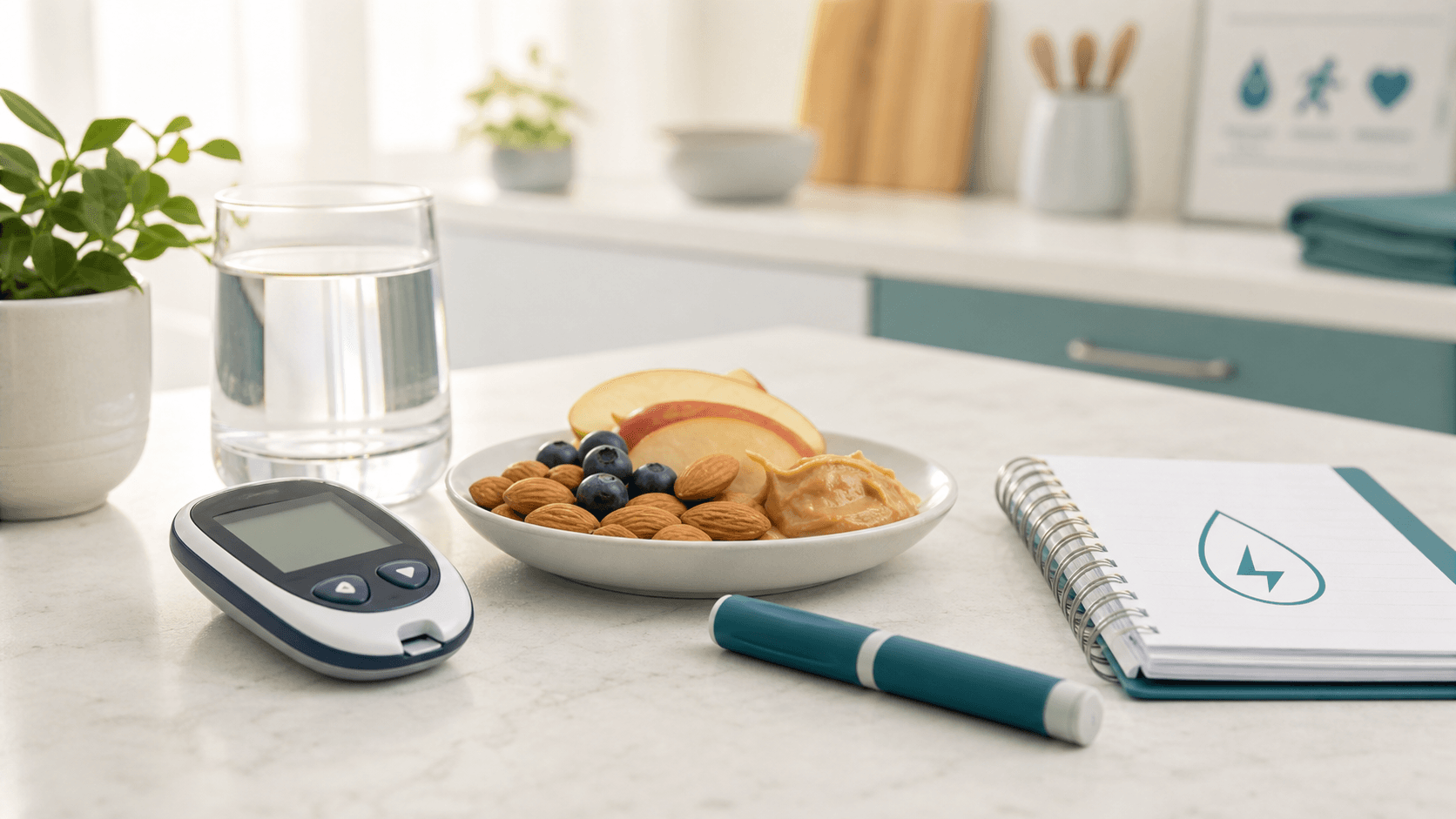
GLP-1 medications are generally low risk for hypoglycemia when used alone, but the risk is not zero in every situation.
Short answer: low blood sugar risk rises when a GLP-1 is combined with insulin, sulfonylureas, or other glucose-lowering drugs, or when a person eats much less than usual, vomits, has diarrhea, drinks alcohol, or is ill.
Symptoms to Know
| Possible low blood sugar symptom | Notes |
|---|---|
| Shaking or sweating | Common early warning |
| Hunger or nausea | Can overlap with GLP-1 GI symptoms |
| Fast heartbeat | Can feel like anxiety or palpitations |
| Dizziness | May also reflect dehydration |
| Confusion or weakness | More urgent |
| Seizure or loss of consciousness | Emergency |
Who Should Be Extra Careful
People using insulin, sulfonylureas, glinides, or complex diabetes regimens should have a clear plan for monitoring, medication adjustment, and treating lows.
Ask the clinician whether other diabetes medications should change when starting or increasing a GLP-1.
When to Seek Help
Follow your diabetes action plan. Seek urgent help for severe confusion, inability to swallow, seizure, loss of consciousness, repeated lows, or lows that do not respond as expected.
Internal Reading Path
FAQ
Do GLP-1 medications cause hypoglycemia by themselves?
They are usually low risk alone, but individual context matters.
Why does risk rise with insulin?
Insulin can lower glucose directly. Appetite suppression and reduced food intake can make the same insulin dose too strong.
Should I monitor more often when starting?
People with diabetes should ask their clinician how often to monitor when starting or escalating.
Why This Symptom Can Happen on GLP-1 Treatment
GLP-1 Hypoglycemia: Low Blood Sugar Risk and When It Happens usually needs to be understood in the context of delayed gastric emptying, appetite suppression, dose escalation, lower food intake, hydration changes, and other medications. GLP-1 and GIP/GLP-1 drugs can change how quickly food moves, how full someone feels, and how much they naturally eat or drink. Those changes can improve weight and glucose outcomes, but they can also create side effects when the dose, meal pattern, or hydration plan is not matched to the person's tolerance.
Symptoms often show up during the first few weeks or after a dose increase. They can also appear after a large meal, high-fat meal, alcohol, dehydration, constipation, or a long gap between meals. The timing is useful because it helps a clinician decide whether the symptom is likely dose-related, food-pattern related, or possibly unrelated to the medication.
First 24 to 48 Hours: What to Track
A useful symptom log does not need to be complicated. Record the dose date, dose strength, meals, fluids, bowel movements, alcohol, caffeine, exercise, and any other medications. Include severity from 1 to 10 and whether the symptom affects eating, drinking, sleeping, work, or exercise.
| Track this | Why it helps |
|---|---|
| Dose timing | Symptoms may peak after injection or escalation |
| Meal size and fat content | Large or greasy meals often worsen GI symptoms |
| Fluid intake | Dehydration can worsen headache, dizziness, constipation, and palpitations |
| Bowel pattern | Constipation can drive bloating, reflux, and abdominal pain |
| Blood sugar, if diabetic | Low or high glucose can mimic other symptoms |
| Red flags | Severe, persistent, or systemic symptoms need care |
Dose Escalation Questions
Many side effects become more disruptive when the dose is increased before the previous dose feels stable. Before moving up, it is reasonable to ask whether symptoms are mild and improving, whether protein and fluids are adequate, whether constipation is controlled, and whether work or daily function is being affected.
Do not adjust the dose independently. The practical question for the prescriber is whether to hold the current dose longer, step down, treat the symptom, review meal timing, or evaluate another cause.
Questions to Bring to the Prescriber or Pharmacist
- Does my current dose and timing match the official label or my prescription?
- Are my symptoms or concerns expected at this stage, or do they suggest changing the plan?
- Should I delay escalation, restart lower, hold steady, or be evaluated before continuing?
- Are any of my other medications increasing risk, especially insulin, sulfonylureas, blood pressure medication, diuretics, or drugs affected by delayed gastric emptying?
- What exact symptoms should make me call urgently or seek same-day care?
- If cost or supply interrupts therapy, what is the safest backup plan?
Bottom Line for GLP-1 Hypoglycemia: Low Blood Sugar Risk and When It Happens
The practical answer is rarely just one number, food list, or yes-or-no rule. For GLP 1 hypoglycemia, the safest approach is to combine the direct answer with the variables that change it: product type, dose, timing, side effects, storage history, other medications, and the person's medical context. When those variables are unclear, the best next step is to ask the prescriber or pharmacist before acting.
Additional Scenarios Readers Commonly Compare
| Scenario | How to think about it |
|---|---|
| Symptoms started after a dose increase | Treat escalation as a likely contributor and ask whether to hold the dose longer |
| The plan changed because of supply | Confirm whether a restart or lower dose is safer after the gap |
| Advice online conflicts with the label | Use the label, pharmacy, and prescriber as the authority |
| The medication is compounded | Verify concentration, BUD, storage, sterility, and dose instructions directly with the pharmacy |
| The goal is maintenance | Prioritize sustainable intake, resistance training, monitoring, and follow-up |
More FAQ
Why do different websites give different answers?
Most differences come from assuming different products, concentrations, patient goals, dose histories, or risk tolerance. A chart or tip can be mathematically correct but still wrong for a specific prescription.
What information should I keep in my notes?
Keep the medication name, dose, date taken, pharmacy label, concentration if vial-based, side effects, food and fluid changes, weight trend, and any clinician instructions. This makes follow-up safer and more specific.
When is it better not to troubleshoot at home?
Do not troubleshoot at home when symptoms are severe, rapidly worsening, involve chest pain or fainting, include repeated vomiting or dehydration, suggest allergic reaction, or involve a possible dosing or storage error.
Quick Self-Check Before Acting
Before making a decision based on GLP 1 hypoglycemia, pause long enough to confirm the basics: exact medication, dose, date of last dose, product form, storage history if relevant, current symptoms, and any other medications that could change risk. Most GLP-1 mistakes happen when one of those details is assumed instead of verified.
If the question involves dosing, switching, storage, severe symptoms, pregnancy planning, surgery, diabetes medication, or a compounded vial, treat the article as preparation for a clinician or pharmacist conversation. The safest next step is often not to act faster. It is to bring better information to the person who can make the decision with you.
| Detail to confirm | Why it matters |
|---|---|
| Medication and form | Pens, tablets, branded vials, and compounded vials have different rules |
| Current dose | Dose history changes tolerance and restart decisions |
| Timing | Missed doses, gaps, and dose increases change the plan |
| Symptoms | Severity decides whether this is routine or urgent |
| Storage or expiration | Product reliability depends on label and pharmacy rules |
| Other medications | Insulin, sulfonylureas, blood pressure drugs, and diuretics can change risk |
Summary
GLP-1 hypoglycemia risk is mainly a combination-risk issue. Insulin, sulfonylureas, reduced intake, illness, and alcohol make planning more important.
References
- Role of Glucagon-Like Peptide-1 (GLP-1) Receptor Agonists in Hypoglycemia. PMC, National Library of Medicine. PMC8527576
- Glucagon-Like Peptide-1 Receptor Agonists. StatPearls [Internet]. NCBI Bookshelf. NBK551568