Headaches on GLP-1 medications are often indirect: less food, less fluid, caffeine changes, vomiting, diarrhea, or blood sugar shifts.
Short answer: a GLP-1 headache is commonly worth troubleshooting with hydration, electrolytes, regular protein-containing meals, sleep, caffeine consistency, and blood sugar awareness in people with diabetes.
Can GLP-1 Medications Cause Headaches?
Yes, and the FDA-approved prescribing information puts numbers on it. The numbers are smaller than the internet implies, and they differ sharply between semaglutide and tirzepatide.
| Product and trial population | Headache on drug | Headache on placebo |
|---|---|---|
| Wegovy 2.4 mg injection, adults (N=2,116) | 14% | 10% |
| Wegovy 7.2 mg injection, adults (N=1,311) | 9% | 7% |
| Wegovy 2.4 mg injection, adolescents 12 and older (N=133) | 17% | 16% |
| Ozempic (semaglutide) in type 2 diabetes | Below the 5% reporting threshold; headache is listed under postmarketing reports | Not reported |
| Zepbound and Mounjaro (tirzepatide) | Below the 2% reporting threshold; headache is not in the adverse reaction table | Not reported |
Three things fall out of that table.
- Placebo groups get headaches too. About one adult in seven on Wegovy 2.4 mg reported a headache, and about one in ten on placebo reported one as well. The gap attributable to the drug is roughly four percentage points, which is why hunting the trigger beats blaming the injection.
- Higher dose barely moves it. In the two trials that compared 7.2 mg, 2.4 mg and placebo head to head, headache ran 9%, 8% and 7% respectively.
- Tirzepatide never cleared the bar. Headache does not appear in the tirzepatide adverse reaction tables at all, so a headache on Zepbound or Mounjaro deserves a cause hunt rather than an assumption.
The labels do not name a headache mechanism. They do name the two indirect drivers this page keeps returning to: semaglutide's kidney warning describes acute kidney injury in patients who became dehydrated from nausea, vomiting or diarrhea, and the medication guides list headache among the symptoms of low blood sugar in people also taking insulin or a sulfonylurea.
Common Causes to Check
| Possible cause | Clue |
|---|---|
| Dehydration | Dark urine, dizziness, dry mouth |
| Under-eating | Weakness, shakiness, fatigue |
| Caffeine change | Headache after cutting intake |
| GI fluid loss | Vomiting or diarrhea |
| Low blood sugar | Sweating, shaking, confusion, hunger |
GLP-1 Headache Remedies Worth Trying First
Every remedy below targets one specific cause from the table above. None of them treat a red-flag headache, and none of them replace the list in the next section.
| Remedy | Cause it targets | Why it is on this list |
|---|---|---|
| Drink on a schedule instead of on thirst, with electrolytes on any day that includes vomiting or diarrhea | Dehydration | Semaglutide's labeled kidney warning describes acute kidney injury in patients who became dehydrated from GI side effects, and tells prescribers to monitor kidney function during dose initiation and escalation |
| Hold caffeine at a steady daily amount rather than letting appetite suppression quietly cut it | Caffeine change | Headache is the hallmark caffeine-withdrawal symptom, reported in up to half of cases, starting 12 to 24 hours after the last dose and peaking between 20 and 51 hours |
| Anchor two or three eating occasions with protein even on days when appetite is gone | Under-eating | This page's own cause table pairs low intake with weakness, shakiness and fatigue, the same cluster people describe alongside the headache |
| Check glucose before you treat the headache if you also take insulin or a sulfonylurea | Low blood sugar | Headache is listed among low blood sugar symptoms in the Ozempic and Zepbound medication guides, and the labels advise considering a lower insulin or sulfonylurea dose when the GLP-1 starts |
| Ask the prescriber whether to sit on the current dose longer before the next step up | Dose escalation | Symptoms cluster in the first weeks and after an increase, and holding a dose is a prescriber decision rather than a self-adjustment |
A caffeine remedy that backfires is worth naming separately: cutting coffee to "be healthier" during titration is a common way to turn one problem into two, because withdrawal headache can run two to nine days.
On over-the-counter pain relievers, two things are true at once. Delayed gastric emptying gives GLP-1s a theoretical route to change how oral drugs are absorbed, but Wegovy's label reports that in clinical pharmacology trials semaglutide 1 mg weekly did not affect the absorption of orally administered medications, so a tablet is not automatically useless. The larger issue is timing. If the headache lands during a stretch of vomiting, diarrhea or poor fluid intake, that is precisely the volume-depletion scenario the kidney warning is about, and it is worth a call to the pharmacist before adding anything rather than after.
When to Seek Care
Seek urgent care for sudden worst headache, neurologic symptoms, confusion, fainting, chest pain, severe dehydration, head injury, fever with stiff neck, or headache with very high blood pressure.
Internal Reading Path
FAQ
Do GLP-1 medications directly cause headaches?
Headaches can occur, but they are often tied to hydration, food intake, caffeine, GI symptoms, or glucose changes.
Should I take pain relievers?
Ask a clinician or pharmacist if headaches are frequent, severe, or you have kidney, liver, stomach, blood pressure, or anticoagulant concerns.
Can low blood sugar cause headache?
Yes, especially in people using insulin or sulfonylureas, where a GLP-1 raises the risk of hypoglycemia.
Which GLP-1 headache remedies actually help?
Start with the four that map onto a labeled cause: steady fluids with electrolytes, a constant daily caffeine amount, protein-containing meals at regular times, and a glucose check if you take insulin or a sulfonylurea. Pain relievers and any dose change are pharmacist and prescriber decisions, not self-service remedies.
Why This Symptom Can Happen on GLP-1 Treatment
GLP-1 Headache: Causes, Hydration Checks, and When to Worry usually needs to be understood in the context of delayed gastric emptying and appetite suppression, dose escalation, lower food intake, hydration changes, and other medications. GLP-1 and GIP/GLP-1 drugs can change how quickly food moves, how full someone feels, and how much they naturally eat or drink. Those changes can improve weight and glucose outcomes, but they can also create side effects when the dose, meal pattern, or hydration plan is not matched to the person's tolerance.
Symptoms often show up during the first few weeks or after a dose increase. They can also appear after a large meal, high-fat meal, alcohol, dehydration, constipation, or a long gap between meals. The timing is useful because it helps a clinician decide whether the symptom is likely dose-related, food-pattern related, or possibly unrelated to the medication.
First 24 to 48 Hours: What to Track
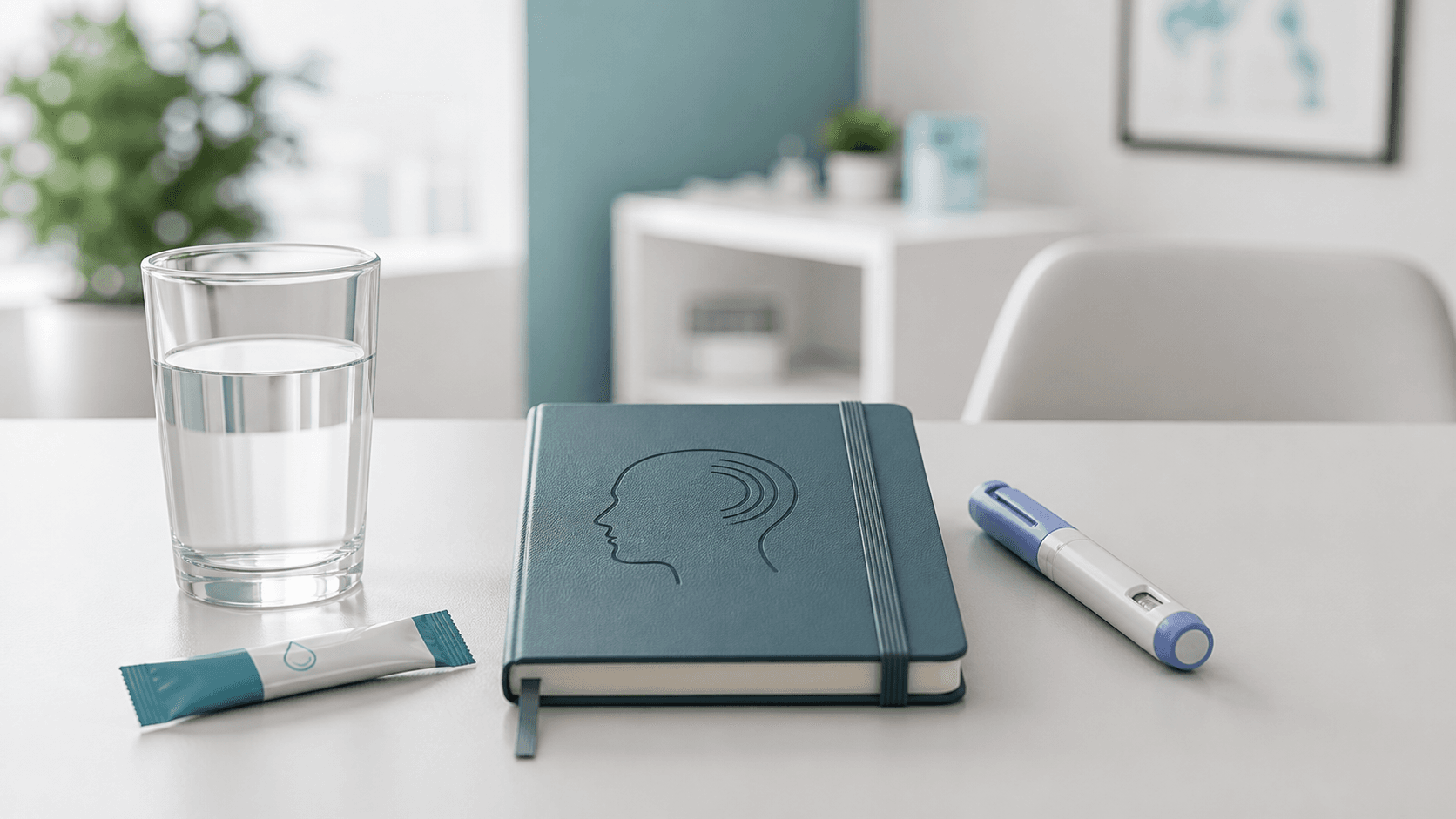
A useful symptom log does not need to be complicated. Record the dose date, dose strength, meals, fluids, bowel movements, alcohol, caffeine, exercise, and any other medications. Include severity from 1 to 10 and whether the symptom affects eating, drinking, sleeping, work, or exercise.
| Track this | Why it helps |
|---|---|
| Dose timing | Symptoms may peak after injection or escalation |
| Meal size and fat content | Large or greasy meals often worsen GI symptoms |
| Fluid intake | Dehydration can worsen headache, dizziness, constipation, and palpitations |
| Bowel pattern | Constipation can drive bloating, reflux, and abdominal pain |
| Blood sugar, if diabetic | Low or high glucose can mimic other symptoms |
| Red flags | Severe, persistent, or systemic symptoms need care |
Dose Escalation Questions
Many side effects become more disruptive when the dose is increased before the previous dose feels stable. Before moving up, it is reasonable to ask whether symptoms are mild and improving, whether protein and fluids are adequate, whether constipation is controlled, and whether work or daily function is being affected.
Do not adjust the dose independently. The practical question for the prescriber is whether to hold the current dose longer, step down, treat the symptom, review meal timing, or evaluate another cause.
Questions to Bring to the Prescriber or Pharmacist
- Does my current dose and timing match the official label or my prescription?
- Are my symptoms or concerns expected at this stage, or do they suggest changing the plan?
- Should I delay escalation, restart lower, hold steady, or be evaluated before continuing?
- Are any of my other medications increasing risk, especially insulin, sulfonylureas, blood pressure medication, diuretics, or drugs affected by delayed gastric emptying?
- What exact symptoms should make me call urgently or seek same-day care?
- If cost or supply interrupts therapy, what is the safest backup plan?
Bottom Line for GLP-1 Headache: Causes, Hydration Checks, and When to Worry
The practical answer is rarely just one number, food list, or yes-or-no rule. For GLP 1 headache, the safest approach is to combine the direct answer with the variables that change it: product type, dose, timing, side effects, storage history, other medications, and the person's medical context. When those variables are unclear, the best next step is to ask the prescriber or pharmacist before acting.
Additional Scenarios Readers Commonly Compare
| Scenario | How to think about it |
|---|---|
| Symptoms started after a dose increase | Treat escalation as a likely contributor and ask whether to hold the dose longer |
| The plan changed because of supply | Confirm whether a restart or lower dose is safer after the gap |
| Advice online conflicts with the label | Use the label, pharmacy, and prescriber as the authority |
| The medication is compounded | Verify concentration, BUD, storage, sterility, and dose instructions directly with the pharmacy |
| The goal is maintenance | Prioritize sustainable intake, resistance training, monitoring, and follow-up |
More FAQ
Why do different websites give different answers?
Most differences come from assuming different products, concentrations, patient goals, dose histories, or risk tolerance. A chart or tip can be mathematically correct but still wrong for a specific prescription.
What information should I keep in my notes?
Keep the medication name, dose, date taken, pharmacy label, concentration if vial-based, side effects, food and fluid changes, weight trend, and any clinician instructions. This makes follow-up safer and more specific.
When is it better not to troubleshoot at home?
Do not troubleshoot at home when symptoms are severe, rapidly worsening, involve chest pain or fainting, include repeated vomiting or dehydration, suggest allergic reaction, or involve a possible dosing or storage error.
Detailed Reader Scenarios
A stronger page for GLP 1 headache needs to answer the situations people actually bring to search. The same keyword can represent a careful planner, someone with active symptoms, someone whose pharmacy instructions are confusing, or someone who is trying to decide whether the issue is urgent. The sections below turn the topic into practical scenarios without replacing medical judgment.
Scenario 1: The symptom is mild and predictable
Mild symptoms that appear after a larger meal, high-fat meal, alcohol, constipation, or a dose increase are often managed by changing the food pattern and discussing whether to hold the dose longer. The key is that the symptom should be improving, not escalating.
Scenario 2: The symptom affects hydration or nutrition
When symptoms reduce fluid intake, protein intake, or the ability to function, they become more than a nuisance. Dehydration can worsen headache, dizziness, constipation, palpitations, and kidney stress. Under-eating can worsen fatigue, hair shedding risk, and muscle loss.
Scenario 3: The symptom is new, severe, or different
Do not assume every symptom is the medication. Severe abdominal pain, chest pain, fainting, neurologic symptoms, allergic symptoms, repeated vomiting, bloody stool, fever, or confusion should be evaluated rather than treated as normal GLP-1 adjustment.
Symptom Pattern Table
| Pattern | More reassuring | More concerning |
|---|---|---|
| Timing | Starts after dose increase and improves | Worsens every day or appears suddenly severe |
| Hydration | Able to drink normally | Dry mouth, very low urine, dizziness, fainting |
| Eating | Small meals tolerated | Cannot keep food down or avoids most food |
| Pain | Mild, brief, food-related | Severe, persistent, radiates, or with fever |
| Function | Annoying but manageable | Interrupts work, sleep, exercise, or diabetes control |
What to Try Only After Red Flags Are Ruled Out
For non-urgent symptoms, the usual foundations are smaller meals, slower eating, lower-fat choices during escalation, steady fluids, gradual fiber, gentle movement, and consistent protein. Medication treatments, dose holds, anti-nausea drugs, laxatives, reflux medication, or dose changes should be discussed with a clinician or pharmacist.
Summary
GLP-1 headaches often point to hydration, food, caffeine, or glucose patterns. Sudden, severe, or neurologic headaches need urgent evaluation.
References
- Collins L, Costello RA. Glucagon-Like Peptide-1 Receptor Agonists. StatPearls. NCBI Bookshelf. NCBI Bookshelf
- Ozempic (semaglutide) Prescribing Information. U.S. Food and Drug Administration, via DailyMed (NLM). DailyMed
- WEGOVY (semaglutide) injection and tablets, Prescribing Information (Table 3: headache 14% vs 10%; Table 4; Table 5; Sections 5.4, 5.5, 7.2). Novo Nordisk, via DailyMed (NLM). DailyMed
- ZEPBOUND (tirzepatide) injection, Prescribing Information (Table 1: adverse reactions at 2% or more and greater than placebo). Eli Lilly, via DailyMed (NLM). DailyMed
- MOUNJARO (tirzepatide) injection, Prescribing Information. Eli Lilly, via DailyMed (NLM). DailyMed
- Caffeine Withdrawal. StatPearls. NCBI Bookshelf. NCBI Bookshelf