How to Boost GLP-1 Naturally: Foods, Exercise, and Habits
Your body makes GLP-1 every time you eat. L-cells in the gut release it within minutes of food reaching the small intestine — and what you eat, when you eat, and how you exercise change how much shows up. You cannot replicate Ozempic with food, but you can meaningfully amplify your own GLP-1 response. The catch: native GLP-1 gets destroyed by DPP-4 within 1–2 minutes. Prescription drugs resist that breakdown; food doesn't. Lifestyle interventions typically deliver 5–10% body weight loss vs the 15–22% on prescription GLP-1s. Worth doing regardless of medication.
Certain plant compounds may help too, such as quercetin and GLP-1.
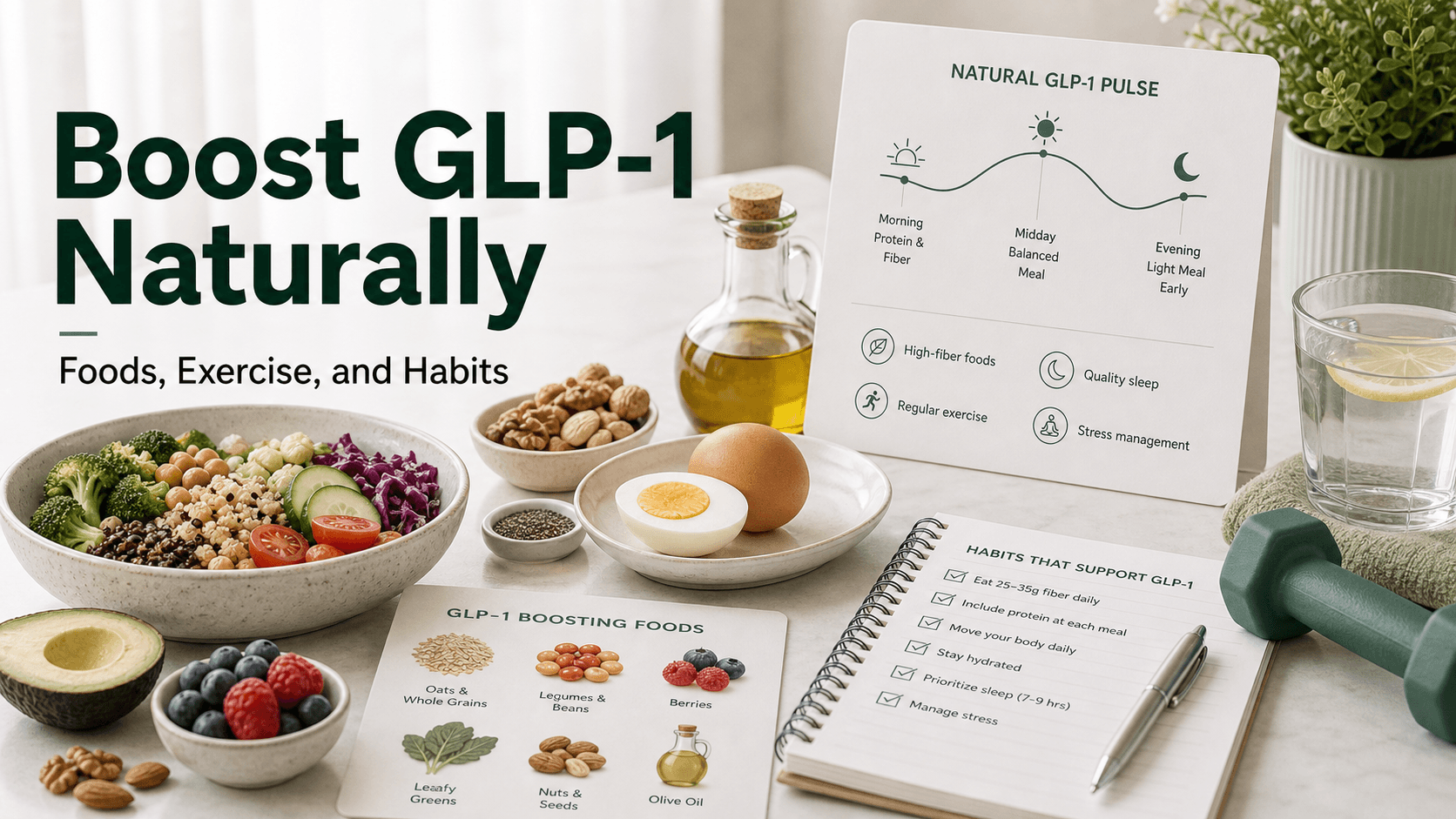
Direct answer: The best-evidenced natural GLP-1 boosters are 6 foods (eggs, nuts, high-fiber grains like oats and barley, avocado, olive oil, and vegetables eaten before carbs), soluble fiber (25–40 g/day from psyllium, beans, chia, oats), lean protein at every meal (eggs, fish, yogurt, legumes), healthy fats (olive oil, omega-3s, nuts, avocado), fermented foods (yogurt, kefir, sauerkraut, kimchi), moderate-to-vigorous exercise (150+ min/week aerobic plus 2 days resistance training), meal order (protein and fat before carbs), and dark chocolate (~28 g of 70%+ cacao daily). Effect lasts only 1–2 minutes per pulse — much smaller than injected GLP-1, but real.
How Your Body Actually Makes GLP-1
GLP-1 is produced by L-cells, specialized hormone-producing cells in the lining of the small intestine and colon. When food arrives, L-cells release GLP-1, which then:
- Tells the pancreas to release more insulin (only when glucose is high)
- Slows gastric emptying
- Signals satiety to the brain
- Suppresses glucagon
The catch: native GLP-1 is destroyed within 1–2 minutes by an enzyme called DPP-4. Prescription GLP-1 agonists are engineered to resist DPP-4, which is why they last 1 week instead of 2 minutes. This is why "natural GLP-1" can amplify a meal response but cannot match a sustained pharmaceutical dose.
The 6 Best-Evidenced GLP-1-Boosting Foods
Based on a 2016 review and multiple subsequent trials, these are the foods with the strongest evidence:
1. Eggs
- Rich in protein and monounsaturated fats that trigger GLP-1 secretion
- Egg whites particularly beneficial for the protein effect
- A 2016 review found egg meals produced "lower post-meal blood glucose levels, reduced feelings of hunger" and increased satisfaction
- Associated with decreased 24-hour food intake
2. Nuts (Almonds, Pistachios, Peanuts)
- Protein, fiber, and healthy fats slow digestion, causing gradual glucose release and GLP-1 secretion
- 2016 research review identified these nuts specifically as GLP-1 stimulators
- Additional benefit: fiber and fats improve insulin sensitivity
- Practical dose: ~1 oz (a small handful) per snack
3. High-Fiber Grains (Oats, Barley, Whole Wheat)
- Soluble fiber slows digestion
- Gut bacteria ferment fiber into short-chain fatty acids that bind to L-cell receptors and trigger GLP-1 release
- Multiple pathways: 2016 review confirmed GLP-1 stimulation through digestion, fermentation, and satiety mechanisms
- Best sources: oats, barley, whole wheat, rye
4. Avocado
- High fiber and monounsaturated fats slow glucose release
- 2019 study: whole avocado with meals increased GLP-1 and peptide YY (another satiety hormone) while reducing insulin
- Supports appetite regulation through multiple pathways
- Practical dose: half an avocado per meal
5. Olive Oil
- Unsaturated fats are more effective than saturated fats at stimulating GLP-1 release
- Mediterranean diet (rich in olive oil) showed "higher post-meal GLP-1 levels, improved insulin sensitivity" in 2016 review
- Animal studies: olive oil–enriched diets increased GLP-1, glucose tolerance, and insulin sensitivity
- Practical use: drizzle on salads and vegetables before starch-heavy meals
6. Vegetables (Brussels Sprouts, Broccoli, Carrots)
- High fiber and vitamins regulate blood sugar and affect GLP-1 levels
- 2022 study: consuming vegetables before carbohydrates "significantly affected glucose and GLP-1 levels" in T2D patients at 60 minutes post-meal
- Eating order matters as much as the food itself
Bonus Categories
Protein shakes: Whey, casein, gluten, and soy protein all increase GLP-1 secretion (2021 review). Particularly potent when combined with calcium.
Fermented foods: Yogurt, kefir, sauerkraut, kimchi, miso, tempeh — support the gut bacteria that influence L-cell behavior.
Dark chocolate: ≥70% cacao in modest amounts (~28 g daily) contains flavanols that may support GLP-1 activity.
Resistant starch: Cooked-and-cooled potatoes, rice, and pasta; green bananas; beans and lentils. Ferments to short-chain fatty acids that increase GLP-1 release.
Meal Order: A Free Lever
A consistent finding across multiple studies: eating foods in a specific order changes how much GLP-1 you release:
- Protein and fat first — primes GLP-1 release before carbs arrive
- Fiber and vegetables next — slows carb absorption
- Carbs last — already buffered by protein, fat, and fiber
Trials show this order alone reduces post-meal glucose spikes by 30–40% and increases GLP-1 release significantly — without changing what you eat, just the order.
Soluble Fiber: Target 25–40 g/Day
The most reliable natural GLP-1 booster. Soluble fiber slows nutrient absorption, ferments in the colon to short-chain fatty acids (especially butyrate), and doubles GLP-1 release at meals in trials.
Best sources:
| Food | Soluble fiber per serving |
|---|---|
| Psyllium husk | 5 g per tablespoon |
| Black beans (½ cup cooked) | 4 g |
| Chia seeds (1 tbsp) | 4 g |
| Oats (½ cup dry) | 2 g |
| Apple (medium, with skin) | 2 g |
| Brussels sprouts (1 cup) | 2 g |
| Avocado (½) | 2 g |
| Sweet potato | 2 g |
Target: 25–40 g total fiber/day with at least 5–10 g as soluble fiber.
Exercise
Both single sessions and long-term training measurably raise GLP-1:
- A single 30-minute moderate-intensity session raises GLP-1 for hours afterward
- Long-term training raises baseline GLP-1 levels, especially in insulin-resistant adults
- Resistance training has smaller acute GLP-1 effect but improves insulin sensitivity
- High-intensity intervals (HIIT) give the biggest GLP-1 bump per minute
Target: 150 minutes/week of moderate aerobic activity + 2 strength sessions.
What Lowers Natural GLP-1
- Refined carbohydrates (white bread, sugary cereals, pastries)
- Highly processed foods — typically low in fiber and protein
- Excess saturated fat, especially fried foods
- Excessive alcohol
- Chronic poor sleep — measurably reduces incretin response
- Sedentary behavior
- Chronic stress — elevated cortisol impairs GLP-1 release
Circadian Timing
GLP-1 follows circadian rhythms — higher daytime/evening levels. Practical implications:
- Eat during daylight hours on a regular schedule (e.g., 7 a.m. to 7 p.m.)
- Finish substantial meals 2+ hours before bedtime
- Eat every 3–4 hours, not constant grazing
- First meal 1–2 hours after waking — gives the system time to wake up
The "Maximize Natural GLP-1" Day
What a high-GLP-1 day looks like:
- Breakfast: Greek yogurt + 2 tbsp chia + berries + drizzle of nut butter
- Mid-morning: Hard-boiled egg + apple
- Lunch: Salmon + olive-oil salad + lentils + sauerkraut
- Afternoon: 20-minute walk
- Snack: Cottage cheese + walnuts
- Dinner: Chicken or tofu + roasted vegetables + cooked-and-cooled rice or beans
- Evening: Stop eating ~3 hours before bed
What Natural GLP-1 Cannot Do
Be honest about scale:
| Approach | Mean weight loss in 12 months |
|---|---|
| High-fiber, protein-forward whole-foods diet alone | 5–10 lb |
| Mediterranean diet + exercise | 10–18 lb |
| Wegovy (semaglutide injection) | 30+ lb |
| Zepbound (tirzepatide) | 40+ lb |
The comparison is stark: "Clinical trials show drugs like semaglutide can help people lose 15% or more of their body weight, while even the most intensive lifestyle interventions typically achieve 5–10% weight loss." Natural approaches are foundational and worth doing regardless of whether you take a medication. They are not interchangeable with the drugs.
What People Get Wrong
- "Natural means as effective as the drugs." It doesn't. Effect size is smaller and shorter-lasting.
- "There's one 'GLP-1 food.'" No single food matters that much. The pattern matters.
- "Apple cider vinegar boosts GLP-1." Marginal effect at best.
- "Oatzempic works." Per Dr. Supriya Rao: "may raise GLP-1 slightly, but it's not anything like these injections."
- "I can ditch the medication once I eat right." Diet should supplement, not replace, a clinically appropriate prescription.
Frequently Asked Questions
Can I boost GLP-1 naturally without medication? Yes — protein, soluble fiber, healthy fats, fermented foods, meal order, and exercise all raise endogenous GLP-1.
What foods raise GLP-1 the most? The six best-evidenced: eggs, nuts, high-fiber grains (oats, barley), avocado, olive oil, and vegetables eaten before carbohydrates.
How long does natural GLP-1 last? About 1–2 minutes before being broken down by DPP-4. The signaling effect of a meal-driven pulse lasts hours.
Is there a "natural Ozempic"? No single food or supplement replicates Ozempic. A high-fiber, protein-forward diet combined with exercise is the closest natural analog.
Does exercise raise GLP-1? Yes. Moderate-to-vigorous aerobic exercise and HIIT both produce measurable acute and long-term increases.
Does eating slowly help? Yes — eating slowly produces a more pronounced GLP-1 response and higher satiety.
Will eating like this work as well as taking a GLP-1 drug? No. The drugs sustain GLP-1 receptor activation 24/7 at much higher levels than diet alone can. Natural approaches are still the best foundation.
Last reviewed: May 13, 2026