How to Mix BAC Water with Retatrutide - Reconstitute & Store
Direct answer: Draw your chosen volume of bacteriostatic water (BAC water) into an insulin syringe, angle the needle against the inner glass wall of the retatrutide vial, push the plunger slowly so water trickles down the side, then swirl gently until the powder dissolves. Refrigerate immediately and use within 28 days.
Key Takeaways
- Always use bacteriostatic water (BAC water) — not sterile water, not saline
- Add water to the vial wall; never blast it directly onto the powder
- Never shake — swirl gently until the powder dissolves completely
- Your water volume sets your concentration, which determines how many units you draw per dose
- Knowing how to store retatrutide once it's mixed with BAC water is just as important as the mixing itself — refrigerate at 2–8°C and use within 28 days
- Label every vial with the date mixed and the concentration you used
You've done the research, sourced your peptide, and now you're staring at a small glass vial wondering where to start. Reconstitution is the make-or-break step — mix it wrong and you might underdose yourself for weeks, or degrade the peptide entirely. This guide covers how to mix retatrutide at every common vial size, with a full retatrutide mixing chart so you're never doing mental math mid-process.
What Is Retatrutide?
Retatrutide (also studied as LY3437943, and shortened to "reta" in most vendor and forum shorthand) is an investigational once-weekly peptide that acts as a triple agonist of the GLP-1, GIP, and glucagon receptors, and it is being studied for obesity and chronic weight management. This is what distinguishes it from semaglutide, which targets only the GLP-1 receptor, and from tirzepatide, which targets the GLP-1 and GIP receptors. In its phase 2 trial, the GLP-1 and GIP activity is associated with reduced appetite while the added glucagon-receptor activity is associated with increased energy expenditure. Retatrutide is not approved by the FDA; the information below is procedural and not a statement of benefit for any individual.
What You'll Need Before You Start
Don't skip the prep. Having everything on the counter before you open anything is half the job. If you would rather not source each item separately, some vendors sell all-in-one retatrutide reconstitution kits.
- Retatrutide lyophilized vial (commonly 10 mg, 20 mg, 30 mg, or 40 mg)
- Bacteriostatic water (BAC water) — the 0.9% benzyl alcohol preservative is what keeps bacteria out between doses; regular sterile water has no preservative
- Insulin syringes — 1 mL capacity, 29–31 gauge needles, U-100 markings
- Alcohol swabs — at minimum two (one for each vial top)
- A flat, clean surface — a clean paper towel works fine
- Marker and label — write the date and concentration on the vial immediately after mixing
One thing competitors don't mention enough: the gauge of the needle matters for drawing BAC water. A 29-gauge is fine for injecting but can be slow when drawing larger volumes. Some people keep a spare 18-gauge on hand just for drawing water, then switch to 29-gauge for injection. Not required, but it speeds things up with larger vials.
The Reconstitution Formula (Understand This Once, Use It Forever)
Before the tables, the math:
Concentration (mg/mL) = Peptide Amount (mg) ÷ Water Added (mL)
That's it. Add 2 mL to a 10 mg vial: 10 ÷ 2 = 5 mg/mL.
To find how many syringe units to draw for a given dose:
Units = (Dose in mg ÷ Concentration in mg/mL) × 100
Example: You want 2 mg from a 5 mg/mL solution → (2 ÷ 5) × 100 = 40 units
The "× 100" converts mL to units on a U-100 syringe (100 units = 1 mL, always).
So if you ask yourself "2mg retatrutide is how many units on a diabetic syringe" — the answer depends entirely on your concentration. At 5 mg/mL it is 40 units; at 2.5 mg/mL it is 80 units; at 10 mg/mL it is 20 units.
Retatrutide Mixing Chart: Concentration by Vial Size
This is the retatrutide mixing chart for every common vial size. Choose the BAC water volume that gives you workable unit numbers at your current dose.
| Vial Size | BAC Water Added | Concentration | Best For |
|---|---|---|---|
| 5 mg | 1 mL | 5 mg/mL | Early escalation, low doses |
| 5 mg | 2 mL | 2.5 mg/mL | Most common; clean unit numbers |
| 10 mg | 2 mL | 5 mg/mL | Mid-protocol, doses 2–8 mg |
| 10 mg | 4 mL | 2.5 mg/mL | Higher-volume doses, larger syringes |
| 20 mg | 2 mL | 10 mg/mL | Experienced users, high-dose phase |
| 20 mg | 4 mL | 5 mg/mL | Balanced option for 20 mg vials |
| 30 mg | 3 mL | 10 mg/mL | Bulk vials, high-dose maintenance |
| 30 mg | 6 mL | 5 mg/mL | Standard dilution, 30 mg vial |
| 40 mg | 4 mL | 10 mg/mL | High-dose phase, 40 mg vials |
| 40 mg | 8 mL | 5 mg/mL | Lower concentration, 40 mg vials |
Quick tip: If your dose is 1 mg or less, use more water (lower concentration) so you're drawing a measurable number of units. At 10 mg/mL, a 0.5 mg dose is just 5 units — that tiny mark on the syringe is nearly impossible to hit accurately.
Retatrutide Mixing Instructions: Every Vial Size and BAC Water Volume
The chart above covers the common vial sizes. This one covers every size suppliers actually ship, including the awkward ones (12 mg, 15 mg, 24 mg), and adds the number that matters most at the syringe: units per 1 mg.
You only need one shortcut to reproduce any row here:
Units per 1 mg = (BAC water in mL × 100) ÷ vial size in mg
Two mL into a 10 mg vial: (2 × 100) ÷ 10 = 20 units per mg. Two mL into a 20 mg vial: (2 × 100) ÷ 20 = 10 units per mg. Same water, half the units, because the powder is twice as concentrated.
| Vial Size | BAC Water | Concentration | Units per 1 mg | Total Units in Vial |
|---|---|---|---|---|
| 5 mg | 1 mL | 5 mg/mL | 20 units | 100 |
| 5 mg | 2 mL | 2.5 mg/mL | 40 units | 200 |
| 10 mg | 1 mL | 10 mg/mL | 10 units | 100 |
| 10 mg | 2 mL | 5 mg/mL | 20 units | 200 |
| 10 mg | 3 mL | 3.33 mg/mL | 30 units | 300 |
| 10 mg | 4 mL | 2.5 mg/mL | 40 units | 400 |
| 12 mg | 1.2 mL | 10 mg/mL | 10 units | 120 |
| 12 mg | 2 mL | 6 mg/mL | 16.7 units | 200 |
| 12 mg | 3 mL | 4 mg/mL | 25 units | 300 |
| 15 mg | 1.5 mL | 10 mg/mL | 10 units | 150 |
| 15 mg | 2 mL | 7.5 mg/mL | 13.3 units | 200 |
| 15 mg | 3 mL | 5 mg/mL | 20 units | 300 |
| 20 mg | 1 mL | 20 mg/mL | 5 units | 100 |
| 20 mg | 2 mL | 10 mg/mL | 10 units | 200 |
| 20 mg | 4 mL | 5 mg/mL | 20 units | 400 |
| 24 mg | 2.4 mL | 10 mg/mL | 10 units | 240 |
| 24 mg | 3 mL | 8 mg/mL | 12.5 units | 300 |
| 24 mg | 4.8 mL | 5 mg/mL | 20 units | 480 |
| 30 mg | 2 mL | 15 mg/mL | 6.7 units | 200 |
| 30 mg | 3 mL | 10 mg/mL | 10 units | 300 |
| 30 mg | 6 mL | 5 mg/mL | 20 units | 600 |
| 40 mg | 2 mL | 20 mg/mL | 5 units | 200 |
| 40 mg | 4 mL | 10 mg/mL | 10 units | 400 |
| 40 mg | 8 mL | 5 mg/mL | 20 units | 800 |
| 60 mg | 3 mL | 20 mg/mL | 5 units | 300 |
| 60 mg | 6 mL | 10 mg/mL | 10 units | 600 |
To get units for any dose, multiply out: at 20 units per mg, a 2.5 mg dose is 50 units. The last column is simply the water volume expressed in units (1 mL = 100 units), and it tells you at a glance how much peptide you are holding — 300 units at 20 units per mg is 15 mg, which at 3 mg a week is five weeks of dosing. That matters, because reconstituted retatrutide only holds for 28 days refrigerated.
Headroom check before you draw: most peptide vials are 2 mL, 3 mL, 5 mL or 10 mL glass. Confirm the capacity printed on your vial before committing to volumes above 3 mL — 8 mL will not fit in a 3 mL vial no matter how good the math is.

How much do you actually need to buy? Work backwards from the table below. A 10 mg vial at 2 mL, the most common setup, uses a fifth of a 10 mL bottle, so one bottle covers five reconstitutions. At 4 mL for a 2.5 mg/mL solution it covers two and a half. Buying a 30 mL bottle to save a few dollars is usually a false economy: once opened, the same 28-day clock applies to the water as to the peptide.
What to check on whatever you buy: 0.9% benzyl alcohol in USP Water for Injection, a glass multi-dose vial rather than a plastic squeeze bottle, and a batch certificate you can match to the lot number on the label. PureBac publishes a per-batch certificate covering purity, benzyl alcohol concentration, fill volume, heavy metals, endotoxins and sterility — affiliate link, we earn a commission at no extra cost to you.
How Much BAC Water for Each Vial Size
How Much BAC Water for 5 mg Retatrutide
A 5 mg vial takes 1 mL for 5 mg/mL (1 mg = 20 units) or 2 mL for 2.5 mg/mL (1 mg = 40 units). Go with 2 mL if you are in the 0.5–2 mg range — a 0.5 mg dose lands on 20 units instead of 10, which is a far easier mark to hit. A 5 mg vial is five 1 mg doses, or two 2 mg doses with 1 mg left over, so plan the vial against your schedule before you add water: the 28-day clock starts the moment it goes in.
How Much BAC Water for 10 mg Retatrutide
Add 2 mL for a 5 mg/mL solution (most practical for doses up to 8 mg/week). Use 4 mL if you want 2.5 mg/mL — useful when doses are 1–3 mg and you need more precise unit marks. How much BAC water for 10mg retatrutide is ultimately a dose question: if your weekly dose is above 6 mg, 2 mL keeps injection volumes manageable. The full option set for a 10 mg vial is 1 mL = 10 mg/mL (10 units per mg), 2 mL = 5 mg/mL (20 units per mg), 3 mL = 3.33 mg/mL (30 units per mg) and 4 mL = 2.5 mg/mL (40 units per mg). Two mL is the default answer for most people; 1 mL only makes sense once you are consistently dosing 4 mg or more.
How Much BAC Water for 12 mg Retatrutide
12 mg does not divide into round numbers as easily, so pick the volume that puts your dose on a whole unit mark:
- 1.2 mL → 10 mg/mL → 1 mg = 10 units
- 2 mL → 6 mg/mL → 3 mg = 50 units, 6 mg = 100 units
- 3 mL → 4 mg/mL → 2 mg = 50 units, 4 mg = 100 units
If you dose in whole 2 mg steps, 3 mL is the friendliest of the three. If you dose in 3 mg steps, use 2 mL.
How Much BAC Water for 15 mg Retatrutide
3 mL is the answer for nearly everyone holding a 15 mg vial. That gives 5 mg/mL: 1 mg = 20 units, 2 mg = 40 units, 4 mg = 80 units, with 300 units in the vial. Use 1.5 mL (10 mg/mL) only if you are dosing 4 mg or more and want smaller injection volumes. Avoid 2 mL — it produces 7.5 mg/mL, or 13.3 units per mg, and fractional unit marks are exactly where dosing errors come from.
How Much BAC Water for 20 mg Retatrutide
For a 20 mg vial, 2 mL gives 10 mg/mL and 4 mL gives 5 mg/mL. The 4 mL option is the more forgiving starting point — you get 80 units per 4 mg dose, which is easy to measure. Is 100 units of reconstituted water enough for 20 mg retatrutide? Yes: 1 mL (100 units on a U-100 syringe) yields 20 mg/mL, which is workable but produces very small draw volumes for low doses — use this only if you're consistently dosing 4 mg or more.
How Much BAC Water for 24 mg Retatrutide
24 mg vials turn up from several research suppliers, and they reconstitute like any other size — only the water volume changes. Three options:
- 2.4 mL → 10 mg/mL → 1 mg = 10 units, 240 units in the vial
- 3 mL → 8 mg/mL → 2 mg = 25 units, 4 mg = 50 units, 6 mg = 75 units, 8 mg = 100 units
- 4.8 mL → 5 mg/mL → 1 mg = 20 units, 480 units in the vial
3 mL is the practical pick: every even dose lands on a whole unit mark, and 3 mL fits standard vial headroom without the fiddly 2.4 or 4.8 measurement.
How Much BAC Water for 30 mg Retatrutide
How much BAC water for 30mg retatrutide depends on your dose range. Use 3 mL (10 mg/mL) for high-dose phases (6–12 mg/week). Use 6 mL (5 mg/mL) if you're mid-protocol and want easier unit measurement. A retatrutide 30 mg vial reconstituted at 5 mg/mL gives you 6 doses of 5 mg each — a clean weekly cycle for most escalation schedules.
How Much BAC Water for 40 mg Retatrutide
For a 40 mg vial, the same logic applies. How to mix 40g of retatrutide (the "g" in search queries refers to mg): add 4 mL BAC water for 10 mg/mL, or 8 mL for 5 mg/mL. The 8 mL option means a 4 mg dose is 80 units — straightforward to draw. With 4 mL, a 4 mg dose is only 40 units. How much BAC water should I add to a 40 mg vial of retatrutide? Most users find 4–8 mL depending on their dose, with 4 mL being the more common choice when dosing above 6 mg/week.
How Much BAC Water for 60 mg Retatrutide
Use 6 mL for 10 mg/mL (1 mg = 10 units, 600 units in the vial). 3 mL gives 20 mg/mL, which is only workable if you are dosing 4 mg or more — at that concentration 1 mg is just 5 units. 12 mL would give 5 mg/mL but exceeds the headroom of most vials.
The bigger problem with a 60 mg vial is not the water, it is the calendar. At 6 mg a week, 60 mg is ten weeks of dosing, and reconstituted retatrutide only holds 28 days refrigerated — you would lose more than half the vial. 60 mg vials are also uncommon; most suppliers ship 10 mg, 20 mg or 30 mg. Check the label before you mix, and match vial size to roughly four weeks of dosing rather than reconstituting more than you can use.
Dose-to-Units Conversion Table
Once you know your concentration, use this to find the draw volume.
| Target Dose | @ 2.5 mg/mL | @ 5 mg/mL | @ 10 mg/mL | @ 20 mg/mL |
|---|---|---|---|---|
| 0.5 mg | 20 units | 10 units | 5 units | 2.5 units† |
| 1.0 mg | 40 units | 20 units | 10 units | 5 units |
| 2.0 mg | 80 units | 40 units | 20 units | 10 units |
| 3.0 mg | 120 units* | 60 units | 30 units | 15 units |
| 4.0 mg | 160 units* | 80 units | 40 units | 20 units |
| 6.0 mg | — | 120 units* | 60 units | 30 units |
| 8.0 mg | — | 160 units* | 80 units | 40 units |
| 10.0 mg | — | 200 units* | 100 units | 50 units |
| 12.0 mg | — | — | 120 units* | 60 units |
*Exceeds standard 1 mL syringe. Use a 2 mL syringe or split into two injection sites.
†Below 5 units on a U-100 syringe — not reliably measurable. Reconstitute at a lower concentration instead.
The 20 mg/mL column is what you get from 1 mL (100 units) in a 20 mg vial, 2 mL in a 40 mg vial, or 3 mL in a 60 mg vial. It keeps injection volumes tiny, but every dose under 2 mg lands on a mark too small to read with confidence.
For a full week-by-week dosing protocol, see the Retatrutide Dosage Chart →
How to Mix Retatrutide: The 60-Second Process
If you've already used the formula above to pick your BAC water volume, the actual mixing takes about a minute. The order matters — adding water too fast, into the wrong spot in the vial, or shaking instead of swirling, are the three most common reasons reconstituted retatrutide ends up cloudy, foamy, or potency-compromised.
How to Mix Retatrutide Step Sequence
- Bring both vials to room temperature. Take the retatrutide vial out of the freezer or fridge and the BAC water out of storage. Let them sit on the counter for 15–20 minutes. Cold powder is hygroscopic — opening it cold pulls humid air in.
- Disinfect both vial stoppers with a fresh alcohol swab. Let dry 10 seconds.
- Draw your BAC water into a 1mL or 3mL syringe at the volume your reconstitution math calls for (1mL, 2mL, 3mL, or 4mL — see the chart above).
- Angle the needle against the inner glass wall of the retatrutide vial at roughly 45 degrees. This is the trick — water trickling down the glass dissolves the powder gently instead of blasting it.
- Push the plunger slowly so water flows down the side, not directly onto the powder pile.
- Swirl gently — never shake. Hold the vial at the neck and rotate it in a slow horizontal circle for 15–20 seconds.
- Wait 60 seconds. The solution should clear completely. Tiny bubbles are fine; visible undissolved particles are not.
- Refrigerate immediately at 2–8°C. Label the vial with today's date — your 28-day clock starts now.
How to Mix Retatrutide Without Causing Foam or Cloudiness
Three common failure modes and how to avoid them:
- Foam at the top of the vial — caused by pushing BAC water too fast or shaking. The proteins denature at the air-liquid interface. Re-swirl gently and let it sit; small amounts of foam will settle. Heavy foam means potency loss.
- Cloudiness that doesn't clear — usually means the powder absorbed moisture before reconstitution (vial was opened cold) or you used unsterile water. Discard the vial.
- Visible specks or stringy material — bacterial contamination or peptide aggregation. Discard.
The same principles apply across vial sizes. Whether you're reconstituting 5mg, 10mg, 20mg, 30mg, or 40mg, the technique is identical — only the BAC water volume changes.
Step-by-Step: How to Reconstitute Retatrutide
Walk through this the first time. After a few vials it becomes muscle memory. This is also the answer to "how do I reconstitute powdered retatrutide" — the powder form requires the same technique regardless of vial size.
1. Wash your hands. Not negotiable. No gloves needed but hands must be clean.
2. Wipe both vial tops with separate alcohol swabs — the retatrutide vial and the BAC water vial. Let them air dry for about 10 seconds. Wet alcohol on the stopper can get pulled into the syringe.
3. Draw your BAC water. Insert the syringe into the BAC water vial and pull back the plunger to your chosen volume (see the mixing chart above). Check for air bubbles; flick them to the top and push them out.
4. Angle the needle against the glass wall of the retatrutide vial. Point the tip at the inside wall, not at the powder sitting at the bottom. You want water to trickle down the glass, not splash onto the peptide.
5. Push the plunger slowly. Let the water slide down the glass and pool under the powder. Go slow — 30 seconds to inject 2 mL is not too slow.
6. Pull the needle out and set the syringe aside (capped, if reusing for drawing later).
7. Swirl the vial gently between your palms using a slow, circular wrist motion. Don't shake it. Don't vortex it. Swirl for about 60 seconds. The powder should begin dissolving.
8. Let it rest for 5 minutes, then swirl again. Most vials clear up completely within 2–5 minutes. A little cloudiness right after adding water is normal — it should resolve.
9. Inspect the solution. It should be perfectly clear and colorless. If you see floating particles after 10 minutes of swirling, or a persistent haze, there may be an issue with the peptide or contamination. Don't use it.
10. Label the vial immediately. Write: the date reconstituted, the concentration (e.g., "5 mg/mL"), and optionally the number of doses remaining. You won't remember in three weeks.
11. Refrigerate. Straight into the fridge at 2–8°C. Don't leave it sitting on the counter while you prep the injection site.
That's the full process. Takes about 5–10 minutes the first time; less than 3 minutes once you've done it a few times.
Syringe Issues: When the Needle Is Too Short or the Draw Seems Off
A common problem when drawing retatrutide from a vial: the syringe feels too short to reach the solution, or you're pulling air instead of liquid. If you're drawing retatrutide from a vial and the syringe is too short, tilt the vial at a 45-degree angle so the liquid pools toward the stopper — this gets the needle tip submerged even in a near-empty vial.
For very small remaining volumes, angle the vial almost horizontally and insert the needle at the side of the stopper rather than straight down the center.
Standard 1 mL insulin syringes work fine for most vials. If your dose calculation pushes you above 100 units (1 mL), use a 2 mL syringe or split the dose across two injection sites.
How Long Does Reconstituted Retatrutide Last?
Reconstituted retatrutide lasts 28 days in the refrigerator at 2–8°C, sealed, with minimal septum punctures. That's the working answer, and it's the most important number to remember from this entire guide. Beyond 28 days, peptide degradation accelerates enough that potency cannot be relied on — even if the solution still looks clear.
How Long Does Reconstituted Retatrutide Last by Storage Condition
| Storage Condition | How Long Reconstituted Retatrutide Lasts |
|---|---|
| Refrigerated at 2–8°C, sealed, minimal punctures | 28 days |
| Refrigerated, septum punctured 10+ times | 2–3 weeks (contamination risk rises with each draw) |
| Stored in the fridge door (temperature swings) | ~20 days |
| Left at room temperature (20–25°C) | 4–6 hours maximum |
| Accidentally frozen with visible ice crystals | Discard — irreversible damage |
| Exposed to direct light (clear glass vial) | Reduced; wrap in foil if you cannot use original box |
How Long Does Reconstituted Retatrutide Last Compared to Lyophilized Powder?
The contrast is enormous, and it is the single most important storage fact about retatrutide:
- Reconstituted (liquid): 28 days, refrigerated
- Lyophilized (powder), refrigerated: 1–2+ years, sealed
- Lyophilized (powder), frozen: 2–3+ years, sealed
The moment water hits powder, you start a 28-day countdown that cannot be paused, extended, or undone. If you only use a small portion of a vial per week, the smart move is to reconstitute in smaller portions — mix half the vial now, leave the rest as powder, mix the second half later when you need it.
How Long Does Reconstituted Retatrutide Last in a Drawn Syringe?
Pre-drawing a syringe and storing it for later is not recommended. Once drawn:
- At room temperature: 4 hours max before discarding
- Refrigerated, in a sealed sharps-safe container: Up to 24 hours, but bacteriostatic protection drops significantly
Best practice is to draw and inject within minutes. If you must pre-draw, refrigerate immediately and use the same day.
How to Store Retatrutide Once It's Mixed with BAC Water
Knowing how to store retatrutide once it's mixed with BAC water correctly is what determines whether your vial lasts 4 weeks or goes bad in days.
| State | Temperature | Shelf Life |
|---|---|---|
| Lyophilized (powder) — room temp | 15–25°C | 6–12 months |
| Lyophilized (powder) — refrigerated | 2–8°C | 1–2+ years |
| Lyophilized (powder) — frozen | –20°C | 2–3+ years |
| Reconstituted with BAC water | 2–8°C | Up to 28 days |
| Reconstituted with sterile water | 2–8°C | Use within 24 hours |
Once you mix retatrutide with BAC water, here is what to do and how to store it: place the vial in the refrigerator at 2–8°C immediately, away from the door (temperature fluctuates there), and mark the date you mixed it on the label. Draw each weekly dose with a fresh syringe and return the vial to the fridge promptly.
Critical rule: Never freeze a reconstituted (liquid) peptide. Ice crystals shear peptide bonds. If you need long-term storage, freeze only the lyophilized powder, and reconstitute what you'll use within the month.
If you buy multiple vials, keep the unopened ones in the freezer and pull out one at a time as needed.
How long does reconstituted retatrutide last? Up to 28 days refrigerated with BAC water. Mark the date and respect that window.
Signs Your Reconstituted Retatrutide Has Degraded
Not many guides cover this. Here's what to watch for:
- Persistent cloudiness after more than 10 minutes of swirling — fresh peptide dissolves clear
- Floating particles or fibers — these don't dissolve out; discard the vial
- Yellow or amber color — clear and colorless is correct; any yellowing suggests oxidation
- Unusual smell — a properly reconstituted peptide solution is odorless
- Reduced efficacy over time without explanation — if you've verified dosing is correct and response drops off, the peptide may have degraded past the 28-day window or been stored improperly
When in doubt, don't inject it. A wasted vial is irritating; an injection of degraded protein is worse.
Common Reconstitution Mistakes (and How to Avoid Them)
Shaking the vial. The most common error. Shaking aerates the solution and creates foam — air bubbles in contact with peptide molecules can denature them. Swirl only, always.
Squirting water directly onto the powder. The force can mechanically disrupt the peptide structure and make it harder to dissolve evenly. Angle the needle and let water trickle down the glass.
Using too little water. At a very high concentration (like 20 mg/mL from a 20 mg vial in 1 mL), low doses produce near-invisible unit marks. Measurement errors compound quickly.
Not labeling the vial. You will absolutely forget the date you mixed it and the concentration you used. Three weeks from now you'll be squinting at an unlabeled vial. Label it immediately.
Leaving it at room temperature. Every hour above 8°C the reconstituted solution degrades faster. Draw your dose and get the vial back in the fridge.
Using the same syringe repeatedly. Needles dull after the first puncture and each reuse increases contamination risk. New syringe every time.
Freezing the liquid. Already mentioned — liquid peptides plus freezing equals ice crystal damage to peptide bonds. Powder only in the freezer.
Frequently Asked Questions
How to use reta powder if you've never reconstituted a peptide before?
The process is the same regardless of experience level. Use the step-by-step section above. The key points for first-timers: use BAC water (not sterile water), add water to the glass wall not the powder directly, swirl — never shake, and refrigerate immediately. Making up retatrutide for the first time takes about 10 minutes; subsequent vials take less than 3.
Can I use sterile water instead of bacteriostatic water?
Technically yes, but it is not recommended unless you are using the entire vial in one day. Sterile water contains no preservative, so bacteria can grow in the solution within 24 hours. Since retatrutide is typically dosed once weekly and a single vial lasts 3–4 weeks, bacteriostatic water is essentially mandatory.
How do I know how many units to draw for my dose?
Use the formula: (Dose in mg ÷ Concentration in mg/mL) × 100. Or use the dose-to-units conversion table above. The conversion is the same every time, so once you've done it once you'll rarely need to recalculate.
Is 100 units of reconstituted water enough for 20 mg retatrutide?
1 mL (100 units) gives you 20 mg/mL — a workable concentration only if you're consistently dosing 4 mg or more. For lower starting doses, use 2 mL (10 mg/mL) or 4 mL (5 mg/mL) to get measurable draw volumes.
My powder didn't dissolve completely — what do I do?
Keep swirling gently. Some vials take up to 10 minutes to fully dissolve. Warming the vial slightly between your palms can help. If after 10–15 minutes there are still visible particles, the peptide may be damaged or the vial may have been exposed to moisture. Contact your supplier.
What is the ratio of water to powder for retatrutide?
There is no single required ratio — you choose based on your dose. The most common starting point is 1 mL of BAC water per 5 mg of peptide (5 mg/mL), but any ratio from 2.5 mg/mL to 10 mg/mL is practical. See the mixing chart above for specifics by vial size.
Can I reconstitute a vial and then freeze the liquid for later?
No. Freezing a liquid peptide causes ice crystal formation that physically damages the peptide structure. Only freeze lyophilized (powder) peptides. Once reconstituted, refrigerate and use within 28 days.
What concentration should I use for dose escalation?
For the starting phase (0.5–2 mg/week), lower concentrations like 2.5 mg/mL work best because low doses land on clean, measurable unit marks. As you escalate to 6–12 mg/week, higher concentrations (5–10 mg/mL) keep injection volumes reasonable. See the Retatrutide Dosage Chart for phase-specific guidance.
How much constitution solution do you add to 20 mg of retatrutide?
2 mL (for 10 mg/mL) or 4 mL (for 5 mg/mL) are the standard options. The 4 mL option is more beginner-friendly because dose draws land on bigger, easier-to-read unit marks.
How much BAC should be added to 30 mg of retatrutide powder?
3 mL (10 mg/mL) or 6 mL (5 mg/mL). The 6 mL option gives you 120 units per 6 mg dose — clean math for a standard escalation schedule. If you searched "how to reconstitute 30 mg of retatrutide" or "how much bac water for 30mg retatrutide", these are the same numbers.
How much BAC water for 10mg retatrutide?
For a 10mg retatrutide vial, the standard BAC water amounts are 1 mL (10 mg/mL concentration) or 2 mL (5 mg/mL). Beginners usually prefer 2 mL because draw volumes land on clean unit marks: 1mg = 20 units, 2mg = 40 units, 4mg = 80 units on a U-100 insulin syringe. To reconstitute retatrutide 10 mg, draw the BAC water with an insulin syringe and inject it slowly down the inside wall of the vial — never directly onto the powder.
How to mix retatrutide (step-by-step)?
Mixing retatrutide takes about 10 minutes the first time and under 3 minutes after that. The steps to reconstitute retatrutide: (1) wipe both vial tops with alcohol swabs, (2) draw your chosen BAC water volume into an insulin syringe, (3) inject it slowly against the glass wall — never directly into the powder, (4) swirl gently for 10–30 seconds — never shake, (5) wait 5–10 minutes for full dissolution, (6) label the vial with the date and concentration, (7) refrigerate immediately.
How much water do I mix with 60 mg of retatrutide peptide powder?
For 60 mg of retatrutide powder, use 6 mL of BAC water for 10 mg/mL concentration or 12 mL for 5 mg/mL. The 6 mL option is far more practical — 12 mL exceeds the headroom of most standard vials. At 10 mg/mL: a 6mg dose = 60 units on a U-100 syringe, 8mg = 80 units, 12mg = 120 units. Note: 60mg vials are uncommon — most suppliers ship 10mg, 20mg, or 30mg vials. Verify your label before reconstituting.
Is there a retatrutide mixing chart?
Yes — the retatrutide mixing chart in the main body above covers vial sizes from 5mg through 60mg, with BAC water volumes for both 5 mg/mL and 10 mg/mL final concentrations, plus corresponding U-100 syringe units for every standard dose (0.5mg, 1mg, 2mg, 4mg, 6mg, 8mg, 10mg, 12mg). Use the row matching your vial size; the chart is the same whether you call it a mixing chart or a reconstitution chart.
How to mix 40 mg of retatrutide?
For a 40 mg retatrutide vial (sometimes mistyped as "40g" — clinical doses are always in mg, not grams), use 4 mL of BAC water for 10 mg/mL concentration or 8 mL for 5 mg/mL. 4 mL is more common because it fits standard vial headroom. At 10 mg/mL: your 4mg dose = 40 units on a U-100 syringe, 8mg = 80 units, 12mg = 120 units.
How much bacteriostatic water do I put in a bottle of reta?
There is no single number — the volume you put in the bottle sets the concentration, and the concentration sets how many units you draw. The shortcut is units per 1 mg = (mL of BAC water × 100) ÷ vial mg. Two mL into a 10 mg bottle gives 20 units per mg; the same 2 mL into a 20 mg bottle gives 10 units per mg. Most people land somewhere between 1 mL and 4 mL. Check the capacity printed on the vial before going above 3 mL.
How much BAC water for 15mg retatrutide?
3 mL, for 5 mg/mL. That puts 1 mg at 20 units, 2 mg at 40 units and 4 mg at 80 units on a U-100 syringe, with 300 units in the vial. Use 1.5 mL (10 mg/mL) only if you are dosing 4 mg or more and want smaller injection volumes. Skip 2 mL — 7.5 mg/mL works out to 13.3 units per mg, and fractional marks are hard to hit.
How to reconstitute 24 mg retatrutide?
Identical technique to every other vial size; only the water volume changes. 3 mL gives 8 mg/mL, which puts 2 mg at 25 units, 4 mg at 50 units, 6 mg at 75 units and 8 mg at 100 units — whole marks at every even dose. If you would rather have the familiar 10 mg/mL, use 2.4 mL; for 5 mg/mL, use 4.8 mL.
What happens if I reconstitute reta with double the water?
Nothing is lost and nothing is gained — the vial still holds the same total milligrams. Doubling the water halves the concentration and doubles the units you draw for the same dose. A 10 mg vial in 2 mL is 5 mg/mL, so 2 mg is 40 units; the same 10 mg vial in 4 mL is 2.5 mg/mL, so 2 mg is 80 units. The trap is drawing your old unit number after mixing at a new volume — that halves your actual dose. Two limits apply: the vial has to physically hold the volume, and the 28-day refrigerated window does not change no matter how much water you add.
When do I mix reta with BAC water — on arrival or before the first dose?
Mix it when you are ready to start dosing, not when the package lands. Lyophilized powder keeps for 1–2+ years refrigerated and longer frozen; the moment water goes in you start a 28-day refrigerated countdown that cannot be paused. If a 30 mg vial at 6 mg a week would take five weeks to finish, the tail of it expires before you get there — match vial size to about four weeks of dosing.
Can I reconstitute retatrutide with cold bacteriostatic water?
Let both vials come to room temperature first, roughly 15–20 minutes on the counter. Cold slows dissolution, so you will be swirling noticeably longer, and opening a cold vial pulls humid room air onto the powder — the one thing you do not want near a lyophilized peptide. Storing BAC water in the fridge is fine; just take it out ahead of time. Refrigerate the mixed vial immediately afterwards.
Can I use a vendor "reconstitution solution" with reta instead of BAC water?
Read the ingredient list, not the product name. "Reconstitution solution" is a marketing label rather than a standard formulation — some products are ordinary bacteriostatic water, some are plain sterile water, and some are bacteriostatic saline. If the label reads sterile water with 0.9% benzyl alcohol, it is bacteriostatic water and behaves exactly as described on this page. If no preservative is listed, treat it like sterile water: acceptable for a vial you will finish the same day, unsuitable for one you will draw from weekly for a month. Saline-based solutions add sodium chloride, which is unnecessary here. If you cannot confirm what is in it, do not use it.
How many mg do you start with on reta if you reconstitute with 100 units of BAC water?
100 units is 1 mL — a volume, not a dose. The water you add does not set your starting milligrams; it only decides which unit mark that dose lands on. In the phase 2 trial, once-weekly arms started at 1 mg, 2 mg or 4 mg before escalating. Run the numbers both ways: 1 mL in a 10 mg vial is 10 mg/mL, so a 2 mg dose is 20 units; 1 mL in a 20 mg vial is 20 mg/mL, so the same 2 mg dose is only 10 units and a 1 mg dose is 5 units — right at the edge of what you can read. If you are starting low, add more water. Retatrutide is not FDA approved and has no approved label; see the Retatrutide Dosage Chart and speak to a qualified healthcare provider before setting a dose.
What Comes Next: Injection and Protocol
Once you've got your vial reconstituted and labeled, the next step is actually injecting it correctly — subcutaneous injection into the abdomen, thigh, or upper arm. The technique matters for consistent absorption and minimal discomfort.
→ How to Inject Retatrutide: Step-by-Step Guide
You'll also want to be aware of the most common side effects and how to manage them — particularly GI effects like nausea that tend to peak in the early escalation phase.
→ Retatrutide Side Effects: What to Expect and How to Manage
What to Expect After Injecting
In the phase 2 retatrutide trial, the most commonly reported adverse events were gastrointestinal: nausea, vomiting, diarrhea, and constipation. These effects were dose-related and were partially reduced by using a lower starting dose, so they tend to be most noticeable during dose escalation. Discuss any persistent or severe symptoms with a qualified healthcare provider rather than self-managing them.
Where to Source Retatrutide
Quality matters more with peptides than almost any other compound. Poor lyophilization, improper storage during shipping, or low peptide purity all affect what you actually get in the vial. Our guide to what to check before buying retatrutide goes through those checks in more detail.
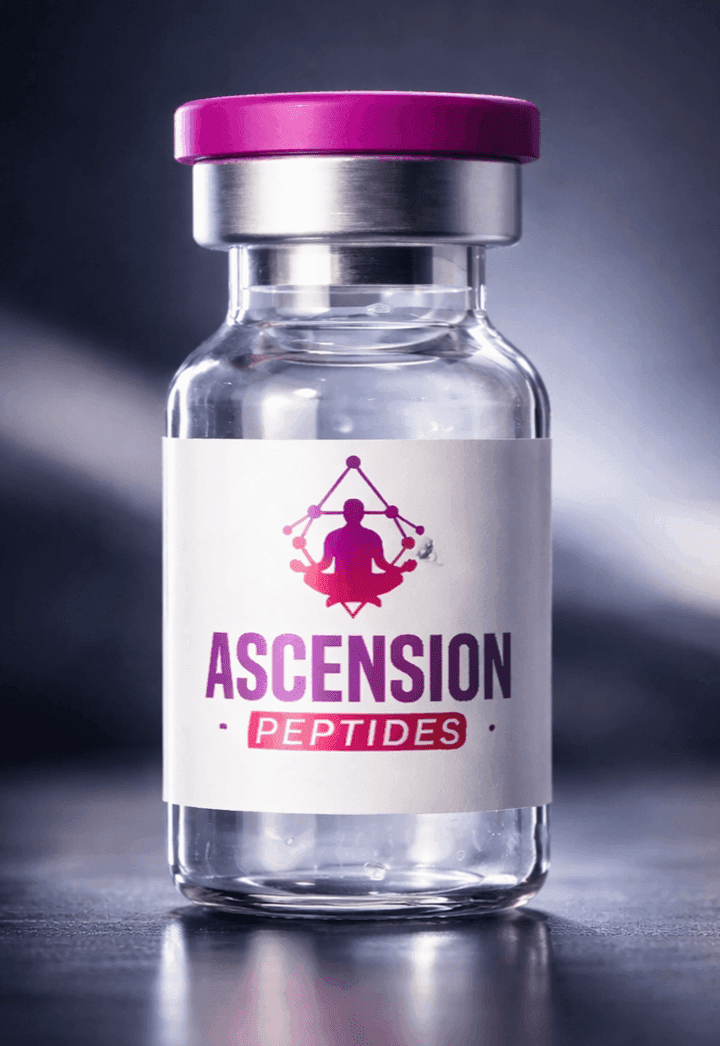
Ascension Peptides is the supplier we recommend for retatrutide, listed as Ascension's R-10 (retatrutide, 10 mg) — every batch is third-party tested, and batch-specific certificates are published in a public COA library. It ships within the United States only.
→ View Retatrutide at Ascension Peptides
Summary: Reconstitution in 60 Seconds
- Wipe both vial tops with alcohol swabs
- Draw your chosen BAC water volume into an insulin syringe
- Insert needle at an angle against the glass wall of the peptide vial
- Slowly push water down the glass — don't squirt onto the powder
- Swirl gently for 60 seconds; repeat after 5 minutes
- Inspect: solution should be clear and colorless
- Label with date and concentration
- Refrigerate immediately — good for 28 days
That's it. The chemistry is straightforward; the habit of doing it consistently is what actually matters.
This content is provided for informational purposes. Retatrutide is currently in clinical development and not approved by the FDA. Consult a qualified healthcare provider before using any peptide compound. Nothing on this page constitutes medical advice.