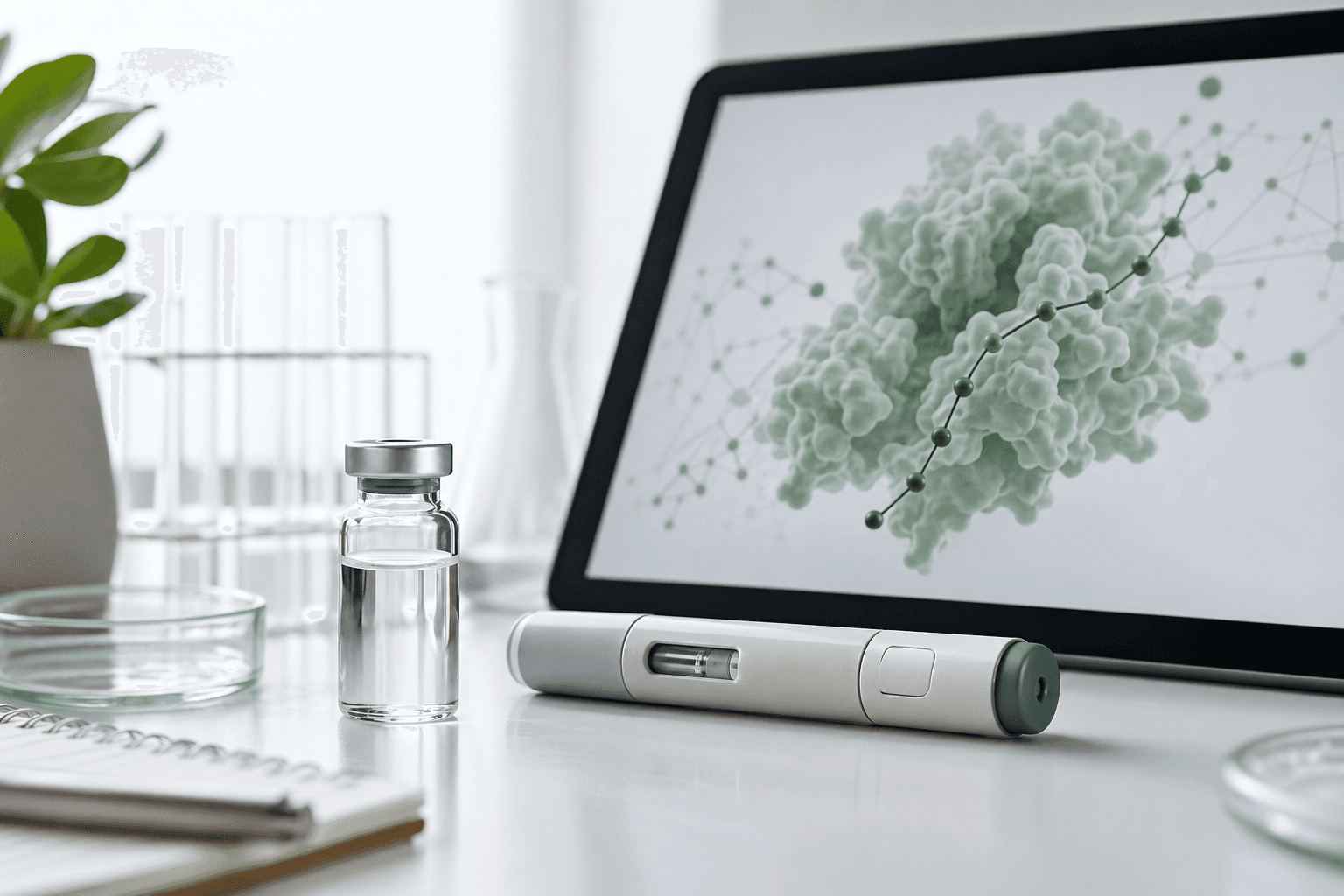
GLP-1 (glucagon-like peptide-1) is a gut hormone your intestine releases after you eat. In plain terms, it tells the body a meal has arrived: it nudges the pancreas to release insulin, calms the hormone that raises blood sugar, slows the stomach, and signals the brain that you are full.
What is GLP-1 in plain English?
GLP-1 stands for glucagon-like peptide-1. It is a short hormone made mainly by L-cells in the lining of your lower small intestine and colon. When food, especially carbohydrates and fats, reaches the gut, these cells secrete GLP-1 into the bloodstream within minutes. It is one of two main "incretin" hormones, the body's signal that nutrients are on the way and the system should prepare to handle them, as described in the review Biology of Incretins: GLP-1 and GIP in Gastroenterology.
Because natural GLP-1 breaks down in roughly two minutes, the body uses it as a fast, short-lived messenger rather than a long-acting one. That short lifespan is exactly what modern medicines are designed to get around.
What does GLP-1 do to insulin?
GLP-1's headline job is boosting insulin, but with an important safety feature: the effect is glucose-dependent. GLP-1 prompts the pancreas to release more insulin only when blood sugar is actually rising after a meal. When glucose is normal or low, the signal quiets down.
This is why GLP-1 itself rarely causes dangerous low blood sugar. It amplifies the meal response instead of forcing insulin out around the clock. Over time it also supports the health of the insulin-producing beta cells in animal studies, helping them stay responsive.
A useful way to picture it: GLP-1 acts like a smart thermostat for insulin. Instead of running constantly, it switches the heat up only when a meal pushes glucose higher, then backs off as glucose settles. That built-in restraint is one reason the natural hormone, and the drugs that copy it, are considered safer on blood sugar than therapies that release insulin no matter what.
How does GLP-1 affect blood sugar from the other side?
Insulin is only half the story. GLP-1 also suppresses glucagon, the hormone that tells your liver to release stored sugar into the blood. In people with high blood sugar, too much glucagon keeps glucose elevated even between meals.
By dialing glucagon down when it is not needed, GLP-1 stops the liver from over-supplying sugar, which lowers blood glucose from a second direction. This dual push and pull is covered in the relationship between GLP-1 and glucagon. Like the insulin effect, glucagon suppression is glucose-dependent and eases off when sugar drops.
Why does GLP-1 slow down your stomach?
GLP-1 slows gastric emptying, the rate at which the stomach passes food into the small intestine. A landmark human study in the American Journal of Physiology showed that GLP-1 markedly delays both the lag phase and the speed of stomach emptying.
Two things follow from a slower stomach:
- Glucose enters the bloodstream more gradually, so post-meal spikes are flatter.
- Food stays in the stomach longer, so you feel full sooner and for longer.
This is also why nausea is the most common complaint when GLP-1 signaling is amplified by medication, since an over-slowed stomach can feel uncomfortable.
Slowed emptying is a big part of why GLP-1 feels so different from simply eating less by willpower. The brake on digestion means a normal-sized meal stretches the stomach for longer and triggers fullness signals sooner, so the urge to keep eating fades on its own. With the natural hormone this effect is mild and brief; with long-acting drugs it is much stronger and more sustained.
How does GLP-1 reduce appetite and hunger?
GLP-1 does not act only in the gut. Receptors for it sit in appetite-regulating regions of the brain, including the hypothalamus and the brainstem. When GLP-1 reaches these areas, or is made locally in the brain, it sends a satiety signal that reduces hunger and food intake.
The result is a smaller appetite and earlier fullness, which is the main reason GLP-1 pathways are so powerful for weight management. The broader effects on hunger, reward, and mood are explored in GLP-1 brain effects.
Does GLP-1 affect more than appetite?
Yes. GLP-1 receptors are also found in the heart, blood vessels, and kidneys, and research links GLP-1 signaling to modest effects on blood pressure and cardiovascular health. Appetite and glucose control are the best-understood roles, but the hormone's reach is wider than digestion alone.
What do all of GLP-1's jobs look like together?
| GLP-1 action | What it does | Net effect |
|---|---|---|
| Stimulates insulin | Glucose-dependent insulin release | Lowers post-meal blood sugar |
| Suppresses glucagon | Less liver sugar output | Lowers blood sugar between meals |
| Slows gastric emptying | Food leaves stomach slower | Flatter glucose spikes, longer fullness |
| Acts on the brain | Signals satiety | Less hunger, lower food intake |
Together these add up to a hormone that lowers blood sugar and curbs appetite at the same time, which is why it became such an important drug target.
What happens when GLP-1 signaling is blunted?
In type 2 diabetes, research suggests the body's response to GLP-1 can be weaker than normal, so meals are met with less of the insulin boost and glucagon braking that should follow. The hormone is still released, but its message lands softly. The result is higher post-meal glucose and, often, less of the natural fullness signal that helps regulate appetite.
This is part of the rationale behind GLP-1 medicines: rather than replacing a missing hormone outright, they flood the same receptors with a long-lasting copy, restoring and exaggerating the signal the body is no longer responding to strongly enough.
How is the GLP-1 hormone turned into medicine?
Because natural GLP-1 disappears in about two minutes, drug developers built modified versions that resist breakdown and last days instead. These GLP-1 receptor agonist medications copy the hormone's actions but stay active far longer, producing stronger and steadier appetite and glucose effects. The trade-off is that amplified signaling also amplifies side effects, mostly the gastrointestinal symptoms tied to slowed digestion.
Frequently Asked Questions
Is GLP-1 the same as insulin?
No. GLP-1 is a gut hormone that tells the pancreas when to release insulin and when to ease off. Insulin is the hormone that actually moves glucose into cells. GLP-1 manages the response; insulin carries it out.
Does everyone make GLP-1 naturally?
Yes. Your intestine releases GLP-1 after meals whether or not you take any medication. Some research suggests the response can be blunted in type 2 diabetes, which is part of why mimicking it with drugs is effective.
Why does GLP-1 cause weight loss?
It reduces appetite through brain receptors and slows stomach emptying so you feel full sooner and eat less. Lower food intake over time leads to weight loss.
How long does natural GLP-1 last in the body?
Only about two minutes. An enzyme called DPP-4 breaks it down quickly, which is why the natural hormone acts in short bursts and why long-acting drug versions were developed.
This article is for general education only and is not medical advice; talk with a licensed clinician before starting or changing any medication.
References
- Drucker DJ, Nauck MA. Biology of Incretins: GLP-1 and GIP. Gastroenterology 2007. https://www.gastrojournal.org/article/S0016-5085(07)00580-X/fulltext
- Nauck MA, et al. GLP-1 slows solid gastric emptying and inhibits insulin, glucagon, and PYY release in humans. American Journal of Physiology 1999. https://journals.physiology.org/doi/full/10.1152/ajpregu.1999.277.3.R910
- Collins L, Costello RA. Glucagon-Like Peptide-1 Receptor Agonists. StatPearls, NCBI Bookshelf. https://www.ncbi.nlm.nih.gov/books/NBK551568/