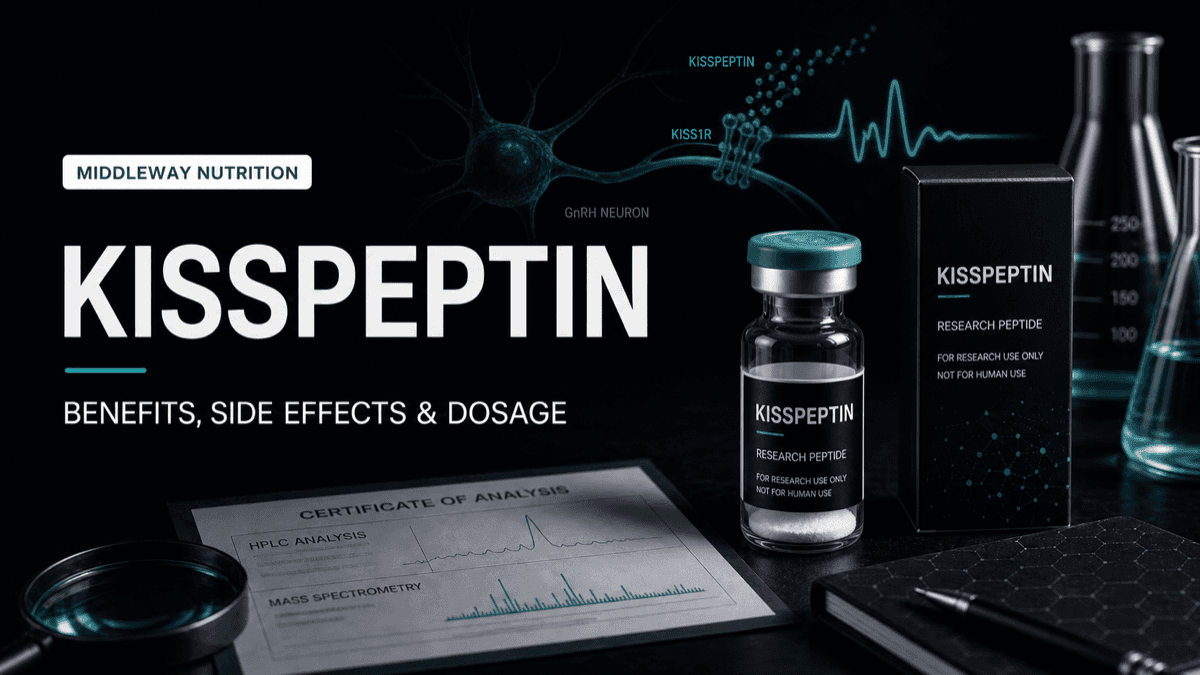
Kisspeptin for sale is research-use-only material rather than a medicine, whatever the listing says. Nobody audits what goes into the vial, so the quality-control burden is yours. Below is how to judge the price you are quoted, then the verification work that actually separates a real vial from a repackaged one.
Key Takeaways
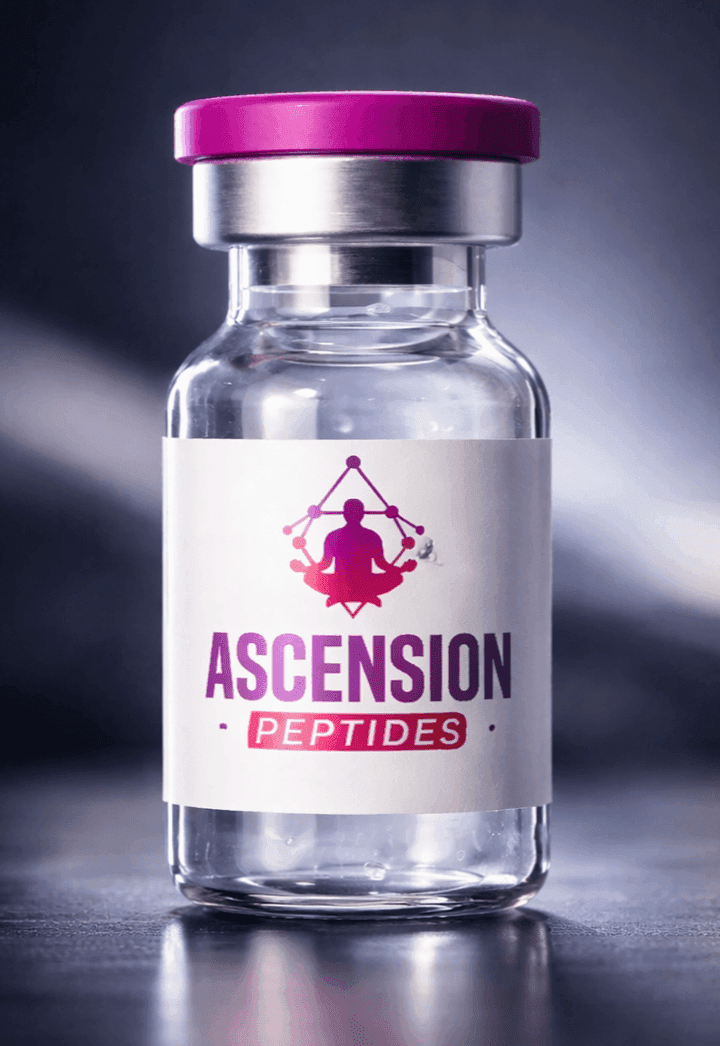
- Our pick is Ascension Peptides: Kisspeptin (10mg) at $60.00 USD, with batch-specific third-party certificates in a public library
- Kisspeptin-10 is cheap to synthesize, so honest per-vial prices cluster in a tight band; build that band yourself from vendors that publish per-batch testing
- Research-use-only: no prescription route, no FDA oversight of manufacturing, no recall system if a batch is bad
- A batch-specific COA is the minimum bar: it must name the lot on your vial, report HPLC purity, and confirm identity by mass spec
- Mass spec matters more than usual here, because Kisspeptin-10 is a short fragment that is cheap to mimic with a wrong-sequence peptide
- Purity and peptide content are different numbers. A vial can be 99% pure by HPLC and still be underfilled once salt and water are subtracted
Comparing sellers head to head is a different job than this page; our Kisspeptin vendor comparison guide covers sourcing options in detail.
Our pick for Kisspeptin: Ascension Peptides
Ascension Peptides is where we would start. It lists Kisspeptin (10mg) at $60.00 USD, which works out to $6.00 per milligram. New customers get 50% off with code PEPTIDEDECK, and buying 3, 5 or 10 vials saves a further 3%, 5% or 10%.
The reason it is our pick is the paperwork this page tells you to demand. Every Ascension batch is independently tested by a third-party lab, currently Kovera Labs (older batches were tested by MZ Biolabs in Tucson). The Kovera certificates report HPLC purity, LC-MS identity, net content in mg per vial, endotoxin, a rapid sterility screen and heavy metals, so they cover the peptide-content and endotoxin checks that most listings leave out. The pass mark is >98% purity, and 85 batch-specific certificates are published in a public certificate library. We checked one Kovera report against the lab's own records, and it matched.
Know the limits before you order. Ascension ships within the United States only, with free shipping on orders over $250. All sales are final, though damaged or incorrect items are replaced if reported quickly. Match the certificate to the lot on your vial all the same, exactly as described below.
Is the price reasonable?
Kisspeptin-10 is a short peptide and cheap to synthesize, which keeps honest pricing in a fairly tight band. Rather than trusting a single number, build the band yourself:
- Open the 5mg and 10mg listings at four or five vendors that actually publish batch COAs, and write down the full price per vial.
- Ignore the outliers at both ends. The cluster in the middle is the working market rate for lab-tested material.
- Treat bulk and multi-vial discounts as normal. A modest per-unit reduction at higher counts is ordinary commerce, not a warning sign.
Then use price as a diagnostic rather than a goal. Third-party analysis costs real money on every batch, so a listing far below the cluster usually means testing was skipped, the fill is short, or the material is not what the label says. Paying above the cluster guarantees nothing either. Only the paperwork does.
What you are actually buying
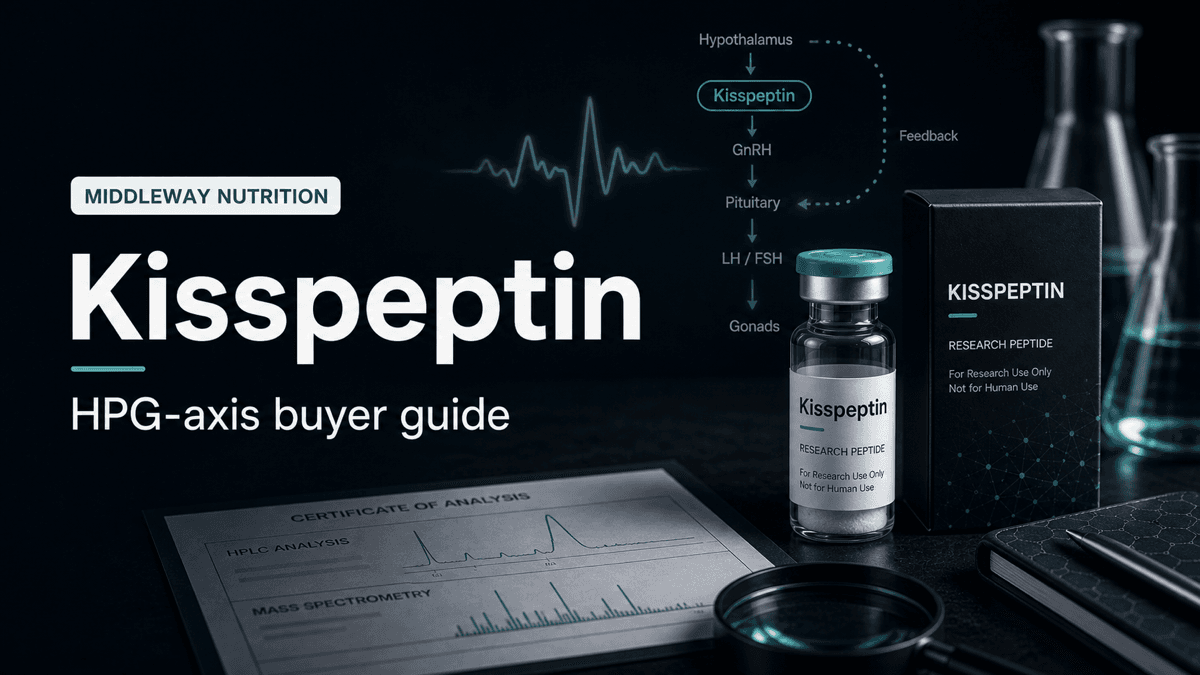
Kisspeptin is a neuropeptide encoded by the KISS1 gene. It binds the KISS1R receptor (GPR54) on GnRH neurons at the head of the hypothalamic-pituitary-gonadal axis, prompting GnRH release, which drives pituitary secretion of LH and FSH. That upstream position is the source of research interest. Human work exists in academic settings, most visibly from reproductive endocrinology groups at Imperial College London, but remains investigational.
Nearly every vial sold is Kisspeptin-10, the ten-amino-acid C-terminal fragment that carries the receptor activity (sequence YNWNSFGLRF-amide, molecular weight around 1,302 Da), with a half-life on the order of minutes. Kisspeptin-54 is the longer parent form, rarely stocked outside clinical research supply. A listing vague about which one it sells is itself a data point.
When you see Kisspeptin for sale on a vendor site, you are looking at a product marketed for laboratory use and labeled not for human consumption. That phrase is the legal footing the whole market stands on, with practical consequences:
- No agency verifies purity, sterility, dose accuracy, or endotoxin load before it ships.
- The seller alone decides what testing to run and what to publish.
- There is no pharmacist, no chain of custody, no adverse-event reporting pathway.
- Import rules vary. Material shipping freely inside the US can be detained at other borders.
Kisspeptin is not a scheduled controlled substance in the US when sold for research. But legal to sell is not the same as approved, safe, or verified.
Reading a Kisspeptin COA properly
Most buying advice stops at "look for a COA." Here is what to actually read.
Match the lot number. A product-level certificate describes a product line and may have been run on a batch from a year ago. A batch-specific certificate names the exact lot printed on your vial. If those two strings do not match, the document says nothing about what you received.
Check the analysis date. Recent and lot-specific. An undated COA is decor.
HPLC purity. Chromatography reports what fraction of the sample is the intended compound. Look for 98% or better; 99%+ is common for a fragment this short. Below 95% is not research-grade.
Mass spectrometry identity. The check people skip, and the one that matters most here. HPLC can report beautiful purity for the wrong molecule. Mass spec confirms the observed mass matches the expected 1,302 Da. A truncated or wrong-sequence peptide passes visual inspection but will not match on mass.
Peptide content, if reported. Almost no vendor page explains this. Lyophilized peptides carry counter-ions (acetate or TFA) plus residual moisture. Purity is the share of peptide that is the right peptide; net content is how much of the powder is peptide at all. A 99% pure vial can still deliver less than the labeled milligrams.
Endotoxin data. A LAL result is a real differentiator; most listings omit it.
Third-party testing: independent, or it does not count
In-house testing is a vendor grading its own homework. Independent analysis means the batch went to an outside lab whose report can be checked with that lab, not merely downloaded from the seller.
Labs appearing repeatedly here include Janoshik Analytical and Colmaric Analyticals. A familiar lab name on a PDF is not the finish line, because a PDF is a file anyone can edit. Where the lab offers a verification portal or report number, use it. No findable lab, or no report ID and lot number, means the claim is unsupported. One more tell: a serious COA shows the actual chromatogram and spectrum, not just a summary table.
What physically arrives
A small sealed glass vial with a flip-top cap, holding white to off-white lyophilized powder as a thin cake or barely visible film. At 10mg the quantity is small, so a near-empty-looking vial is normal, not evidence of being cheated. Diluent is rarely included.
The label should carry the compound name, quantity, and lot number. Handwritten labels or a vial arriving loose without protective packaging point to corner-cutting upstream. Sealed powder stores cool, dry, and dark; reconstituted material is refrigerated.
Red flags that mean walk away
- No COA, or one with no lot number. No document, no purchase.
- One certificate reused across every product. Marketing, not a test result.
- Purity claimed on the page but absent from the document. A "99.9% pure" banner with no chromatogram is a claim, not data.
- No mass spec. For a fragment this short, identity confirmation is not optional.
- Human dosing instructions on a research-use-only listing. A seller explaining how to inject what it cannot legally sell for injection will say anything.
- Crypto-only or wire-only payment. It removes your chargeback protection, which is often the point.
- Prices far under the market band. Cheap is a symptom.
- No traceable reputation. No history, no reviews, no footprint at all.
Pre-purchase checklist
- Confirm the form listed: Kisspeptin-10 or Kisspeptin-54.
- Open the COA before adding to cart. It must be public and lot-specific.
- Match the COA lot number to the lot on the vial.
- Confirm HPLC purity of 98%+ with a chromatogram shown.
- Confirm mass spec identity near 1,302 Da.
- Check the testing lab is real and independently findable.
- Check the price sits inside the normal band.
- Pay with a method that preserves a dispute path.
- On arrival: sealed vial, printed label, legible lot number.
Legal and safety reality
Kisspeptin has not been approved by the FDA or comparable regulators for any condition. Human research exists, but under controlled clinical conditions with nothing in common with buying powder online. There is no prescription route either, so no clinician reviews your labs or hormone status. Kisspeptin sits at the top of a hormone axis, and anything acting there is not a casual compound. Competitive athletes should also note that hormone-axis-active substances fall within anti-doping frameworks.
Frequently Asked Questions
How much does Kisspeptin cost?
Kisspeptin-10 is one of the less expensive research peptides, and prices cluster closely for a given vial size at vendors publishing per-batch third-party testing. Build the band yourself by comparing four or five of them. Anything far under that cluster usually reflects skipped testing or a short fill.
Is Kisspeptin legal to buy?
Kisspeptin is not a controlled substance in the US and sells legally as a research chemical labeled not for human consumption. That is a statement about commerce, not approval or safety. Import rules differ by country.
How do I know Kisspeptin is real?
Documentation, not appearance. Require a batch-specific COA whose lot matches your vial, HPLC purity at 98%+ with a visible chromatogram, and mass spec confirming a mass near 1,302 Da. Then confirm the lab exists independently.
Do I need a prescription for Kisspeptin?
No, because there is no prescription version. It is not an approved medicine, so no pharmacy dispenses it and no insurance covers it. That is less oversight, not more convenience.
What is the difference between purity and peptide content?
Purity is the share of peptide present that is the correct sequence. Peptide content is how much of the powder mass is peptide at all, after salts and moisture. Most vendors report only the first.
Medical disclaimer: Kisspeptin is sold for research use only. It is not approved by the FDA or any comparable regulator for any condition and is not for human or animal consumption. This article is informational, not medical advice, and not an endorsement of self-administering an unapproved compound. Consult a qualified clinician about any hormone-related concern.