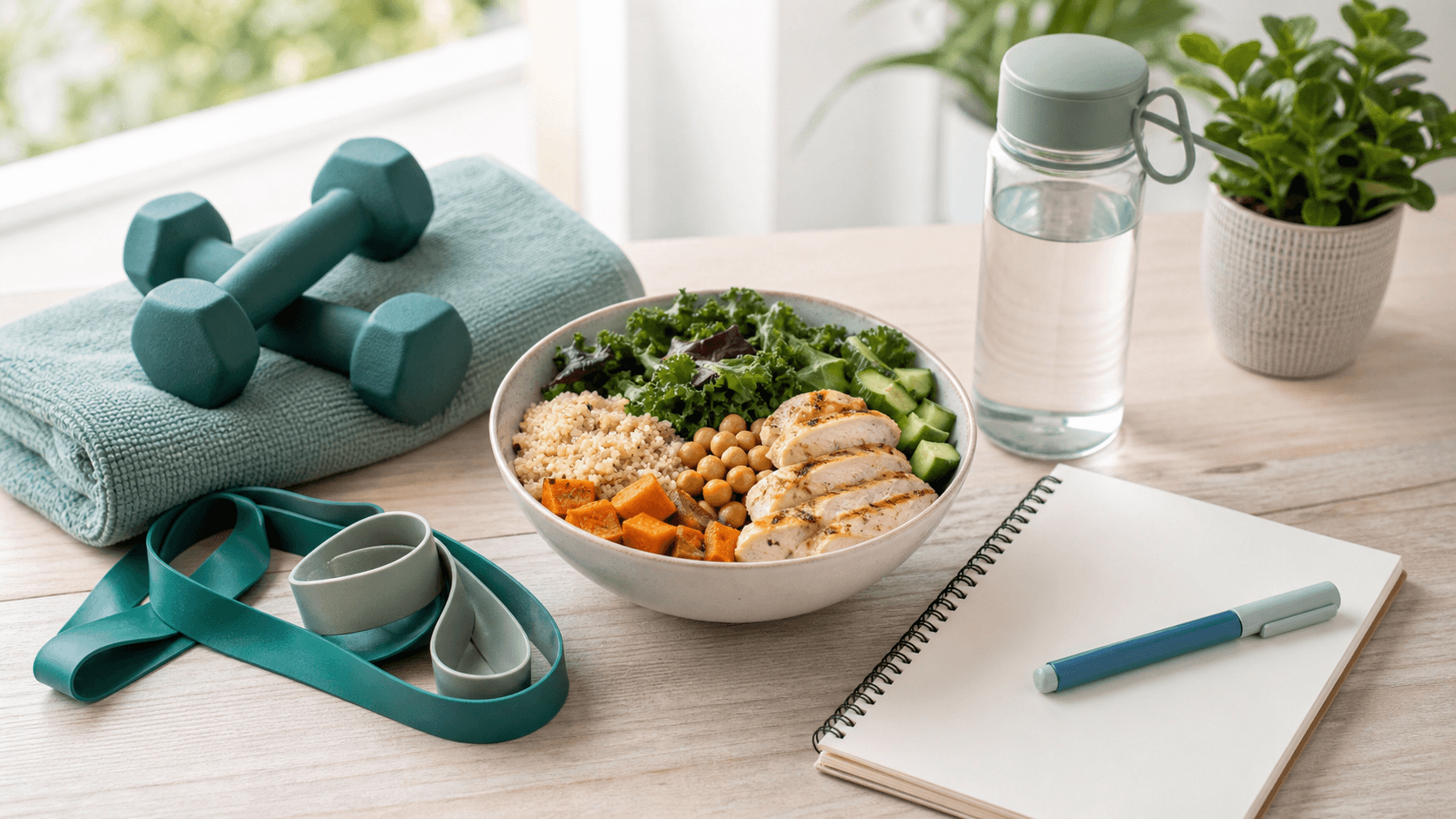
You can build or preserve muscle while using a GLP-1 medication, but appetite suppression changes the execution, because without a deliberate plan a meaningful share of the weight lost on these drugs can come from lean mass.
Short answer: prioritize protein, lift consistently, avoid crash-level under-eating, sleep enough, and progress slowly. The medication does not prevent muscle building, but low intake can.
Muscle Checklist
| Habit | Practical target |
|---|---|
| Protein | Spread across 2 to 4 meals or shakes |
| Strength training | 2 to 4 sessions weekly |
| Progression | Add reps, load, or sets gradually |
| Recovery | Sleep and rest days |
| Calories | Avoid chronic under-eating |
| Tracking | Strength, measurements, and function, not scale only |
Best Training Focus
Use major movement patterns: squat or leg press, hinge, row, press, pulldown, carry, and core. Start conservatively if nausea, dizziness, or low intake are active.
Internal Reading Path
The GLP-1 Nutrition Filter
For can you build muscle on GLP 1, the goal is not to create a stricter diet. The goal is to make a smaller appetite nutritionally useful. A good GLP-1 plan protects protein, fluids, fiber, micronutrients, and muscle while reducing the foods or habits that trigger side effects.
A helpful filter is to ask four questions before a meal: Where is the protein? Is the portion small enough to tolerate? Is there a fiber source that will not worsen bloating? Have fluids been steady today? If the answer is no to several of those questions, the meal may be filling but not supportive.
| Priority | Practical examples |
|---|---|
| Protein | Greek yogurt, eggs, fish, poultry, tofu, cottage cheese, beans, protein shake |
| Gentle carbs | Rice, oats, potatoes, toast, fruit, soup noodles |
| Fiber | Berries, oats, cooked vegetables, beans, chia, ground flax |
| Fluids | Water, low-sugar electrolytes, broth, non-carbonated drinks |
| Tolerance | Smaller meals, slower eating, lower-fat choices during escalation |
Small Appetite Meal Strategy
When appetite is very low, trying to eat a normal-sized meal can worsen nausea or reflux. A smaller meal schedule often works better. Think in protein anchors rather than large plates: yogurt plus fruit, eggs plus toast, soup with shredded chicken, tofu with rice, cottage cheese with berries, or a smoothie with protein and a gentle carbohydrate.
If intake is too low for several days, symptoms like fatigue, dizziness, constipation, headache, poor workouts, and hair shedding risk can become more likely. That is a reason to discuss the dose and nutrition plan, not a sign that the medication is working perfectly.
Adjustments by Side Effect
| If this is happening | Try discussing or testing |
|---|---|
| Nausea | Smaller meals, lower fat, slower eating, bland protein |
| Constipation | More fluids, gradual fiber, regular meals, movement |
| Diarrhea | Lower-fat reset, electrolytes, review sugar alcohols |
| Reflux | Earlier dinner, less carbonation, stay upright after meals |
| Fatigue | Protein, hydration, electrolytes, sleep, dose review |
Questions to Bring to the Prescriber or Pharmacist
- Does my current dose and timing match the official label or my prescription?
- Are my symptoms or concerns expected at this stage, or do they suggest changing the plan?
- Should I delay escalation, restart lower, hold steady, or be evaluated before continuing?
- Are any of my other medications increasing risk, especially insulin, sulfonylureas, blood pressure medication, diuretics, or drugs affected by delayed gastric emptying?
- What exact symptoms should make me call urgently or seek same-day care?
- If cost or supply interrupts therapy, what is the safest backup plan?
Bottom Line for Can You Build Muscle on GLP-1? Yes, But the Plan Has to Be Intentional
The practical answer is rarely just one number, food list, or yes-or-no rule. For can you build muscle on GLP 1, the safest approach is to combine the direct answer with the variables that change it: product type, dose, timing, side effects, storage history, other medications, and the person's medical context. When those variables are unclear, the best next step is to ask the prescriber or pharmacist before acting.
Additional Scenarios Readers Commonly Compare
| Scenario | How to think about it |
|---|---|
| Symptoms started after a dose increase | Treat escalation as a likely contributor and ask whether to hold the dose longer |
| The plan changed because of supply | Confirm whether a restart or lower dose is safer after the gap |
| Advice online conflicts with the label | Use the label, pharmacy, and prescriber as the authority |
| The medication is compounded | Verify concentration, BUD, storage, sterility, and dose instructions directly with the pharmacy |
| The goal is maintenance | Prioritize sustainable intake, resistance training, monitoring, and follow-up |
More FAQ
Why do different websites give different answers?
Most differences come from assuming different products, concentrations, patient goals, dose histories, or risk tolerance. A chart or tip can be mathematically correct but still wrong for a specific prescription.
What information should I keep in my notes?
Keep the medication name, dose, date taken, pharmacy label, concentration if vial-based, side effects, food and fluid changes, weight trend, and any clinician instructions. This makes follow-up safer and more specific.
When is it better not to troubleshoot at home?
Do not troubleshoot at home when symptoms are severe, rapidly worsening, involve chest pain or fainting, include repeated vomiting or dehydration, suggest allergic reaction, or involve a possible dosing or storage error.
Detailed Reader Scenarios
A stronger page for can you build muscle on GLP 1 needs to answer the situations people actually bring to search. The same keyword can represent a careful planner, someone with active symptoms, someone whose pharmacy instructions are confusing, or someone who is trying to decide whether the issue is urgent. The sections below turn the topic into practical scenarios without replacing medical judgment.
Scenario 1: Appetite is low but nutrition is poor
Low appetite can make it easy to under-eat protein and micronutrients. A day of crackers, coffee, and a few bites of dinner may keep calories low, but it does not support muscle, bowel function, or energy. The goal is not to force large meals. The goal is to make small meals count.
Scenario 2: Side effects are driving food choices
Nausea, reflux, constipation, and diarrhea each need a different food strategy. High fiber may help constipation but worsen bloating if added too fast. Fatty foods may be calorie-dense but can worsen reflux or nausea. Protein shakes may help low appetite but can worsen diarrhea if they contain sugar alcohols.
Scenario 3: The scale is moving but strength is dropping
Rapid weight loss with poor protein and no resistance training can reduce lean mass. Track strength, steps, waist, energy, and how clothes fit, not only weight. If workouts are getting worse every week, the plan may need more protein, fluids, carbohydrates around training, or a slower loss rate.
Practical Meal Architecture
| Small appetite meal | Why it works |
|---|---|
| Greek yogurt plus berries | Protein, calcium, fiber, soft texture |
| Egg plus toast plus fruit | Protein and gentle carbohydrate |
| Chicken soup with rice | Fluids, sodium, protein, easy digestion |
| Tofu or fish with potatoes | Protein and potassium-rich carb |
| Protein smoothie | Useful when chewing feels hard |
Weekly Check-In
Once per week, review protein, fluids, bowel movements, side effects, strength training, sleep, and weight trend. If two or more are worsening, the answer is usually not more restriction. It is a plan adjustment.
Summary
Building muscle on GLP-1 is possible when the plan protects protein, training progression, hydration, and recovery instead of relying on weight loss alone; with adequate protein and resistance training, the loss is largely fat rather than muscle.
References
- Changes in lean body mass with glucagon-like peptide-1-based therapies and mitigation strategies (PubMed, PMID 38937282)
- Weight loss with GLP-1 medicines does not result in a disproportionate loss of muscle mass or function in obese mice and humans (PubMed, PMID 41850248)
- Semaglutide — StatPearls (NCBI Bookshelf): appetite regulation and mechanism of action