
Compounded tirzepatide is a custom-mixed version of the same active ingredient found in Mounjaro and Zepbound, prepared by pharmacies rather than by Eli Lilly. It exploded in popularity during the tirzepatide shortage, but after the FDA declared that shortage resolved in late 2024, large-scale compounding of copies became unlawful through 2025.
What exactly is compounded tirzepatide?
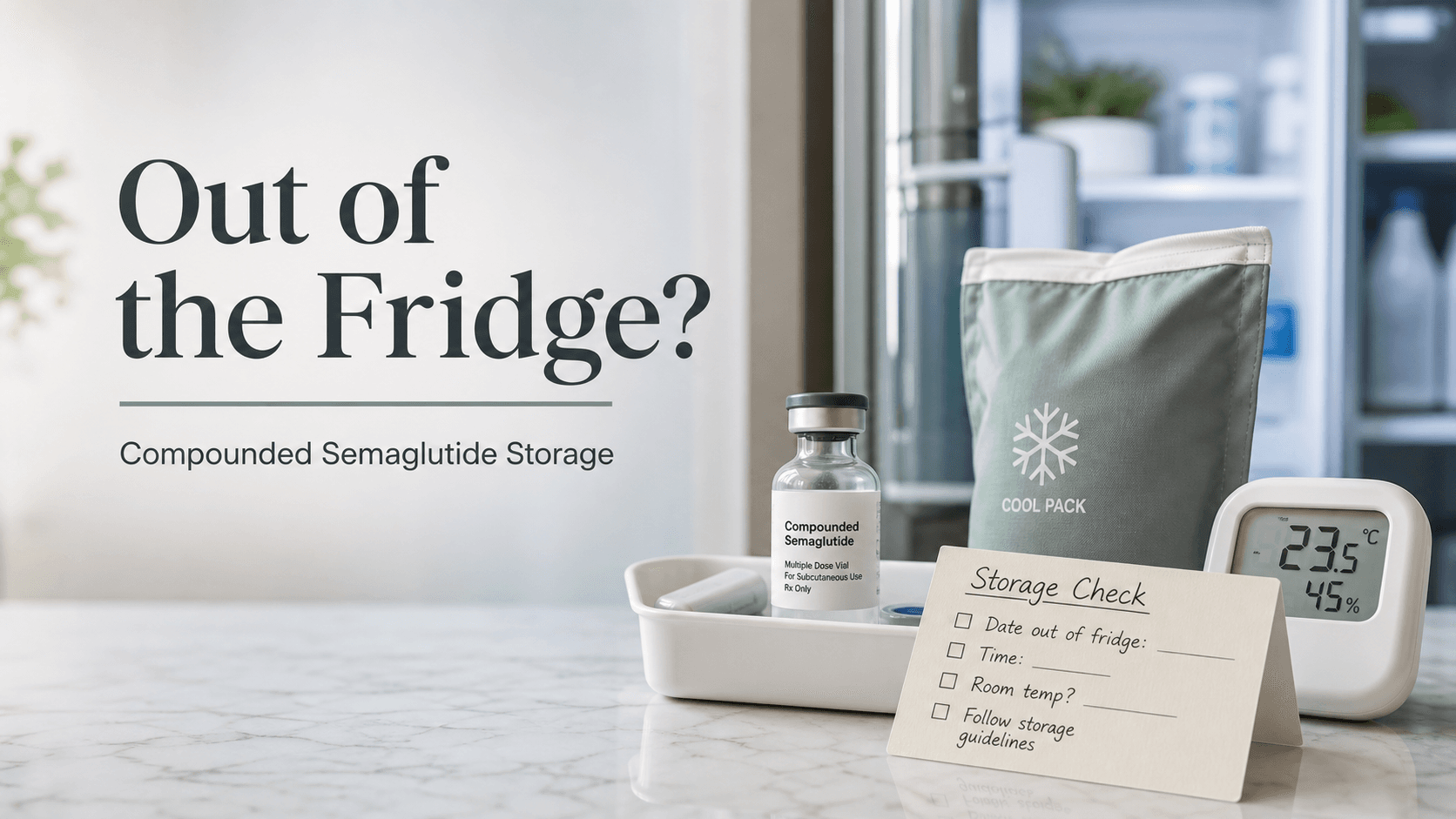
Compounding is the practice of a licensed pharmacy mixing a medication to order, typically from raw active pharmaceutical ingredient, rather than dispensing a manufacturer's finished product. Compounded tirzepatide is usually supplied as a multi-dose vial plus syringes instead of a prefilled pen, and it is often combined with additives such as vitamin B6 or niacinamide. Crucially, compounded products are not FDA-approved; the agency does not review them for safety, effectiveness, or quality before they reach patients. You will see it written both ways, compounded tirzepatide and compound tirzepatide, and shortened to "tirze" in patient forums; all three point at the same pharmacy-mixed vial rather than a Lilly-filled pen.
Why did compounded tirzepatide exist in the first place?
US law lets pharmacies compound a drug that is essentially a copy of a commercial product only under narrow conditions, and one of those is when the brand drug is officially in shortage. Tirzepatide spent much of 2022 to 2024 on the FDA shortage list as demand for Mounjaro and Zepbound outran supply. During that window, 503A pharmacies and 503B outsourcing facilities could legally produce tirzepatide, and a large telehealth market grew up around cheaper compounded vials. That legal opening was always tied to the shortage continuing.
How was compounded tirzepatide typically supplied?
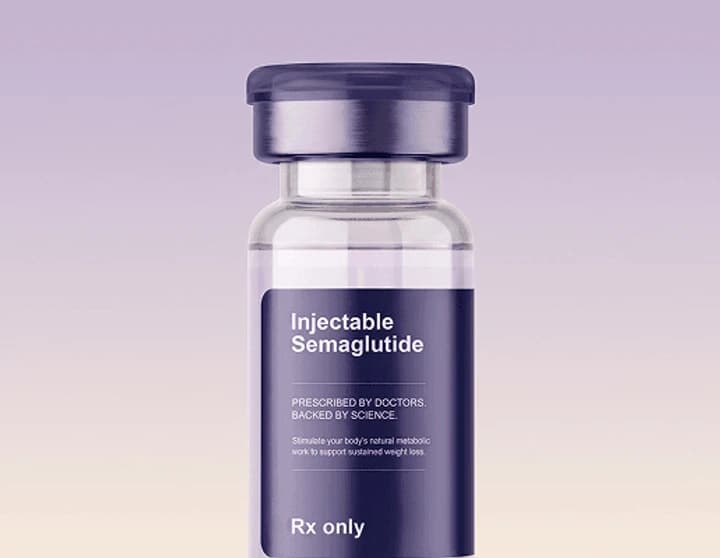
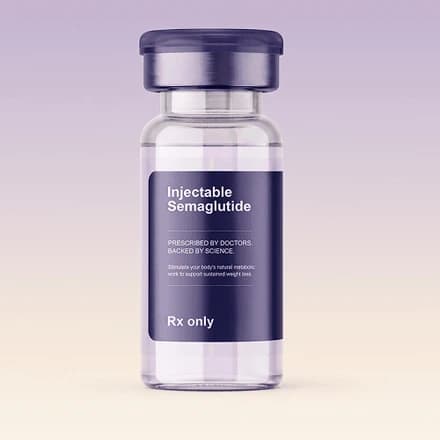
Unlike the brand pens, compounded tirzepatide almost always arrived as a glass vial of liquid, or occasionally a powder for the patient to reconstitute, alongside a pack of insulin syringes. Patients drew their own dose in units, which suits fine-tuned microdosing but introduces measurement error that prefilled pens are designed to eliminate. Many telehealth platforms paired the vials with a brief online intake and shipped on a monthly subscription, and that frictionless model is a large part of why the compounded market scaled so fast during the shortage. The flip side of the convenience was inconsistency: concentration, additives, and fill volume varied from one pharmacy to the next, so two people both using "compounded tirzepatide" might be on meaningfully different products at meaningfully different strengths.
What is compounded tirzepatide mixed with?
Two things go into a compounded vial: tirzepatide active pharmaceutical ingredient bought as bulk powder, and whatever the pharmacy dissolves it in. Brand Mounjaro is a preservative-free single-dose solution of tirzepatide with sodium chloride, sodium phosphate dibasic heptahydrate and water for injection, at pH 6.5 to 7.5. A multi-dose compounded vial has to survive a dozen needle punctures, so it is commonly made up with bacteriostatic water, which is water for injection carrying 0.9% or 1.1% benzyl alcohol as a preservative. Some pharmacies also add a vitamin, most often B12 (cyanocobalamin), B6, or niacinamide.
| What's in it | Brand Mounjaro / Zepbound | Typical compounded vial |
|---|---|---|
| Active ingredient | Tirzepatide, a 39-amino-acid modified peptide (C225H348N48O68, 4813.53 Da) | Tirzepatide API bought in bulk |
| Vehicle | Water for injection, sodium chloride, sodium phosphate buffer | Sterile or bacteriostatic water, pharmacy's choice |
| Preservative | None; the pen is single-dose and preservative-free | Usually benzyl alcohol at 9 or 11 mg/mL, carried in by bacteriostatic water |
| Added vitamins | None | Sometimes B12, B6, or niacinamide |
| Strength | Fixed, 2.5 mg to 15 mg per 0.5 mL | Varies by pharmacy; dosed in syringe "units" |
The added vitamin was never only a marketing flourish, it was a legal argument: a combination formula lets a pharmacy claim its product is not "essentially a copy" of the commercial drug. The FDA closed that door explicitly. In its April 1, 2026 reminder to compounders, the agency said it may still treat a combination such as semaglutide plus vitamin B12 as essentially a copy when the compounded product is given by the same route and both ingredient amounts land within 10% of the strengths of the respective commercially available products. The same reasoning applies to a tirzepatide-plus-vitamin vial. The exception is narrow: a prescriber determining and documenting that the change produces a significant difference for one identified patient. FDA added that it does not intend to act on the "regularly or in inordinate amounts" condition against a compounder filling four or fewer prescriptions of a given essentially-a-copy product in a calendar month.
What happened when the FDA ended the shortage?
The FDA removed tirzepatide from its shortage list on December 19, 2024, declaring supply resolved. That decision triggered a phased wind-down for compounders, because the legal basis for copying the drug disappeared along with the shortage.
| Date | Event |
|---|---|
| Dec 19, 2024 | FDA declares the tirzepatide shortage resolved |
| Feb 18, 2025 | Enforcement discretion ends for 503A pharmacies |
| Mar 19, 2025 | Enforcement discretion ends for 503B outsourcing facilities |
| Sep 5, 2025 | FDA green list import alert (66-80) targets GLP-1 active ingredients from unverified foreign sources |
| Apr 1, 2026 | FDA restates the 503A conditions; tirzepatide sits on neither the 503B bulks list nor the shortage list |
| Apr 30, 2026 | FDA proposes excluding tirzepatide from the 503B bulk-substances list, finding no clinical need |
| Jul 30, 2026 | Comment period on that proposal closes; final determination still pending |
Industry groups challenged these deadlines in federal court, but judges denied their requests to pause enforcement, so the dates held.
Is compounded tirzepatide legal in 2026?
The blanket, shortage-era permission to mass-produce tirzepatide copies is gone. What survives is the much narrower, long-standing authority for a 503A pharmacy to compound for an individual patient when there is a documented clinical need that the FDA-approved product cannot meet, for example a verified allergy to an inactive ingredient in the commercial pen. Routine "we compound tirzepatide for everyone" operations no longer have a legal shield. Because sourcing is now the central question, it is worth understanding how to evaluate a tirzepatide compounding pharmacy before trusting any supplier.
It is also worth separating "legal" from "FDA-approved." Even a properly compounded, patient-specific preparation remains a non-approved product; legality in that narrow case rests on documented medical necessity, not on the product having been tested and cleared like Mounjaro or Zepbound. That distinction matters if you are weighing safety, insurance coverage, or what happens if something goes wrong, since compounded drugs sit largely outside the manufacturer-liability and recall systems that cover approved medicines.
Where compound tirzepatide stands in 2026
As of August 2026, tirzepatide appears on neither the FDA drug shortage list nor the 503B bulks list, and that pair of absences is the whole story. Outsourcing facilities generally cannot compound from a bulk substance unless it is on the bulks list or the finished drug is in shortage at the time of compounding, distribution, and dispensing. Neither applies here.
FDA restated the ground rules on April 1, 2026. A 503A pharmacy may compound only for an individual patient on receipt of a prescription, and only where the result is not essentially a copy of a commercially available drug: same active ingredient, same or similar or easily substitutable strength, same route of administration. The only way past that test is a prescriber determining and documenting a change that makes a significant difference for that identified patient.
On April 30, 2026, the agency went further and proposed to keep semaglutide, tirzepatide, and liraglutide off the 503B bulks list outright, saying it found no clinical need for outsourcing facilities to compound them from bulk substance. Comments were originally due June 30, 2026, then extended to July 30, 2026 after an industry request for more time. No final determination has been published. If FDA finalizes as proposed, the 503B route closes permanently rather than resting on shortage-linked enforcement discretion, and the only lane left is one-off 503A compounding for a documented patient-specific need.
How does compounded tirzepatide compare to brand Mounjaro and Zepbound?
The active molecule can be the same, but the differences around it matter.
| Feature | Brand (Mounjaro / Zepbound) | Compounded tirzepatide |
|---|---|---|
| FDA approval | Yes | No |
| Manufacturer | Eli Lilly | Compounding pharmacy |
| Form | Prefilled single-dose pen | Multi-dose vial + syringes |
| Dose accuracy | Fixed, factory-controlled | Depends on user drawing units |
| Quality oversight | Full FDA review | Pharmacy/state oversight only |
| Typical cost | Higher (often insurance-dependent) | Often lower out of pocket |
Cost was the engine behind the entire compounded market. During the shortage, a month of compounded vials often ran a few hundred dollars or less through telehealth, while a brand pen without insurance could list at well over a thousand dollars a month. That gap is what pulled cash-pay patients toward vials in the first place. Since the shortage ended, Eli Lilly has expanded self-pay pricing on single-dose Zepbound vials to close some of that distance, so the savings that once offset the risk of an unapproved product are smaller now than they were at the peak of compounding.
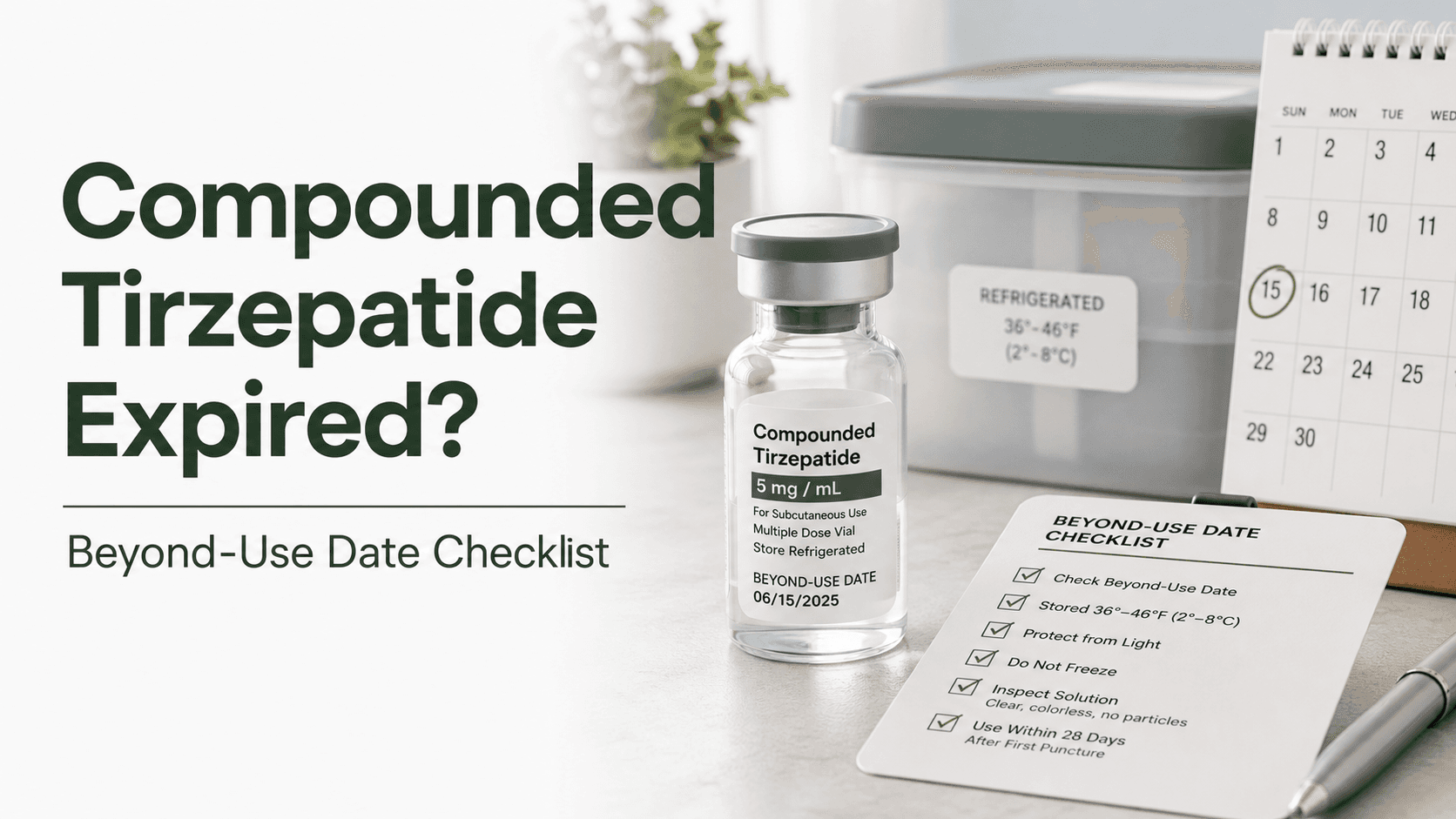
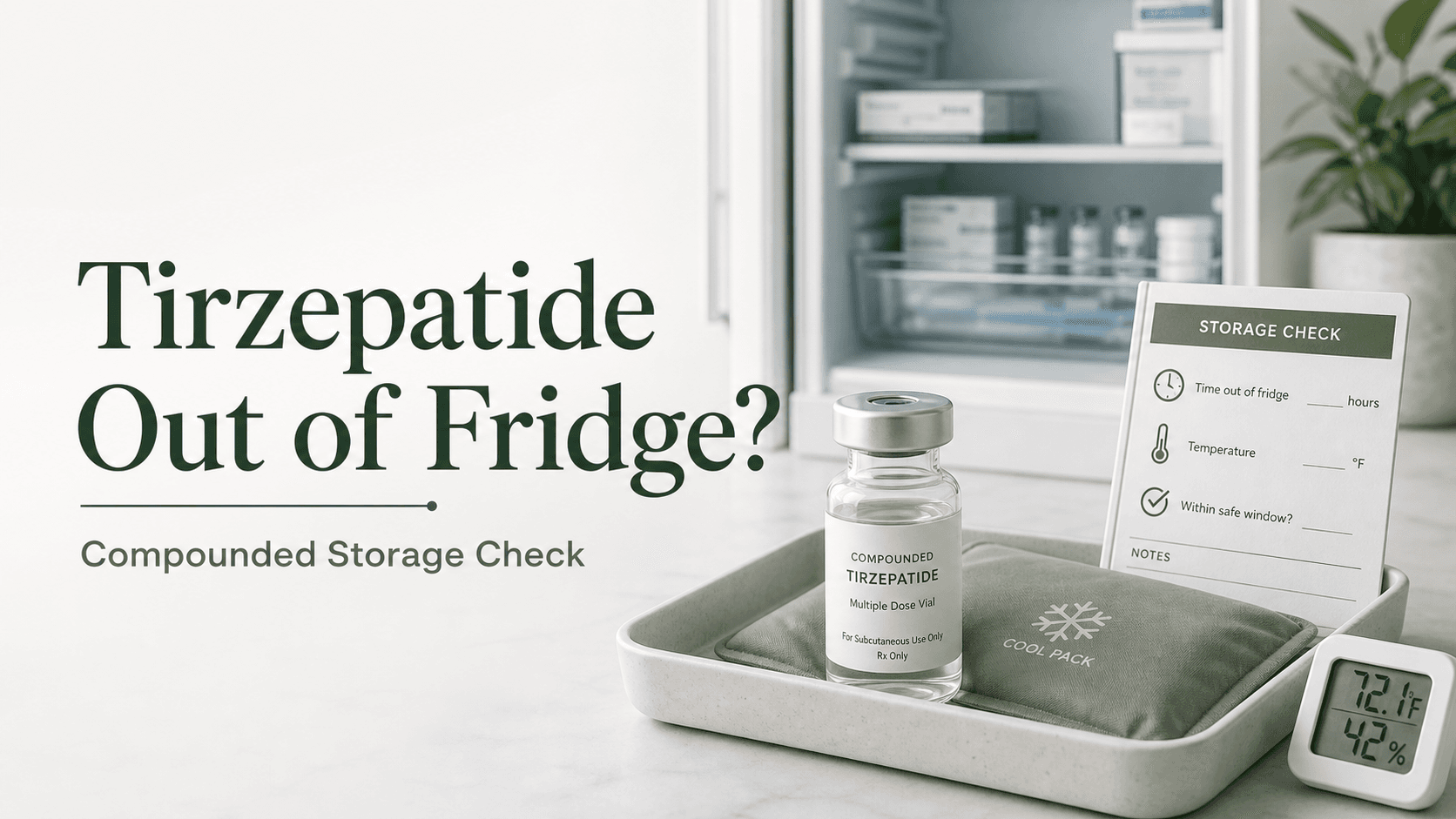
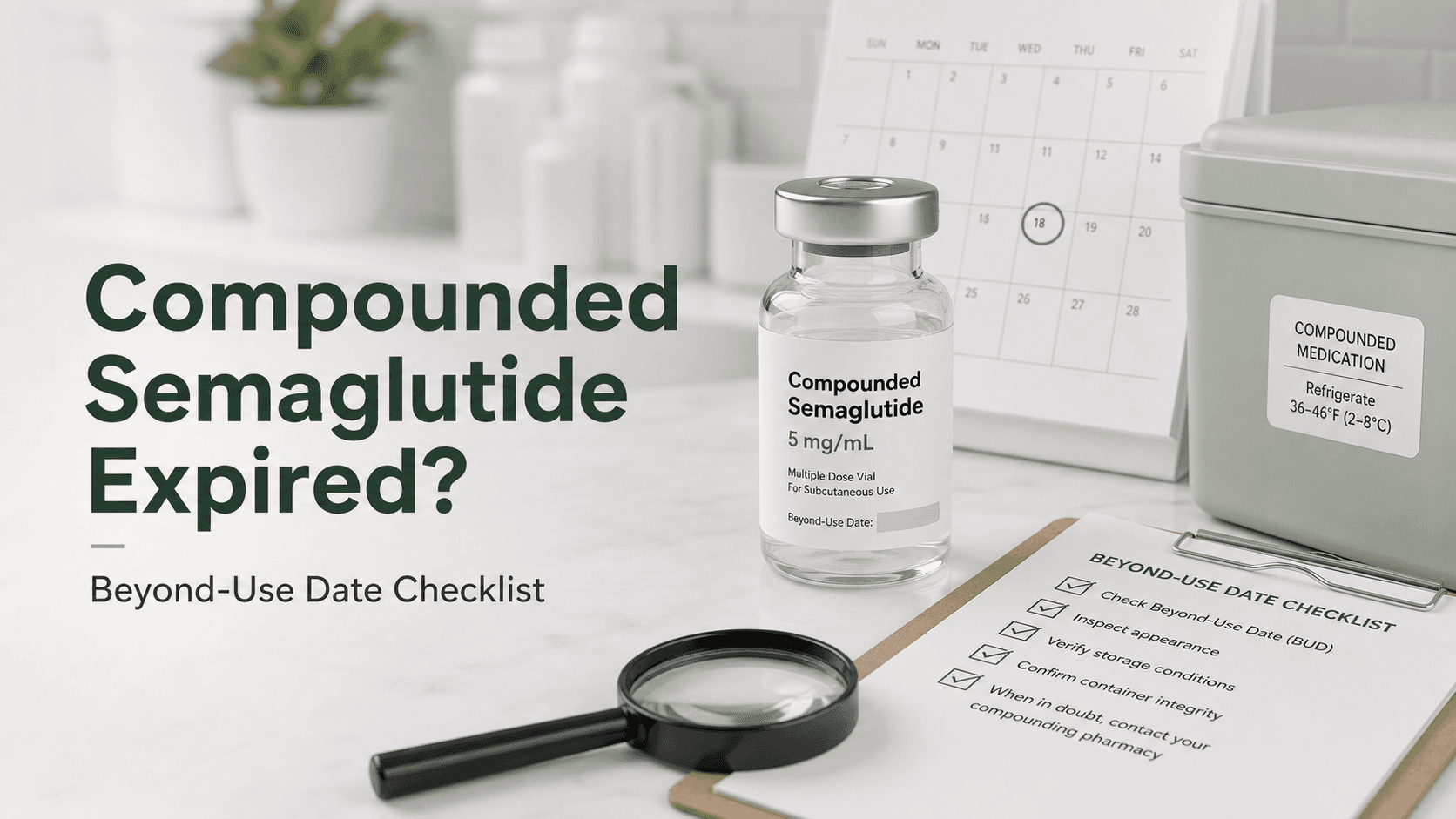
For the approved branded options, see our Mounjaro guide and Zepbound guide. If you already hold compounded vials, our explainer on whether compounded tirzepatide expires covers storage and dating.
What are the risks of compounded tirzepatide?
The FDA has repeatedly warned about compounded GLP-1 drugs, citing dosing errors from patients measuring their own units, the use of unapproved salt forms of the active ingredient, and products from facilities it has not inspected. Without standardized fill volumes, an accidental tenfold overdose is a real and documented hazard. There is also no guarantee the vial contains the stated amount or purity of tirzepatide, since the finished product never passed FDA review. Reconstitution and storage add further room for error, because the safety of a vial depends on the patient handling it correctly over weeks of use rather than on a sealed, single-use pen.
Who still sells compounded tirzepatide, and what to check
The large telehealth sellers mostly exited during 2025. What is left is a mix of individual 503A pharmacies working from patient-specific prescriptions, clinics and med spas still advertising vials, and outright fraud. The FDA says it is aware of fraudulent compounded semaglutide and tirzepatide marketed in the US with false label information: in some cases the compounding pharmacy named on the label does not exist, and in others the label carries the name of a real licensed pharmacy that did not compound the product. One adverse event report involved a product labeled as compounded tirzepatide from a pharmacy that never made it; the patient reported redness, swelling, pain, and a red lump at the injection site.
The agency's own red flags for judging a telehealth seller or compound pharmacy:
- Claims that the compounded drug is the same as the FDA-approved drug
- Deep discounts, or prices that look too good to be true
- No screening and prescription by a licensed doctor before medicine ships
- No licensed doctor available to answer questions after it arrives
- Spelling errors on the label, an incorrect pharmacy address, or a pharmacy name you cannot verify
- Medicine that looks different from what you received before, or packaging that is damaged or missing instructions for use
- Vials that arrive warm or with inadequate ice packs; injectable GLP-1 drugs require refrigeration per their package inserts
Two further limits matter before you accept a substitute molecule or a cheaper source. Retatrutide and cagrilintide cannot be used in compounding at all under federal law, and the FDA has warned telehealth companies for marketing retatrutide, active-ingredient distributors for selling it to compounders, and outsourcing facilities for repackaging it. And since September 5, 2025 the agency has run a green list import alert on GLP-1 active ingredients: API from facilities it has inspected or otherwise evaluated as compliant may enter, while API from other sources is subject to detention without physical examination. Our guide to evaluating a tirzepatide compounding pharmacy covers the documentation to ask for before you pay.
Who was affected when the compounding rules changed?
The 2025 wind-down landed hardest on the large population of cash-pay and telehealth patients who had come to depend on lower-cost vials. As enforcement discretion ended, many compounding pharmacies and telehealth companies stopped offering tirzepatide outright or steered patients toward the branded products, manufacturer savings programs, or different molecules entirely. Some providers floated personalized-dose or combination formulations to argue a patient-specific clinical need, but the FDA and the courts have signaled little tolerance for arrangements that function mainly as a workaround to keep mass compounding alive. For most people the practical choice narrowed to transitioning onto FDA-approved Mounjaro or Zepbound, often with the help of self-pay vial pricing now offered through manufacturer channels, or stopping treatment.
References
- FDA: clarifying policies for compounders as GLP-1 supply stabilizes
- FDA Mounjaro (tirzepatide) prescribing information
- FDA: proposal to exclude semaglutide, tirzepatide and liraglutide from the 503B bulks list (April 30, 2026)
- Federal Register: extension of the comment period on the 503B bulks list proposal
- FDA: concerns with unapproved GLP-1 drugs used for weight loss
- FDA: dosing errors associated with compounded injectable semaglutide products
- FDA: green list import alert for imported GLP-1 active ingredients
- FDA: personal importation of drugs for personal use
- DailyMed: Bacteriostatic Water for Injection, USP label
- SURMOUNT-1: tirzepatide once weekly for the treatment of obesity (NEJM)
Frequently Asked Questions
Is compounded tirzepatide the same drug as Zepbound?
It can share the same active ingredient, but it is not the same product. Zepbound is FDA-approved and factory-filled; compounded tirzepatide is not reviewed by the FDA and is mixed by a pharmacy.
Can I still buy compounded tirzepatide after the shortage ended?
Mass-market compounded copies lost their legal basis in early 2025. Narrow, patient-specific compounding may continue only when a documented clinical need cannot be met by the approved product.
Why was compounded tirzepatide cheaper?
It skipped brand pricing and was often sold cash-pay through telehealth. That lower price came without FDA approval, standardized dosing, or the same quality oversight.
Is compounded tirzepatide safe?
The FDA has not verified its safety. Reported risks include self-measured dosing errors, unapproved ingredient forms, and uninspected manufacturing.
What does "compounded" mean on a tirzepatide vial?
It means a licensed pharmacy mixed that vial to order rather than Eli Lilly filling it in a factory. The active molecule can be the same tirzepatide, but the finished product was prepared by the pharmacy and never went through FDA review for safety, effectiveness, or quality.
Is compounded tirzepatide FDA approved?
No, and no compounded drug is. The FDA does not review compounded products before they reach patients. Tirzepatide is also on neither the FDA shortage list nor the 503B bulks list, which are the two conditions that would let an outsourcing facility compound it from bulk substance.
Is tirzepatide itself a compound?
Yes, in the chemistry sense: it is a synthetic 39-amino-acid modified peptide with the empirical formula C225H348N48O68 and a molecular weight of 4813.53 Da, built on the GIP sequence with a C20 fatty diacid attached at position 20. That is unrelated to "compounded", which describes who prepared the vial, not what the molecule is.
Is Zepbound a compounded drug?
No. Zepbound is an FDA-approved tirzepatide product made by Eli Lilly and sold as prefilled pens and single-dose vials. Compounded tirzepatide is an unapproved product from a pharmacy that happens to contain the same active ingredient.
Have people died from compounded tirzepatide?
The FDA has not published a death count attributable to compounded tirzepatide. What it has published is an overdose pattern: for compounded semaglutide, reports of patients drawing five to 20 times the intended dose out of a multi-dose vial, some requiring hospitalization, with effects including severe nausea and vomiting, dehydration, fainting, acute pancreatitis, and gallstones. The agency has separately received reports involving compounded semaglutide or tirzepatide prescribed above approved-label doses. Adverse event reports are voluntary and do not on their own establish that the drug caused the outcome.
Can I import tirzepatide from another country for personal use?
Generally no. The FDA states that in most circumstances it is illegal for individuals to import drugs into the US for personal use, and a drug approved abroad that is an unapproved new drug here cannot be imported legally. Its more permissive personal-importation criteria require a serious condition for which effective treatment is not available domestically, which tirzepatide fails because Mounjaro and Zepbound are approved and on the market here. Even where the criteria are met, the quantity is generally capped at about a three-month supply, not five months. Since September 2025 the agency has also targeted GLP-1 active ingredients at the border under a green list import alert.
Are some people super responders to tirzepatide?
Response varies widely, and the only trial-grade numbers come from the brand drug. In SURMOUNT-1, 72 weeks of once-weekly tirzepatide produced a mean weight change of -15.0% at 5 mg, -19.5% at 10 mg, and -20.9% at 15 mg, against -3.1% on placebo, and 57% of the 15 mg group and 50% of the 10 mg group lost 20% or more of their body weight. No compounded tirzepatide product has been through a trial like that, so an unusually strong or weak response on a pharmacy-mixed vial cannot be separated from what was actually in the vial.
This article is educational and does not constitute medical or legal advice; confirm current rules with a licensed clinician.