
A tirzepatide compounding pharmacy is a licensed facility that mixes tirzepatide to order. These fall into two regulatory classes, 503A and 503B, with very different oversight. Since the FDA shortage ended, neither may mass-produce copies of Mounjaro or Zepbound, which changes how you should vet any source claiming to sell it. As of FDA's most recent compounding update, dated April 1, 2026, tirzepatide appears on neither FDA's drug shortage list nor the 503B bulks list. That combination is what closed the door on routine compounding, and it is the first thing to check before you believe any seller's account of the law.
What is the difference between a 503A and a 503B pharmacy?
The two categories come from different parts of US drug law and carry very different standards. A 503A pharmacy compounds patient-specific prescriptions and is overseen mainly by its state board. A 503B outsourcing facility registers with the FDA, follows manufacturing-grade quality rules (current good manufacturing practice, or cGMP), and undergoes federal inspections.
| Attribute | 503A pharmacy | 503B outsourcing facility |
|---|---|---|
| Primary regulator | State pharmacy board | FDA |
| Quality standard | USP compounding standards | cGMP, like a manufacturer |
| Prescriptions | Patient-specific required | Can make office stock in batches |
| FDA inspections | Generally no | Yes, routine |
| Typical scale | Small, individual | Large batch |
Neither category may legally produce drugs that are "essentially copies" of an available, FDA-approved product, which is exactly what blanket tirzepatide compounding became once the shortage ended.
A 503B outsourcing facility has a second constraint that rules tirzepatide out on its own. A 503B may compound from a bulk drug substance only when that substance sits on the 503B bulks list, or when the drug is on FDA's shortage list at the time of compounding, distribution and dispensing. The 503B bulks list is short. It holds five substances: diphenylcyclopropenone, glycolic acid, squaric acid dibutyl ester and trichloroacetic acid for topical use, and quinacrine hydrochloride for oral use. Nothing GLP-1 related is on it, and tirzepatide is on neither that list nor the shortage list, so a seller advertising 503B-made tirzepatide is telling you something about itself.
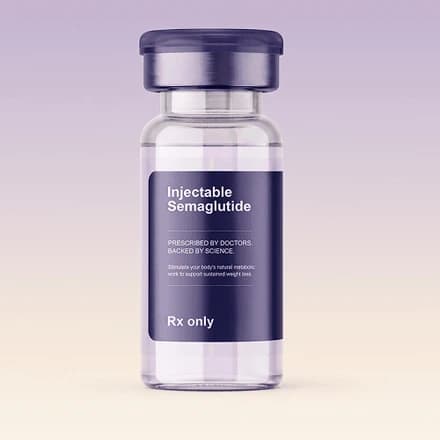
What counts as "essentially a copy" of Mounjaro or Zepbound?
FDA applies a specific test under section 503A. It considers a compounded product to be essentially a copy when the product has the same active ingredient as a commercially available drug, in the same, similar or an easily substitutable strength, and the commercial product can be used by the same route of administration prescribed for the compounded one. Compounded tirzepatide in a vial meets all three parts against Mounjaro and Zepbound: same active ingredient, overlapping strengths, same subcutaneous injection.
There is one exception, and it is narrower than the marketing suggests. The prescriber has to determine and document that the compounded product contains a change producing a significant difference from the commercially available product for an identified individual patient. The documentation sits with the prescriber, it names one patient, and price is not a clinical difference.
Adding another ingredient does not automatically escape the test either. FDA's published example is semaglutide combined with vitamin B12: when the compounded product is injectable like the approved products and the amounts of each ingredient fall within 10% of the strengths of the respective commercially available products, FDA may still treat the result as essentially a copy. A tirzepatide blend is assessed the same way, so "it has B12 in it" is not by itself a legal distinction.
One number is worth knowing because sellers rarely volunteer it. Section 503A bars compounding copies "regularly or in inordinate amounts," and FDA has stated it does not currently intend to take action on that condition against a compounder who fills four or fewer prescriptions of a given essentially-a-copy product in a calendar month. That describes an enforcement posture at very small volume. It is not approval, it does not make the product FDA-approved, and it plainly does not describe a telehealth operation shipping vials at scale.
What can a compounding pharmacy still legally make after the shortage?
With tirzepatide off the shortage list since December 2024 and the enforcement grace periods closed in early 2025, the broad permission to compound tirzepatide for everyone is gone. A legitimate 503A pharmacy can still compound a patient-specific tirzepatide preparation only when a prescriber documents a genuine clinical need the commercial product cannot meet, such as a verified allergy to an excipient in the approved pen. A pharmacy that offers tirzepatide to all comers as a routine cash product is operating outside that narrow lane. The drug-level details behind this sit in our explainer on what compounded tirzepatide actually is.
The sequence matters, because sellers still quote the parts of it that suit them:
| Date | What happened |
|---|---|
| October 2, 2024 | FDA determined the tirzepatide injection shortage was resolved |
| October 22, 2024 | The delisting decision was remanded to FDA for reevaluation as part of Outsourcing Facilities Association v. FDA (N.D. Tex.) |
| December 19, 2024 | FDA reevaluated and again determined the shortage resolved, with a 60-day wind-down for 503A compounders and 90 days for 503B facilities |
| February 18, 2025 | End of the 60-day 503A window, extendable until the court ruled on the injunction motion |
| March 5, 2025 | The district court denied the plaintiffs' preliminary injunction (4:24-cv-00953), and 503A enforcement discretion ended |
| March 19, 2025 | 503B enforcement discretion ended |
| April 1, 2026 | FDA restated the rules and confirmed tirzepatide appears on neither the 503B bulks list nor the drug shortage list |
Semaglutide walked the same path a few months behind: shortage declared resolved on February 21, 2025, with the 503A window closing April 22, 2025 and the 503B window May 22, 2025 after the court denied a second injunction motion on April 24, 2025. Any page still telling you compounding is fine "because of the shortage" is quoting 2024.
How do you verify a compounding pharmacy is legitimate?
Treat verification as non-negotiable. Confirm the pharmacy holds an active license with its state board of pharmacy and that the license is in good standing. If the seller claims 503B status, check that it appears on the FDA's published list of registered outsourcing facilities. Legitimate operations require a valid prescription tied to a real clinical evaluation, list a US physical address, and employ pharmacists you can actually reach with questions. Before committing, it helps to understand how tirzepatide pricing compares across legitimate channels so an unusually low price stands out as a warning rather than a bargain.
Verify the pharmacy named on the label by contacting it directly, using a number you look up rather than one the seller gives you. FDA has documented compounded semaglutide and tirzepatide sold with false label information, including labels naming pharmacies that do not exist and labels carrying the name of a real licensed pharmacy that had nothing to do with the product.
How do you read FDA's list of registered 503B facilities?
The outsourcing facility table is republished weekly and carries more than names. The version updated on August 18, 2026 lists 98 registered facilities. Forty of them had not yet been inspected. Of the 58 that had, 55 were issued a Form FDA 483 listing investigator observations at their most recent inspection. The table also shows the inspection date, whether the resulting action is open or closed, and any warning letter or regulatory meeting.
Two things follow from that. Registration is a form and an annual fee, not a seal of approval, and a facility can sit on the list having never had an inspector through the door. And the table covers federal action only. State board of pharmacy discipline is not in it, which is why the state license lookup is a separate check rather than a duplicate one.
One detail catches stale listings. A registered facility must re-register and pay the annual establishment fee between October 1 and December 31 each year, and any that does not is removed from the list on January 1. Read the "most recent registration date" column, not just the presence of a name.
What red flags signal an unsafe tirzepatide source?
Some warning signs reliably separate a real pharmacy from a risky storefront:
- No prescription required, or a token questionnaire with no clinician contact
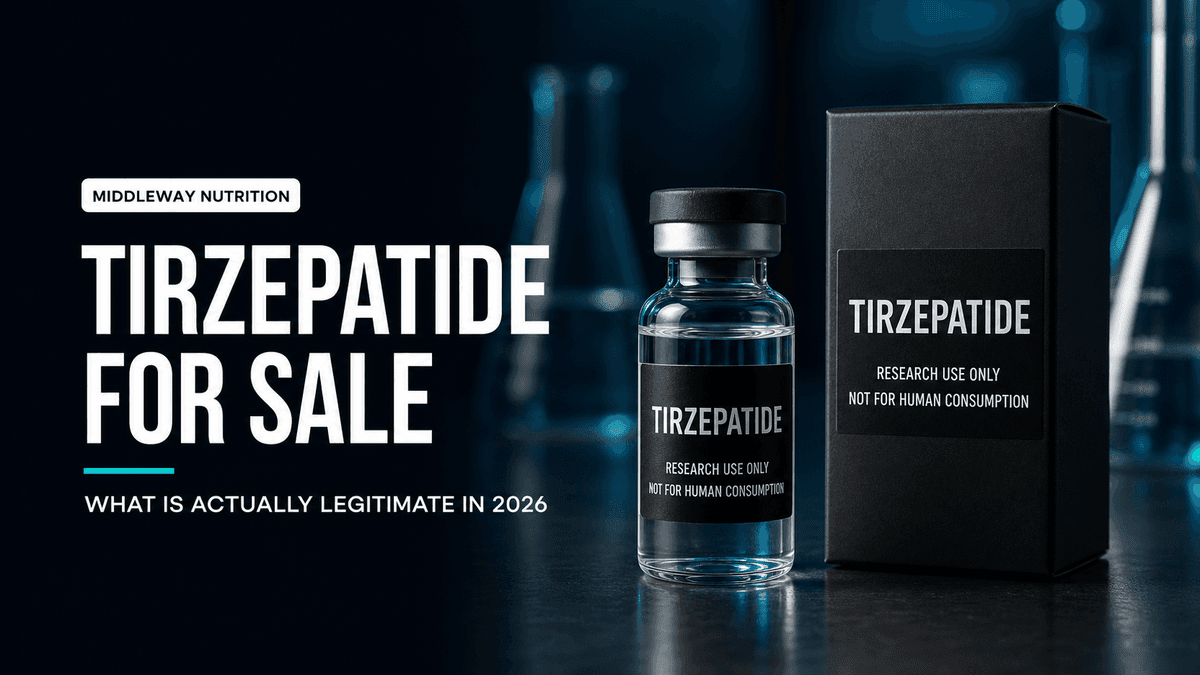
- Products labeled "for research use only" or "not for human consumption"
- No verifiable US license or physical address
- Prices far below every legitimate option
- Pressure tactics, bulk discounts, or cryptocurrency-only payment
- Vials shipped from overseas with no pharmacist named
Any one of these should stop the transaction. The "research use only" label in particular is a hallmark of the grey market, not of a licensed pharmacy.
FDA publishes its own telehealth warning list, and it adds several that only become visible once the package is in your hands:
- A company claiming its compounded drug is the same as the FDA-approved drug
- Medicine that looks different from what you received before, or from the photo on the website
- Packaging that arrives broken or damaged, or without instructions for use
- Spelling errors on the label, or a pharmacy address that does not check out
- No licensed clinician available to answer questions after the medicine arrives
It helps to remember why these signals matter rather than just memorizing the list. A licensed pharmacy has something to lose, namely its license, so it ties dispensing to a prescription, names a responsible pharmacist, and stands behind its labeling. An operation that skips those steps has structured itself to avoid accountability, which is precisely the situation you do not want when the product is a self-injected drug. When in doubt, the safer assumption is that a missing safeguard is deliberate, and treat the absence of basic professional infrastructure as disqualifying on its own.
What has actually gone wrong with compounded tirzepatide?
FDA collects the complaints, and the pattern is worth knowing before a price tag does your thinking for you. As of May 31, 2026, the agency had received 990 adverse event reports involving compounded semaglutide and more than 730 involving compounded tirzepatide. Two caveats belong with those figures. State-licensed 503A pharmacies are not required to report adverse events to FDA, so the real count is almost certainly higher. And many of the events reported look like the side effects already known from the approved products rather than something unique to compounding.
Four failure modes stand out because they trace directly to how compounded product reaches patients:
- Dose measurement. A pen delivers a metered dose. A vial makes a patient or a clinician calculate one. FDA has multiple adverse event reports, some involving hospitalization, that may relate to dosing errors with compounded injectable semaglutide, both from patients measuring and self-administering incorrect doses and from clinicians miscalculating them.
- Doses beyond the label. FDA has also received reports involving patients prescribed compounded semaglutide or tirzepatide at doses beyond the approved label, taken more frequently, or titrated up faster, with symptoms including nausea, vomiting, diarrhea, abdominal pain and constipation. Some were serious enough to send people for medical attention.
- Cold chain. Injectable GLP-1 drugs require refrigeration as stated in their package inserts. FDA has received complaints of compounded GLP-1 products arriving warm or with inadequate ice packs, and its advice is not to use a product that shows up that way.
- Fabricated labels. Beyond the nonexistent-pharmacy labels described above, FDA notes one adverse event report tied to a product labeled as compounded tirzepatide from a pharmacy that did not compound it, with injection-site redness, swelling, pain and a red lump.
What questions should you ask before buying?
Ask the pharmacy to state its 503A or 503B status in writing, to name the source of its active ingredient and provide a certificate of analysis, to confirm the exact concentration in milligrams per milliliter, and to explain how the product should be stored and how long it remains stable. A trustworthy pharmacy answers these readily; evasiveness is itself an answer. For more on the storage piece, see how long compounded tirzepatide can sit out of the fridge.
Ask which exact form of the active ingredient goes into the vial. The precedent here comes from semaglutide, where FDA has said it is not aware of any lawful basis for compounding with salt forms such as semaglutide sodium or semaglutide acetate, because those are different active ingredients from the one in the approved drugs. A pharmacy that is vague about what it is putting in the vial has answered the question.
What does a legitimate dispensing process look like?
A real pharmacy does not simply take an order and ship a vial. It dispenses against a valid prescription written after a clinician has reviewed your medical history, it counsels you on dosing and storage, and it labels the product with the drug name, concentration, lot number, and a beyond-use date. A pharmacist should be reachable to answer questions or take an adverse-event report, and you should be able to identify the clinician who prescribed for you. If the entire "evaluation" is a one-screen checkbox form with no way to reach a human, you are not dealing with a pharmacy operating to professional standards, no matter what the website says. The presence of these routine safeguards is one of the clearest signals separating a licensed operation from a storefront.
What about tirzepatide shipped from overseas?
Vials mailed from outside the United States sit outside the US compounding framework entirely. They are not produced by a US-licensed 503A pharmacy or 503B outsourcing facility, they are not subject to FDA inspection, and personal importation of an unapproved injectable drug is generally not lawful. Overseas suppliers also tend to overlap heavily with the research-peptide market, where products carry no accountability for sterility, identity, or dose. A domestic shipping origin and a verifiable US license should be treated as minimum requirements rather than reassuring extras.
FDA has moved at the border as well. It maintains a green list import alert, 66-80, aimed at GLP-1 active pharmaceutical ingredients with potential quality concerns, letting API through from manufacturers that appear compliant on inspection or other evaluation while flagging the rest. The alert targets the ingredient supply chain rather than parcels addressed to patients, and FDA is explicit that it creates no new limits on lawful compounding. What it tells you is how the agency reads the foreign API pool that the cheapest sellers draw from.
How is this different from the grey-market peptide scene?
Websites selling "tirzepatide for research" are not pharmacies at all. They dispense without prescriptions, label products to dodge FDA oversight, and carry no accountability for purity or dose. A real compounding pharmacy operates under state or federal licensure and patient-specific prescribing; a research-peptide vendor operates outside the medical system entirely. If you are weighing where to obtain the drug safely, our overview of where to buy tirzepatide lays out the legitimate routes.
Federal law also puts part of what those sites sell beyond the reach of any pharmacy. Retatrutide and cagrilintide cannot be used in compounding at all. They are not components of any FDA-approved drug and have not been found safe and effective for any condition. FDA has warned telehealth companies for marketing unapproved drugs such as retatrutide, including direct marketing to consumers, API distributors for selling retatrutide and other GLP-1 drugs to compounders, and outsourcing facilities for repackaging retatrutide. A provider offering retatrutide as the next step up from tirzepatide is outside the compounding rules regardless of what license it holds.
References
- FDA: clarifying policies for compounders as GLP-1 supply stabilizes
- FDA: registered human drug compounding outsourcing facilities (503B)
- FDA: concerns with unapproved GLP-1 drugs used for weight loss
- FDA: 503B bulk drug substances list
- FDA guidance: compounded drug products that are essentially copies of a commercially available drug product under section 503A
Frequently Asked Questions
Is a 503B pharmacy safer than a 503A?
503B facilities follow manufacturing-grade quality rules and are inspected by the FDA, so their process oversight is stricter. That does not make any specific product FDA-approved, but it is a meaningful quality signal. Check the specific facility rather than the category: of the 98 outsourcing facilities on FDA's August 18, 2026 list, 40 had not yet been inspected.
Can a compounding pharmacy legally sell me tirzepatide now?
Only in narrow, patient-specific cases. As of FDA's April 1, 2026 update, tirzepatide is on neither the drug shortage list nor the 503B bulks list. A 503A pharmacy may still compound it for an individual patient when the prescriber determines and documents a change that produces a significant difference from the approved product for that patient. Routine bulk compounding of tirzepatide copies is no longer permitted.
Can a 503B outsourcing facility compound tirzepatide?
Not from bulk active ingredient. A 503B may use a bulk drug substance only if it appears on the 503B bulks list or the drug is on FDA's shortage list at the time of compounding, distribution and dispensing. Tirzepatide is on neither.
Does a "personalized" or "custom" dose make compounded tirzepatide legal?
Only when a prescriber determines and documents a significant difference for you specifically. A strength picked because it is cheaper, or because it splits an approved dose, is still the same active ingredient given by the same route, which is what FDA's essentially-a-copy test looks at.
How many prescriptions can a 503A pharmacy fill before it counts as "regularly"?
FDA has said it does not currently intend to act on the "regularly or in inordinate amounts" condition against a compounder filling four or fewer prescriptions of a given essentially-a-copy product per calendar month. That is an enforcement position at small volume, not approval, and it does not cover a high-volume telehealth pipeline.
How do I check a pharmacy's license?
Search your state board of pharmacy's online license lookup, and for 503B claims, cross-check the FDA's registered outsourcing-facility list. Confirm the "most recent registration date" falls in the current registration cycle, since facilities that do not re-register by December 31 come off the list on January 1.
My compounded tirzepatide arrived warm. Should I use it?
No. Injectable GLP-1 drugs require refrigeration as indicated in their package inserts, and FDA advises against using any that arrives warm or with insufficient refrigeration. Contact the pharmacy, report the shipment, and ask how its cold chain is validated before you reorder.
Can a compounding pharmacy make retatrutide instead?
No. Retatrutide and cagrilintide cannot be used in compounding under federal law, and neither is a component of an FDA-approved drug. FDA has issued warnings over retatrutide to telehealth marketers, API distributors and outsourcing facilities that repackaged it.
What does "research use only" labeling mean?
It is a signal that the seller is avoiding FDA drug rules and is not operating as a licensed pharmacy. Products labeled that way are not intended or tested for human use. FDA has warned companies selling unapproved semaglutide, tirzepatide or retatrutide labeled "for research purposes" or "not for human consumption" that were in fact sold to consumers with dosing instructions.
This article is educational and is not medical or legal advice; verify any pharmacy's status with the appropriate regulator.