Diarrhea is one of the common gastrointestinal side effects people report on GLP-1 medications.
Short answer: GLP-1 diarrhea can come from gut motility changes, dose escalation, smaller but richer meals, sugar alcohols, alcohol, greasy foods, or an unrelated infection. The main safety risk is dehydration.
Quick Guide
| Pattern | Common response |
|---|---|
| Mild diarrhea after escalation | Simplify meals and hydrate |
| Diarrhea with vomiting | Call sooner because dehydration risk rises |
| Bloody diarrhea or fever | Seek medical care |
| Diarrhea plus severe abdominal pain | Get urgent evaluation |
GLP-1 Diarrhea Management Tips
Managing diarrhea on a GLP-1 comes down to three levers: replace what you are losing, strip the trigger load out of your meals for a few days, and treat a recent dose increase as its own event. Work them in that order.
- Replace fluid and electrolytes, not just water. NIDDK advises drinking water plus liquids that contain electrolytes, such as broths and sports drinks. Oral rehydration solutions, which contain glucose and electrolytes, can be bought or made at home. Older adults, people with a weakened immune system, and anyone with diabetes or kidney disease should ask a clinician before using one.
- Cut the fat per meal for 48 to 72 hours. Fried food, pizza, and fast food sit on NIDDK's avoid list during diarrhea, alongside alcohol, caffeine, lactose, sugar alcohols, and large amounts of fructose.
- Pull the common triggers at the same time, not one per week. Alcohol, caffeine, lactose, and sugar alcohols come out together for the reset. Removing them one at a time costs a week you do not need to spend.
- Count episodes instead of estimating. Diarrhea means three or more loose, watery stools a day. Six or more in 24 hours, or symptoms lasting more than two days, is a phone call rather than a wait-and-see.
- Do not start an over-the-counter antidiarrheal blind. Loperamide and bismuth subsalicylate are reasonable for many adults, but NIDDK advises against them for anyone with bloody stools or fever, and advises seeing a doctor if diarrhea worsens or lasts more than two days while taking one.
- Treat an escalation week separately. The Ozempic, Mounjaro, and Zepbound labels all report that most nausea, vomiting, and diarrhea occurred during dose escalation and decreased over time. Symptoms that started within days of a step-up are the first thing to raise with the prescriber.
- Audit everything else you swallow. Metformin reported diarrhea in 53% of treated patients versus 12% on placebo in its own trial, and it led to discontinuation in 6%. Magnesium supplements, new fiber products, and sugar-free powders belong on the same list.
- Do not fast. Beyond the trigger foods above, NIDDK does not recommend a restricted diet or fasting; eating normally once you feel ready is the standard advice.
| Window | Priority | What that looks like |
|---|---|---|
| First 24 hours | Fluid replacement | Electrolyte fluid or broth after every episode, in small amounts often rather than a litre at once |
| 24 to 48 hours | Lower the trigger load | Bland, low-fat meals; no alcohol, caffeine, lactose, or sugar alcohols |
| 48 to 72 hours | Decide, do not drift | Six or more loose stools a day, or symptoms still worsening, means calling the prescriber |
| Past 72 hours | Look past the drug | Ask about infection, other medications, supplements, and whether escalation should pause |
Food Reset
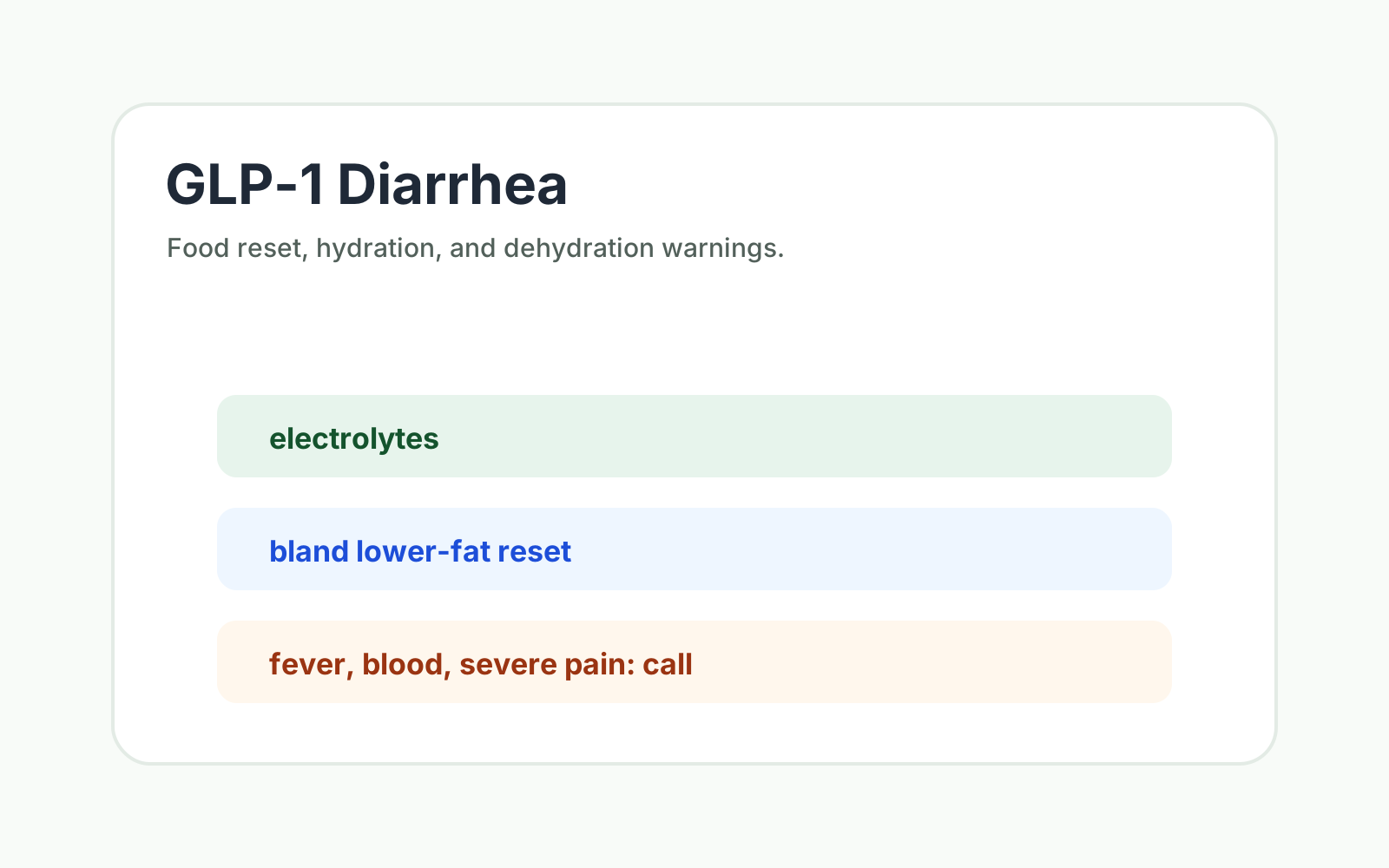
For a short reset, many people tolerate bland, lower-fat foods better: broth, rice, bananas, applesauce, toast, potatoes, lean protein, and electrolyte fluids. Avoid greasy foods, alcohol, heavy dairy, sugar alcohols, and very large raw salads until symptoms settle.
Do not use anti-diarrheal medication if there is fever, blood, severe pain, or suspected infection unless a clinician says it is appropriate.
Common Dietary Triggers for GLP-1 Induced Diarrhea
Portions are smaller on a GLP-1, so a single trigger food can make up a large share of a day's intake. These are the items worth pulling first, and what to eat instead while stools are loose.
| Trigger | Where it hides | Swap for a few days |
|---|---|---|
| High-fat meals | Fried food, pizza, fast food, cream sauces, cheese-heavy plates | Baked or grilled lean protein with rice, potato, or toast |
| Sugar alcohols | Sugar-free gum and candy, protein bars, keto desserts, some flavored powders | Plain versions, or a smaller portion |
| Lactose | Milk, ice cream, milky coffee drinks, milk-based protein shakes | Lactose-free milk or a lactose-free protein |
| Large fructose loads | Juice, regular soda, honey-sweetened drinks, big fruit servings | Water, broth, small fruit portions |
| Alcohol | Any amount while symptoms are active | Skip it until stools are formed again |
| Caffeine | Coffee, tea, energy drinks, pre-workout | Half the usual amount, or decaf during the reset |
| Sudden fiber increases | A new fiber supplement, a jump to large raw salads | Reintroduce gradually once symptoms settle |
| Magnesium-containing supplements and antacids | Companion supplement packs, sleep stacks, calcium-magnesium antacids | Pause and reintroduce one product at a time |
Alcohol, caffeine, lactose, fructose, sugar alcohols, and high-fat foods are the specific items NIDDK lists to avoid during diarrhea. The GLP-1 twist is timing: if the trigger meal landed in the same week as a dose increase, both are contributing and both are worth changing.
How Common Is Diarrhea on Each GLP-1?
Yes, GLP-1 medications cause diarrhea in a meaningful minority of users. Diarrhea is listed as a common adverse reaction on the label of every semaglutide, tirzepatide, and dulaglutide product below. The rates come from those FDA labels.
| Medication | Diarrhea on drug | Placebo |
|---|---|---|
| Wegovy (semaglutide 2.4 mg, weight management) | 30% | 16% |
| Zepbound (tirzepatide 5 / 10 / 15 mg, weight management) | 19% / 21% / 23% | 8% |
| Mounjaro (tirzepatide 5 / 10 / 15 mg, type 2 diabetes) | 12% / 13% / 17% | 9% |
| Trulicity (dulaglutide 0.75 / 1.5 mg, type 2 diabetes) | 8.9% / 12.6% | 6.7% |
| Ozempic (semaglutide 0.5 / 1 mg, type 2 diabetes) | 8.5% / 8.8% | 1.9% |
Three points matter more than the ranking. Trial populations, durations, and dose ranges differ, and the labels themselves warn that rates from one drug's trials cannot be compared directly with another's. Placebo groups reported diarrhea too, from 1.9% to 16%, so not every loose-stool week on a GLP-1 belongs to the medication. And diarrhea rarely ends treatment: in the Wegovy trials it led to permanent discontinuation in 0.7% of treated patients versus 0.1% on placebo.
Watery, Explosive, or Chronic Diarrhea: How to Read the Pattern
The wording people use matters, because the response changes with the pattern. NIDDK defines diarrhea as three or more loose, watery stools a day. Acute diarrhea typically lasts less than a week, persistent diarrhea runs longer than 2 weeks and less than 4, and chronic diarrhea lasts at least 4 weeks.
| Pattern | How to read it | Next step |
|---|---|---|
| Watery, no blood, starting within days of a dose increase | The timing the labels associate with escalation | Hydrate, cut triggers, ask whether to hold the dose |
| Explosive or urgent, clustered after particular meals | Look at what preceded it; fat, lactose, and sugar alcohols are the usual suspects | Run the food reset for 2 to 3 days, then reintroduce one item at a time |
| Six or more loose stools in 24 hours | Fluid is leaving faster than most people replace it | Same-day call |
| Blood, black or tarry stool, pus, or fever | Not a dose-adjustment problem | Seek care, and skip over-the-counter antidiarrheals |
| Wakes you at night, or still going past 4 weeks | Meets the definition of chronic diarrhea | Ask for evaluation of causes other than the medication |
Duration is the part people underrate. Diarrhea lasting more than two days in an adult already warrants a call, and anything running past four weeks is a reason to investigate rather than to keep managing it at home, whether or not a GLP-1 is in the picture.
Dehydration Warning Signs With Nausea and Diarrhea
Dehydration is why this symptom gets taken seriously. The semaglutide and tirzepatide labels carry the same warning: postmarketing reports of acute kidney injury, in some cases requiring hemodialysis, mostly in people whose gastrointestinal reactions, such as nausea, vomiting, or diarrhea, led to dehydration. Nausea and diarrhea on the same day is the combination to watch, because output rises while intake drops.
| Dehydration signs to watch | Symptoms that need care right away |
|---|---|
| Extreme thirst or dry mouth | Any of these signs getting worse rather than better |
| Dark-colored urine | Frequent vomiting, so fluids will not stay down |
| Urinating less than usual | Change in mental state: confusion, irritability, unusual lack of energy |
| Feeling tired, dizzy, or lightheaded | Severe pain in the abdomen or rectum |
| Sunken eyes or cheeks | Stools that are black and tarry, or contain blood or pus |
| Skin that stays tented after being pinched | Six or more loose stools a day, high fever, or diarrhea lasting more than 2 days |
Those warning signs come from NIDDK. The semaglutide, tirzepatide, and dulaglutide labels give the same instruction: report persistent nausea, vomiting, or diarrhea to the prescriber promptly, because volume loss is what puts the kidneys at risk.
What to Track
Track dose timing, recent dose increases, new foods, alcohol, caffeine, sugar alcohols, hydration, bowel frequency, and whether symptoms wake you at night.
Internal Reading Path
FAQ
Is diarrhea common on GLP-1s?
Yes. It is a recognized GI side effect, but severe or persistent diarrhea needs review.
Can diarrhea cause kidney problems?
Dehydration from diarrhea and vomiting can stress the kidneys, especially in higher-risk patients.
Should I increase my next dose if I have diarrhea?
Ask the prescriber. Active GI symptoms are a reason to discuss delaying escalation.
Why do some people get diarrhoea on GLP-1s while others get constipation?
Both are on the label, from the same trials. In the Wegovy trials, 30% reported diarrhea and 24% reported constipation, against 16% and 11% on placebo. In the Zepbound trials, diarrhea ran 19% to 23% by dose and constipation 11% to 17%, against 8% and 5% on placebo. Nothing in the labels predicts which direction an individual lands in. What tips it in practice is fluid intake, fiber, fat per meal, sugar alcohols, and the rest of the medicine cabinet: metformin reported diarrhea in 53% of patients versus 12% on placebo, while low fluid and low fiber intake push the other way.
Can a GLP-1 cause a fever?
Fever is not listed among the common adverse reactions in the Wegovy, Ozempic, Mounjaro, Zepbound, or Trulicity labels. Where those labels do mention fever, it is as a symptom of gallbladder problems, alongside upper abdominal pain, jaundice, and clay-colored stools. Fever with diarrhea more often points to an infection. Either way it changes the plan: NIDDK advises against over-the-counter antidiarrheal medicines for people with fever or bloody stools, so the move is to call rather than self-treat.
Why This Symptom Can Happen on GLP-1 Treatment
GLP-1 Diarrhea: Causes, Food Reset, Hydration, and Red Flags usually needs to be understood in the context of delayed gastric emptying, appetite suppression, dose escalation, lower food intake, hydration changes, and other medications. GLP-1 and GIP/GLP-1 drugs can change how quickly food moves, how full someone feels, and how much they naturally eat or drink. Those changes can improve weight and glucose outcomes, but they can also create side effects when the dose, meal pattern, or hydration plan is not matched to the person's tolerance.
Symptoms often show up during the first few weeks or after a dose increase. They can also appear after a large meal, high-fat meal, alcohol, dehydration, constipation, or a long gap between meals. The timing is useful because it helps a clinician decide whether the symptom is likely dose-related, food-pattern related, or possibly unrelated to the medication.
First 24 to 48 Hours: What to Track
A useful symptom log does not need to be complicated. Record the dose date, dose strength, meals, fluids, bowel movements, alcohol, caffeine, exercise, and any other medications. Include severity from 1 to 10 and whether the symptom affects eating, drinking, sleeping, work, or exercise.
| Track this | Why it helps |
|---|---|
| Dose timing | Symptoms may peak after injection or escalation |
| Meal size and fat content | Large or greasy meals often worsen GI symptoms |
| Fluid intake | Dehydration can worsen headache, dizziness, constipation, and palpitations |
| Bowel pattern | Constipation can drive bloating, reflux, and abdominal pain |
| Blood sugar, if diabetic | Low or high glucose can mimic other symptoms |
| Red flags | Severe, persistent, or systemic symptoms need care |
Dose Escalation Questions
Many side effects become more disruptive when the dose is increased before the previous dose feels stable. Before moving up, it is reasonable to ask whether symptoms are mild and improving, whether protein and fluids are adequate, whether constipation is controlled, and whether work or daily function is being affected.
Do not adjust the dose independently. The practical question for the prescriber is whether to hold the current dose longer, step down, treat the symptom, review meal timing, or evaluate another cause.
Questions to Bring to the Prescriber or Pharmacist
- Does my current dose and timing match the official label or my prescription?
- Are my symptoms or concerns expected at this stage, or do they suggest changing the plan?
- Should I delay escalation, restart lower, hold steady, or be evaluated before continuing?
- Are any of my other medications increasing risk, especially insulin, sulfonylureas, blood pressure medication, diuretics, or drugs affected by delayed gastric emptying?
- What exact symptoms should make me call urgently or seek same-day care?
- If cost or supply interrupts therapy, what is the safest backup plan?
Bottom Line for GLP-1 Diarrhea: Causes, Food Reset, Hydration, and Red Flags
The practical answer is rarely just one number, food list, or yes-or-no rule. For GLP 1 diarrhea, the safest approach is to combine the direct answer with the variables that change it: product type, dose, timing, side effects, storage history, other medications, and the person's medical context. When those variables are unclear, the best next step is to ask the prescriber or pharmacist before acting.
Additional Scenarios Readers Commonly Compare
| Scenario | How to think about it |
|---|---|
| Symptoms started after a dose increase | Treat escalation as a likely contributor and ask whether to hold the dose longer |
| The plan changed because of supply | Confirm whether a restart or lower dose is safer after the gap |
| Advice online conflicts with the label | Use the label, pharmacy, and prescriber as the authority |
| The medication is compounded | Verify concentration, BUD, storage, sterility, and dose instructions directly with the pharmacy |
| The goal is maintenance | Prioritize sustainable intake, resistance training, monitoring, and follow-up |
More FAQ
Why do different websites give different answers?
Most differences come from assuming different products, concentrations, patient goals, dose histories, or risk tolerance. A chart or tip can be mathematically correct but still wrong for a specific prescription.
What information should I keep in my notes?
Keep the medication name, dose, date taken, pharmacy label, concentration if vial-based, side effects, food and fluid changes, weight trend, and any clinician instructions. This makes follow-up safer and more specific.
When is it better not to troubleshoot at home?
Do not troubleshoot at home when symptoms are severe, rapidly worsening, involve chest pain or fainting, include repeated vomiting or dehydration, suggest allergic reaction, or involve a possible dosing or storage error.
Are crackers OK for GLP-1 diarrhea?
Plain, low-fat crackers such as saltines or water crackers fit the same category as the toast and rice in the food reset above: simple starch that is easy to keep down and easy to pair with an electrolyte drink. Skip buttery, cheese-filled, or fried crackers, since fat is the part that aggravates diarrhea. Check the label on high-fiber or sugar-free versions, which can add inulin or sugar alcohols. Crackers do not rehydrate you, so they replace nothing if fluid is not going in alongside them.
Can a GLP-1 companion supplement pack cause diarrhea?
Yes, and it is worth ruling out before blaming the injection. Companion or health packs sold alongside GLP-1 programs usually bundle magnesium, fiber, electrolytes, and flavored powders. Supplemental magnesium carries a tolerable upper intake level of 350 mg a day for adults, set specifically because higher supplemental doses can cause osmotic diarrhea; magnesium gluconate and chloride cause it less often than other salt forms, and citrate may affect stools more than oxide. Sugar-free powders and gummies often carry sugar alcohols, which NIDDK lists among the things to avoid during diarrhea. Practical test: hold the pack for three days while keeping the prescription unchanged, then reintroduce one product at a time.
Detailed Reader Scenarios
A stronger page for GLP 1 diarrhea needs to answer the situations people actually bring to search. The same keyword can represent a careful planner, someone with active symptoms, someone whose pharmacy instructions are confusing, or someone who is trying to decide whether the issue is urgent. The sections below turn the topic into practical scenarios without replacing medical judgment.
Scenario 1: The symptom is mild and predictable
Mild symptoms that appear after a larger meal, high-fat meal, alcohol, constipation, or a dose increase are often managed by changing the food pattern and discussing whether to hold the dose longer. The key is that the symptom should be improving, not escalating.
Scenario 2: The symptom affects hydration or nutrition
When symptoms reduce fluid intake, protein intake, or the ability to function, they become more than a nuisance. Dehydration can worsen headache, dizziness, constipation, palpitations, and kidney stress. Under-eating can worsen fatigue, hair shedding risk, and muscle loss.
Scenario 3: The symptom is new, severe, or different
Do not assume every symptom is the medication. Severe abdominal pain, chest pain, fainting, neurologic symptoms, allergic symptoms, repeated vomiting, bloody stool, fever, or confusion should be evaluated rather than treated as normal GLP-1 adjustment.
Symptom Pattern Table
| Pattern | More reassuring | More concerning |
|---|---|---|
| Timing | Starts after dose increase and improves | Worsens every day or appears suddenly severe |
| Hydration | Able to drink normally | Dry mouth, very low urine, dizziness, fainting |
| Eating | Small meals tolerated | Cannot keep food down or avoids most food |
| Pain | Mild, brief, food-related | Severe, persistent, radiates, or with fever |
| Function | Annoying but manageable | Interrupts work, sleep, exercise, or diabetes control |
What to Try Only After Red Flags Are Ruled Out
For non-urgent symptoms, the usual foundations are smaller meals, slower eating, lower-fat choices during escalation, steady fluids, gradual fiber, gentle movement, and consistent protein. Medication treatments, dose holds, anti-nausea drugs, laxatives, reflux medication, or dose changes should be discussed with a clinician or pharmacist.
Edge Cases That Change the Answer
For GLP 1 diarrhea, the usual advice can change when there is a long medication gap, a recent dose increase, active vomiting or diarrhea, diabetes medications that can cause low blood sugar, kidney disease, pregnancy planning, surgery or anesthesia, a compounded vial, or uncertainty about the exact product. Those details should be treated as decision points, not footnotes.
A practical way to handle edge cases is to pause and sort the issue into one of three buckets. The first bucket is routine planning: questions about meals, timing, cost, or what to ask at the next visit. The second bucket is same-week clinical guidance: persistent side effects, repeated missed doses, uncertain conversions, or a plan that cannot be filled. The third bucket is urgent evaluation: severe pain, chest symptoms, fainting, allergic reaction symptoms, dehydration, confusion, or a possible large dosing error.
| Bucket | Examples | Best next step |
|---|---|---|
| Routine planning | Meal changes, mild symptoms, coverage questions | Bring notes to the next visit |
| Prompt guidance | Persistent symptoms, switch timing, unclear label, storage uncertainty | Call prescriber or pharmacist |
| Urgent care | Severe pain, fainting, chest pain, allergic symptoms, dehydration | Seek same-day or emergency care |
Practical Takeaway
If a reader remembers only one thing from this page, it should be that GLP 1 diarrhea is context-dependent. The safest answer comes from matching the general information to the exact medication, dose, timing, symptoms, product label, and medical history. When those details are incomplete, the right move is to ask before acting.
Summary
GLP-1 diarrhea is often manageable, but dehydration, fever, blood, severe pain, or persistent symptoms should be treated as warning signs.
References
- GLP-1 gastrointestinal adverse events review (PMC, NIH)
- Dietary management of GLP-1 gastrointestinal effects (PMC, NIH)
- GLP-1 receptor agonists: mechanism and physiology (StatPearls, NCBI)
- Wegovy (semaglutide) prescribing information (DailyMed, NIH)
- Zepbound (tirzepatide) prescribing information (DailyMed, NIH)
- Mounjaro (tirzepatide) prescribing information (DailyMed, NIH)
- Ozempic (semaglutide) prescribing information (DailyMed, NIH)
- Trulicity (dulaglutide) prescribing information (DailyMed, NIH)
- Metformin hydrochloride prescribing information (DailyMed, NIH)
- Diarrhea: definition and facts (NIDDK, NIH)
- Diarrhea: symptoms and causes (NIDDK, NIH)
- Diarrhea: treatment (NIDDK, NIH)
- Diarrhea: eating, diet, and nutrition (NIDDK, NIH)
- Tolerable upper intake level for supplemental magnesium (PMC, NIH)