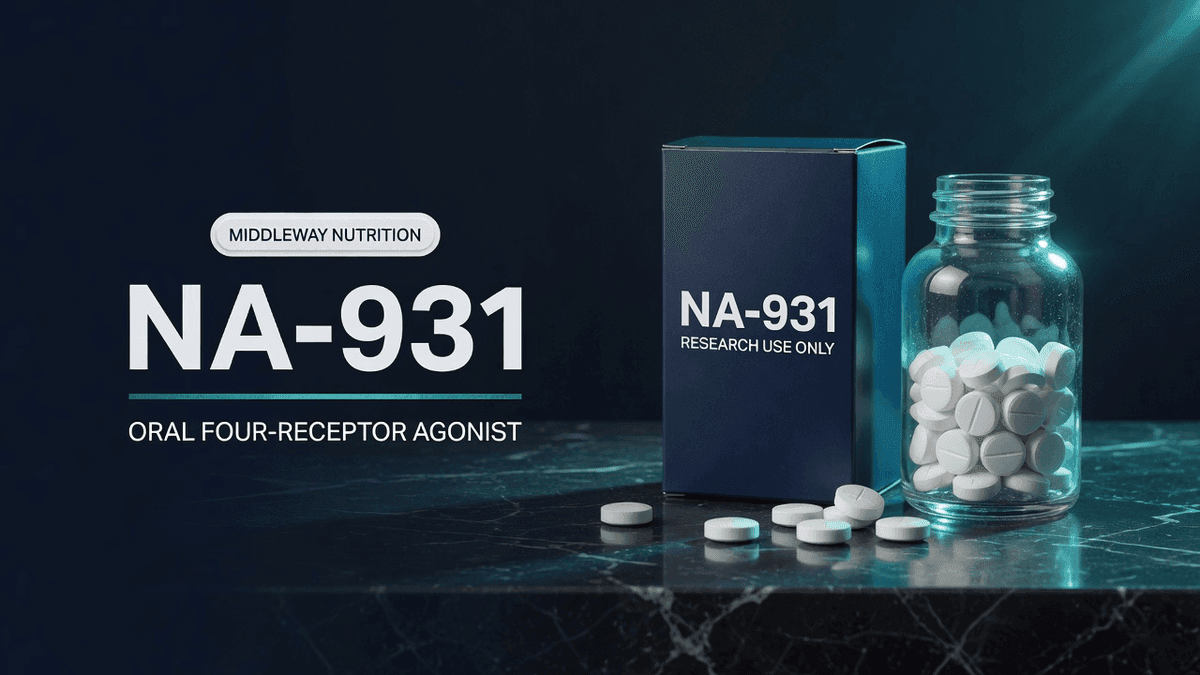
NA-931 (Bioglutide) is an investigational oral compound developed by Biomed Industries that is described as activating four receptors at once: GLP-1, GIP, glucagon and IGF-1. If NA-931 (Bioglutide) does what its developer describes, it would be the first oral drug in this class with a four-receptor mechanism, which is a genuinely significant claim.
It is also a claim that currently rests largely on company communications rather than peer-reviewed publication, and that distinction is the most useful thing to understand about it.
NA-931 (Bioglutide) and the Receptor Story
The trajectory of this drug class has been additive. Semaglutide activates the GLP-1 receptor. Tirzepatide adds GIP. Retatrutide adds glucagon. Each addition has been associated with greater weight loss in trials.
NA-931 is described as adding a fourth target, the IGF-1 receptor, with the compound said to derive structurally from an IGF-1 metabolite. The GLP-4 label attached to it in online discussion is invented shorthand for the receptor count, not a recognised drug classification.
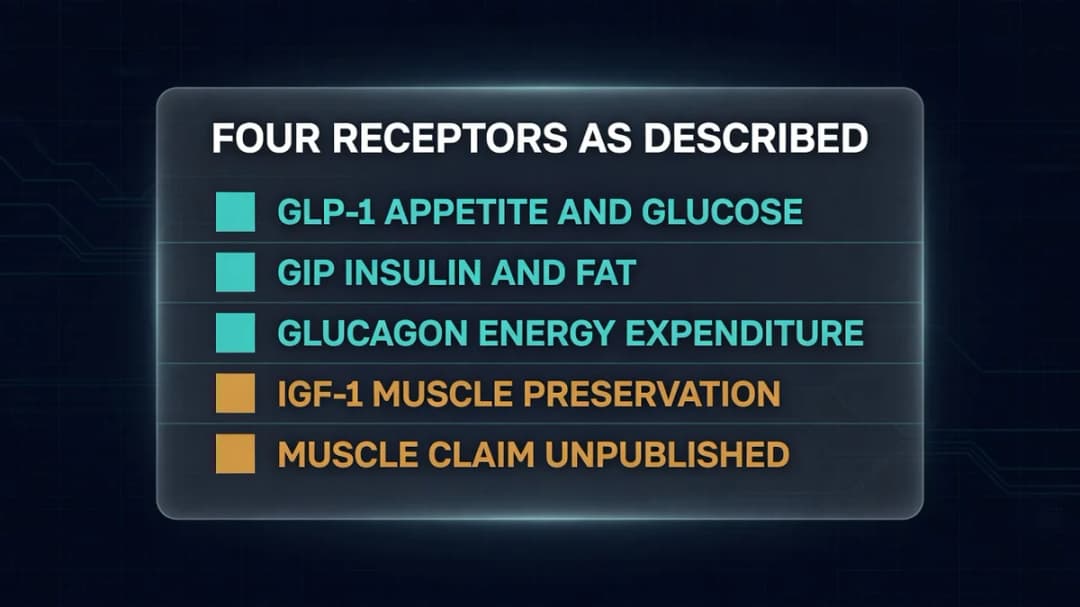
What each receptor is proposed to contribute:
| Receptor | Proposed contribution |
|---|---|
| GLP-1 | Appetite suppression, slowed gastric emptying, glucose-dependent insulin release |
| GIP | Additional insulin response and effects on fat metabolism |
| Glucagon | Increased energy expenditure |
| IGF-1 | The muscle preservation argument, the distinguishing claim |
The IGF-1 element is the interesting one, because lean mass loss is the most substantive criticism of the current generation of weight loss drugs. A compound that addressed it would be genuinely differentiated rather than incrementally better.
The Oral Delivery Question
The second notable claim is that NA-931 is intended as a once-daily oral tablet.
This is a hard problem. Peptides are broken down by digestive enzymes and absorb poorly across the gut wall. Oral semaglutide only works because it is co-formulated with an absorption enhancer, and even then a small fraction of the dose is absorbed, which is why oral doses are far larger than injected ones.
Any compound claiming oral delivery in this class needs to explain how it solves that problem. That explanation, in a form independent reviewers can assess, is what would move this from an interesting claim to an established one.


What Is Actually Verified
This is where a careful reader should slow down.
Established: the compound exists, has a developer, and has been entered into clinical trials. Trial registrations are public and checkable.
Not established: the efficacy figures. Weight loss percentages for NA-931 circulate widely and originate from company communications rather than from peer-reviewed publication or independent analysis. Early-phase trials are small, often unblinded and not designed to measure weight loss reliably, so figures from that stage do not predict later results well even when accurately reported.
Also not established: the muscle preservation claim. Adding IGF-1 receptor activity to a weight loss drug is a reasonable idea, and demonstrating that it preserves lean mass in humans requires body composition measurement in a controlled trial with a comparator. That evidence has not been published.
The reasonable position is interest without belief. Compounds at this stage fail far more often than they succeed, and early-phase figures are the least reliable numbers in drug development.
Why More Receptors Is Not Automatically Better
The additive story is appealing and slightly misleading, and it is worth resisting.
Each receptor added to a molecule brings its own effects, not all of them wanted. Glucagon receptor activation raises energy expenditure, which is the point, and it also affects hepatic glucose output, which has to be managed. GIP agonism took years to be accepted as useful at all, because the field initially expected the opposite direction to work better.
IGF-1 receptor activity is the one that deserves the most scrutiny here. IGF-1 signalling is a growth pathway, and chronic activation of growth pathways is not obviously benign over years of use. Any compound adding it to a drug intended for long-term metabolic treatment carries a question about long-term risk that only extended trials can answer.
So a four-receptor drug is not simply a three-receptor drug with more upside. It is a more complex pharmacological object with more ways to produce unintended effects, and that is a normal part of drug development rather than a criticism.

How It Compares On Paper
| Semaglutide | Tirzepatide | Retatrutide | NA-931 | |
|---|---|---|---|---|
| Receptors | 1 | 2 | 3 | 4 as described |
| Route | Injection, plus an oral form | Injection | Injection | Oral, as described |
| Status | Approved | Approved | Late-stage development | Early development |
| Published phase 3 data | Yes | Yes | Yes | No |
| Independent verification of claims | Extensive | Extensive | Substantial | Limited |
The right column is the one that matters. The others contain drugs whose results have been published, scrutinised and replicated. NA-931 is not at that stage, and the comparison table is a description of ambition rather than of demonstrated performance.
What This Means Practically
It is not available and will not be for years, if ever. There is no approved product.
Anything sold online as NA-931 or Bioglutide is not the investigational compound. Molecules in active development do not reach research chemical vendors legitimately, and the contents of such a vial are unknown.
If the IGF-1 mechanism appeals because of concerns about muscle loss on GLP-1 drugs, that concern is addressable now, with resistance training and adequate protein intake, both of which have solid evidence behind them. Our guide on building muscle on GLP-1 drugs covers what actually works.
For related reading, see our overview of new GLP-1 drugs, the retatrutide guide for the triple agonist that is furthest along, and our article on oral GLP-1 options.
Frequently Asked Questions
What is NA-931 (Bioglutide)?
It is an investigational compound from Biomed Industries described as an oral agonist acting on four receptors: GLP-1, GIP, glucagon and IGF-1. It is in early clinical development, has no regulatory approval, and no phase 3 results have been published.
Is NA-931 better than tirzepatide or retatrutide?
There is no basis for that comparison. Tirzepatide has published phase 3 data and is approved; retatrutide has substantial late-stage data. NA-931 has neither, and early-phase figures from any drug are poor predictors of later results.
Does NA-931 preserve muscle?
That is the claim behind the IGF-1 receptor component, and it is not established. Demonstrating it requires body composition measurement in a controlled trial against a comparator, which has not been published. It is a plausible design goal rather than a proven property.
Can NA-931 really be taken orally?
That is how it is described. Oral peptide delivery is a difficult pharmaceutical problem, and the one approved oral GLP-1 required a dedicated absorption enhancer and still achieves low bioavailability. How NA-931 addresses this has not been independently assessed.
Where can I buy NA-931?
Nowhere legitimately. It is an investigational compound and is not available outside clinical trials. Products sold online under that name are of unknown composition and should not be used.