
Retatrutide reviews are overwhelmingly positive on weight loss and consistently cautious on tolerability. Across published trials, the highest dose drove average reductions of roughly 24% of body weight at 48 weeks in phase 2 and up to 28.3% at 80 weeks in the phase 3 TRIUMPH-1 study, with some patients exceeding 30%. The trade-off is gastrointestinal side effects, mainly nausea, that affect a large share of users during dose escalation. One fact frames every honest review: retatrutide is investigational. As of August 2026 it is not approved by the FDA. Legal access runs through Eli Lilly clinical trials and, since August 3, 2026, a narrow expanded access program for patients who meet all five of Lilly's eligibility criteria at once.
This page synthesizes what the trial data actually shows alongside themes from self-reported user experiences, then gives a straight verdict. It is distinct from a benefits overview. If you want the foundational explainer first, see what is retatrutide.
What retatrutide is, in one paragraph
Retatrutide is a triple hormone receptor agonist developed by Eli Lilly. It activates three receptors at once: GLP-1, GIP, and glucagon. The first two are familiar from tirzepatide. The glucagon arm is the differentiator, because glucagon receptor activity is thought to increase energy expenditure on top of appetite suppression. That mechanism is why some users report a different feel than semaglutide. For the biology, see retatrutide mechanism of action.
Real results: what the trial data shows
The strongest evidence comes from two sources, the phase 2 trial published in the New England Journal of Medicine in 2023 and the phase 3 TRIUMPH-1 results, reported in topline form in May 2026 and detailed at the American Diabetes Association meeting that June.
Phase 2 (NEJM, 338 adults, 48 weeks)
This randomized, double-blind, placebo-controlled trial enrolled 338 adults with obesity or overweight and no type 2 diabetes. Weight loss was dose dependent and continued climbing through 48 weeks rather than plateauing early.
| Dose | 24-week loss | 48-week loss |
|---|---|---|
| Placebo | -1.6% | -2.1% |
| 1 mg | -7.2% | -8.7% |
| 4 mg | -12.9% | -17.1% |
| 8 mg | -17.3% | -22.8% |
| 12 mg | -17.5% | -24.2% |
At the 12 mg dose, 100% of participants lost at least 5% of body weight, 93% lost at least 10%, and 83% lost at least 15% by 48 weeks. Every dose lost more by week 48 than it had at week 24, so the curves had not flattened by study end.
Phase 3 TRIUMPH-1 (2,339 adults, 80 to 104 weeks)
TRIUMPH-1 enrolled 2,339 adults with obesity or overweight plus a weight-related condition, without diabetes. All three doses met the primary and key secondary endpoints. The numbers below reflect the efficacy estimand (results for participants who stayed on treatment).
| Dose | 80-week loss | Pounds lost (avg) |
|---|---|---|
| Placebo | -2.2% | 5.5 lb |
| 4 mg | -19.0% | 47.2 lb |
| 9 mg | -25.9% | 64.4 lb |
| 12 mg | -28.3% | 70.3 lb |
At 12 mg, 45.3% of participants lost at least 30% of their body weight, a level Lilly compares to bariatric surgery outcomes. In a pre-specified extension that enrolled 532 participants with a starting BMI of 35 or higher and escalated them to their maximum tolerated dose, average loss reached 30.3% at 104 weeks.
Two other phase 3 readouts add context. TRIUMPH-4, in 445 adults with obesity or overweight and knee osteoarthritis, reported 28.7% loss at 68 weeks on 12 mg. TRANSCEND-T2D-1, in 537 people with type 2 diabetes, showed 16.8% loss at 40 weeks on 12 mg, lower than the non-diabetes cohorts, which mirrors the pattern seen with other GLP-1 drugs in diabetes. The two sit in separate programs. The initial TRIUMPH registrational program is four trials covering obesity or overweight, obstructive sleep apnea, and knee osteoarthritis pain, and enrolled more than 5,800 participants; TRANSCEND-T2D is a separate three-trial diabetes program of more than 2,050. TRIUMPH-2 and TRIUMPH-3 reported in July 2026, and further trials, including a cardiovascular and kidney outcomes study, are still running. For the full study breakdown, see retatrutide clinical trial.
What users actually report
Trial averages are clean. Real-world reports are messier, because most current users are taking compounded retatrutide outside of trials, often without clinical supervision or standardized titration. In those communities the drug is almost always shortened to "reta", so searches for reta reviews and for retatrutide reviews land on the same body of self-reported experience. A 2026 medRxiv preprint ran a validated language model over Reddit posts through December 2025, identifying 13,589 users who reported current retatrutide use and 7,823 with at least one symptom that mapped to a standard adverse-event term. Its authors are blunt about the limits: the findings are hypothesis-generating, Reddit users are not representative of retatrutide users, and people who have adverse events are more likely to post about them.
Recurring patterns from user reviews:
- Fast early appetite drop. Many describe strong satiety within the first week or two, sometimes stronger than they expected from a starting dose.
- Energy that differs from semaglutide. A common theme is more energy or warmth, plausibly tied to the glucagon component, though some report the opposite.
- "Retatrutide tiredness" early on. Fatigue during the first 2 to 3 weeks is frequently mentioned and usually described as fading once the body adjusts.
- Nausea as the top complaint. Consistent with the trials, nausea dominates, and users repeatedly credit slow titration with keeping it manageable.
- Skin sensitivity. Some report a burning or sunburn-like skin sensation. This one is in the trial record too, reported as dysesthesia: 12.3% at 9 mg and 12.5% at 12 mg in TRIUMPH-1 against 0.9% on placebo, and 20.9% at 12 mg in TRIUMPH-4 against 0.7% on placebo.
- Elevated heart rate. A noticeable resting heart rate bump is mentioned, matching the dose-dependent heart rate rise seen in trials.
- Wide outcome spread. Self-reported results range from 20-plus pounds in eight weeks to near non-response, often traceable to inconsistent compounded dosing, reconstitution errors, or peptide degradation from poor storage.
The takeaway from user reviews: the upside can be dramatic, but the experience is far more variable outside controlled conditions. For first-person timelines, see retatrutide week by week and retatrutide before and after.
Side effects: what to expect
Side effects are predictable in type and concentrated during dose escalation. They are overwhelmingly gastrointestinal and mostly mild to moderate. Here is the TRIUMPH-1 safety snapshot by dose.
| Adverse effect | 4 mg | 9 mg | 12 mg | Placebo |
|---|---|---|---|---|
| Nausea | 28.6% | 38.4% | 42.4% | 14.8% |
| Diarrhea | 25.2% | 34.1% | 32.0% | 13.5% |
| Vomiting | 10.6% | 22.8% | 25.3% | 4.8% |
| Constipation | 23.8% | 25.9% | 26.1% | 10.9% |
Discontinuation due to adverse events tracked with dose: 4.1% at 4 mg, 6.9% at 9 mg, and 11.3% at 12 mg, versus 4.9% on placebo. In the phase 2 trial, the results posted to ClinicalTrials.gov record one or two participants in each retatrutide arm leaving the study for an adverse event, roughly 1% to 3%, and none on placebo.
Other documented findings:
- Heart rate. Resting heart rate rose dose-dependently, peaking at about week 24 and declining thereafter in the phase 2 trial.
- Dysesthesia and urinary tract infections. In TRIUMPH-1, dysesthesia occurred in 5.1%, 12.3%, and 12.5% of patients at 4, 9, and 12 mg, against 0.9% on placebo. Urinary tract infections were 7.5%, 8.8%, and 8.4%, against 5.3% on placebo, a far narrower gap. Both were generally mild to moderate and mostly resolved during treatment.
- Pancreatitis and thyroid. The phase 2 results posting records one serious adverse event of acute pancreatitis, in the 12 mg group, and no thyroid malignancy. That is a single case among 338 participants, and both the phase 2 trial and TRIUMPH-1 screened out anyone with a history of pancreatitis or a family history of medullary thyroid carcinoma, so neither risk can be ruled in or out from this data. Long-term surveillance is still limited and ongoing.
The practical lesson across both data and user reviews is the same: titrate slowly. Side effects cluster in the escalation phase and ease at maintenance. For deeper coverage, see retatrutide side effects and is retatrutide safe.
Retatrutide complaints: what reviews push back on
Not every complaint in retatrutide reviews is a side effect. Sorted by how often they recur:
| Complaint | What it looks like | How well the data backs it |
|---|---|---|
| Nausea during escalation | Worst in the days after a dose increase, easing at a stable dose | Strong. 42.4% at 12 mg in TRIUMPH-1 versus 14.8% on placebo |
| Fatigue in the first weeks | "Retatrutide tiredness", usually described as fading by week 3 or 4 | Ranks second in the Reddit dataset, ahead of nausea. The phase 2 results posting records fatigue in 9.7% on 12 mg against 4.3% on placebo |
| Appetite coming back | Hunger returning between doses or later in a cycle | The single most-mapped symptom in the Reddit analysis, which is the opposite of the trial profile |
| Insomnia and a faster pulse | Broken sleep, a noticeably higher resting heart rate | Heart rate has trial support and peaked at about week 24 in phase 2. Insomnia is absent from the phase 3 adverse-event lists and fell below the 5% reporting threshold in the phase 2 posting |
| Inconsistent vials | Same protocol, very different results between batches or sellers | Not measurable from reviews. Gray-market product is not quality-assured |
| No legal way to get it | Wanting a prescription and finding none exists | Accurate for almost everyone. See the verdict below |
The appetite finding is the one worth pausing on. In the phase 2 trial, gastrointestinal events dominated. In the Reddit dataset, gastrointestinal symptoms were common but not the dominant category, and increased appetite, fatigue, increased energy, nausea, food craving, insomnia, and raised heart rate led the list instead. The preprint's own authors list retatrutide's glucagon receptor activity first among possible explanations, then a set that has nothing to do with the molecule: product quality and dose variability, stacking with other peptides, the user profile in these communities, errors in reconstituting lyophilized powder, and misattribution. Most of that list describes gray-market conditions rather than the drug as it was studied. For how those threads read in full, see retatrutide reddit.
How to read retatrutide vendor and brand reviews
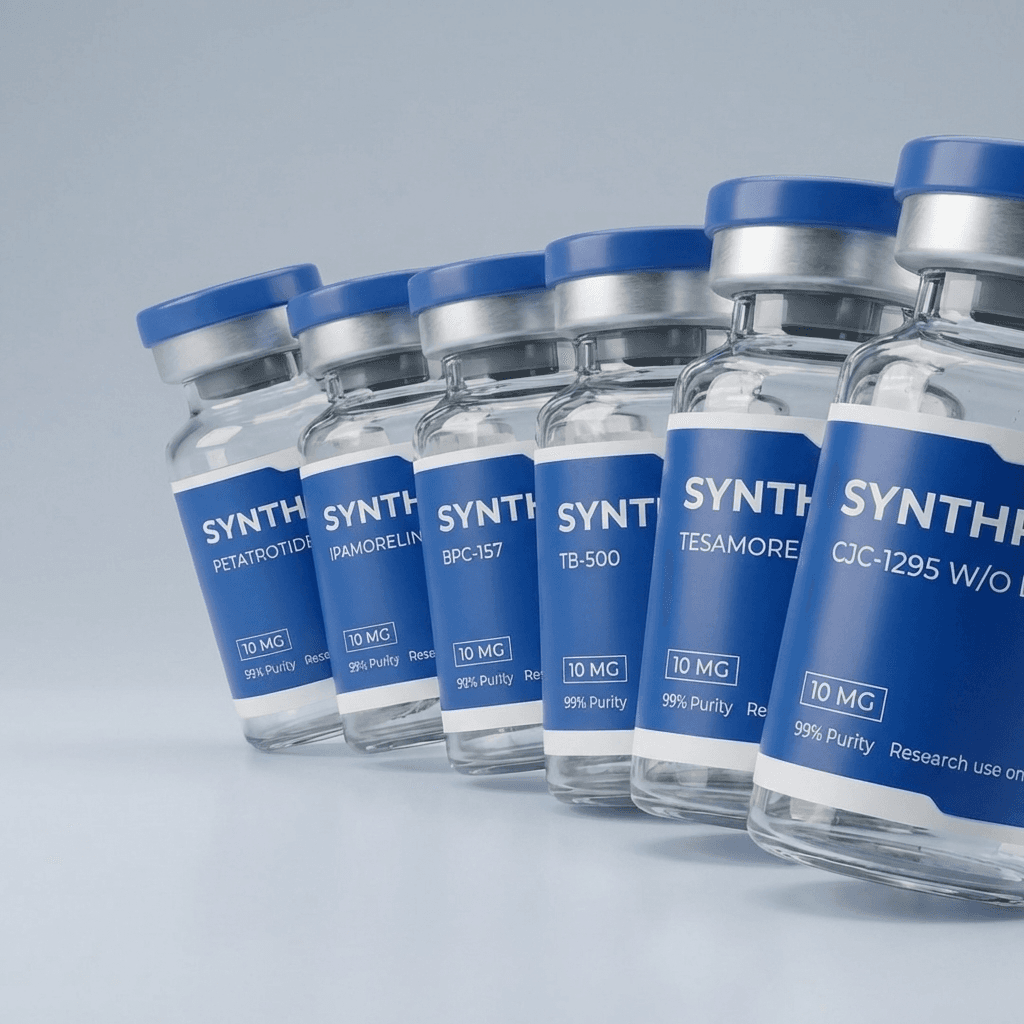
A large share of retatrutide review searches are really vendor searches: someone has a brand name in hand and wants to know whether that seller is the good one. Start from the constraint that makes every one of those reviews weaker than it looks. There is no legal retatrutide supplier. The FDA states that "retatrutide and cagrilintide cannot be used in compounding under federal law" and that neither is a component of an FDA-approved drug nor has been found safe and effective for any condition. The agency has warned telehealth companies marketing retatrutide, active pharmaceutical ingredient distributors selling it to compounders, and outsourcing facilities repackaging it, along with sellers who label products "for research purposes" or "not for human consumption" while shipping them to consumers with dosing instructions.
That reframes what a five-star vendor review is actually measuring.
| What the review rates | What it cannot tell you |
|---|---|
| Shipping speed, packaging, responsiveness | Whether the vial holds retatrutide at the labeled amount |
| That the vial arrived intact and cold | Sterility, endotoxin load, or residual synthesis solvents |
| That the buyer lost weight | Whether the effect came from this product, this dose, or something stacked alongside it |
| A certificate of analysis posted on the product page | Whether that certificate belongs to the batch in the box |
Certificates of analysis are the most misread signal in this market. An HPLC purity figure describes the proportion of detectable peptide material in the sample, and mass spectrometry confirms the identity of the main compound. Neither is a sterility test, an endotoxin test, or a heavy-metals test unless those assays were run and reported separately, and a certificate only means anything if it is batch-specific, dated, and issued by a laboratory that is not the seller. A "99% pure" banner with no batch number attached is decoration.
The FDA has flagged one more failure mode that no review captures: injectable GLP-1 drugs require refrigeration, the agency has received complaints of compounded GLP-1 products arriving warm or with inadequate ice packs, and its advice is not to use product that shows up that way. Listings shorten the name in several ways, including "reta" and "reta GLP-3", which matters only because the same unverified supply gets reviewed under different labels. For the wider picture, see retatrutide grey market.
We do not rank retatrutide sellers, and no honest site can. Comparing two brand names is comparing two sets of claims that neither the buyer nor the reviewer is able to verify from the outside.
How retatrutide reviews compare to tirzepatide and semaglutide
Reviewers frequently rank retatrutide as the most potent of the three on weight loss, with tolerability that is broadly comparable to tirzepatide and arguably more demanding at the top dose. The comparison below is approximate and uses each drug's flagship trial peak figures, which differ in design and duration, so treat it as directional rather than head-to-head.
| Drug | Receptors | Peak avg weight loss (trial) | Status |
|---|---|---|---|
| Semaglutide | GLP-1 | ~15% (STEP, 68 wk) | FDA approved |
| Tirzepatide | GLP-1 + GIP | ~21% (SURMOUNT-1, 72 wk) | FDA approved |
| Retatrutide | GLP-1 + GIP + glucagon | ~28% (TRIUMPH-1, 80 wk) | Investigational |
The headline gap in this table is approval status. Semaglutide and tirzepatide are approved and prescribable. Retatrutide is not. For detailed matchups, see retatrutide vs tirzepatide and retatrutide vs semaglutide.
Retatrutide pros and cons
The weight loss reviews, stripped down to a ledger.
| Pros | Cons |
|---|---|
| Largest average weight loss reported to date from a phase 3 trial in this drug class: 28.3% at 80 weeks on 12 mg | Not approved. Lilly plans to file with the FDA in the first quarter of 2027, putting any launch in 2027 at the earliest |
| 45.3% of 12 mg patients lost at least 30% of body weight, approaching bariatric surgery territory | Nausea in 42.4% and vomiting in 25.3% at 12 mg, concentrated during escalation |
| Loss was still continuing at 48 weeks in phase 2 and at 80 weeks in phase 3, with no early plateau | 11.3% stopped the 12 mg dose for adverse events, versus 4.9% on placebo |
| Three mechanisms instead of one, with glucagon activity potentially adding energy expenditure to GLP-1 and GIP appetite suppression | Dysesthesia in 12.5% at 12 mg against 0.9% on placebo, urinary tract infections in 8.4% against 5.3%, and resting heart rate rises dose-dependently |
| Works in type 2 diabetes as well: 16.8% at 40 weeks on 12 mg in TRANSCEND-T2D-1 | Long-term safety, durability after stopping, and effect on lean mass are not yet characterized |
| One subcutaneous injection per week | Everything on sale outside a trial is unapproved and cannot legally be compounded |
The honest weighting: every pro in the left column comes from a controlled trial, and most of the risk in the right column comes from taking the drug outside one.
Dosing in plain terms
Retatrutide is given as a once-weekly subcutaneous injection in trials. Escalation was gradual, from a low starting dose to a maintenance target, typically over months, to limit GI side effects. The 12 mg dose delivered the most weight loss but also the most nausea and the highest discontinuation rate, so the best dose is the highest one a person tolerates, not automatically the maximum. For structured schedules, see retatrutide dosage and the retatrutide dosing schedule.
The honest verdict
On efficacy, retatrutide reviews are earned, not hype. The phase 3 weight loss figures are the strongest yet seen in this drug class, and the share of patients hitting 30% loss is genuinely notable. The glucagon mechanism may also explain the energy reports that distinguish it from semaglutide in user accounts.
The caveats are real and should weigh heavily:
- It is not approved. As of August 2026, retatrutide is investigational. Lilly says it plans to submit its FDA application in the first quarter of 2027, which puts any launch in 2027 at the earliest. Access outside a trial is limited to a narrow expanded access program applied for by a clinician; everything else on sale is unapproved, cannot legally be compounded, and carries no guarantee of identity, purity, or dose. See when will retatrutide be available.
- Tolerability is a hurdle. Most users will have nausea during escalation, and roughly 1 in 9 stopped the top dose in TRIUMPH-1 due to side effects.
- Long-term data is still maturing. Multi-year safety, durability after stopping, and lean-mass effects are not fully characterized.
Bottom line: the results justify the excitement, but the responsible verdict is to wait for approval and clinician-supervised access rather than chasing compounded vials. If you and a qualified clinician decide it fits your situation once available, the data suggests it can deliver category-leading weight loss for those who can tolerate titration.
FAQ
Is retatrutide FDA approved in 2026?
No. As of August 2026 retatrutide is investigational and not FDA approved, and Lilly has said it plans to submit its FDA application in the first quarter of 2027. Legal access runs through Eli Lilly clinical trials and, since August 3, 2026, an expanded access program with five criteria a patient must meet simultaneously: age 18 or older; refractory obesity, defined as a BMI of 35 or higher despite adhering to and tolerating the highest available dose of a chronic weight management therapy; two or more serious or life-threatening obesity-related complications already under standard care; inability to enroll in a retatrutide trial or a comparable investigational one; and a shared-decision discussion covering all standard options, bariatric surgery included. Clinicians submit the request on the patient's behalf.
How much weight do people lose on retatrutide?
In phase 3 TRIUMPH-1, average loss on the 12 mg dose was 28.3% at 80 weeks, with up to 30.3% in a longer extension among higher-BMI patients. Phase 2 showed about 24.2% at 48 weeks on 12 mg. Individual results vary widely, especially with compounded use.
What is the most common side effect?
Nausea, reported by about 42% of people at the 12 mg dose in TRIUMPH-1. Diarrhea, vomiting, and constipation are also common. Most are mild to moderate and concentrated during dose escalation.
Does retatrutide give you more energy than other GLP-1 drugs?
Some user reviews describe more energy or warmth than on semaglutide, plausibly linked to glucagon receptor activity that may raise energy expenditure. This is a reported theme, not a guaranteed effect, and others report fatigue early on.
Is compounded retatrutide safe?
Compounded retatrutide is unapproved and not quality-assured, so identity, purity, and dosing can vary. Reported non-response and inconsistent results often trace to compounded products. See compounded retatrutide for more.
What do people say retatrutide feels like?
The most consistent first-person description is appetite dropping hard within the first week or two, often faster than expected at a starting dose, then nausea that tracks each dose increase, and fatigue through roughly the first two to three weeks. Some describe feeling warmer or more energetic than they did on semaglutide, and others report the opposite. All of it is self-report from people using unapproved product without supervision, so it is a map of what to ask a clinician about, not evidence.
What side effects do Reddit users report?
The 2026 medRxiv analysis of Reddit posts through December 2025 mapped symptoms from 7,823 users and found increased appetite, fatigue, increased energy, nausea, food craving, insomnia, and raised heart rate at the top of the list. Gastrointestinal symptoms were common but not dominant, which diverges from the phase 2 trial profile. The authors point to product quality, dose variability, stacking with other peptides, reconstitution errors, and misattribution as possible explanations, and note that people who have adverse events are more likely to post.
Are there real patient reviews of retatrutide?
Not in the usual sense. Almost nobody holds a prescription for retatrutide, so there is no pharmacy review page and no dispensed-product user base to draw on. Trial outcomes are published in aggregate rather than as individual accounts, and the expanded access group is small by design. What circulates as patient reviews is overwhelmingly gray-market self-report, which is why the reported range of results is so much wider than the trial range.
Which retatrutide brand is best?
None can be recommended, and any page that ranks them is guessing. No retatrutide product has been reviewed by the FDA, retatrutide cannot legally be compounded in the US, and the differences buyers report between brands are indistinguishable from batch variation, dosing error, or storage damage. A brand-versus-brand verdict here would be a comparison of marketing claims.
Are retatrutide pens legitimate?
There is no FDA-approved retatrutide product, so there is no approved pen or prefilled device either. Anything sold as a retatrutide pen, including listings that advertise a total milligram figure on the device, carries a label nobody has reviewed, and neither the concentration nor the fill volume can be verified from the outside. In trials, retatrutide is given as a once-weekly subcutaneous injection.
This article is for informational purposes only and is not medical advice. Talk to a qualified clinician before starting, stopping, or changing any medication.
References
- Triple-Hormone-Receptor Agonist Retatrutide for Obesity — A Phase 2 Trial (NEJM 2023) — PubMed
- Lilly's triple agonist retatrutide delivered powerful weight loss in pivotal Phase 3 TRIUMPH-1 obesity trial — Eli Lilly
- Once-Weekly Semaglutide in Adults with Overweight or Obesity (STEP 1, NEJM 2021; ~14.9% at week 68) — PubMed
- Tirzepatide Once Weekly for the Treatment of Obesity (SURMOUNT-1, NEJM 2022; up to ~20.9% at 72 weeks) — PubMed
- Self-Reported Side Effects Among Reddit Users Taking Unapproved Retatrutide (medRxiv preprint, June 2026) — medRxiv
- FDA's Concerns with Unapproved GLP-1 Drugs Used for Weight Loss (current as of June 15, 2026) — U.S. Food and Drug Administration
- Eli Lilly to offer retatrutide access given earlier to just one patient (August 3, 2026) — STAT
- Lilly's triple agonist retatrutide delivered weight loss of up to an average of 71.2 lbs along with substantial relief from osteoarthritis pain in first successful Phase 3 trial (TRIUMPH-4, December 11, 2025) — Eli Lilly
- Lilly's triple agonist retatrutide drove substantial improvements in weight, A1C, knee osteoarthritis pain, and obstructive sleep apnea (TRIUMPH-1 and TRANSCEND-T2D-1 at ADA, June 6, 2026) — Eli Lilly
- Lilly's triple agonist retatrutide successful in two additional Phase 3 obesity trials (TRIUMPH-2 and TRIUMPH-3, July 23, 2026) — Eli Lilly
- A Study of LY3437943 in Participants Who Have Obesity or Are Overweight (NCT04881760, posted phase 2 results) — ClinicalTrials.gov
- Pre-approval Expanded Access of Retatrutide (LY3437943) (NCT07629401) — ClinicalTrials.gov