
You cannot buy retatrutide from a pharmacy anywhere in the world, with or without a prescription. As of October 2026 it is not approved by the FDA or any other regulator. Eli Lilly plans to submit it to the FDA in the first quarter of 2027, so the earliest realistic pharmacy launch is late 2027 or 2028. Until then there are two legal routes, a clinical trial or Lilly's expanded access program, and both are free. Everything else on sale is either compounded (which the FDA says is unlawful for retatrutide) or a research-labelled vial from a peptide vendor (which is not a legal source either).
That is the honest answer to "retatrutide where to buy". The rest of this guide walks through each route, what it costs, who qualifies, and, because most people searching this end up on the grey market anyway, how to tell a documented vendor from a dangerous one.
Key Takeaways
- Retatrutide is not FDA approved. Lilly reported its first Phase 3 obesity result (TRIUMPH-1, 28.3% average weight loss on 12 mg at 80 weeks) in May 2026 and plans to file with the FDA in Q1 2027.
- The legal routes are clinical trials and Lilly's expanded access program. Both are free. Most TRIUMPH trials have stopped enrolling, and expanded access is limited to people with severe obesity and serious complications.
- Compounded retatrutide is not a grey zone. The FDA states it "cannot be used in compounding under federal law". Any telehealth site offering it is breaking the law.
- "Research use only" vials are not a legal source. The FDA has sent warning letters to sellers using that label, and Lilly sued six sellers in August 2026.
- If you buy from a research vendor anyway, the batch-specific certificate of analysis (COA) is the only real quality signal. Price is not.
Every way to get retatrutide in the US, October 2026
Can You Buy Retatrutide Legally Right Now?
No. In the United States a drug can only be sold at a pharmacy once the FDA has approved it, and retatrutide (Lilly's code LY3437943) has not been approved for any use. It has no brand name, no pharmacy listing, no insurance coverage and no manufacturer savings card. The same is true in the UK, the EU, Canada and Australia: no regulator has approved it.
What has changed in 2026 is that the Phase 3 data is in. Lilly reported TRIUMPH-1, its lead obesity trial, on 21 May 2026, and in its August results said the clinical data package is now complete to support registrations for obesity, obstructive sleep apnea and knee osteoarthritis pain, "with plans to submit a Biologics License Application to the U.S. FDA in the first quarter of 2027" (Lilly Q2 2026 results, SEC Form 8-K). For the trial-by-trial detail, see our retatrutide Phase 3 breakdown and when retatrutide will be available.
Where retatrutide is on the road to a pharmacy shelf
What the Phase 3 results mean for buyers
TRIUMPH-1 enrolled 2,339 adults with obesity or overweight and no diabetes. After 80 weeks, average weight loss was 19.0% on 4 mg, 25.9% on 9 mg and 28.3% on 12 mg, and participants with a starting BMI of 35 or more who continued 12 mg to 104 weeks averaged 30.3% (AJMC, reporting Lilly's topline results).
TRIUMPH-1: average weight loss by weekly dose
Those numbers are why demand has run so far ahead of approval. They also come with a tolerability cost that matters if you are thinking of using an unsupervised vial: on 12 mg, 42.4% of trial participants had nausea, 25.3% had vomiting, and 11.3% stopped treatment because of side effects, against 4.9% on placebo. Trial participants were titrated slowly under medical supervision. More on that in our retatrutide side effects guide.
Why retatrutide works differently
Semaglutide acts on one hormone receptor (GLP-1) and tirzepatide on two (GLP-1 and GIP). Retatrutide is a triple agonist: it acts on GLP-1, GIP and glucagon receptors at once (Lilly). The GLP-1 and GIP signals cut appetite and slow digestion, as they do with the approved drugs, while the glucagon signal is thought to raise energy expenditure. That third target is thought to be the main reason the trial numbers sit above tirzepatide's. It is also why heart rate was watched closely: the Phase 2 trial saw dose-dependent increases that peaked at 24 weeks and then eased (Jastreboff et al., NEJM 2023). Our mechanism of action guide goes into the detail.
Legal Route 1: Join a Clinical Trial
A trial is the only way to get pharmaceutical-grade retatrutide, made by Lilly, with a doctor watching your labs. It costs nothing, and many studies pay for time and travel. The trade-offs are that you may be randomized to placebo, you have to live near a site, and you have to fit the enrollment criteria.
The bigger problem in late 2026 is that the window is closing. When we checked ClinicalTrials.gov on 20 October 2026, only two retatrutide studies were recruiting:
- SYNERGY-Outcomes (NCT07165028), a Phase 3 master protocol in metabolic dysfunction-associated steatotic liver disease (MASLD, excess liver fat) that includes retatrutide and tirzepatide arms. It lists 563 sites, 141 of them in the United States, and 137 of those US sites were recruiting.
- A 300-participant Phase 2 in obesity in China (NCT07467447), which is not a route for US readers.
The large obesity trials (TRIUMPH-1, -3 and -4) are completed, and TRIUMPH-5, -7, -8 and -9 are active but no longer recruiting. Our retatrutide clinical trial guide explains how to screen for a site.
How to tell a real trial from a scam
A genuine trial never charges you for the drug, is registered on ClinicalTrials.gov with an NCT number, and is run through a named hospital or research site you can phone directly. Anyone who asks for a "trial enrollment fee", ships vials to your house without a site visit, or recruits through a peptide store is not running a trial.
Legal Route 2: Lilly's Expanded Access Program
Lilly lists an individual-patient expanded access protocol for retatrutide on ClinicalTrials.gov (NCT07629401), status "available". This is the pre-approval route for people who are too sick to wait and cannot get into a trial. It is narrow by design. The listed criteria are:
- 18 or older
- BMI of 35 or more despite sticking with and tolerating the highest available dose of a weight-management medicine
- Two or more serious or life-threatening obesity-related complications that are being treated
- Unable to join an ongoing retatrutide trial
- A documented discussion with your doctor of all standard options, including bariatric surgery
You cannot apply yourself. Your treating physician requests it, acts as the sponsor of a single-patient investigational new drug (IND) application with the FDA, and needs ethics board approval. Lilly supplies the drug free. If you have tried tirzepatide or semaglutide at full dose without enough response and have serious complications, this is the conversation to have with your doctor.
Why Compounded Retatrutide Is Not an Option
Some telehealth platforms and med spas still sell "compounded retatrutide". It is not a legal grey area. The FDA's position is direct: "Retatrutide and cagrilintide cannot be used in compounding under federal law" (FDA, current as of 1 October 2026).
The reason is technical but simple. A compounding pharmacy can only use a bulk ingredient that has a USP monograph, is part of an FDA-approved drug, or is on the FDA's approved bulks list. Retatrutide is none of those. So no 503A pharmacy or 503B outsourcing facility can lawfully make it, with or without a prescription. The FDA has warned telehealth companies for marketing retatrutide, ingredient distributors for selling it to compounders, and outsourcing facilities for repackaging it.
That has two practical consequences. First, the "pharmacy" label tells you nothing about what is in the vial, because the pharmacy is already operating outside the rules that would normally guarantee quality. Second, supply can stop overnight when a regulator acts. Our compounded retatrutide explainer covers the enforcement history.
The Grey Market: What "Research Use Only" Actually Means
Most retatrutide in circulation is sold by online peptide vendors as a lyophilized (freeze-dried) powder labelled "for research use only" or "not for human consumption". That label does not make the sale legal when the product is plainly bought for injection. The FDA says it "has warned companies that have illegally sold unapproved drugs containing semaglutide, tirzepatide, retatrutide, survodutide or mazdutide that are falsely labeled 'for research purposes' or 'not for human consumption'" (FDA).
Lilly has started suing too. On 12 August 2026 it announced lawsuits against six companies, including three peptide sellers, a pharmacy and an aesthetic clinic, alleging they sell unapproved retatrutide while falsely claiming it is for research use. Lilly's chief medical officer called what is being sold "not a medicine" (Healio).
What this means for you as a buyer:
- Enforcement targets sellers, not individual buyers, but you have no legal protection if the product is fake, contaminated or seized. This is not legal advice.
- Imports are riskier than domestic orders. The FDA says that "in most circumstances, it is illegal for individuals to import drugs or devices into the U.S. for personal use" (FDA), and overseas shipments can be held at customs.
- Quality is whatever the batch test says it is. There is no regulator checking the vial. The only check is a third-party certificate of analysis for the exact batch you receive.
Our retatrutide grey market and is retatrutide safe guides go deeper on the risks.
If You Buy From a Research Vendor: How to Vet One
People who decide to buy anyway are better served by a hard checklist than by a list of storefronts. Run every vendor through these five checks before you pay.
| Check | What a good vendor shows | Walk away if |
|---|---|---|
| Batch-specific COA | A certificate whose lot number matches the lot printed on your vial | There is one generic certificate for the whole product line |
| Identity test | Mass spectrometry (MS or LC-MS) confirming the molecule is retatrutide | Only an HPLC purity figure, with no identity test |
| Purity | HPLC purity of at least 98%, with the chromatogram | "99%" with no chromatogram, or below 95% |
| Lab you can verify | A named independent lab whose records you can check | The "lab" has no website or the certificate ID cannot be looked up |
| No medical claims | Product pages that stay factual about the compound | Weight-loss promises, dosing protocols or "before and after" photos |
Read the certificate properly
HPLC (high-performance liquid chromatography) measures purity: what share of the powder is the main compound. Mass spectrometry confirms identity: that the main compound actually has retatrutide's molecular weight. You need both, because a sample can be 99% pure and still be the wrong peptide. Some vendors list retatrutide under a code such as "GLP-3" or "R-10" rather than its name, so check that the certificate names retatrutide or LY3437943 in full.
Then verify the report itself. Most independent peptide labs, Janoshik and Kovera Labs among them, let you look up a report by its number on the lab's own website. If the numbers, date and batch on the lab's record do not match the PDF the vendor sent, the certificate has been edited.
Red flags that should end the search
- Prices far below the market. Peptide synthesis and third-party testing cost real money. A 10 mg vial priced well under $50 usually means testing was skipped.
- Countdown timers and "limited stock" pressure. Documented vendors do not need to rush you.
- No footprint in user communities. A seller nobody on r/Peptides or r/retatrutide has heard of, good or bad, is a gamble.
- Crypto-only payment. A credit card gives you chargeback protection if the product never arrives or is clearly not what was listed.
When the vial arrives
Research retatrutide ships as a freeze-dried powder. Check that the lot number on the vial matches the certificate, then keep the unopened vial in the fridge (2 to 8°C) away from light. Once it is mixed with bacteriostatic water it becomes a multi-dose vial, and the FDA's advice for multi-dose GLP-1 vials is not to keep using one after 28 days, even if a label says longer (FDA). Never freeze a mixed vial. Our retatrutide storage and reconstitution guides cover the steps.
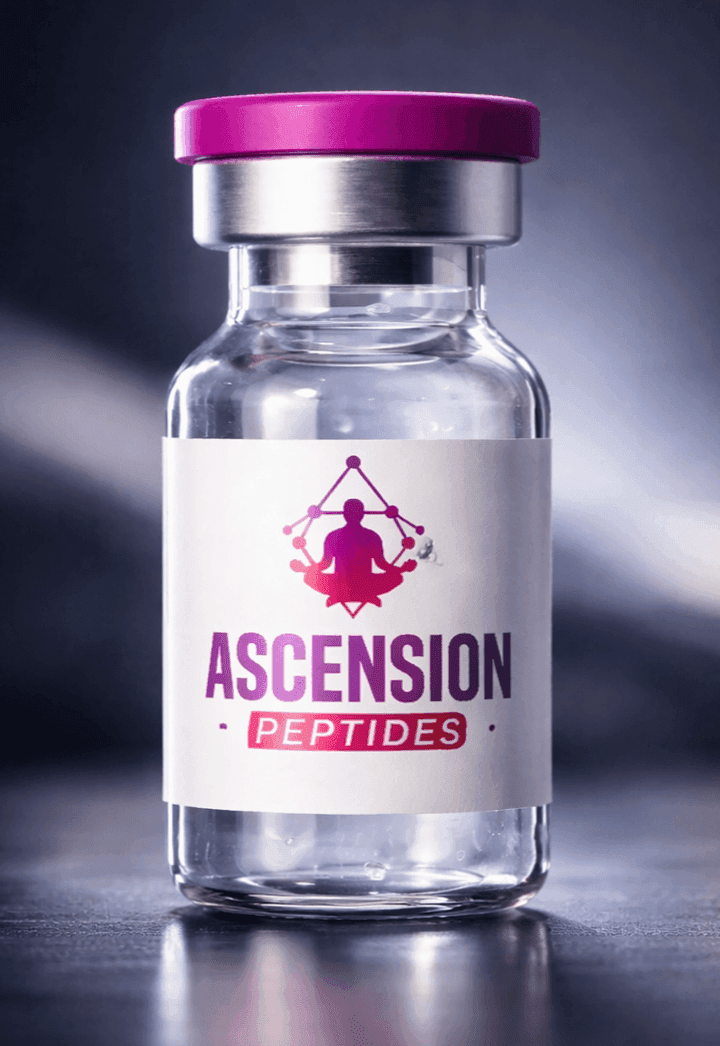
The Vendor We Have Checked: Ascension Peptides
If you go the research-vendor route, Ascension Peptides is the one we have checked against the list above. It sells retatrutide under the codes R-10 (10 mg, listed at $80 when we checked in September 2026) and R-30 (30 mg, $200). What we were able to verify:
- Every batch is tested by a third-party lab, currently Kovera Labs (older batches by MZ Biolabs), covering HPLC purity, LC-MS identity, net content per vial, endotoxin, a rapid sterility screen and heavy metals.
- The certificates are batch-specific and public. Its COA library held 85 batch certificates when we checked, and one Kovera report we looked up (KVR-2026-410047) matched the lab's own record.
- The pass mark is above 98% purity by HPLC, and recent batches tested between 98.9% and 99.9%.
- It ships within the US only, free over $250, with 3%, 5% or 10% off when you buy 3, 5 or 10 units. All sales are final, but damaged or incorrect items are replaced if reported quickly.
Two things to keep in mind. We earn a commission if you buy through these links. And documentation makes a vial better than an undocumented one, not legal or approved: everything in the section above still applies. Before you order, confirm the certificate for your batch names retatrutide in full.
What Retatrutide Costs in 2026
- Clinical trial or expanded access: free.
- Research vendor: Ascension lists 10 mg at $80 and 30 mg at $200. How long a vial lasts depends entirely on the dose, which is why price per milligram is a better comparison than price per vial. Our retatrutide cost guide works through monthly figures.
- Compounded: not a lawful product, so any price you see is for something the FDA says cannot be made legally.
- After approval: unknown. Lilly has not announced a list price, and insurers decide coverage only after approval.
What happens between approval and your pharmacy
FDA approval is not the same day a pharmacist can fill a prescription. After approval Lilly has to ship commercial supply, set a list price and negotiate with insurers and pharmacy benefit managers, each of which decides separately whether to cover it and under what conditions, usually with prior authorization. Tirzepatide is the best guide: Zepbound reached pharmacies within weeks of its November 2023 approval, but coverage for weight loss is still patchy years later, and demand outran supply for months. Expect retatrutide's first year on the market to look similar: available, but expensive out of pocket for many people and hard to get covered.
Buying Retatrutide Outside the US
Retatrutide is not approved in the UK, the EU, Canada or Australia either, so the picture is the same everywhere: trials, or an unregulated product.
| Country | Regulator | Status, October 2026 | Extra step before public funding |
|---|---|---|---|
| United States | FDA | Not approved; Lilly to file Q1 2027 | Insurer and PBM coverage decisions |
| United Kingdom | MHRA | Not approved | NICE appraisal for NHS use |
| European Union | EMA | Not approved | National pricing and reimbursement, country by country |
| Canada | Health Canada | Not approved | Provincial and private plan decisions |
| Australia | TGA | Not approved | PBS listing for subsidised supply |
Regulators outside the US usually decide after the FDA, and public funding comes later still, because bodies such as NICE in the UK and the PBS in Australia run their own cost-effectiveness reviews after approval. Customs rules on peptide imports differ by country, and a seized shipment is usually your loss. UK readers can find local detail in our retatrutide UK guide.
Approved Alternatives You Can Get Today
If what you want is the weight loss rather than retatrutide itself, two approved medicines are available now with a prescription, pharmacy supply and, for some people, insurance coverage:
- Tirzepatide (Zepbound), a dual GIP and GLP-1 agonist. In SURMOUNT-1, adults on 15 mg lost an average of 20.9% of body weight at 72 weeks. See retatrutide vs Zepbound and retatrutide vs tirzepatide.
- Semaglutide (Wegovy), a GLP-1 agonist. In the Novo Nordisk-funded STEP UP trial, a higher 7.2 mg dose produced 18.7% average weight loss at 72 weeks, against 15.6% on the standard 2.4 mg dose; whether you can get 7.2 mg depends on your country and prescriber. See retatrutide vs semaglutide.
Neither matches retatrutide's top-dose numbers, but both come with a known safety record, a regulated supply chain and a doctor adjusting the dose. Trying one of them at full dose is also a precondition for expanded access later, since that program is only for people whose obesity has not responded to the highest available dose.
Frequently Asked Questions
The Bottom Line on Where to Buy Retatrutide
Retatrutide produced the largest average weight loss yet reported in a Phase 3 obesity trial, and it is still at least a year away from any pharmacy. The legal ways to get it today are a clinical trial or, for a narrow group of very ill patients, Lilly's expanded access program, and both are free. Compounded retatrutide is unlawful, and research-labelled vials are not a legal source.
If you choose the grey market anyway, make the certificate of analysis your deciding factor, not the price: batch-specific, HPLC and mass-spec, from a lab you can verify. Ascension Peptides is the vendor we have checked against that standard. And if you are not set on retatrutide itself, an approved medicine such as tirzepatide or semaglutide gets you most of the way with a doctor and a regulated supply behind it.
When your order arrives, our guides to reconstituting retatrutide and storing it cover the next steps.
Medical Disclaimer: This article is for information only and is not medical or legal advice. Retatrutide is an investigational drug that is not approved by the FDA or any other regulator, and it is not intended to diagnose, treat, cure or prevent any disease. Buying and using research peptides carries legal and health risks that vary by country. Talk to a qualified healthcare provider before starting any weight-loss medicine.