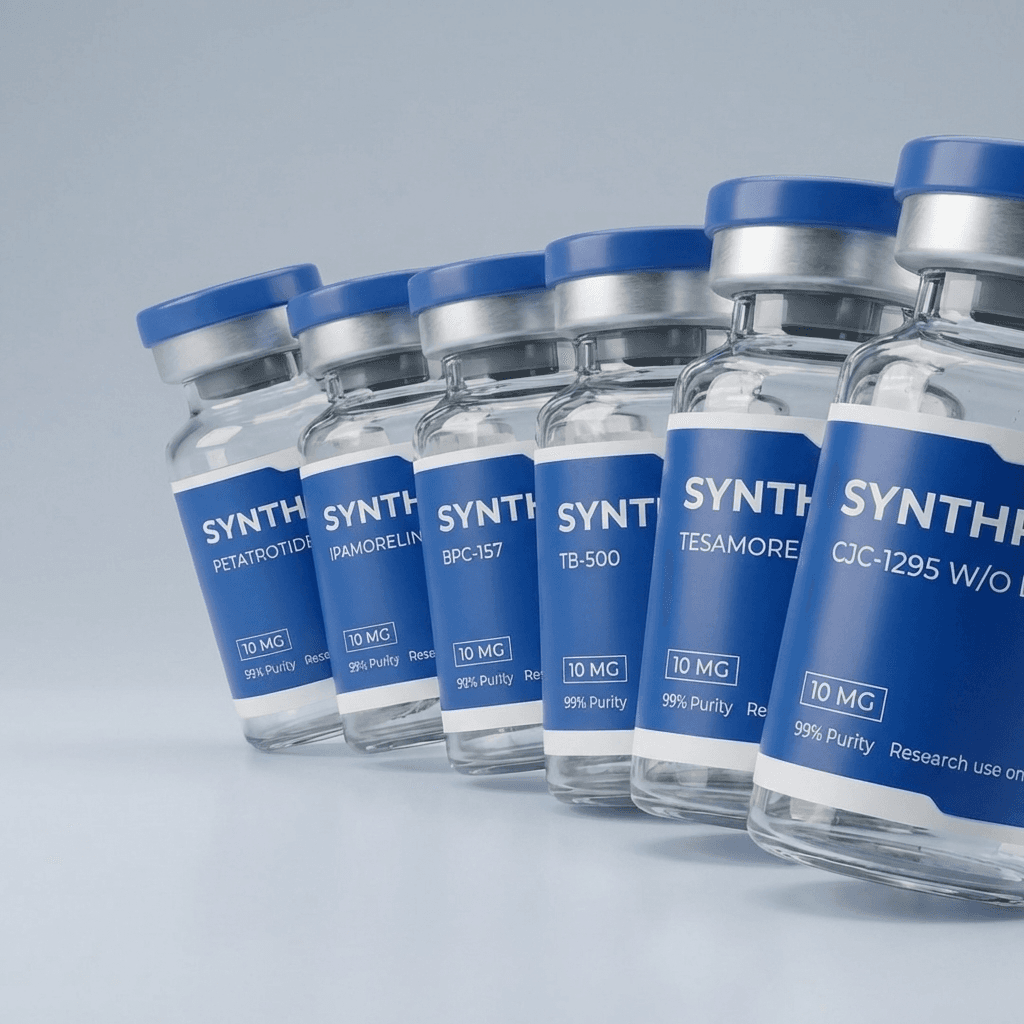

A retatrutide and MOTS-c stack pairs an investigational triple-hormone weight-loss drug with a mitochondrial peptide studied for metabolism and exercise. The rationale is that retatrutide drives appetite suppression and large fat loss while MOTS-c activates AMPK to support glucose handling and energy at the cellular level. The hard caveat: there is no human trial of this combination, MOTS-c is almost entirely preclinical, and retatrutide itself is not yet FDA approved. Treat this stack as speculative, not established.
This article explains what each compound does, why the pairing appeals to some users, what the actual evidence shows, and the safety questions that have no answer yet.
What Retatrutide Is
Retatrutide is a single molecule that activates three receptors at once: GIP, GLP-1, and glucagon. That third arm, glucagon agonism, is what separates it from dual agonists like tirzepatide and is thought to raise energy expenditure in addition to suppressing appetite. For background, see what is retatrutide and the retatrutide mechanism of action.
The phase 2 obesity trial published in the New England Journal of Medicine (NEJMoa2301972) reported a mean weight reduction of 24.2% at 48 weeks on the 12 mg dose, with no weight-loss plateau reached by the end of the study. The full dose-response was:
- 1 mg: -8.7%
- 4 mg: -17.1%
- 8 mg: -22.8%
- 12 mg: -24.2%
- Placebo: -2.1%
Larger phase 3 trials in the TRIUMPH program, which run longer (commonly 68 weeks or more) and at higher doses, are underway to confirm and extend these findings. Until those trials read out and a regulator reviews them, the phase 2 figures above are the strongest published evidence. Despite those numbers, retatrutide is investigational. As of June 2026 it has not been approved by the FDA and is not legally available for routine prescribing. You can read more in our retatrutide clinical trial summary and the timeline at when will retatrutide be available.
What MOTS-c Is
MOTS-c (mitochondrial open reading frame of the twelve S rRNA type-c) is a 16-amino-acid peptide encoded within the mitochondrial 12S rRNA region rather than the nuclear genome. The first 11 residues are conserved across at least 14 species, including humans and mice, which is part of why researchers consider it biologically significant.
Its defining feature is the AMPK connection. Under metabolic stress, MOTS-c translocates from the mitochondria to the cell nucleus in an AMPK-dependent manner and influences nuclear gene expression. AMPK (AMP-activated protein kinase) is the cell's energy sensor: when it activates, it shifts cells toward glucose uptake and fat oxidation and away from energy storage. In preclinical work, MOTS-c promotes glucose entry into cells through this pathway.
MOTS-c is also exercise-linked. In rodent studies, endogenous MOTS-c rose roughly 11.9-fold in skeletal muscle after exercise and about 1.6-fold in circulation, which is why it is sometimes described as an exercise-mimetic candidate.
What MOTS-c Has Shown (and Where)
In animal models, MOTS-c has:
- Reversed age-related insulin resistance, with one report noting old mice reached the insulin sensitivity of young mice after 7 days of treatment
- Prevented high-fat-diet-induced obesity without affecting normal-diet animals
- Supported glucose metabolism and skeletal muscle function
The critical qualifier is that this is overwhelmingly preclinical. Human evidence is limited to observational signals, such as plasma MOTS-c correlating with metabolic markers, and those signals are not always consistent across age groups. There are no large, approved human efficacy trials for MOTS-c as a therapeutic, and no established dosing, purity, or safety standard for it as an injectable peptide.
Retatrutide vs MOTS-c at a Glance
| Feature | Retatrutide | MOTS-c |
|---|---|---|
| Type | Triple agonist (GIP/GLP-1/glucagon) | Mitochondrial-derived peptide, 16 amino acids |
| Primary mechanism | Receptor agonism: appetite suppression, energy expenditure | AMPK activation, cellular glucose handling |
| Strongest evidence | Phase 2 and phase 3 human trials | Animal/preclinical studies |
| Weight-loss data in humans | 24.2% at 48 weeks (12 mg, phase 2) | None established |
| Regulatory status (June 2026) | Investigational, not FDA approved | Not an approved drug; sold as research peptide |
| Typical route | Subcutaneous injection, weekly | Subcutaneous injection (research use) |
| Dosing standard | Defined trial protocols | No validated human protocol |
For deeper retatrutide specifics, see the retatrutide dosage guide and the retatrutide dosage chart.
The Rationale People Use for Stacking
The theory behind combining them rests on complementary mechanisms rather than overlapping ones.
- Different targets. Retatrutide works at hormone receptors to cut appetite and raise expenditure. MOTS-c works inside the cell on the AMPK energy pathway. On paper, they are not competing for the same site.
- Metabolic support during a deficit. Aggressive calorie deficits from a strong agonist can blunt energy and strain metabolic flexibility. Proponents argue MOTS-c's role in glucose uptake and fat oxidation could, in theory, support metabolism while fat loss is steep.
- Energy and exercise. Because MOTS-c rises with exercise and is studied as an exercise-mimetic, some users hope it helps preserve training capacity and energy during the lower-intake phase that retatrutide tends to produce.
- Glucose handling. Both compounds influence glucose metabolism through entirely separate routes, which is the basis for the (unproven) idea that they could be additive.
Every one of these is a hypothesis extrapolated from separate, mostly animal, mechanisms. None has been tested as a combination in people.
The Evidence Gap (Read This Part Twice)
This is where the honest answer matters more than the marketing.
- Zero stack data. No clinical trial, and no published human study, has evaluated retatrutide plus MOTS-c together. Any claim about synergy is conjecture.
- MOTS-c human evidence is thin. The compelling MOTS-c findings come from mice and cell models. Animal metabolic results frequently fail to translate to humans at the same magnitude, if at all.
- Retatrutide is still investigational. You are layering an unapproved peptide on top of a drug that is itself still in trials. See is retatrutide safe for what is and is not known about retatrutide alone.
- No dosing standard for MOTS-c. There is no validated human dose, schedule, or duration. Protocols circulating in peptide communities are anecdotal.
- Product quality is unregulated. Research-grade peptides vary in purity, sterility, and actual content. There is no FDA oversight of what is sold as MOTS-c.
- Unknown interactions. AMPK activation plus glucagon-arm agonism both affect glucose. The net effect on blood sugar, especially in people on other glucose-lowering medication, has not been characterized.
Put plainly: the upside is theoretical and the risk profile is unmeasured.
Safety Considerations and Overlaps
Retatrutide's known side-effect profile is largely gastrointestinal (nausea, vomiting, diarrhea, constipation), consistent with its drug class, and is detailed in retatrutide side effects. The glucagon component also warrants attention to heart rate and glucose. Adding a second injectable with its own (poorly characterized) effects complicates attribution: if something goes wrong, you will not know which compound caused it.
Specific concerns with a combined approach:
- Glycemic uncertainty. Two compounds influencing glucose by different mechanisms could interact unpredictably, particularly relevant for anyone with diabetes or on insulin or sulfonylureas.
- No human safety record for MOTS-c. Long-term safety, immunogenicity, and dosing toxicity are not established.
- Sourcing risk. Unregulated peptides carry contamination and mislabeling risks independent of the molecule itself.
- Compounded or non-prescription retatrutide. Many people exploring stacks obtain retatrutide outside approved channels. The risks there are covered in compounded retatrutide and retatrutide without prescription.
If you are considering retatrutide at all, the conservative path is to understand the drug on its own first, including its half-life and dosing schedule, before contemplating any add-on with no clinical backing.
A More Defensible Alternative to Stacking
The evidence-based way to get MOTS-c-like benefits is the input that reliably raises it: exercise. The same metabolic levers people hope to pull with injectable MOTS-c (AMPK activation, GLUT4-mediated glucose uptake, fat oxidation, mitochondrial function) are activated by resistance and endurance training, which also has decades of human safety and efficacy data.
During a retatrutide course, the well-supported priorities are:
- Adequate protein intake to protect lean mass during rapid loss
- Resistance training to preserve muscle and metabolic rate
- Clinical monitoring of glucose, heart rate, and side effects
These deliver the metabolic-support goal that motivates the MOTS-c stack, without the unknowns of an unproven peptide combination. Adequate sleep, sodium and electrolyte balance during reduced intake, and gradual dose titration also do more to protect energy and training capacity than any add-on peptide currently can claim to.
If you still intend to explore the combination despite the gaps, the least-bad approach is to change one variable at a time. Establish a stable, tolerated retatrutide dose first, confirm your glucose and heart rate are steady, and only then consider whether anything else is worth adding. Introducing two new injectables at once makes it impossible to attribute either a benefit or a side effect, which defeats the point of experimenting at all. None of this converts a speculative stack into an evidence-based one; it only reduces the chance of a preventable mistake.
FAQ
Is there any study on stacking retatrutide with MOTS-c?
No. As of June 2026 there are no clinical trials and no published human studies on the combination. Any benefit claim is theoretical and based on separate mechanisms, not on combined data.
Does MOTS-c boost weight loss on retatrutide?
There is no human evidence that it does. MOTS-c reduced diet-induced obesity in mice, but those results have not been replicated as a human weight-loss therapy, and never alongside retatrutide.
Is MOTS-c FDA approved?
No. MOTS-c is not an approved drug. It is sold as a research peptide without standardized dosing, purity guarantees, or human safety data. Retatrutide is also not approved; it remains investigational in phase 3 trials.
What does MOTS-c actually do?
In preclinical research MOTS-c activates the AMPK energy pathway and translocates to the nucleus under metabolic stress, supporting glucose uptake and fat oxidation. It rises sharply in muscle after exercise, which is why it is studied as a possible exercise-mimetic.
Is the MOTS-c and retatrutide stack safe?
Unknown. Neither the combination nor MOTS-c as an injectable has an established human safety record. Both compounds affect glucose by different routes, and the interaction has not been characterized. This is the central reason the stack is considered speculative.
The Bottom Line
The retatrutide and MOTS-c stack is built on plausible but untested logic: a powerful triple agonist for fat loss plus a mitochondrial peptide for cellular metabolism and energy. The mechanisms do not overlap, which is why the idea is attractive. But the supporting evidence does not exist. MOTS-c is preclinical, retatrutide is investigational, no one has studied them together, and there is no validated MOTS-c dose. If your goal is metabolic support during weight loss, training and protein are the proven tools. If you want to understand retatrutide on its own, start with what is retatrutide and retatrutide vs tirzepatide.
This article is for informational purposes only and is not medical advice; consult a qualified clinician before starting, combining, or stopping any medication or peptide.
References
- Jastreboff et al. Triple–Hormone-Receptor Agonist Retatrutide for Obesity — A Phase 2 Trial, NEJM 2023
- Lee et al. The Mitochondrial-Derived Peptide MOTS-c Promotes Metabolic Homeostasis and Reduces Obesity and Insulin Resistance — Cell Metabolism, 2015
- Kim et al. The Mitochondrial-Encoded Peptide MOTS-c Translocates to the Nucleus to Regulate Nuclear Gene Expression in Response to Metabolic Stress — Cell Metabolism, 2018