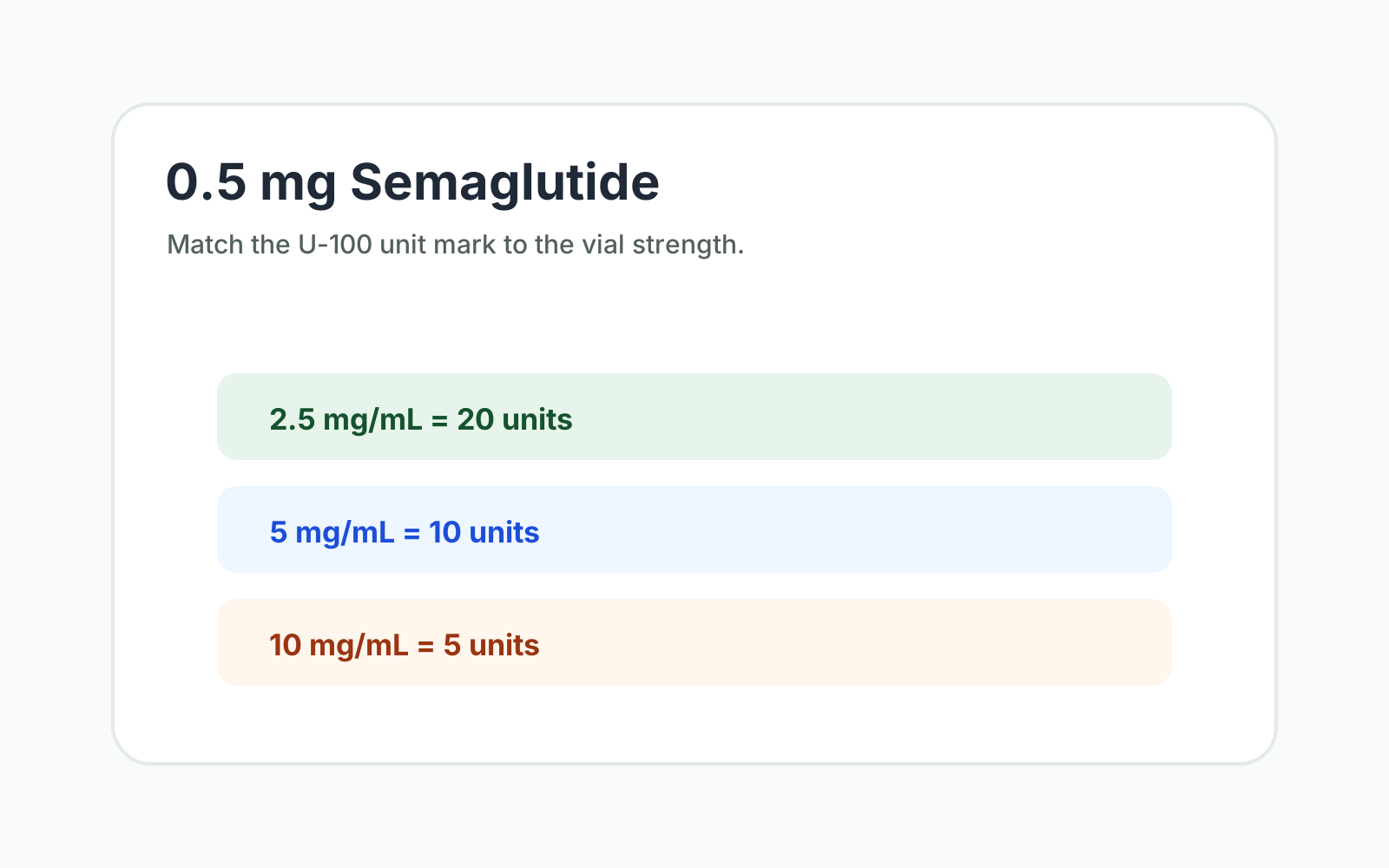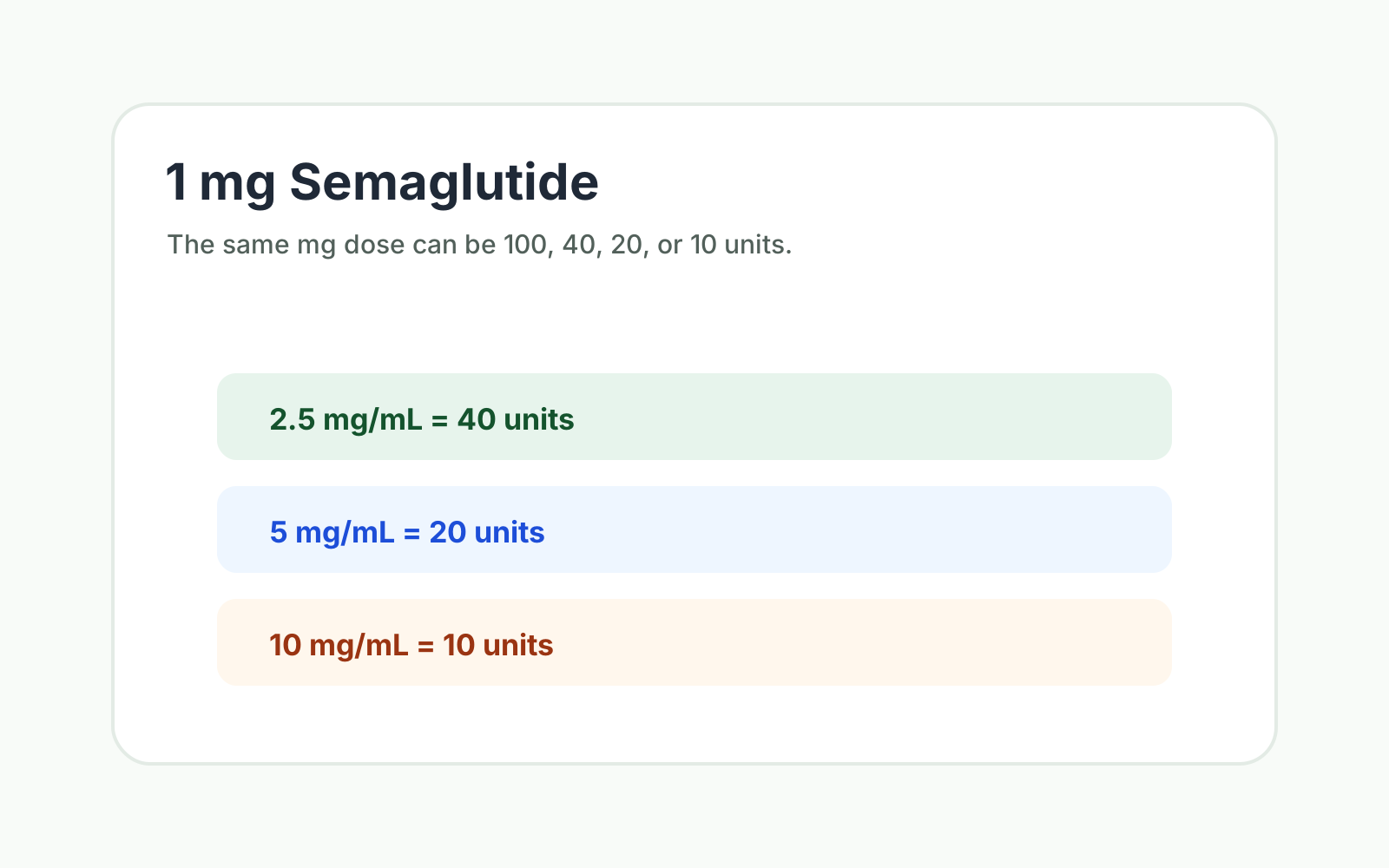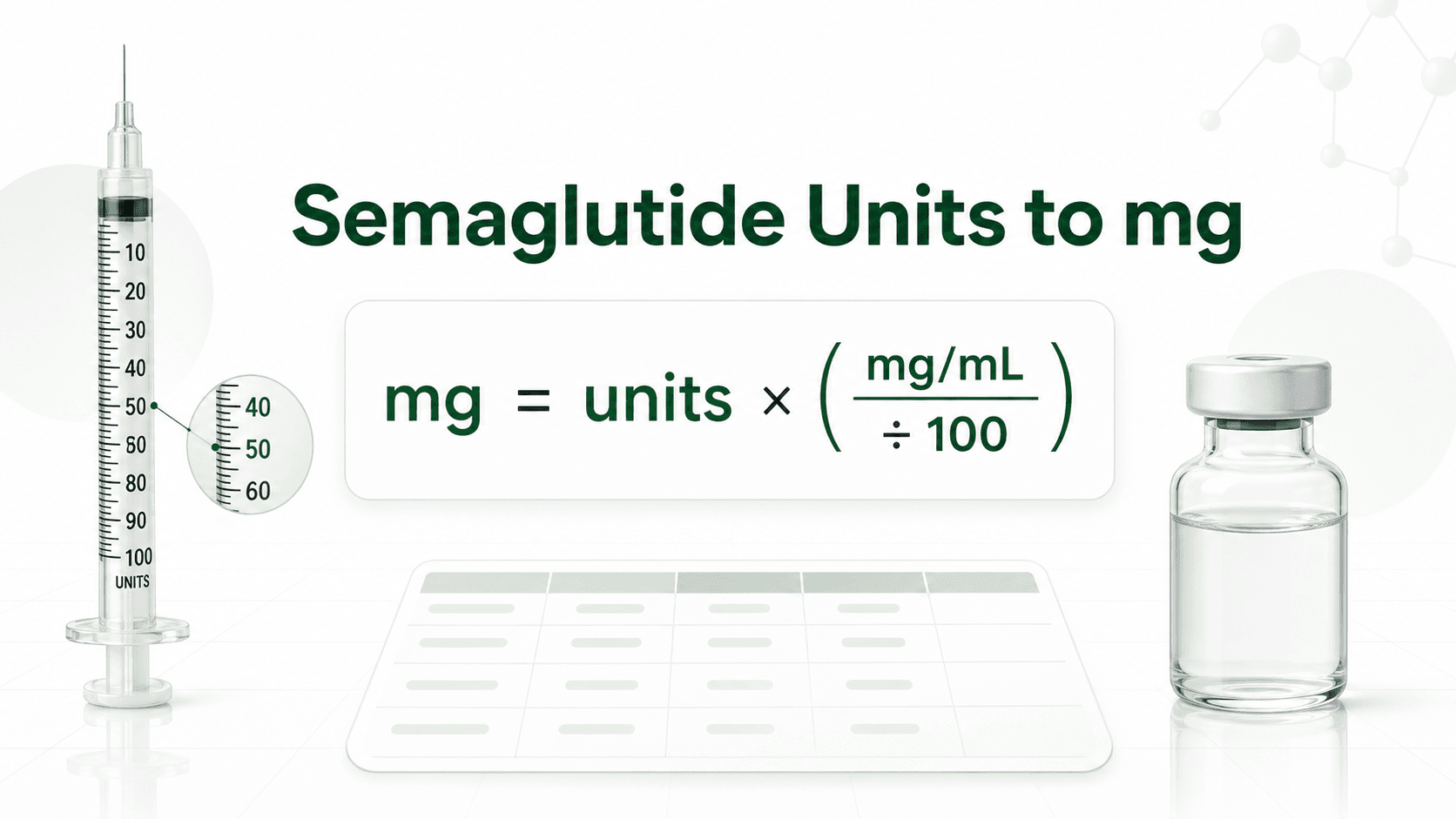
Direct answer: Units are not a fixed property of semaglutide — they depend entirely on the concentration in the vial. A quick mg-to-units summary: divide the prescribed mg dose by the mg/mL concentration, then multiply by 100. At 2.5 mg/mL, 0.5 mg = 20 units; 1 mg = 40 units; 2 mg = 80 units. At 5 mg/mL, those same doses are 10, 20, and 40 units respectively. At 10 mg/mL they are 5, 10, and 20 units.
This is educational math, not personal dosing advice. Use the prescribing clinician's instructions and the pharmacy label. Branded semaglutide pens such as Ozempic and Wegovy are not usually converted into syringe units.
The Core Formula
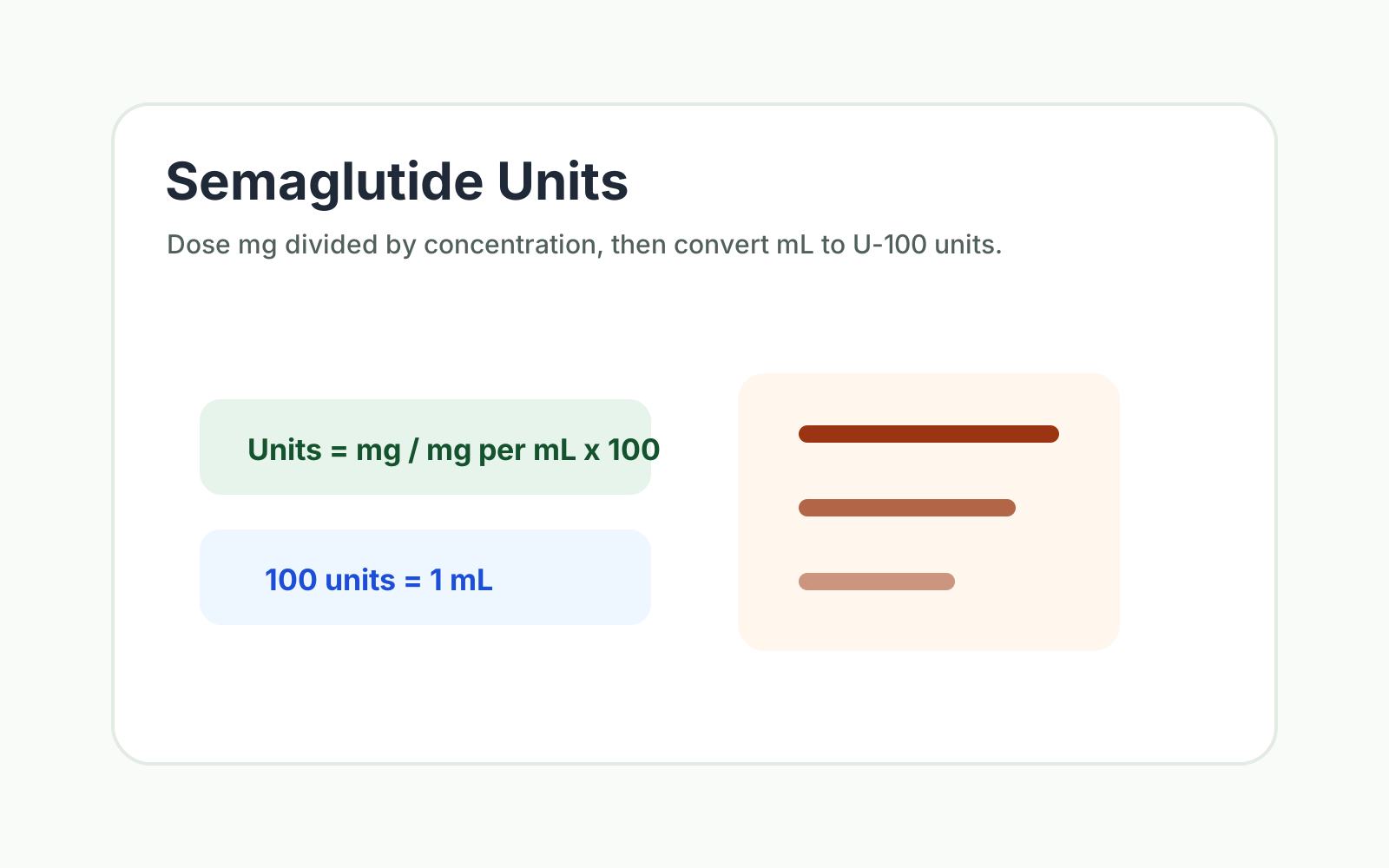
Units = (dose in mg ÷ concentration in mg/mL) × 100
| What you need | Why it matters |
|---|---|
| Dose in mg | The prescribed amount of semaglutide |
| Concentration in mg/mL | The strength of the liquid after compounding or preparation |
| Syringe type | This article assumes a U-100 insulin syringe |
| Formula | Units = dose mg / concentration mg/mL × 100 |
If any one of these details is missing, the unit amount cannot be confirmed safely.
Complete mg-to-Units Conversion Chart
This semaglutide units conversion chart assumes one thing throughout: a U-100 insulin syringe, where 100 units is 1 mL, drawn from a vial whose label states a concentration in mg/mL. These examples show how much the answer changes by concentration. The same mg dose looks very different on the syringe depending on how the vial was prepared.
| Semaglutide dose | 1 mg/mL | 2.5 mg/mL | 5 mg/mL | 10 mg/mL |
|---|---|---|---|---|
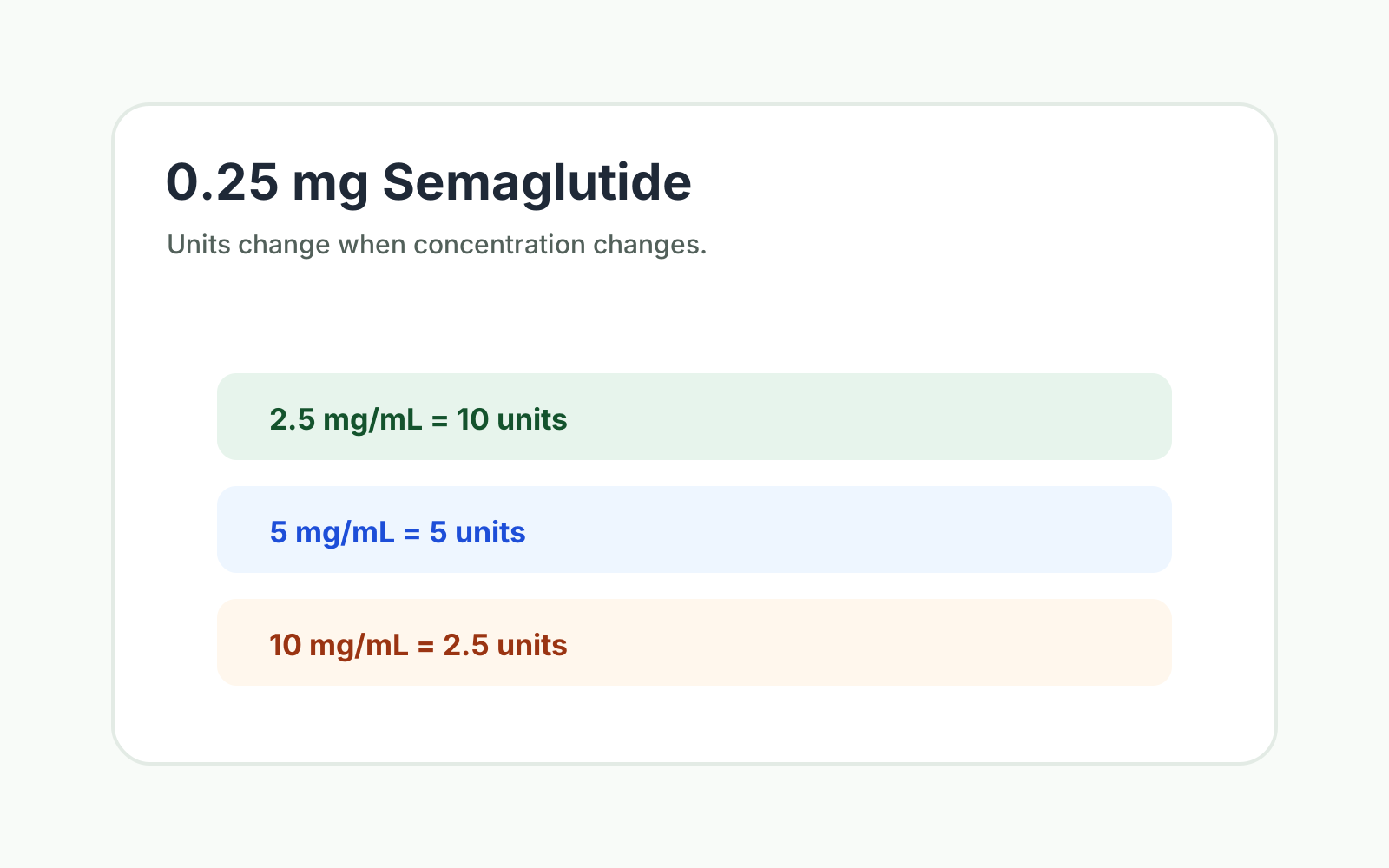
| 0.25 mg | 25 units | 10 units | 5 units | 2.5 units |
| 0.5 mg | 50 units | 20 units | 10 units | 5 units |
| 1 mg | 100 units | 40 units | 20 units | 10 units |
| 1.7 mg | 170 units | 68 units | 34 units | 17 units |
| 2 mg | 200 units | 80 units | 40 units | 20 units |
| 2.4 mg | 240 units | 96 units | 48 units | 24 units |
Amounts above 100 units exceed a single 1 mL U-100 syringe. Do not split injections, combine syringes, or change dose timing unless the prescriber or dispensing pharmacy gives explicit instructions.
Which Syringe Will Actually Hold the Dose
Unit marks are only comparable between syringes printed with the same scale. On any U-100 syringe — written U100 on some packaging, and sold as a 100 unit or 1 mL insulin syringe — one unit is 0.01 mL. Barrel size does not change what a unit means; it changes how much total volume fits.
| Syringe | What 1 unit means | Full barrel | Will it hold 85 units (0.85 mL)? |
|---|---|---|---|
| U-100, 0.3 mL barrel | 0.01 mL | 30 units | No |
| U-100, 0.5 mL barrel | 0.01 mL | 50 units | No |
| U-100, 1 mL barrel | 0.01 mL | 100 units | Yes |
| U-40, 1 mL barrel | 0.025 mL | 40 units | No — the 85 mark does not exist, and 85 U-40 units would be 2.125 mL |
| Tuberculin 1 mL, mL markings only | no unit marks | 1 mL | Yes, but read it as 0.85 mL |
That table answers a question people ask in almost exactly these words: if you are taking 85 units of semaglutide, can you use any unit syringe? No. Eighty-five units means 0.85 mL only on a U-100 scale, and that needs a full 1 mL barrel. A 0.3 mL or 0.5 mL barrel cannot hold it. On a U-40 syringe the same number would be 2.125 mL, more than twice the volume and more than the barrel holds. U-500 syringes are different again at 0.002 mL per unit. Read the scale printed on the barrel, not just the highest number on it.
A draw that large is also worth double-checking. On a U-100 syringe, 0.85 mL is 0.85 mg at 1 mg/mL, 2.125 mg at 2.5 mg/mL, 4.25 mg at 5 mg/mL, and 8.5 mg at 10 mg/mL. If the arithmetic keeps landing near the top of the barrel, the concentration on the label is the number to confirm with the pharmacy first.
How Many Units Is 0.5 mg of Semaglutide?
The question "how many units is 0.5 mg of semaglutide" is one of the most common unit-conversion searches — and it has no single answer without the concentration. At 1 mg/mL, 0.5 mg is 50 units. At 2.5 mg/mL it is 20 units. At 5 mg/mL it is 10 units. At 10 mg/mL it is only 5 units. Every one of those figures assumes a U-100 syringe, so on a 100 unit syringe 50 units is half the barrel and 10 units is one tenth of a millilitre. Always confirm mg/mL from the pharmacy label before drawing up any dose. The same logic applies at the maintenance step — see how many units 2.4 mg of semaglutide is.
If You Inject 30 Units of 1.0 mg/mL Semaglutide, What Is the Dosage?
Working backward from units to mg is the same formula in reverse: mg = (units ÷ 100) × concentration. The query "if you inject 30 units of 1.0mg semaglutide was is the dosage of med?" reflects a real clinical concern. At 1 mg/mL, 30 units = 0.30 mL = 0.30 mg of semaglutide. At 2.5 mg/mL, 30 units would equal 0.75 mg. Knowing the concentration is what makes the answer meaningful.
| Starting point | Concentration | Calculation | Result |
|---|---|---|---|
| 30 units | 1 mg/mL | (30 ÷ 100) × 1 | 0.30 mg |
| 30 units | 2.5 mg/mL | (30 ÷ 100) × 2.5 | 0.75 mg |
| 30 units | 5 mg/mL | (30 ÷ 100) × 5 | 1.50 mg |
| 30 units | 10 mg/mL | (30 ÷ 100) × 10 | 3.00 mg |
Why Search Results Give Different Unit Numbers
Many search results assume a specific concentration. One page may calculate 0.25 mg at 2.5 mg/mL. Another may use 5 mg/mL. A third may use a vial that was prepared with a different amount of diluent.
That is why "how many units is semaglutide?" has no universal answer. The same mg dose can be a small mark on one syringe and a much larger draw on another.
When the Label Gives Total mg and a Diluent Volume Instead of mg/mL
Plenty of labels never print a mg/mL figure at all. They print the total milligrams in the vial and the volume of liquid it is dissolved in, and leave the division to you. A label reading "40 mg in 3.8 mL" is a 10.53 mg/mL vial, because 40 divided by 3.8 is 10.53.
This table assumes a vial whose label states total mg, the stated diluent volume already in the vial, and a U-100 syringe where 100 units is 1 mL. Concentration is total mg divided by total mL; units are dose mg divided by concentration, times 100.
| Vial label | Diluent volume | Concentration | Target dose | Volume to draw | Units on U-100 |
|---|---|---|---|---|---|
| 5 mg total | 2.5 mL | 2 mg/mL | 0.25 mg | 0.125 mL | 12.5 units |
| 10 mg total | 2 mL | 5 mg/mL | 1 mg | 0.20 mL | 20 units |
| 15 mg total | 3 mL | 5 mg/mL | 1.7 mg | 0.34 mL | 34 units |
| 20 mg total | 2 mL | 10 mg/mL | 2.4 mg | 0.24 mL | 24 units |
| 40 mg total | 3.8 mL | 10.53 mg/mL | 4 mg | 0.38 mL | 38 units |
The last row shows the shortcut worth keeping: when the dose is a fraction of the vial, the volume is that same fraction of the vial. Four mg out of a 40 mg vial is one tenth of the vial, so it is one tenth of 3.8 mL, which is 0.38 mL, which is 38 units. You never need the 10.53 figure to get there, though it gives the same answer.
Two cautions on this table. First, 4 mg is not one of the labeled semaglutide injection steps — Ozempic steps are 0.25, 0.5, 1 and 2 mg, and Wegovy steps are 0.25, 0.5, 1, 1.7, 2.4 and 7.2 mg — so a dose written that way should be confirmed with the prescriber rather than derived from a chart. Second, if a vial arrives as powder, the amount of diluent added is the whole ballgame. The same 10 mg of powder is 10 mg/mL in 1 mL of bacteriostatic water and 5 mg/mL in 2 mL, and every unit number doubles between those two vials even though the label on the powder never changed.
Dose Ladder by Week and Typical Unit Ranges
Standard compounded semaglutide protocols follow a dose escalation schedule. The semaglutide dosing chart in units below assumes a U-100 syringe and the two concentrations most often dispensed. Units vary by pharmacy concentration, but the mg milestones are consistent.
| Week range | Typical mg dose | At 2.5 mg/mL | At 5 mg/mL |
|---|---|---|---|
| Weeks 1–4 | 0.25 mg | 10 units | 5 units |
| Weeks 5–8 | 0.5 mg | 20 units | 10 units |
| Weeks 9–12 | 1 mg | 40 units | 20 units |
| Weeks 13–16 | 1.7 mg | 68 units | 34 units |
| Maintenance | 2–2.4 mg | 80–96 units | 40–48 units |
Dose timing and escalation decisions belong to the prescriber, not a conversion chart. This table is for reference only.
Branded Pens Are Different From Vials
Ozempic and Wegovy pens are designed around labeled dose delivery. The patient does not normally measure the dose with a U-100 syringe.
Do not withdraw semaglutide from a branded pen into a syringe unless a licensed clinician or pharmacist specifically instructs you. The dosing design, sterility, and labeling are different from a vial workflow.
What Ozempic and Wegovy Actually Contain
Pens do have concentrations. They are simply printed as a dose over a volume rather than as mg/mL, which is why forum answers about "semaglutide units" disagree with each other so often. The strengths below are the manufacturer figures in the current US prescribing information.
The unit column in both tables is arithmetic only. It shows what that same volume would read on a U-100 syringe, where 100 units is 1 mL. It is not an instruction to withdraw a pen or prefilled-syringe dose into an insulin syringe.
| Ozempic presentation | Concentration | Dose per injection | Volume at that concentration | Same volume on a U-100 syringe |
|---|---|---|---|---|
| 2 mg/3 mL pen | 0.68 mg/mL | 0.25 mg | 0.37 mL | 36.8 units |
| 2 mg/3 mL pen | 0.68 mg/mL | 0.5 mg | 0.74 mL | 73.5 units |
| 4 mg/3 mL pen | 1.34 mg/mL | 0.5 mg | 0.37 mL | 37.3 units |
| 4 mg/3 mL pen | 1.34 mg/mL | 1 mg | 0.75 mL | 74.6 units |
| 8 mg/3 mL pen | 2.68 mg/mL | 2 mg | 0.75 mL | 74.6 units |
| Prefilled syringe, 0.25 mg/0.5 mL | 0.5 mg/mL | 0.25 mg | 0.5 mL | 50 units |
| Prefilled syringe, 0.5 mg/0.5 mL | 1 mg/mL | 0.5 mg | 0.5 mL | 50 units |
| Prefilled syringe, 1 mg/0.5 mL | 2 mg/mL | 1 mg | 0.5 mL | 50 units |
One caveat on the Ozempic volumes: 0.68, 1.34 and 2.68 mg/mL are the rounded concentrations the label prints, and the volumes above are worked from those rounded figures. The pen delivers its labeled dose whatever the arithmetic says, so treat that column as close, not exact.
Wegovy is the other half of the question people type as a mg to units conversion on a 1 mL syringe. It is supplied as single-dose pens, single-dose prefilled syringes, and one four-dose FlexTouch pen — never as a vial you draw from — so the unit column here is illustrative rather than a workflow.
| Wegovy presentation | Concentration | Dose per injection | Volume | Same volume on a U-100 syringe |
|---|---|---|---|---|
| 0.25 mg/0.5 mL | 0.5 mg/mL | 0.25 mg | 0.5 mL | 50 units |
| 0.5 mg/0.5 mL | 1 mg/mL | 0.5 mg | 0.5 mL | 50 units |
| 1 mg/0.5 mL | 2 mg/mL | 1 mg | 0.5 mL | 50 units |
| 1.7 mg/0.75 mL | 2.27 mg/mL | 1.7 mg | 0.75 mL | 75 units |
| 2.4 mg/0.75 mL | 3.2 mg/mL | 2.4 mg | 0.75 mL | 75 units |
| 7.2 mg/0.75 mL (Wegovy HD) | 9.6 mg/mL | 7.2 mg | 0.75 mL | 75 units |
| 9.6 mg/3 mL FlexTouch | 3.2 mg/mL | 2.4 mg, four doses per pen | 0.75 mL per dose | 75 units |
Two things fall out of these tables. A branded pen's concentration has nothing to do with a compounded vial's concentration, so a unit number that is correct for one is wrong for the other. And an 8 mg/3 mL pen is a 2.68 mg/mL product: the "8 mg" is the entire cartridge, not the dose. Reading a total-vial figure as a dose is the most dangerous mistake in semaglutide unit math, and it is the one that turns a 2 mg injection into a four-fold overdose on paper.
How to Read the Label Before Doing Any Math
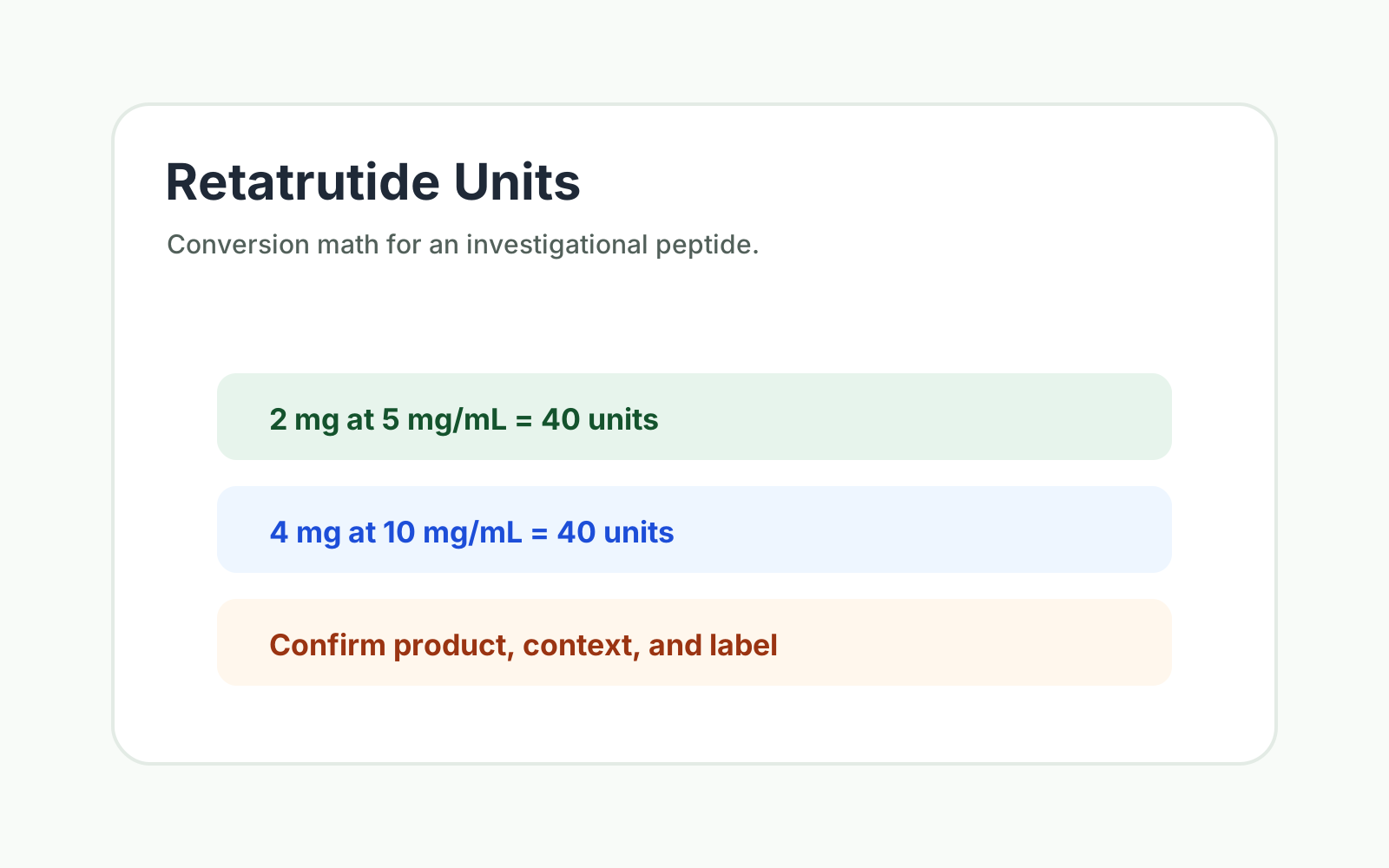
For semaglutide dosage in units, the label matters more than any online chart. A safe conversion starts by identifying the medication name, the prescribed dose in milligrams, the concentration in milligrams per milliliter, the syringe type, and whether the product is a branded pen, commercial vial, compounded vial, or research-market vial. If any of those details are missing, the calculation is incomplete. The routes behind each of those product types are compared in our guide to where to buy semaglutide.
A U-100 syringe — printed U100 on some packaging, and sold as a 100 unit insulin syringe — is a volume tool. It does not know what drug is inside the vial. On that syringe, 100 units equals 1 mL, 50 units equals 0.5 mL, and 10 units equals 0.1 mL. The concentration tells you how many milligrams are in that volume. That is why two people can both say they are taking the same milligram dose but draw up different unit amounts.
| Label item | What to look for | Why it changes the answer |
|---|---|---|
| Medication name | Semaglutide, tirzepatide, retatrutide, or brand name | Similar names are not interchangeable |
| Dose | Usually written in mg | This is the actual medication amount |
| Concentration | mg/mL or total mg plus final mL | This determines the syringe units |
| Device | Pen, vial, U-100 syringe, or other device | Pens are not usually converted to units |
| Date and storage | Expiration, BUD, refrigeration | Unsafe product should not be calculated into use |
What to Confirm Before Using Any Unit Chart
Before relying on a unit chart, confirm:
- The exact medication name.
- The dose written in mg.
- The concentration in mg/mL.
- The syringe type.
- Whether the medication is a branded pen, commercial vial, or compounded vial.
- Whether the pharmacy label already gives a syringe-unit instruction.
- What to do if the unit amount is fractional or greater than the syringe capacity.
Common Conversion Mistakes
The most common mistake is treating units like a medication dose. Units are only a volume marking. Another common mistake is copying a chart that assumes a concentration that does not match the vial. A third mistake is using a unit number from a friend, clinic forum, or old prescription after the pharmacy changed the concentration.
A safer thought process is: first confirm the mg dose, then confirm the mg/mL concentration, then calculate mL, then convert mL to U-100 units. If the resulting number is fractional, unusually high, or above the syringe capacity, the next step is not rounding. The next step is asking the pharmacy how that prescription is meant to be measured.
Worked Scenario Framework
Use this framework for any vial-based GLP-1 calculation. Suppose the prescribed dose is written in mg. Divide that dose by the concentration in mg/mL. The result is mL. If the syringe is U-100, multiply mL by 100 to get units.
| Step | Example question | Safe action |
|---|---|---|
| 1 | What dose was prescribed? | Use the written mg dose, not memory |
| 2 | What is the concentration? | Read mg/mL from the label or ask the pharmacy |
| 3 | What syringe is used? | Confirm U-100 before using unit math |
| 4 | Is the answer measurable? | Ask before rounding fractional units |
| 5 | Does the result match the label? | Resolve conflicts before injecting |
Safety Notes
Call the prescriber or pharmacist before injecting if the label is unclear, if the numbers do not match, if the syringe size is different, or if the medication looks cloudy, discolored, contaminated, or improperly stored.
Seek urgent medical care for severe abdominal pain, repeated vomiting, dehydration symptoms, fainting, allergic reaction symptoms, or a dosing accident that could involve too much medication.
Questions to Bring to the Prescriber or Pharmacist
- Does my current dose and timing match the official label or my prescription?
- Are my symptoms or concerns expected at this stage, or do they suggest changing the plan?
- Should I delay escalation, restart lower, hold steady, or be evaluated before continuing?
- Are any of my other medications increasing risk, especially insulin, sulfonylureas, blood pressure medication, diuretics, or drugs affected by delayed gastric emptying?
- What exact symptoms should make me call urgently or seek same-day care?
- If cost or supply interrupts therapy, what is the safest backup plan?
FAQ
Is 10 units of semaglutide always 0.25 mg?
No. Ten units equals 0.1 mL on a U-100 syringe. The mg amount depends on how many mg are in each mL.
How many units is 0.25 mg of semaglutide?
At 2.5 mg/mL, 0.25 mg is 10 units. At 5 mg/mL, it is 5 units. At 10 mg/mL, it is 2.5 units.
Can I use this chart for Ozempic or Wegovy pens?
No. Pens are not normally measured in U-100 syringe units. Follow the pen label and prescriber instructions.
How many units is 1 mg of semaglutide?
It depends entirely on the concentration, and 1 mg is the dose most often quoted online with no concentration attached. On a U-100 syringe, where 100 units is 1 mL: at 1 mg/mL, 1 mg is 100 units; at 2 mg/mL it is 50 units; at 2.5 mg/mL it is 40 units; at 5 mg/mL it is 20 units; at 10 mg/mL it is 10 units. The same arithmetic answers "1 mg equals how many units" for anything in a vial — divide the mg by the mg/mL, then multiply by 100. Worked in more detail on how many units is 1 mg of semaglutide.
Is 1 mg the same as 0.75 mL for semaglutide?
Only at one concentration. One mg fills 0.75 mL when the solution is 1.33 mg/mL, which is close to the Ozempic 4 mg/3 mL pen the label lists as 1.34 mg/mL. At that strength 1 mg works out to 0.746 mL, which would read as roughly 75 units on a U-100 syringe. Move the concentration and the volume moves with it: 1 mg is 1 mL at 1 mg/mL, 0.4 mL at 2.5 mg/mL, 0.2 mL at 5 mg/mL, and 0.1 mL at 10 mg/mL. Milligrams and millilitres are never interchangeable without the mg/mL figure in between.
I take 85 units of semaglutide — can I use any unit syringe?
No. Eighty-five units is 0.85 mL only on a U-100 scale, so it needs a full 1 mL U-100 barrel. A 0.3 mL or 0.5 mL barrel physically cannot hold it, and on a U-40 syringe that same number would be 2.125 mL. Since 0.85 mL is 2.125 mg at 2.5 mg/mL and 4.25 mg at 5 mg/mL, a draw that large is also worth confirming with the pharmacy before it becomes routine.
How many units is 50 mg?
Fifty mg is almost never an injection dose. It is nearly always the total milligrams in a vial before dilution. No labeled semaglutide injection comes near it: Ozempic tops out at 2 mg per injection and Wegovy at 7.2 mg. If a label says 50 mg, look for the volume printed next to it — 50 mg in 5 mL is 10 mg/mL, 50 mg in 2 mL is 25 mg/mL — and calculate units from that mg/mL figure and your actual prescribed dose, never from the 50.
How many units is 2.4 mg of semaglutide?
At 2.5 mg/mL, 2.4 mg of semaglutide is 96 units on a U-100 insulin syringe. At 5 mg/mL, it's 48 units. At 10 mg/mL, it's 24 units. The 2.4 mg dose is the FDA-approved Wegovy maintenance dose for weight management. If you're drawing 2.4 mg from compounded semaglutide, the formula is: 2.4 mg ÷ concentration (mg/mL) = mL to draw; then mL × 100 = units on a U-100 syringe.
Internal Reading Path
- Semaglutide dosage chart
- Semaglutide units to mg
- What to eat on GLP-1
- GLP-1 nausea
Summary
Semaglutide units are a volume measurement, not a dose by themselves. The dose is the mg amount. The concentration tells you how many syringe units match that mg amount. Confirm concentration, dose, and syringe type from the pharmacy label before drawing up any injection.
References
- U.S. Food and Drug Administration. WEGOVY (semaglutide) injection — Prescribing Information. (Approved semaglutide doses, including the 2.4 mg weight-management maintenance dose.)
- Collins L, Costello RA. Glucagon-Like Peptide-1 Receptor Agonists. StatPearls, NCBI Bookshelf. (Semaglutide is a subcutaneously injected GLP-1 receptor agonist; dosing and administration.)
- Novo Nordisk Inc. OZEMPIC (semaglutide) injection — Prescribing Information. DailyMed. (Pen presentations 2 mg/3 mL at 0.68 mg/mL, 4 mg/3 mL at 1.34 mg/mL and 8 mg/3 mL at 2.68 mg/mL, plus the 0.25 mg, 0.5 mg and 1 mg single-dose prefilled syringes.)
- Novo Nordisk Pharmaceutical Industries, LP. WEGOVY (semaglutide) injection and tablets — Prescribing Information. DailyMed. (Single-dose pen and syringe strengths from 0.25 mg/0.5 mL through 7.2 mg/0.75 mL, and the 9.6 mg/3 mL FlexTouch pen.)