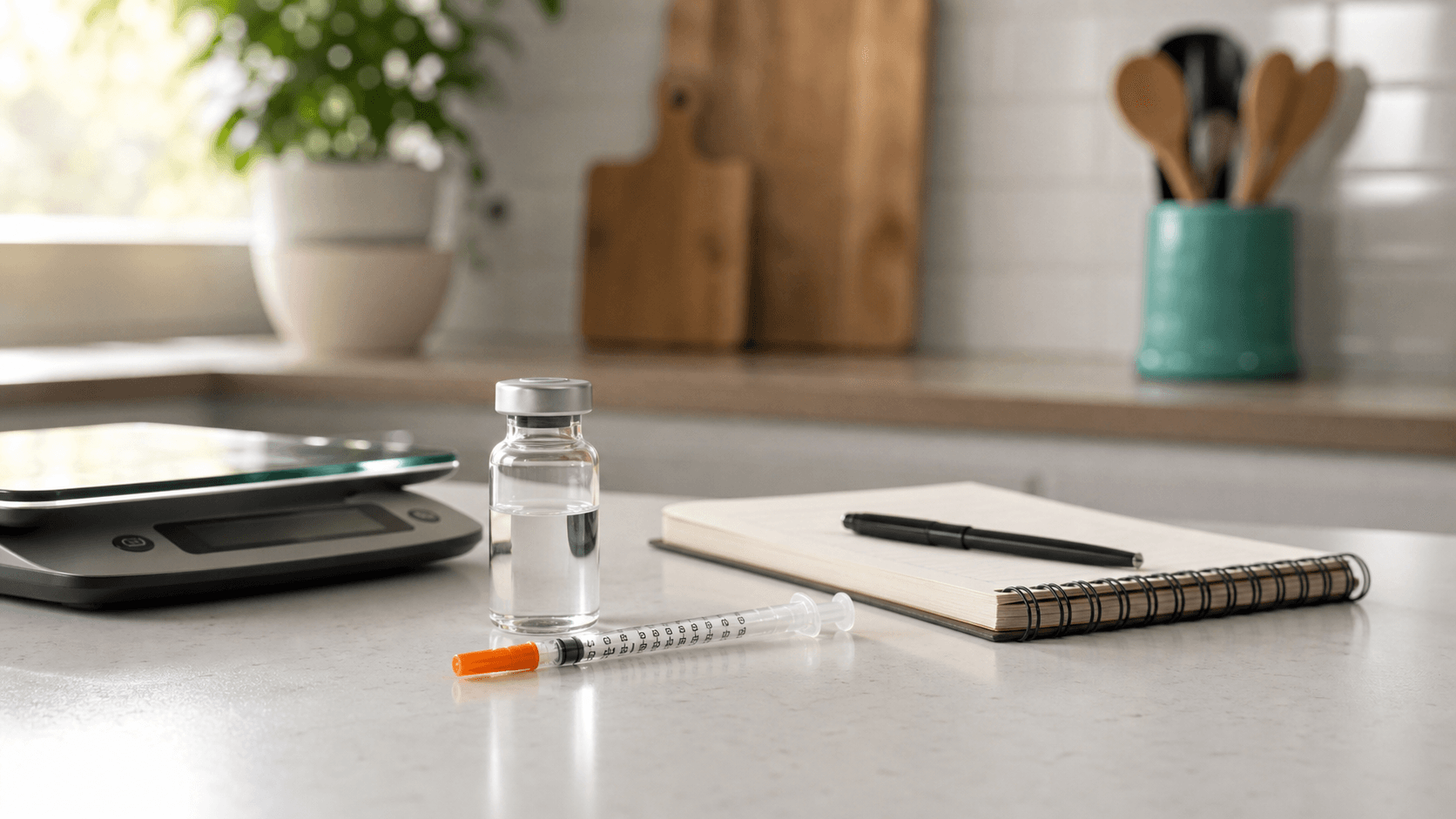
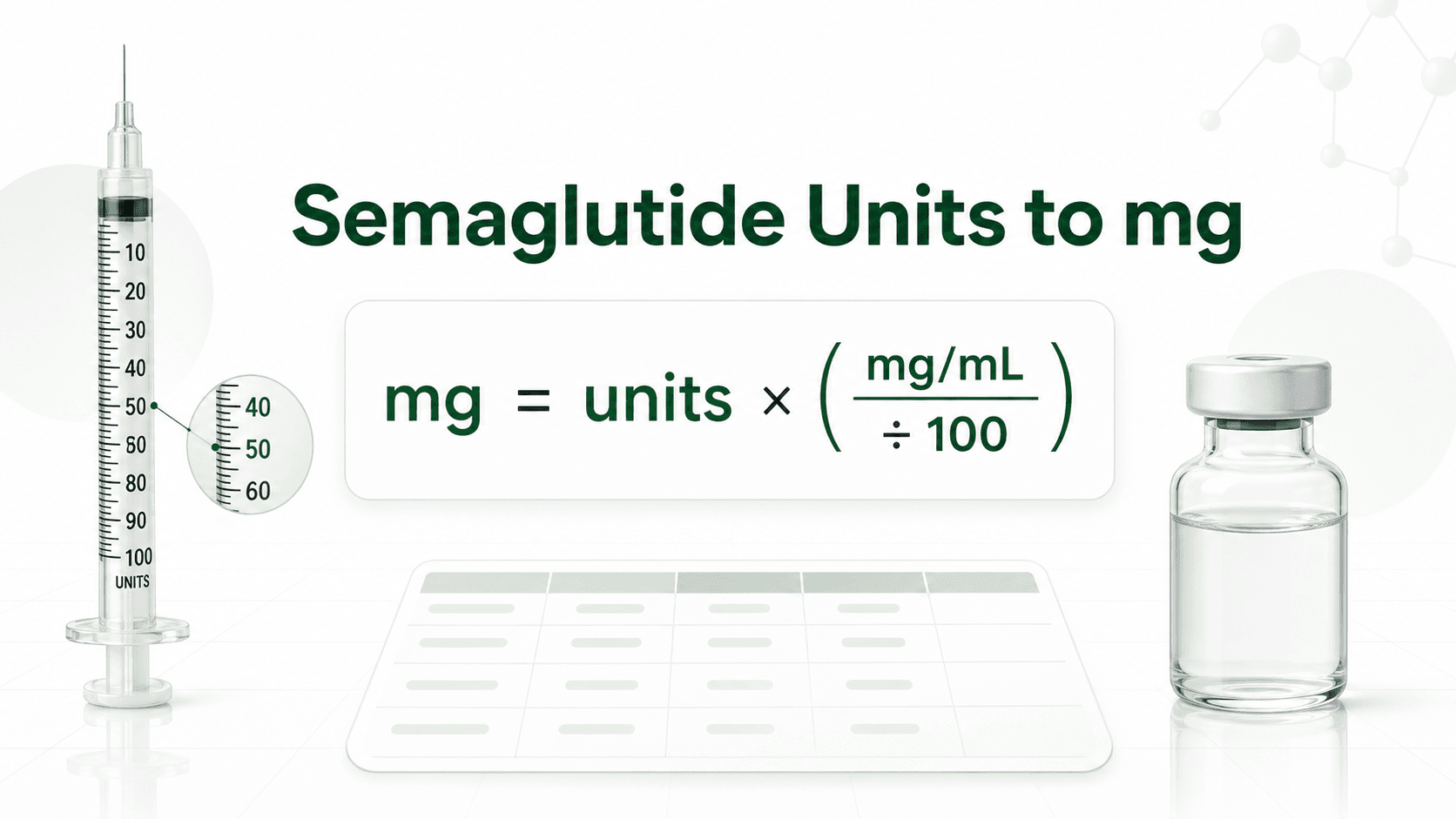
Semaglutide units only convert to mg when you know the concentration of the vial or pen solution. On a U-100 insulin syringe, 100 units equals 1 mL. The missing piece is how many milligrams of semaglutide are in each milliliter.
The direct formula is:
mg = units × concentration in mg/mL ÷ 100
To work the other direction:
units = mg dose × 100 ÷ concentration in mg/mL
This page is for understanding the math. It is not a dosing recommendation. Semaglutide is a prescription medication, and your prescribing clinician or pharmacy label should be the source of truth for your dose, concentration, route, and schedule.
Quick answer
If your semaglutide concentration is 2.5 mg/mL, then 10 units on a U-100 syringe equals 0.25 mg. If the concentration is 5 mg/mL, the same 10 units equals 0.5 mg. That is why a unit number alone is incomplete.
| What you know | Formula to use | Example |
|---|---|---|
| Units and concentration | mg = units × mg/mL ÷ 100 | 20 units at 2.5 mg/mL = 0.5 mg |
| Target mg dose and concentration | units = mg × 100 ÷ mg/mL | 1 mg at 5 mg/mL = 20 units |
| Vial mg and water added | concentration = vial mg ÷ mL added | 5 mg vial + 2 mL = 2.5 mg/mL |
The U-100 syringe rule
Most conversion searches assume a U-100 insulin syringe. U-100 means the syringe scale is based on 100 units per 1 mL. That creates two fixed rules:
- 100 units = 1 mL
- 50 units = 0.5 mL
- 10 units = 0.1 mL
- 1 unit = 0.01 mL
The syringe does not know whether the liquid is semaglutide, tirzepatide, or plain water. It only measures volume. The amount of semaglutide in that volume depends on concentration.
Semaglutide units-to-mg chart by concentration
Use the chart only after verifying the concentration printed on your prescription label or mixing instructions. Compounded products can use different concentrations, so the same unit mark can represent a different mg amount from one vial to another.
| Semaglutide dose | 1 mg/mL | 2.5 mg/mL | 5 mg/mL |
|---|---|---|---|
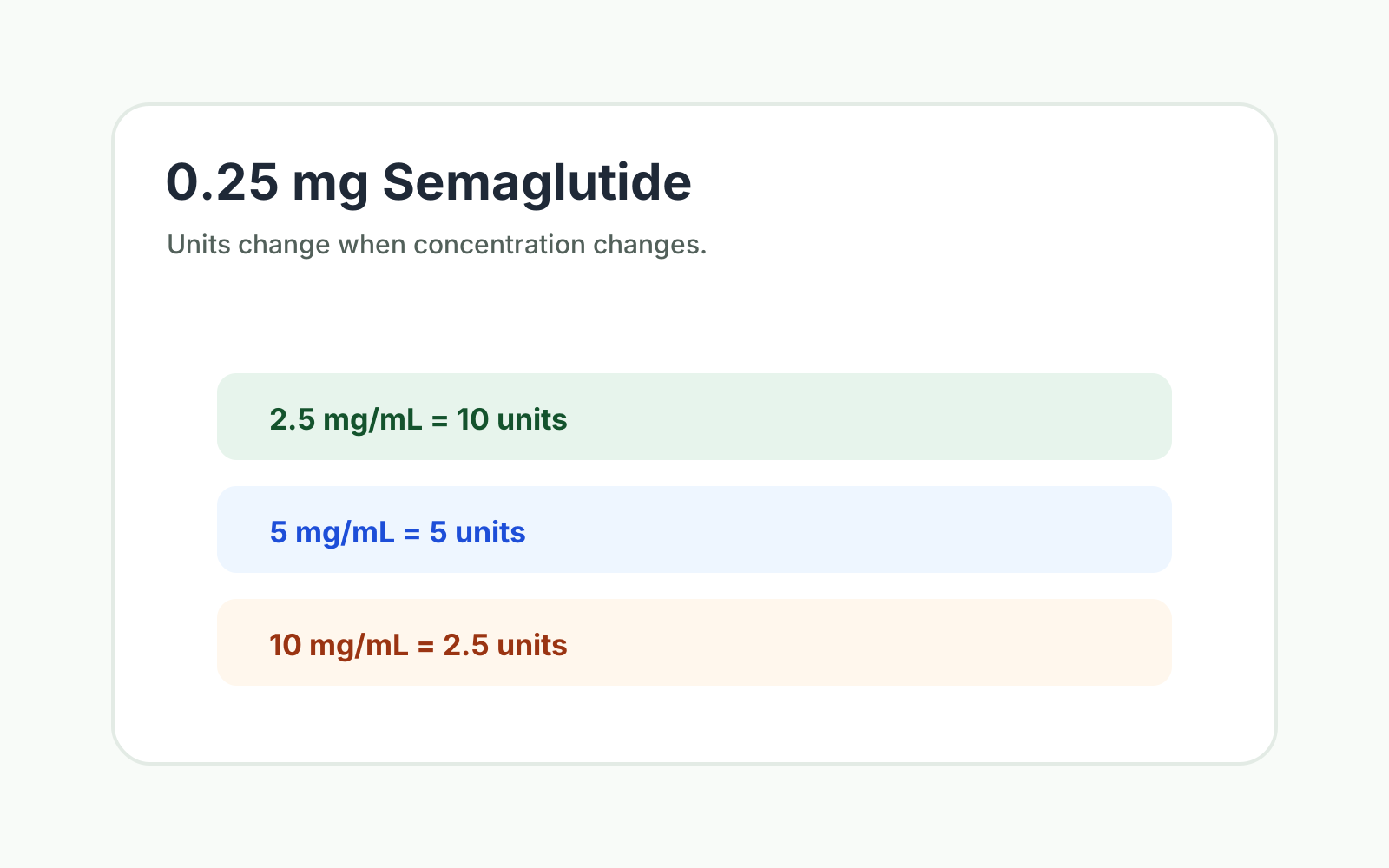
| 0.25 mg | 25 units | 10 units | 5 units |
| 0.5 mg | 50 units | 20 units | 10 units |
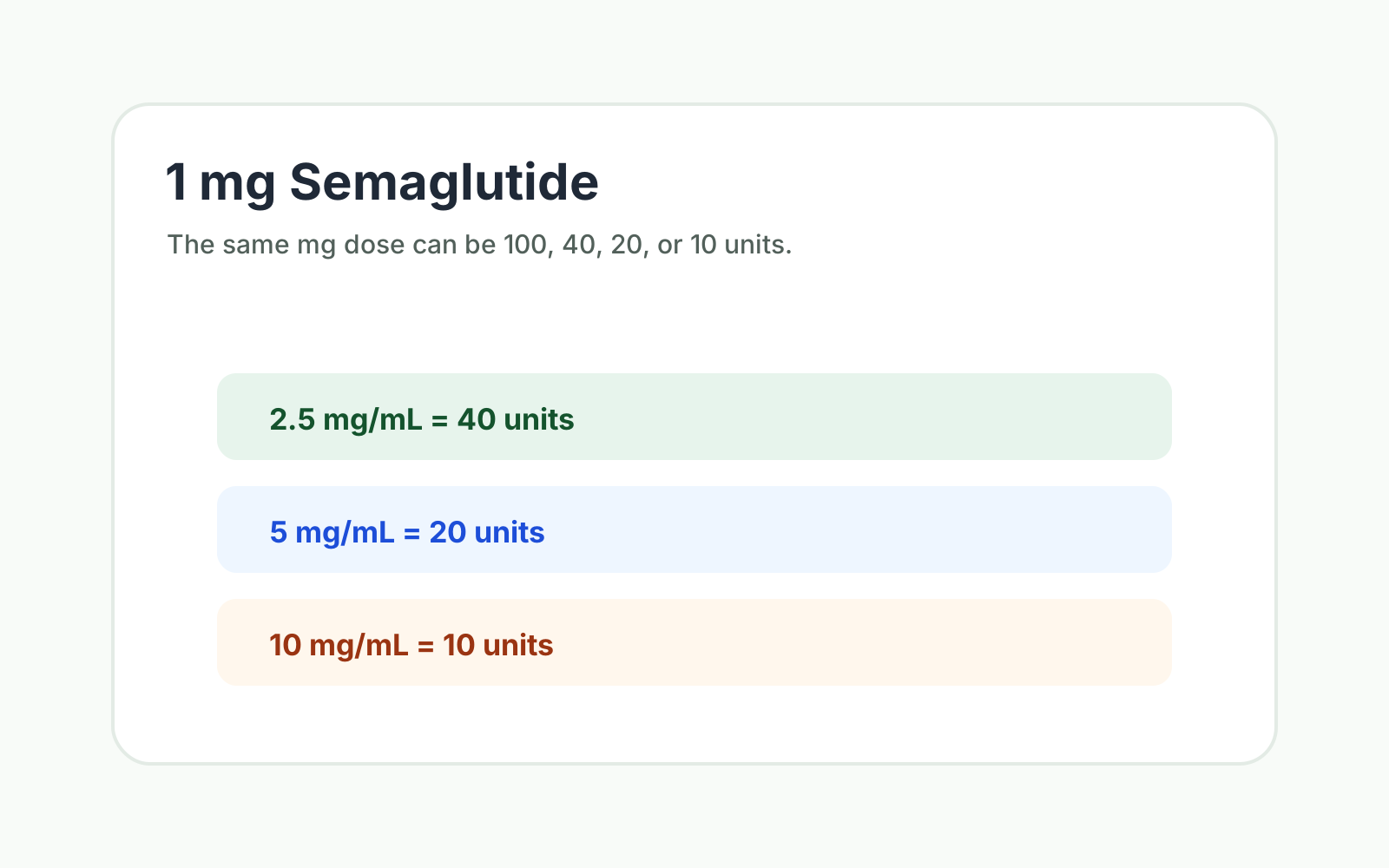
| 1 mg | 100 units | 40 units | 20 units |
| 1.7 mg | 170 units | 68 units | 34 units |
| 2.4 mg | 240 units | 96 units | 48 units |
If the calculated number is above 100 units, it is more than 1 mL on a standard U-100 syringe. That may require a different concentration, a different syringe size, or direct pharmacy clarification. Do not split, concentrate, or reinterpret a prescription without clinician guidance.
Worked examples
Example 1: 10 units at 2.5 mg/mL
Start with the mg formula:
mg = units × mg/mL ÷ 100
10 units × 2.5 mg/mL ÷ 100 = 0.25 mg.
So 10 units equals 0.25 mg only when the solution is 2.5 mg/mL.
Example 2: 20 units at 5 mg/mL
20 units × 5 mg/mL ÷ 100 = 1 mg.
At this concentration, 20 units is a full 1 mg dose.
Example 3: How many units is 0.5 mg?
Use the reverse formula:
units = mg × 100 ÷ mg/mL
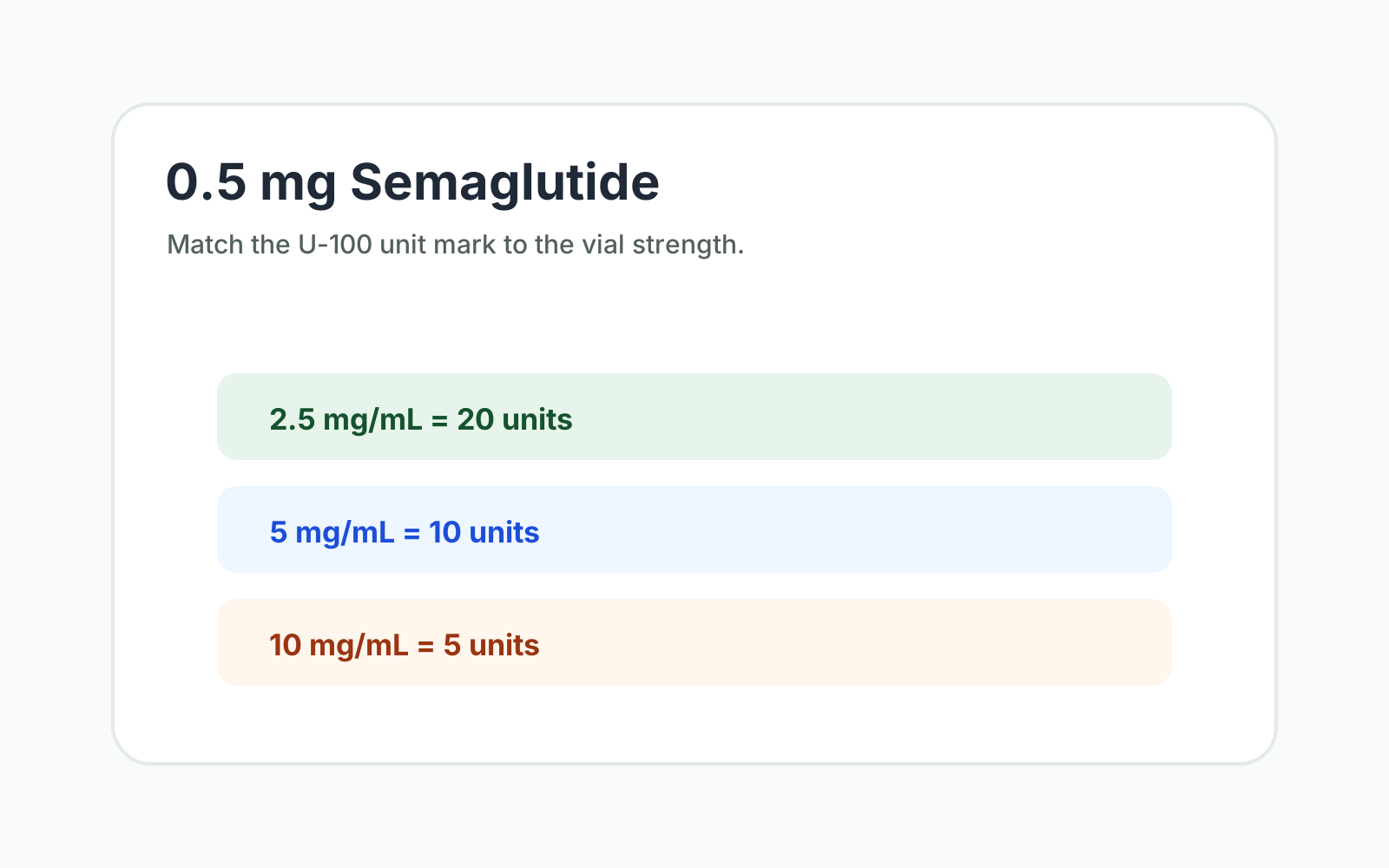
At 2.5 mg/mL: 0.5 × 100 ÷ 2.5 = 20 units.
At 5 mg/mL: 0.5 × 100 ÷ 5 = 10 units.
Same dose, different syringe mark.
Why semaglutide unit charts disagree online
Most disagreements come from one of three assumptions:
- The page assumes a different concentration.
- The page assumes a U-100 syringe but does not say so clearly.
- The page mixes brand pens, compounded vials, and reconstituted research vials into one chart.
Brand-name semaglutide products such as Ozempic, Wegovy, and Rybelsus are not usually managed by manually converting units on an insulin syringe. Unit conversion is mainly searched by people using compounded vials or reconstituted products. That makes label verification more important, not less.
For brand and dose context, use the broader semaglutide guide. For dose schedules, see the semaglutide dosage chart.
How to check your math before drawing
Before using any number from a chart, confirm these four items:
| Check | Why it matters |
|---|---|
| Medication name | Semaglutide, tirzepatide, and retatrutide are not interchangeable |
| Concentration | Units cannot convert to mg without mg/mL |
| Syringe type | This page assumes U-100 syringes |
| Dose in mg | Your prescription should state the actual mg dose, not only units |
If your vial says something like 5 mg/2 mL, divide 5 by 2. The concentration is 2.5 mg/mL. If it says 5 mg/mL directly, use 5 as the concentration.
Common mistakes
Treating units as a universal dose
Units are volume marks, not medication strength. Ten units can be 0.1 mg, 0.25 mg, 0.5 mg, or another amount depending on concentration.
Forgetting the vial was diluted
If you add more liquid to the same vial, each unit contains less semaglutide. If you add less liquid, each unit contains more semaglutide. The total amount of drug in the vial stays the same, but concentration changes.
Copying another person’s syringe mark
Two people can both be taking semaglutide and still need different unit marks because their pharmacies prepared different concentrations.
Confusing mL with units
0.1 mL is 10 units on a U-100 syringe. It is not automatically 0.1 mg.
Safety context
Call the prescribing clinician or dispensing pharmacy if the label is unclear, if your calculated units seem unusually high or unusually low, or if the syringe supplied does not match the instructions. Seek medical help urgently for severe abdominal pain, persistent vomiting, symptoms of dehydration, signs of allergic reaction, or severe hypoglycemia symptoms, especially if you use diabetes medications.
FAQ
How many mg is 10 units of semaglutide?
It depends on concentration. At 2.5 mg/mL, 10 units is 0.25 mg. At 5 mg/mL, 10 units is 0.5 mg.
How many units is 0.25 mg of semaglutide?
At 2.5 mg/mL, 0.25 mg is 10 units. At 5 mg/mL, 0.25 mg is 5 units. At 1 mg/mL, it is 25 units.
Is 100 units always 1 mg of semaglutide?
No. One hundred units is always 1 mL on a U-100 syringe. The mg amount depends on concentration. At 1 mg/mL, 100 units is 1 mg. At 5 mg/mL, 100 units is 5 mg.
What concentration is best?
There is no universal best concentration. Lower concentrations make tiny doses easier to measure but require more volume at higher doses. Higher concentrations reduce injection volume but make small doses harder to measure accurately. Your clinician and pharmacy should determine what is appropriate.
Bottom line
Semaglutide unit conversion is concentration math. First confirm the vial concentration in mg/mL. Then use a U-100 syringe formula: units = mg × 100 ÷ mg/mL, or mg = units × mg/mL ÷ 100. If the result does not match your prescription label, stop and clarify before using it.