The short answer to what to eat on tirzepatide is protein at every meal, vegetables second, starches last, and as little fried or fatty food as you can manage. The reason what to eat on tirzepatide matters more than it does on an ordinary diet is that the drug shrinks how much you eat without any effort from you, so every bite has to carry more nutrition than it used to.
Two problems follow from a much smaller intake. Protein, fibre and micronutrients become easy to fall short on. And some of the weight that comes off will be muscle unless you actively work against that.
Why the Food Choices Change
Tirzepatide is a dual agonist at the GIP and GLP-1 receptors. It slows stomach emptying and reduces appetite and food-related preoccupation. In the SURMOUNT-1 trial, adults without diabetes lost around 21 percent of body weight on average at the highest dose over 72 weeks.
That appetite suppression is the whole benefit and also the whole complication. When someone is eating a fraction of what they used to, filling that space with low-nutrient food produces weight loss with poor body composition and, often, worse side effects.
Body composition analysis from the tirzepatide trials found that roughly three quarters of the weight lost was fat and about a quarter was lean tissue, a ratio comparable to what happens with weight loss generally. That is a reasonable starting point, and diet and training can shift it further in the right direction.
What to Eat on Tirzepatide: The Core Rules
Protein first, every meal. Literally first, before anything else on the plate. Appetite runs out after a few bites, and whatever gets eaten in those bites should be the thing that protects muscle.
Then vegetables, then starch. Same logic. Fibre and micronutrients ahead of calories that do less work.
Keep fat modest. Not zero, but modest. Fat slows gastric emptying further, and gastric emptying is already slowed. This is the single biggest dietary trigger for nausea on this drug.
Small meals, more often. A large plate sits in a stomach that is not emptying, which produces bloating, reflux and discomfort rather than satisfaction.
Fluids all day. Non-negotiable, and covered in more detail below.
Protein Targets
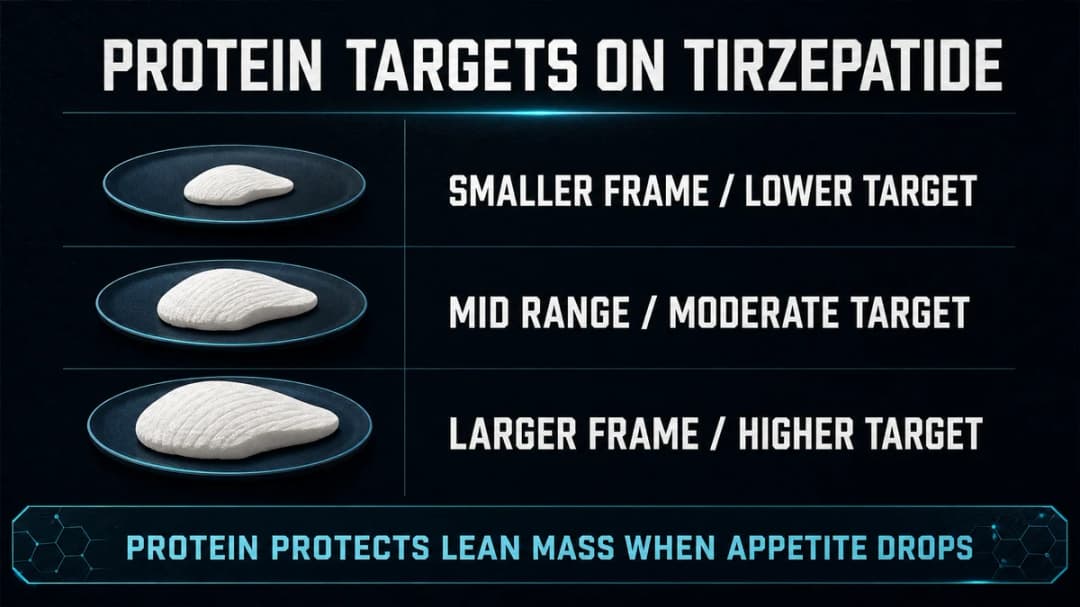
A joint advisory published in 2025 by several US obesity and nutrition societies recommends roughly 1.2 to 1.6 grams of protein per kilogram of body weight per day during active weight loss, which works out at approximately 80 to 120 grams daily for many adults. The same guidance treats around 0.4 to 0.5 g/kg as a floor rather than a target.
| Body weight | Target range | Practical way to hit it |
|---|---|---|
| 60 kg (132 lb) | About 72 to 96 g/day | Three meals at 25 to 30 g |
| 75 kg (165 lb) | About 90 to 120 g/day | Three meals at 30 to 40 g |
| 90 kg (198 lb) | About 108 to 144 g/day | Three meals at 35 to 45 g plus a protein snack |
| 105 kg (231 lb) | About 126 to 168 g/day | Three meals at 40 to 50 g plus one or two snacks |
Hitting those numbers on a suppressed appetite is genuinely hard, which is why protein powder, Greek yoghurt and cottage cheese earn their place. They deliver protein in a form that goes down on days when a plate of chicken does not.
See our guide to how much protein to eat on a GLP-1.
Foods That Work Well
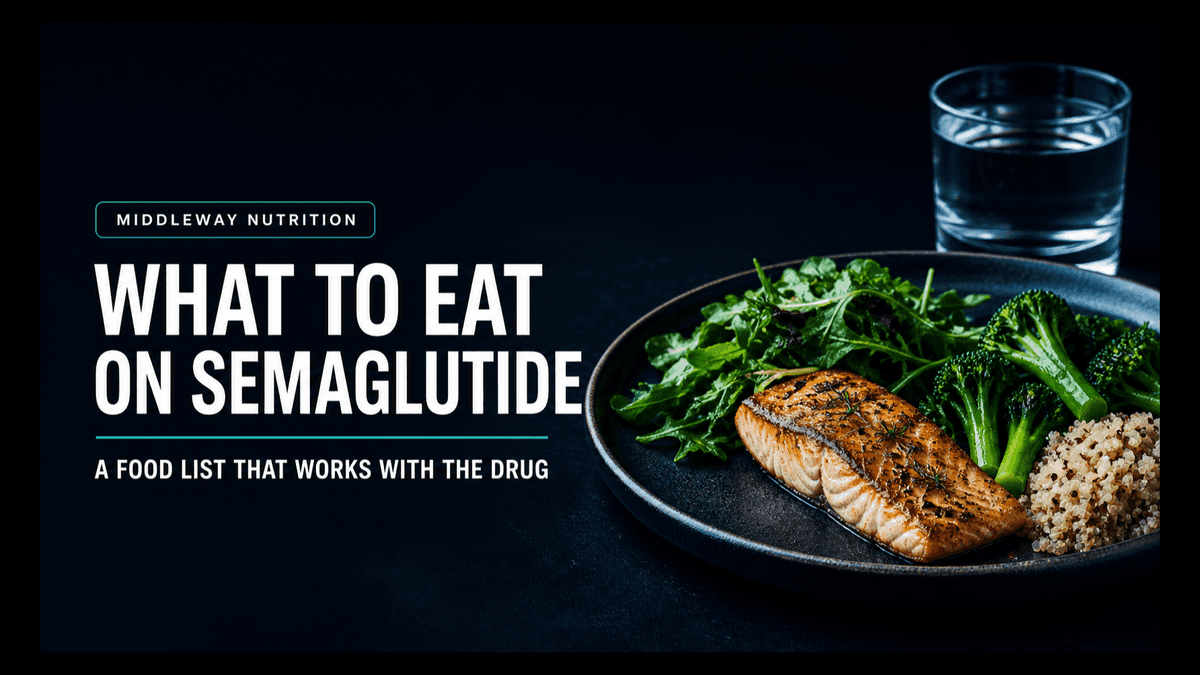
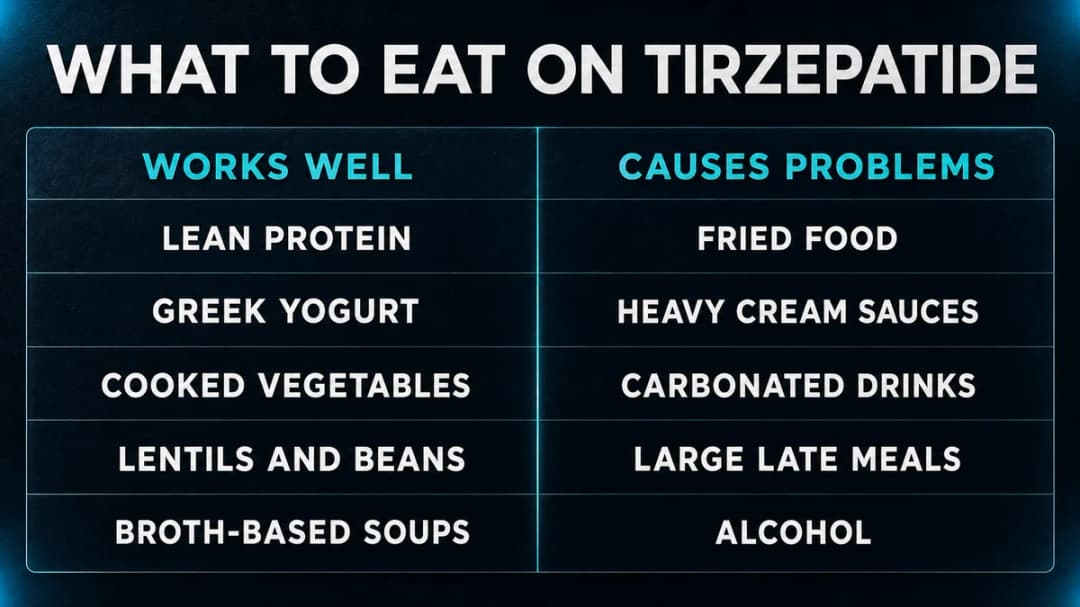
Protein sources. Skinless poultry, white fish and shellfish, salmon and other oily fish, eggs, Greek yoghurt, cottage cheese, tofu and tempeh, lentils and beans. Whey or plant protein powder as a gap-filler rather than a meal replacement.
Vegetables. Leafy greens, broccoli, courgette, peppers, tomatoes, carrots. Cooked vegetables are usually easier to tolerate than a large raw salad when nausea is present, and they take up less room.
Fruit. Berries in particular, for fibre and volume at low calorie cost.
Carbohydrates. Modest portions of the higher-fibre options: oats, quinoa, brown rice, sweet potato, wholegrain bread.
Fats. Small amounts of olive oil, avocado, nuts and seeds. Enough for the fat-soluble vitamins and for palatability, not enough to slow digestion further.
Foods That Cause Problems
Gastrointestinal side effects are the most common adverse events with this drug, and they peak during dose escalation. Adjusting food is the first thing to try before reaching for medication.
| Food or drink | Why it causes trouble |
|---|---|
| Fried and greasy food | Fat slows an already slow stomach. The most reliable nausea trigger |
| Large portions | Sit undigested, producing bloating and reflux rather than fullness |
| Rich creamy sauces, fatty cuts | Same mechanism as fried food |
| Sugary drinks, pastries, sweets | Calories without protein or fibre, and can worsen diarrhoea |
| Alcohol | Worsens nausea and reflux, adds calories, contributes to dehydration |
| Fizzy drinks | Bloating and reflux in people already prone to it |
| Very spicy food | Reflux, for some people |
See our fuller list of foods to avoid on a GLP-1.
Fibre, Fluids and Constipation
Constipation is a recognised effect of this drug class, caused by slower gut transit combined with a much smaller volume of food going through.
The fix is fibre and fluid, both increased gradually. Spiking fibre intake overnight produces gas and cramping and makes people conclude fibre does not help. Build it up over a couple of weeks from vegetables, fruit, legumes and wholegrains, with a supplement if food alone is not getting there. See our guide to managing GLP-1 constipation.
Hydration deserves more emphasis than it usually gets. Reduced thirst cues, smaller food volume, and any vomiting or diarrhoea all push in the same direction, and dehydration in this context is a recognised route to acute kidney injury. Steady fluid intake through the day beats large amounts at once, which is uncomfortable on a slow-emptying stomach.
A Sample Day
Roughly 100 g of protein, meals kept small and lower in fat. Adjust the portions to your own protein target.
| Meal | Example | Approximate protein |
|---|---|---|
| Breakfast | Greek yoghurt with berries and a spoon of ground flax or chia | About 20 g |
| Lunch | Grilled chicken or tofu over greens with quinoa and a little olive oil | About 35 g |
| Snack | Cottage cheese, or two boiled eggs with cucumber | About 12 to 15 g |
| Dinner | Baked salmon, roasted broccoli, a small sweet potato | About 30 g |
| Through the day | Water and unsweetened drinks, sipped steadily | Not applicable |
Appetite varies through the week depending on how recently you injected. The day after an injection is usually the hardest to eat on, and a protein shake on that day is a reasonable answer rather than a failure.
Protecting Muscle
Since roughly a quarter of the weight lost can be lean tissue, this is worth active effort rather than hope.
Two things work, and only two things.
Enough protein, at the targets above. Under-eating protein on a strongly suppressed appetite is the default outcome unless someone plans against it.
Resistance training. The joint advisory recommends strength training at least three times a week alongside at least 150 minutes of moderate aerobic activity. The training is what tells the body the muscle is still needed. Protein alone does considerably less.
Walking is good for adherence, mood and cardiovascular health, and it does not preserve muscle. Something has to be heavy. See our page on building muscle on a GLP-1.
Micronutrients
Eating substantially less raises the odds of falling short somewhere. Vitamin D, calcium and vitamin B12 are the ones most often flagged as worth checking or supplementing, ideally after a baseline assessment rather than by guesswork.
None of that substitutes for a varied, protein-forward diet. It covers the gaps that a small appetite creates.
Does Any of This Change by Dose?
The principles do not. Portion sizes do, because appetite falls as the dose steps up. Side effects also cluster around each dose increase, which is when the low-fat, small-portion approach matters most and when people most often need to lean on the easier protein sources.
FAQ
How much protein should I eat on tirzepatide?
Roughly 1.2 to 1.6 grams per kilogram of body weight per day during active weight loss, which is about 80 to 120 grams for many adults. Below around 0.4 to 0.5 g/kg is a floor to stay above rather than anywhere near a target.
What foods make tirzepatide nausea worse?
Fried and greasy food first, then large portions, then alcohol and fizzy drinks. Fat slows stomach emptying, which is already slowed by the drug, so a high-fat meal has nowhere to go.
Do I need to count calories on tirzepatide?
Usually not. The medication handles intake for you. The habits worth tracking are protein, fibre and fluid, because those are the ones a suppressed appetite quietly undermines.
Will I lose muscle on tirzepatide?
Some lean tissue loss happens with any weight loss. Trial body composition data put the split at roughly three quarters fat to one quarter lean. Hitting the protein target and strength training three times a week shifts that ratio further towards fat.
What helps with constipation?
Fibre increased gradually rather than all at once, enough fluid, and daily movement. If those do not resolve it within a couple of weeks, it is worth raising with the prescriber rather than escalating laxatives indefinitely.
Can I drink alcohol on tirzepatide?
Best kept minimal. It worsens nausea and reflux, adds calories that displace protein, and contributes to dehydration, which is the mechanism behind the kidney warnings attached to this drug class.