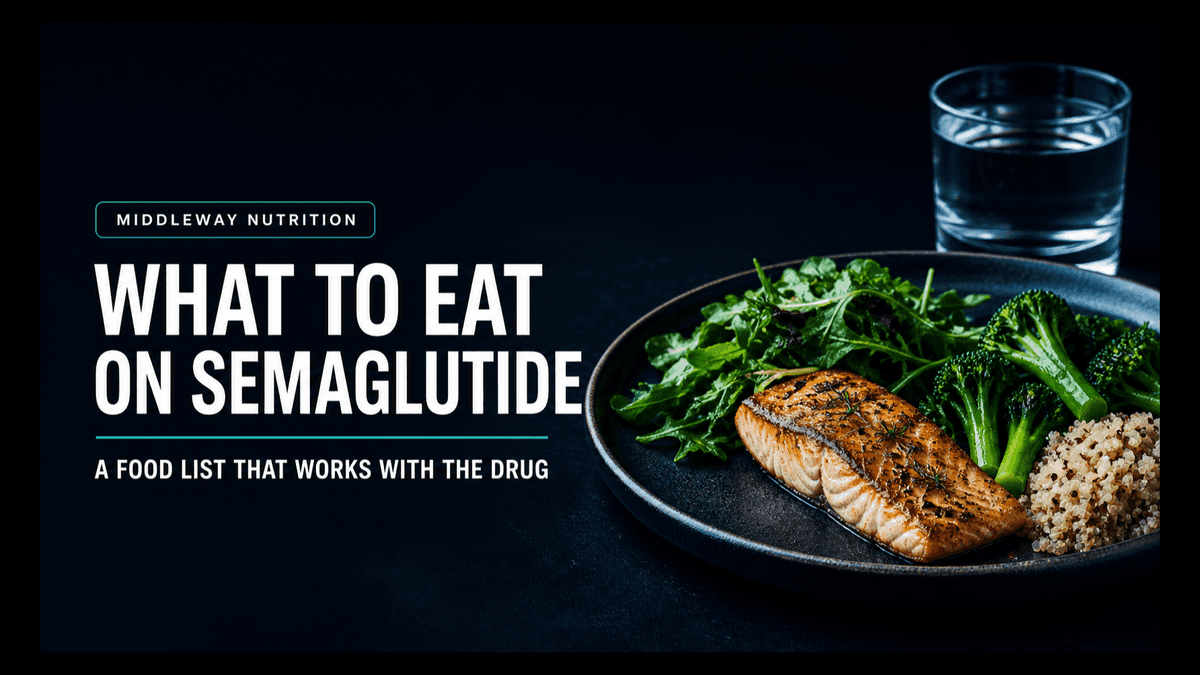
Most advice on what to eat on semaglutide gets the emphasis wrong. It tells people to eat smaller portions and drink more water, when the variable that actually determines how someone feels is what the meal is made of. The useful way to think about what to eat on semaglutide is this: the drug already slows how fast your stomach empties, so anything that slows it further, fat above all, is what turns an ordinary meal into six uncomfortable hours.
That is why the same person can feel fine after grilled chicken and greens and dreadful after a croissant of similar size. Portion is a factor. Composition is the bigger one.
What the Drug Actually Changes
Semaglutide does three things that matter at the table. It reduces appetite centrally, so you want less. It slows gastric emptying, most strongly in the early weeks and after each dose increase, so food stays in the stomach longer. And it blunts the reward pull of food, which is why cravings quieten before any weight comes off.
The practical consequences:
- A meal that fits comfortably before now sits
- Fat, which already slows emptying, compounds the effect
- Fluid taken with a meal adds volume to a stomach that is not clearing
- Total intake drops sharply, which makes protein and micronutrients easy to miss
What to Eat on Semaglutide: The Food List
| Category | Best choices | Why they work |
|---|---|---|
| Lean protein | Chicken and turkey breast, white fish, prawns, tuna, eggs, lean mince, tofu | High satiety per calorie, low fat, easy to hit protein targets without triggering nausea |
| Dairy protein | Greek yoghurt, skyr, cottage cheese, kefir, milk | Soft or liquid texture is far easier to keep down on a bad day |
| Vegetables | Spinach, broccoli, courgette, green beans, peppers, carrots, asparagus | Fibre and volume for very few calories. Cooked is usually better tolerated than large raw servings |
| Carbohydrates | Oats, rice, sweet potato, quinoa, one slice of wholegrain bread, lentils and beans | Steady energy without the sharp glucose swings that make dizziness worse |
| Fruit | Berries, apples, pears, citrus, melon | Sweetness with fibre attached |
| Fats, in small amounts | Olive oil by the teaspoon, a quarter of an avocado, a small handful of nuts, oily fish | Necessary, but the portion matters more here than in any other category |
| Fluids | Water, unsweetened tea, black coffee, broth, low-sugar electrolyte drinks | Hydration is the most commonly missed habit on this drug |
| Protein snacks | Boiled eggs, tuna pouches, protein shakes, edamame, yoghurt pots | The realistic way to close a protein gap on days when meals do not get there |
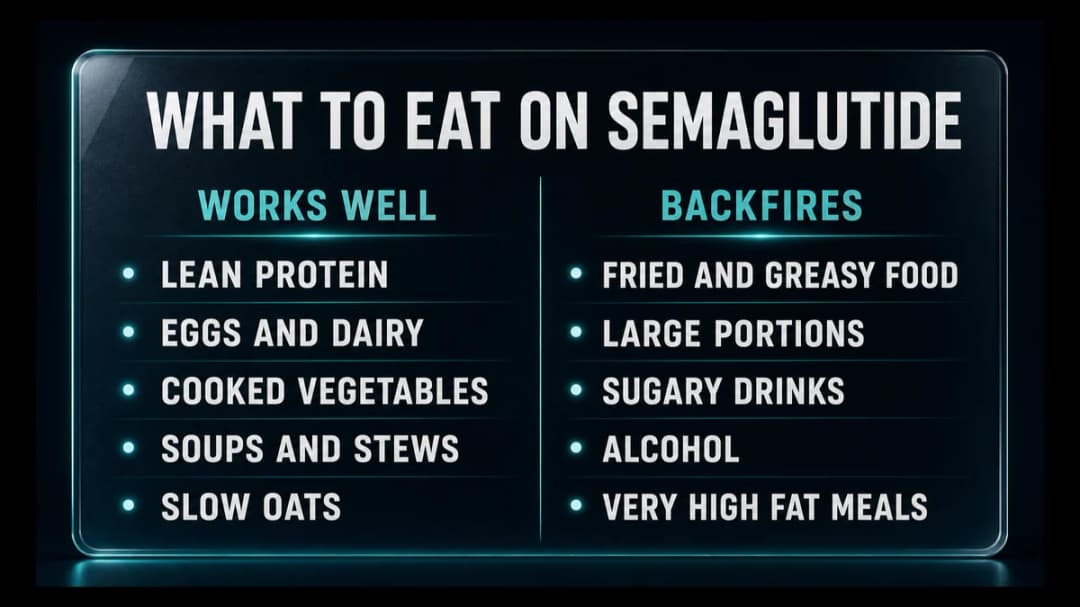
Foods That Backfire
| Category | Examples | What goes wrong |
|---|---|---|
| High-fat meals | Fried food, pizza, cream sauces, fatty cuts, pastries, full-fat ice cream | Already-slow emptying becomes much slower. The most reliable cause of nausea and reflux |
| Sugar-heavy foods and drinks | Fizzy drinks, juice, sweets, cakes, sweetened coffee | Sharp glucose swings that worsen dizziness and lightheadedness |
| Large portions of anything | Restaurant mains, buffets, big breakfasts | Effective stomach capacity is meaningfully reduced. Overshooting produces pain rather than fullness |
| Alcohol | All forms, sweet drinks and beer particularly | Amplifies nausea, adds calories that displace protein, raises hypoglycaemia risk, worsens dehydration |
| Very spicy food | Especially in the first couple of months | Reflux is much more common on this drug and spice sits on top of it |
| Fizzy drinks | Including large volumes of sparkling water | Gas and food both linger, which is uncomfortable |
| Large raw fibrous servings | A big bowl of raw broccoli, cauliflower or sprouts | Cooked is usually fine. Raw in volume ferments and bloats |
The pattern is consistent. Anything that further delays emptying, or spikes glucose sharply, amplifies the drug's side effects. This is not restriction for its own sake, it is working with how digestion has changed. See our fuller list of foods to avoid on a GLP-1.
Protein: The Number That Matters
Under-eating protein is the most common mistake on this drug, and it is entirely predictable. Appetite suppression reduces everything, including the nutrient you now need proportionally more of.
The consequence is not theoretical. A substantial share of weight lost on this drug class is lean tissue, often cited at around a quarter to a third when protein intake is inadequate. Lose enough muscle and resting metabolic rate falls, strength falls, and weight regained afterwards comes back disproportionately as fat.
Target roughly 1.2 to 1.6 grams of protein per kilogram of body weight per day during active weight loss.
| Body weight | Daily protein target |
|---|---|
| 70 kg (154 lb) | About 84 to 112 g |
| 82 kg (180 lb) | About 98 to 130 g |
| 100 kg (220 lb) | About 120 to 160 g |
| 113 kg (250 lb) | About 136 to 180 g |
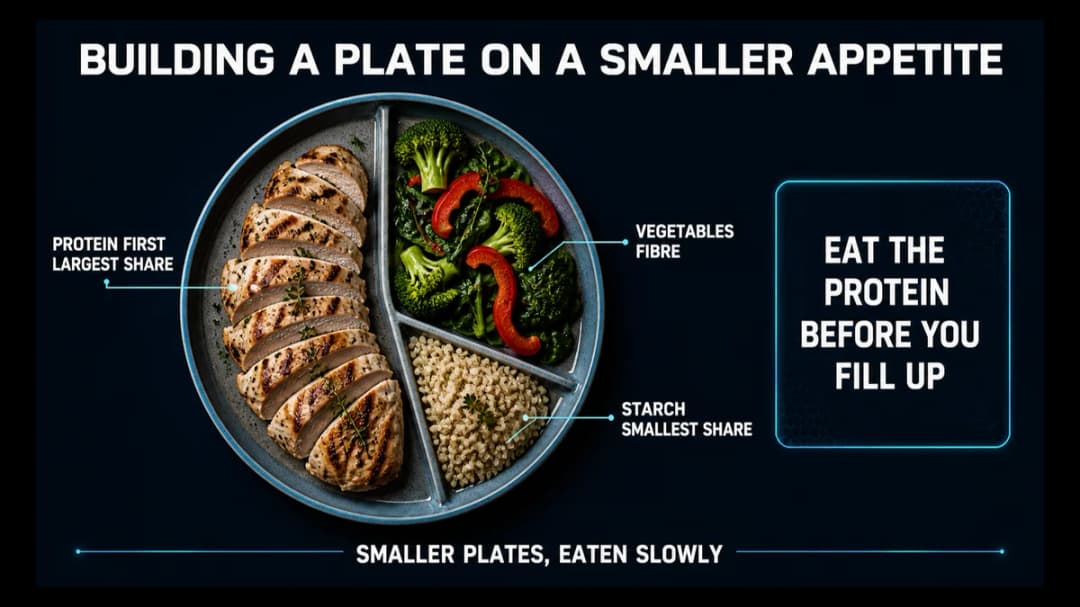
The practical method is unglamorous: protein goes on the plate first and gets eaten first, before appetite runs out. A palm-sized portion of chicken, fish or lean meat is 25 to 40 g. Add a yoghurt or cottage cheese and two simple choices have covered half the day. See our guide to protein intake on a GLP-1.
Eating for the Situation
Different problems need different answers, and this is where general advice usually stops being useful.
When you feel sick. Plain, cool and low-fat. Broth, plain rice, banana, toast, applesauce, plain crackers, ginger tea. Room temperature food sits better than very hot or very cold. Avoid anything fried, fatty or very sweet until it passes. Two changes help more than any specific food: eat five small things rather than three normal meals, and stop drinking during meals. Fluids 30 minutes either side of eating, not alongside. See our page on managing GLP-1 nausea.
When you are constipated. Kiwi, prunes, pears, chia seeds, oats, beans, and considerably more water than feels necessary. Increase fibre over a week or two rather than overnight.
When you have reflux. Nothing within three hours of lying down, smaller meals, no alcohol, less caffeine, and raising the head of the bed. Reflux on this drug is a mechanical problem, so the fixes are mechanical.
When protein is not happening. A shake is a legitimate answer, not a failure. So is cottage cheese eaten straight from the pot. The goal is the number, not the aesthetics of the meal.
When weight loss stalls. Track intake honestly for three days before changing anything. The usual findings are protein below target and more fat than expected hidden in oils, dressings and cheese. Adding resistance training does more than cutting further.
When eating out. Grilled protein and vegetables, sauces and dressings on the side, skip the bread, and order a starter portion rather than fighting a main you cannot finish.
A Workable Week
Not a prescription, a pattern to copy. Calories are deliberately absent, because the drug is already controlling intake and the checks that matter are protein, vegetables and fluid.
| Meal | Rotate between |
|---|---|
| Breakfast | Greek yoghurt with berries and chia; oats with a scoop of protein; two eggs with spinach and one slice of toast; a blended shake with fruit |
| Lunch | Grilled chicken over greens; tuna with salad; lentil soup with a protein side; prawns with quinoa and steamed vegetables |
| Dinner | Baked salmon with asparagus and a small potato; stir-fried chicken with broccoli and rice; white fish with courgette; turkey meatballs with roasted vegetables |
| Snack | Boiled eggs; cottage cheese; edamame; a yoghurt pot; a protein shake |
Three checks per day: at least 30 g of protein at each main meal, vegetables at two of them, and fluid spread across the day rather than in bursts.
Hydration and Electrolytes
Most people on semaglutide under-drink, because thirst tracks appetite more than people expect and because a slow-emptying stomach makes large volumes uncomfortable.
Sip steadily rather than drinking a lot at once. If there has been vomiting or diarrhoea, or in hot weather, electrolytes matter as much as the water itself, since dehydration in this context is the route to headaches, dizziness and, at the serious end, kidney injury. See our page on electrolytes for GLP-1 users.
FAQ
What foods should be avoided on semaglutide?
Fried and high-fat food first, since fat compounds the slowed gastric emptying that causes nausea. Then large portions, sugary drinks, alcohol and fizzy drinks. Very spicy food is worth pausing in the first couple of months while reflux settles.
How much protein should I eat on semaglutide?
About 1.2 to 1.6 grams per kilogram of body weight daily during active weight loss, with at least 30 g at each main meal. Under-eating protein is the main reason people lose more muscle than they need to.
What can I eat when semaglutide makes me nauseous?
Plain, low-fat and cool. Broth, plain rice, banana, toast, crackers, ginger. Eat smaller amounts more often and keep fluids away from meals by about half an hour.
Do I need to count calories?
Usually not. The drug is doing that job. Protein, fibre and fluid are the things worth tracking, because those are what a suppressed appetite quietly erodes.
Can I drink alcohol on semaglutide?
Best minimised. It worsens nausea and reflux, adds calories that displace protein, contributes to dehydration, and raises hypoglycaemia risk for anyone also taking glucose-lowering medication.
Why do I feel worse after some meals than others of the same size?
Fat content, almost always. Two meals of equal volume behave completely differently in a stomach that is emptying slowly, and the fattier one is the one that sits.