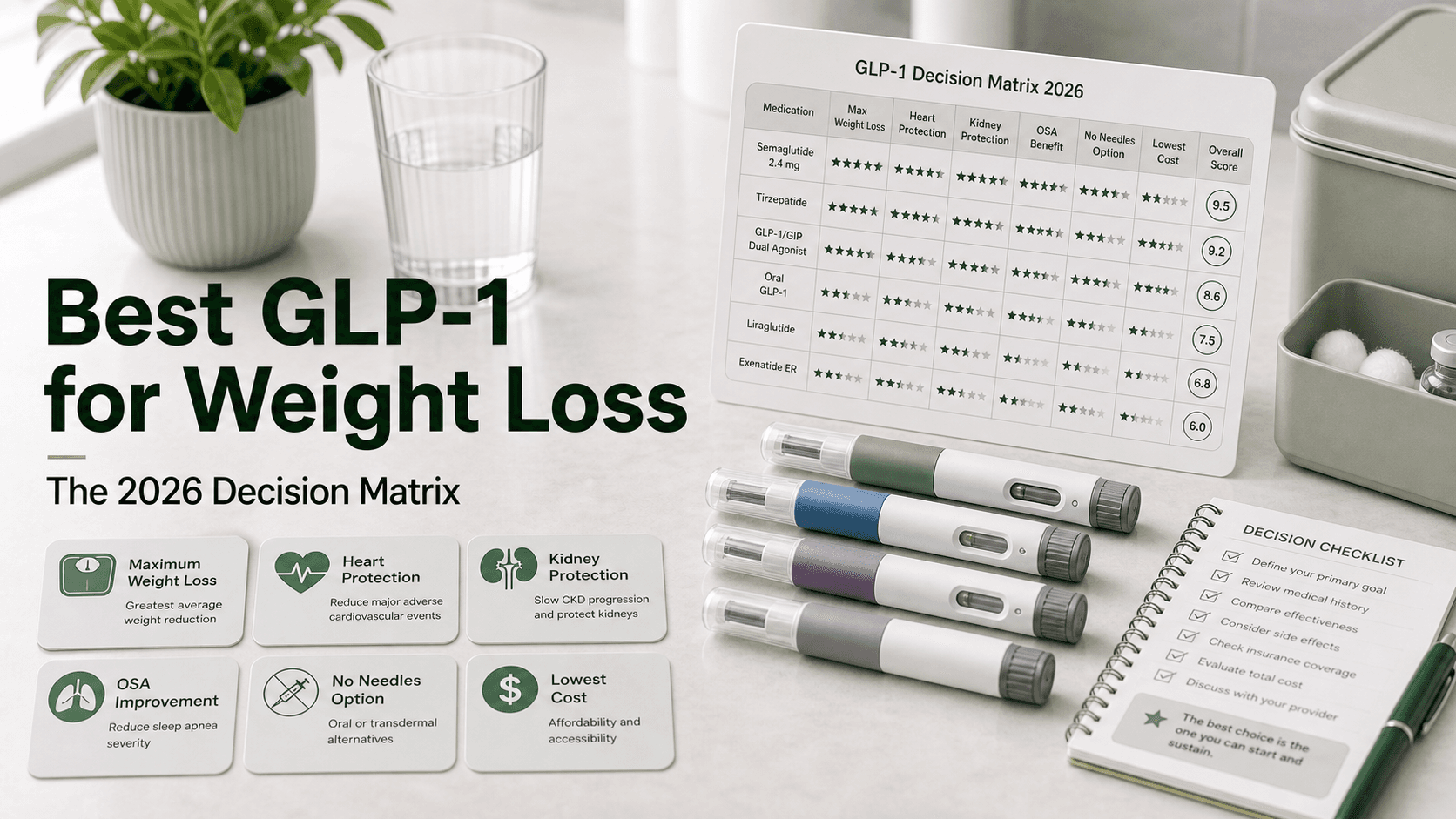
"Which GLP-1 is best for weight loss?" is the most-asked question in the category, and it has the wrong framing. Best for what? Maximum pounds dropped? Cardiovascular protection? Kidney protection? Sleep apnea? Tolerability? Convenience? Cost? Different FDA-approved GLP-1s win on each axis — and the answer for an insured patient with diabetes is not the answer for a self-pay patient with a needle phobia.
Direct answer: For pure weight loss in 2026, tirzepatide (Zepbound) is the most effective FDA-approved drug. SURMOUNT-1 produced 20.9% mean weight loss at 15 mg over 72 weeks, and the head-to-head SURMOUNT-5 trial showed 20.2% with tirzepatide vs 13.7% with semaglutide 2.4 mg over 72 weeks. Semaglutide (Wegovy) still wins for patients who need cardiovascular protection (20% MACE reduction in SELECT) or kidney protection (24% reduction in major kidney disease events in FLOW). Foundayo (orforglipron) wins for pill-only users at 11.1% mean loss at the top approved dose in ATTAIN-1. Retatrutide — not yet approved — delivered 28.3% mean loss at 12 mg over 80 weeks in the Phase 3 TRIUMPH-1 trial. Liraglutide (Saxenda) is the oldest and weakest at about 8% over 56 weeks. One warning before you use those numbers to rank anything: only SURMOUNT-5 compared two of these drugs directly. Every other side-by-side below is arithmetic across separate trials with different patients, different placebo arms and different statistical conventions.
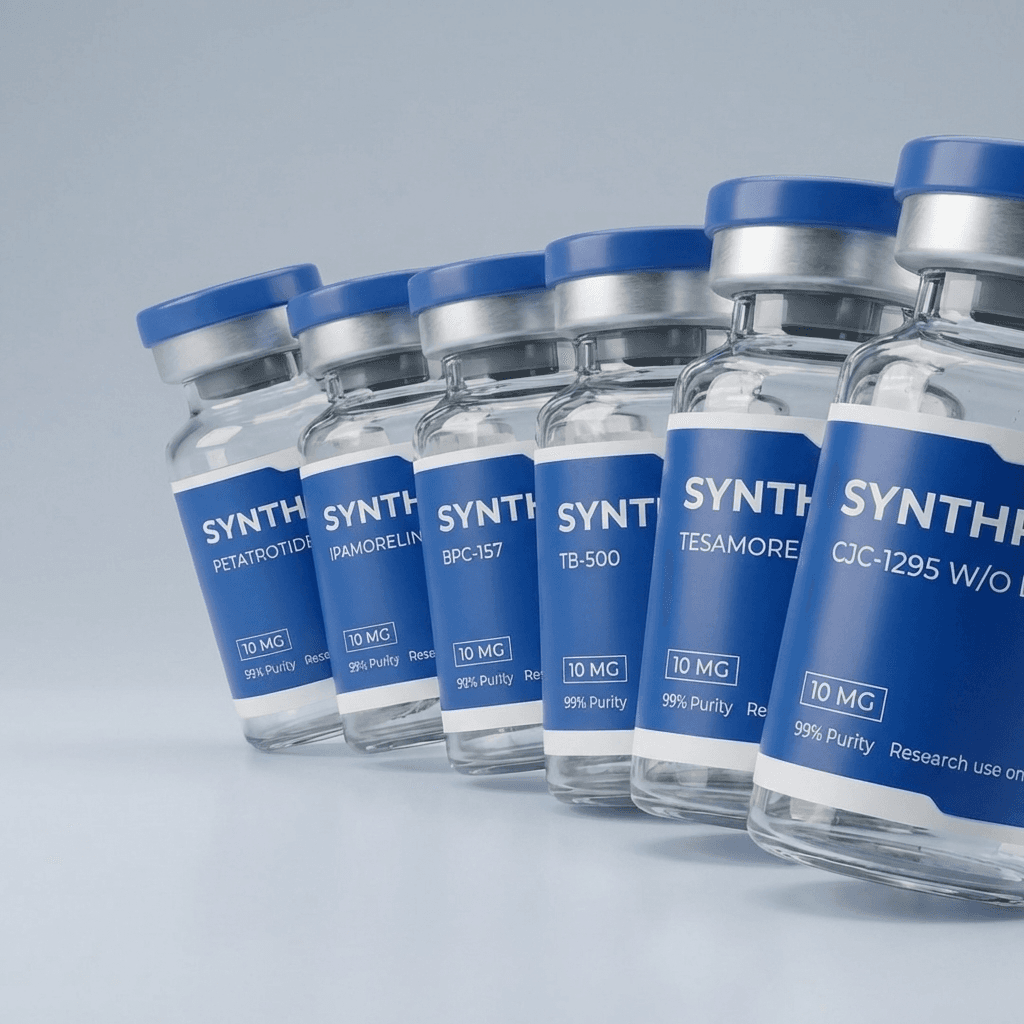
If you want a continuously-updated side-by-side reference for every drug currently sold as a weight-loss injectable — including pre-approval compounds like retatrutide and cagrilintide — Peptidedeck maintains a weight loss injections catalog that tracks each one.
The FDA-Approved GLP-1 Lineup for Weight Loss (August 2026)
Each figure below comes from that drug's own pivotal trial as reported in its FDA label. They are not comparable to each other as a ranking.
| Drug | Active ingredient | Route | Top approved dose | Pivotal trial weight loss |
|---|---|---|---|---|
| Zepbound | Tirzepatide | Weekly injection | 15 mg | 20.9% (SURMOUNT-1, 72 wk) |
| Wegovy injection | Semaglutide 2.4 mg | Weekly injection | 2.4 mg | 14.9% (STEP 1, 68 wk) |
| Wegovy HD | Semaglutide 7.2 mg | Weekly injection | 7.2 mg | 18.8% (STEP UP, 72 wk) |
| Wegovy tablets | Oral semaglutide | Daily pill | 25 mg | 13.6% (OASIS 4, at week 64) |
| Foundayo | Orforglipron | Daily pill | 17.2 mg | 11.1% (ATTAIN-1, 72 wk) |
| Saxenda | Liraglutide 3 mg | Daily injection | 3 mg | 8.4 kg, about 8% (SCALE, 56 wk) |
| Rybelsus | Oral semaglutide | Daily pill | 14 mg | 3–4.4 kg at 26 wk (diabetes label only) |
Two notes on that table. Foundayo's marketed strengths are not the strengths used in the trial: ATTAIN-1 studied an investigational formulation at 6, 12 and 36 mg, and the FDA label restates those as the equivalent commercial doses of 5.5, 9 and 17.2 mg. 17.2 mg is the maximum dose you can actually be prescribed. And oral Wegovy's 13.6% is measured at week 64, the primary endpoint of a 71-week trial, not at 71 weeks.
In the pipeline: retatrutide (Eli Lilly's triple GLP-1 / GIP / glucagon agonist) reported 28.3% mean weight loss at 12 mg over 80 weeks in TRIUMPH-1 — a bigger number than any FDA-approved drug has produced in its own pivotal trial, though on an efficacy estimand that assumes full adherence (Lilly, June 2026). Lilly says it plans to submit retatrutide for US approval in Q1 2027, which puts an approval decision in 2027 at the earliest.
Tirzepatide (Zepbound) — Strongest Pure Weight Loss
Tirzepatide is a dual GLP-1 / GIP receptor agonist. Approved by the FDA for chronic weight management in November 2023 and for moderate-to-severe obstructive sleep apnea in adults with obesity in December 2024 — the first and only OSA medication ever approved.
Key trial data
- SURMOUNT-1 (2,539 non-diabetic adults with obesity, 72 weeks): 15.0% loss at 5 mg, 19.5% at 10 mg, 20.9% at 15 mg vs 3.1% on placebo. 50% of patients on 10 mg and 57% on 15 mg achieved at least 20% body-weight loss (NEJM).
- SURMOUNT-2 (type 2 diabetes population, 72 weeks): 14.7% at 15 mg vs 3.2% on placebo in the Zepbound label. Lilly's efficacy-estimand figure of 15.7% is the one usually quoted in press coverage.
- SURMOUNT-3 (lifestyle run-in then drug): patients lost 6.9% during a 12-week intensive lifestyle lead-in, then a further 18.4% over 72 weeks on tirzepatide, against a 2.5% regain on placebo.
- SURMOUNT-4 (maintenance after run-in): after a 36-week open-label lead-in that produced 20.9% loss, patients switched to placebo regained 14.0% over the next 52 weeks while tirzepatide-continuers lost another 5.5%.
- SURMOUNT-OSA (Study 5/6, 469 patients, 52 weeks): 42.2% of tirzepatide patients not on PAP therapy and 50.2% of those on PAP reached the label's remission endpoint — an apnea-hypopnea index under 5, or 5–14 with an Epworth score of 10 or less — versus 15.9% and 14.3% on placebo.
Side effects
In the pooled weight-management trials behind the Zepbound label, at the 15 mg dose: nausea 28%, diarrhea 23%, vomiting 13%, constipation 11%. Discontinuation for adverse events ran 6.3% at 10 mg and 6.7% at 15 mg versus 3.4% on placebo, with gastrointestinal-specific discontinuation at 3.3% and 4.3%. In SURMOUNT-5 — the only trial that put the two drugs in the same protocol — GI discontinuations on tirzepatide were 2.7% vs 5.6% on semaglutide (ACC), which is the one tolerability comparison here that is not cross-trial guesswork.
Semaglutide (Wegovy) — The Outcomes Drug
Semaglutide is a pure GLP-1 receptor agonist. The injectable 2.4 mg version (Wegovy) was approved for chronic weight management in June 2021 — the trial backbone that legitimized the entire category. Wegovy has the most cardiovascular and kidney outcome data of any GLP-1.
Key trial data
- STEP 1 (1,961 non-diabetic adults, 68 weeks): 14.9% mean weight loss at 2.4 mg vs 2.4% on placebo. 50.5% of patients lost at least 15%; in the FDA label's rendering of the same trial, 30.2% lost at least 20%.
- STEP 2 (T2D population, 68 weeks): 9.6% loss vs 3.4% on placebo — lower than non-diabetic figures, consistent with the harder weight-loss task in diabetes.
- STEP 5 (104-week trial): 15.2% loss vs 2.6% placebo.
- STEP UP (semaglutide 7.2 mg, the new "Wegovy HD," 1,407 patients, 72 weeks): 18.8% vs 15.5% on 2.4 mg and 3.9% on placebo in the Wegovy label — a 3.3-point gain over the standard dose, not the ~21% that circulated in early coverage. Wegovy HD was approved on March 19, 2026.
Outcome trial advantages (where semaglutide currently wins)
- SELECT (17,604 patients with obesity + established CVD, no diabetes, 39.8 months mean follow-up): 20% reduction in major adverse cardiovascular events (hazard ratio 0.80). This is the basis for Wegovy's cardiovascular risk reduction indication. To be precise about what is unique here: Ozempic, Victoza and Trulicity have carried MACE-reduction indications in type 2 diabetes for years. What no other drug has is a CV outcome indication in people with overweight or obesity and no diabetes.
- FLOW (3,533 patients with T2D + CKD, 3.4 years median follow-up, stopped early for efficacy): 24% reduction in major kidney disease events (HR 0.76), 20% reduction in all-cause mortality (HR 0.80), slower eGFR decline. Ozempic now carries a CKD indication; FLOW used the 1.0 mg dose.
- SUSTAIN-6 (T2D CV outcome trial): 26% MACE reduction (HR 0.74).
If you have heart disease, kidney disease, or T2D + CKD, semaglutide has the outcome data that tirzepatide does not. Tirzepatide's own cardiovascular trial has now read out, and it did not close that gap: SURPASS-CVOT (13,299 patients with T2D and atherosclerotic disease) showed tirzepatide was noninferior to dulaglutide on MACE with a hazard ratio of 0.92 (95.3% CI 0.83–1.01), but missed superiority (NEJM, December 2025). Because the comparator was an active drug rather than placebo, it also does not produce a SELECT-style claim. The obesity outcomes trial, SURMOUNT-MMO, is still running, with primary completion estimated October 2027.
Retatrutide — Highest Numbers, Not Yet Approved
Retatrutide is Lilly's next-generation triple agonist: GLP-1, GIP, and glucagon receptor activation in a single peptide. Adding glucagon raises energy expenditure while the GLP-1 component prevents the blood-sugar spike glucagon would otherwise cause.
Phase 3 TRIUMPH-1 (June 2026 readout)
In 2,339 adults with obesity or overweight, 80 weeks of dosing (efficacy estimand):
- 12 mg dose: 28.3% mean weight loss (~70.3 lb)
- 9 mg dose: 25.9% (~64.4 lb)
- 4 mg dose: 19.0% (~47.2 lb)
- In a pre-specified extension, patients with a baseline BMI of 35 or higher who stayed on 12 mg through 104 weeks lost 30.3%
- Dysesthesia (abnormal skin sensation) at 12 mg: 12.5% vs 0.9% on placebo
- Discontinuation for adverse events: 6.9% (9 mg) and 11.3% (12 mg), vs 4.9% on placebo
- Common GI events at 12 mg: nausea 42.4%, diarrhea 32.0%, vomiting 25.3%, constipation 26.1%
Lilly has not published a placebo weight-change figure for TRIUMPH-1, so the placebo arm is not quoted here.
The rest of the program has since reported. TRIUMPH-2 (1,152 adults with type 2 diabetes and obesity, 80 weeks) produced 20.8% at 12 mg. TRIUMPH-3 (1,949 adults with severe obesity and established cardiovascular disease, 80 weeks) produced 22.6% at 12 mg; its cardiovascular analyses were exploratory and underpowered, with a MACE-5 hazard ratio of 0.82 (95% CI 0.55–1.22) and a MACE-3 hazard ratio of 1.12 (95% CI 0.64–1.96) (Lilly, July 2026). TRIUMPH-4 is the stand-alone knee osteoarthritis trial, not the headline weight trial it is often described as.
Retatrutide is not FDA-approved as of August 2026. Lilly states plainly that it "cannot be legally sold or marketed for human use," and that the only legal access is through its clinical trials. Material sold online as retatrutide is not the product Lilly is testing.
Foundayo (Orforglipron) — The First Non-Peptide GLP-1
Orforglipron is the first approved small-molecule, non-peptide GLP-1 receptor agonist. Because it isn't a peptide, stomach acid doesn't destroy it — so no SNAC absorption enhancer, no empty-stomach rule, no fasting window. Approved by the FDA on April 1, 2026.
ATTAIN-1 Phase 3 (3,127 non-diabetic adults, 72 weeks)
Doses below are the commercial equivalents used in the FDA label; the trial itself dosed 6, 12 and 36 mg of an investigational formulation.
- 5.5 mg (trial 6 mg): 7.4% weight loss
- 9 mg (trial 12 mg): 8.3% weight loss
- 17.2 mg (trial 36 mg): 11.1% weight loss
- Placebo: 2.1%
- At the top dose, 54.5% lost at least 10% and 35.9% lost at least 15%
Lilly's press figures of 12.4%, 59.6% and 39.6% are efficacy-estimand numbers. The label figures above are the primary analysis, and they are the ones that line up with how SURMOUNT-1 and STEP 1 report their headline results.
Where orforglipron wins
- No food, water, or timing rules — the label says take it once daily with or without food
- Room-temperature storage; travel-friendly
- It has beaten a pill rival head-to-head, but not the one usually claimed: ACHIEVE-3 compared orforglipron with oral semaglutide 7 mg and 14 mg — that is, Rybelsus doses — in 1,698 adults with type 2 diabetes over 52 weeks, not oral Wegovy 25 mg and not in an obesity population. Orforglipron cut HbA1c by 1.71% (12 mg) and 1.91% (36 mg) from a baseline of 8.3%, against 1.23% and 1.47% for oral semaglutide 7 mg and 14 mg (Lancet, 2026). More orforglipron patients stopped for adverse events than semaglutide patients.
The trade-off: about 11% weight loss is well below tirzepatide's 20.9%, and 10% of patients on the top dose stopped for adverse events (6% for gastrointestinal ones specifically) versus 3% on placebo.
Oral Wegovy and Rybelsus — Pill Semaglutide
Oral Wegovy (high-dose oral semaglutide tablets) was approved on December 22, 2025 and drives 13.6% mean weight loss at 25 mg by week 64 in a 71-week trial (OASIS 4, 307 patients) — close to the injectable's 14.9%. The catch is the strict morning fasting rule, which is right there in the label: take on an empty stomach with no more than 4 ounces of water, no other liquids, then wait at least 30 minutes before food, drink, or other oral medicines. Patients on levothyroxine, omeprazole, or warfarin have to time their morning carefully.
Rybelsus is the original 2019 oral semaglutide product. The dose tops out at 14 mg — too low for serious weight-loss numbers. Across the PIONEER diabetes trials, 14 mg produced mean weight changes of roughly 3.1 to 4.4 kg (about 7 to 10 lb) at 26 weeks, typically 2.3 to 2.5 kg more than placebo. It is approved only for type 2 diabetes.
Liraglutide (Saxenda) — Daily, Older, Smaller Loss
Liraglutide 3 mg is the oldest GLP-1 weight-loss drug — approved December 23, 2014. The SCALE Obesity and Prediabetes trial (3,731 patients, 56 weeks) showed a mean loss of 8.4 kg — about 8% of a 106.2 kg baseline — versus 2.8 kg on placebo, with 63.2% of patients losing at least 5%. Daily injection, no weekly dosing, smaller numbers across the board. Saxenda has been overtaken by Wegovy in real-world prescriptions.
Its main remaining role: adolescent weight management — the Saxenda label covers patients aged 12 and older weighing more than 60 kg with obesity — and as a stepping-stone where weekly drugs aren't covered. Generic liraglutide is now a real market: the FDA has approved eleven abbreviated applications for liraglutide injection, the first in December 2024 and the most recent in July 2026.
The SURMOUNT-5 Head-to-Head
SURMOUNT-5 is the only proper head-to-head trial comparing maximum tolerated doses of tirzepatide and semaglutide for obesity. Open-label, 751 participants, reported December 2024, full publication NEJM May 2025.
| Endpoint at 72 weeks | Tirzepatide (10/15 mg) | Semaglutide (1.7/2.4 mg) |
|---|---|---|
| Mean weight loss | −20.2% (~22.8 kg) | −13.7% (~15.0 kg) |
| Waist circumference reduction | −18.4 cm | −13.0 cm |
| ≥25% body-weight loss | 31.6% | 16.1% |
| GI-related discontinuation | 2.7% | 5.6% |
Tirzepatide hit the primary endpoint and the key secondary endpoints — weight reductions of at least 10%, 15%, 20% and 25%, and waist circumference. The roughly 6.5-percentage-point gap is the cleanest, most-cited number anyone can offer on the question of "which is more effective for pure weight loss," and it is the only number on this page that comes from patients randomized against each other.
Decision Matrix: Which Drug Wins on Each Goal
There is no single best GLP-1 for weight loss that survives contact with a real patient's comorbidities, coverage, and tolerance. Find the row that matches what you are optimizing for.
| If your priority is… | Best GLP-1 in 2026 |
|---|---|
| Maximum pure weight loss | Tirzepatide (Zepbound) 15 mg — 20.9% vs 18.8% for Wegovy HD 7.2 mg, in separate trials |
| Cardiovascular event reduction | Semaglutide (Wegovy) — the only CV indication in obesity without diabetes |
| Kidney protection in T2D + CKD | Semaglutide — Ozempic carries the CKD indication |
| Obstructive sleep apnea (moderate–severe) | Tirzepatide (Zepbound) — only OSA-indicated drug |
| Pill-only, no food rules | Foundayo (orforglipron) |
| Pill, maximum loss | Oral Wegovy 25 mg |
| Lowest GI side-effect rate at high doses | Tirzepatide (lower GI discontinuation in SURMOUNT-5, the one head-to-head) |
| Adolescent (12–17) weight management | Liraglutide (Saxenda) or semaglutide 2.4 mg |
| Cheapest manufacturer self-pay starting dose | Oral Wegovy 1.5 mg ($149/month) or the Wegovy starter pen ($199/month for two fills) |
| Insurance + savings card | Either Wegovy or Zepbound at $25/month if commercially insured with coverage |
| Highest weight loss in trials (not yet approved) | Retatrutide 12 mg (28.3%) — wait for FDA review |
Cost Comparison (August 2026, US)
These are the manufacturers' own published self-pay prices, checked in August 2026. For what the other routes charge, see our breakdown of tirzepatide provider costs.
| Drug and dose | Manufacturer self-pay | With a manufacturer savings card |
|---|---|---|
| Zepbound 2.5 mg (pen or vial) | $299/month via LillyDirect | as low as $25 for up to a 3-month prescription |
| Zepbound 5 mg | $399/month | as low as $25 |
| Zepbound 7.5–15 mg | $449/month only if refilled within 45 days; otherwise $499 (7.5 mg) or $699 (10, 12.5, 15 mg) | as low as $25 |
| Wegovy 0.25/0.5 mg starter | $199/month for the first two fills, through Dec 31, 2026, via NovoCare | as little as $25/month |
| Wegovy 1.0–2.4 mg | $349/month | as little as $25/month |
| Wegovy HD 7.2 mg | $399/month | as little as $25/month |
| Wegovy tablets 1.5 mg | $149/month | as little as $25/month |
| Wegovy tablets 4 mg | $199/month | as little as $25/month |
| Wegovy tablets 9 mg or 25 mg | $299/month | as little as $25/month |
Novo caps the savings-card benefit at $100/month, and government beneficiaries are excluded from it. Foundayo, Saxenda and Rybelsus self-pay prices are not published on the manufacturer pricing pages, so no figure is given for them here. List (WAC) prices are also omitted: the manufacturers do not publish them on their patient-facing pricing pages, and the third-party figures usually quoted could not be confirmed against a primary source. If you are paying cash for semaglutide, our guide to buying semaglutide without insurance compares the routes side by side.
Medicare has changed. Part D still excludes drugs used for weight loss, but since July 1, 2026 CMS has run the Medicare GLP-1 Bridge, a demonstration that sits outside the Part D benefit and gives eligible Part D beneficiaries Foundayo, Wegovy (injection or tablet), and the Zepbound KwikPen at a $50 monthly copay through December 31, 2027 (CMS). Eligibility runs off BMI plus comorbidity — BMI 35+, or 30+ with diastolic heart failure, uncontrolled hypertension or stage 3a+ CKD, or 27+ with prediabetes, prior MI or stroke, or symptomatic peripheral artery disease — and it excludes anyone whose Part D plan already covers their GLP-1, and anyone with type 2 diabetes, moderate-to-severe sleep apnea or fatty liver disease, since those are Part D indications already (Medicare.gov).
Side Effect Discontinuation: The Real-World Question
Across the pivotal trials, discontinuation for adverse events runs:
| Drug | Discontinued for adverse events | Source |
|---|---|---|
| Tirzepatide 10 mg / 15 mg | 6.3% / 6.7% (GI-specific 3.3% / 4.3%) | Zepbound label, pooled SURMOUNT-1 and -2 |
| Semaglutide 2.4 mg injection | 6.8% | Wegovy label, pooled STEP trials |
| Semaglutide 7.2 mg injection | 5.4% | Wegovy label, STEP UP |
| Oral semaglutide 25 mg | 6.8% | Wegovy label, OASIS 4 |
| Orforglipron 17.2 mg | 10% (GI-specific 6%) | Foundayo label, pooled ATTAIN-1 and -2 |
| Retatrutide 12 mg | 11.3% | TRIUMPH-1 |
| Liraglutide 3 mg | 9.8% (GI-specific 6.2%) | Saxenda label |
Read that table as a set of separate trials, not a ranking: the populations, run-in designs and follow-up windows differ. The one apples-to-apples reading is SURMOUNT-5's 2.7% versus 5.6% for GI discontinuation. GIP receptor activation appears to buffer GLP-1-driven nausea, which is why tirzepatide tolerates higher relative doses than pure GLP-1 agonists. Retatrutide's higher number probably reflects both the glucagon component and the steep dose curve.
Real-world persistence is a different animal from trial completion, and it varies enormously by drug and by how well the drug is covered. In a Military Health System cohort of 10,649 active-duty service members starting these drugs between 2021 and 2025 — a population with full pharmacy coverage — one-year persistence was 81.9% for Zepbound, 70.7% for Wegovy and 34.2% for Saxenda (Mil Med, 2026). Cohorts with weaker coverage do worse. Cost, supply and side effects, not loss of benefit, are what drive people off these drugs.
What People Get Wrong About "Which Is Best"
- "More weight loss = better drug." Not if you have coronary artery disease without diabetes — SELECT is on semaglutide's label, not tirzepatide's. SURPASS-CVOT has now reported and tirzepatide came out noninferior to dulaglutide but not superior, so the cardiovascular argument for semaglutide in non-diabetic obesity still stands.
- "Retatrutide is available now." It is not FDA-approved, and Lilly says it cannot legally be sold or marketed for human use. Submission for US approval is planned for Q1 2027.
- "Tirzepatide is just a stronger GLP-1." Tirzepatide is an imbalanced, biased dual agonist: it engages the GIP receptor more strongly than the GLP-1 receptor, and at the GLP-1 receptor it favors cAMP signaling over β-arrestin recruitment (JCI Insight). That is a different pharmacology, not a bigger dose of the same thing. A head-to-head binding comparison against semaglutide is not what that paper established.
- "Pills are gentler." They are not gentler and not harsher: oral semaglutide 25 mg and injectable semaglutide 2.4 mg have the same 6.8% adverse-event discontinuation rate in the Wegovy label. Orforglipron's top dose runs higher, at 10%.
- "All GLP-1s help with OSA." Only tirzepatide carries an OSA indication. Other drugs may help by virtue of weight loss but aren't on-label.
- "Once you stop, you keep the weight off." The STEP 1 extension found participants regained about two-thirds of their prior weight loss within a year of withdrawal, and SURMOUNT-4 patients switched to placebo regained 14.0% after losing 20.9%. These are long-term medications.
Whose Evidence Each "Best" Claim Rests On
Every headline percentage on this page comes from a trial the drug's own manufacturer paid for. That is normal in this field and does not make the numbers wrong, but it is worth naming before you compare figures from trials that never enrolled the same patients.
| Trial | Number cited here | Funder | Population | Duration |
|---|---|---|---|---|
| SURMOUNT-1 | 20.9% (tirzepatide 15 mg) | Eli Lilly | 2,539 adults with obesity, no diabetes | 72 weeks |
| SURMOUNT-5 | 20.2% vs 13.7%, head-to-head | Eli Lilly | 751 adults with obesity, no diabetes | 72 weeks |
| STEP 1 | 14.9% (semaglutide 2.4 mg) | Novo Nordisk | 1,961 adults, no diabetes | 68 weeks |
| STEP UP | 18.8% (semaglutide 7.2 mg) | Novo Nordisk | 1,407 adults with obesity, no diabetes | 72 weeks |
| SELECT | 20% MACE reduction | Novo Nordisk | 17,604 with CVD and overweight/obesity, no diabetes | 39.8 months mean follow-up |
| FLOW | 24% kidney composite reduction | Novo Nordisk | 3,533 with T2D and chronic kidney disease | 3.4 years median follow-up, stopped early for efficacy |
| SURPASS-CVOT | HR 0.92, noninferior to dulaglutide | Eli Lilly | 13,299 with T2D and atherosclerotic CVD | active-comparator outcome trial |
| SCALE Obesity and Prediabetes | 8.4 kg, about 8% (liraglutide 3 mg) | Novo Nordisk | 3,731 adults with obesity or overweight | 56 weeks |
| ATTAIN-1 | 11.1% (orforglipron top dose) | Eli Lilly | 3,127 adults, no diabetes | 72 weeks |
| TRIUMPH-1 | 28.3% (retatrutide 12 mg) | Eli Lilly | 2,339 adults with obesity or overweight | 80 weeks, efficacy estimand |
Four things follow from that table.
Only one of these comparisons is direct. SURMOUNT-5 is the only head-to-head trial behind any number in the table above, and it was funded by the maker of the drug that won it. Every other ranking on this page, including tirzepatide's 20.9% against semaglutide's 14.9%, is cross-trial arithmetic across different populations, different placebo responses, and different trial lengths.
The estimand matters as much as the drug. Efficacy-estimand figures answer "what if everyone stayed on the drug"; treatment-regimen figures answer "what happened to everyone randomized." Retatrutide's 28.3% and orforglipron's press figure of 12.4% are efficacy estimands. SURMOUNT-1's 20.9% and ATTAIN-1's 11.1% are not. Comparing across the two conventions inflates whichever drug is quoted on the more generous one, which is why this page uses the label figure wherever a label exists.
The two pills have never been compared head-to-head for weight. The closest evidence is a population-adjusted indirect treatment comparison published in Diabetes, Obesity and Metabolism in 2026, written by Novo Nordisk employees and funded by Novo Nordisk, which put oral semaglutide 25 mg about 3.2 percentage points ahead of orforglipron 36 mg on body weight and found more discontinuation on orforglipron (odds ratio 4.1 for any adverse event, 13.9 for GI adverse events) (PubMed). The confidence interval on that GI figure runs from 2.0 to 96.0, so the direction is clearer than the size, and it is indirect evidence produced by the manufacturer of the drug that came out ahead. ACHIEVE-3 is a real head-to-head, but it tested orforglipron against Rybelsus-dose oral semaglutide in type 2 diabetes, on HbA1c.
The retatrutide-vs-tirzepatide question has a trial attached to it. TRIUMPH-5 is a Phase 3, randomized, double-blind study of retatrutide against tirzepatide in 800 adults with obesity. ClinicalTrials.gov lists it as active and no longer recruiting, with primary completion estimated November 2026 (NCT06662383). Until that reads out, retatrutide's 28.3% and tirzepatide's 20.9% are numbers from separate trials in different patients, on different estimands, and not a measured gap.
Frequently Asked Questions
What is the best GLP-1 for weight loss? There is no single best GLP-1 for weight loss, and any answer that names one drug without the trade-off is skipping the part that decides it. For raw weight lost, tirzepatide (Zepbound) is the strongest FDA-approved option: 20.9% over 72 weeks in SURMOUNT-1, and 20.2% against semaglutide's 13.7% in the head-to-head SURMOUNT-5, both Eli Lilly-funded. If you have established cardiovascular disease or T2D with kidney disease, semaglutide (Wegovy or Ozempic) is the better answer despite losing on weight, because the Novo Nordisk-funded SELECT and FLOW trials are what put cardiovascular and kidney risk reduction on a label. If you will not inject, oral Wegovy at 13.6% and Foundayo (orforglipron) at 11.1% are the realistic pill ceiling. And the strongest drug on paper is worth nothing if your plan will not cover it or you cannot get through titration. Match the drug to your comorbidities, your coverage, and your tolerance, in that order.
Which GLP-1 produces the most weight loss? Among FDA-approved drugs, tirzepatide (Zepbound) at 15 mg — about 20.9% over 72 weeks in SURMOUNT-1, and 20.2% in the head-to-head SURMOUNT-5 vs semaglutide's 13.7%. Retatrutide in Phase 3 trials produced 28.3% at 12 mg over 80 weeks on an efficacy estimand, but is not approved, and it has never been compared with tirzepatide in the same trial.
Is Ozempic or Wegovy better for weight loss? They are the same molecule (semaglutide). Wegovy doses up to 2.4 mg weekly (7.2 mg for Wegovy HD) and is FDA-approved for weight management. Ozempic doses up to 2.0 mg and is approved for type 2 diabetes, cardiovascular risk reduction in diabetes, and chronic kidney disease — weight loss is a secondary effect.
Is tirzepatide better than semaglutide? For pure weight loss and waist reduction, yes — SURMOUNT-5 showed a 6.5-percentage-point advantage at 72 weeks. For cardiovascular and kidney outcomes, semaglutide has the data; tirzepatide's SURPASS-CVOT met noninferiority against dulaglutide but not superiority.
Is Zepbound better than Wegovy? SURMOUNT-5 showed Zepbound (tirzepatide 10/15 mg) produced more weight loss than Wegovy (semaglutide 1.7/2.4 mg) — 20.2% vs 13.7% over 72 weeks. Wegovy HD at 7.2 mg, approved in March 2026, produced 18.8% in its own trial, which narrows the gap on paper but has not been tested against tirzepatide.
What is the best GLP-1 pill for weight loss? For maximum loss, oral Wegovy at 25 mg (13.6% at week 64). For convenience without food rules, Foundayo (orforglipron) at its 17.2 mg top approved dose (11.1%). Both are below injectable tirzepatide, and the two have never been compared head-to-head for weight.
Which GLP-1 is best for people with heart disease? Semaglutide (Wegovy 2.4 mg or Ozempic 1.0–2.0 mg). The SELECT trial showed a 20% reduction in major adverse cardiovascular events, and Wegovy is the only drug with that indication in people who have obesity or overweight without diabetes.
Which GLP-1 is best for diabetes with kidney disease? Semaglutide. The FLOW trial showed a 24% reduction in major kidney disease events and a 20% reduction in all-cause mortality on the 1.0 mg dose. Ozempic now has a CKD indication.
Which GLP-1 has the fewest side effects? At the relative doses studied head-to-head, tirzepatide had the lowest GI-related discontinuation (2.7% vs 5.6% in SURMOUNT-5). Across separate trials the adverse-event discontinuation rates cluster between 5% and 10% for every approved drug here, so the head-to-head is the only comparison worth much.
Is retatrutide available now? No. Retatrutide is investigational and, in Lilly's own words, cannot legally be sold or marketed for human use. Lilly plans to submit it for US approval in Q1 2027, so an approval decision is 2027 at the earliest.
Last reviewed: August 21, 2026
Sources
- Tirzepatide as Compared with Semaglutide for the Treatment of Obesity (SURMOUNT-5) — NEJM/PubMed
- SURMOUNT-5: Greater Weight Loss with Tirzepatide than Semaglutide — American College of Cardiology
- Lilly: tirzepatide superior to Wegovy in head-to-head trial, 20.2% vs 13.7%
- Once-Weekly Semaglutide in Adults with Overweight or Obesity (STEP 1) — NEJM
- Weight regain after withdrawal of semaglutide: the STEP 1 trial extension — Diabetes, Obesity and Metabolism/PubMed
- Once-weekly semaglutide 7.2 mg in adults with obesity (STEP UP) — Lancet Diabetes & Endocrinology/PubMed
- Semaglutide and Cardiovascular Outcomes in Obesity without Diabetes (SELECT) — NEJM
- Effects of Semaglutide on Chronic Kidney Disease in Patients with Type 2 Diabetes (FLOW) — NEJM
- Cardiovascular Outcomes with Tirzepatide versus Dulaglutide in Type 2 Diabetes (SURPASS-CVOT) — NEJM/PubMed
- FDA Approves First Medication for Obstructive Sleep Apnea (tirzepatide) — FDA
- Orforglipron, an Oral Small-Molecule GLP-1 Receptor Agonist for Obesity Treatment (ATTAIN-1) — NEJM/PubMed
- Oral Semaglutide at a Dose of 25 mg in Adults with Overweight or Obesity (OASIS 4) — NEJM/PubMed
- Efficacy and safety of orforglipron compared with oral semaglutide in type 2 diabetes (ACHIEVE-3) — Lancet/PubMed
- Lilly: retatrutide TRIUMPH-1 and TRANSCEND-T2D-1 results, June 2026
- Lilly: retatrutide TRIUMPH-2 and TRIUMPH-3 topline results, July 2026
- Retatrutide TRIUMPH registrational trial program design — Diabetes, Obesity and Metabolism/PubMed
- Tirzepatide is an imbalanced and biased dual GIP and GLP-1 receptor agonist — JCI Insight/PubMed
- A Randomized, Controlled Trial of 3.0 mg of Liraglutide in Weight Management (SCALE) — NEJM/PubMed
- Tirzepatide Once-Weekly for the Treatment of Obesity (SURMOUNT-1) — NEJM/PubMed
- Oral Semaglutide 25 mg Versus Orforglipron 36 mg in Obesity: A Population-Adjusted Indirect Treatment Comparison — Diabetes, Obesity and Metabolism/PubMed
- Patterns of Use for GLP-1 Receptor Agonists in a Weight Management Cohort — Military Medicine/PubMed
- TRIUMPH-5: Retatrutide Compared to Tirzepatide in Adults Who Have Obesity (NCT06662383) — ClinicalTrials.gov
- SURMOUNT-MMO: Tirzepatide morbidity and mortality trial (NCT05556512) — ClinicalTrials.gov
- ZEPBOUND (tirzepatide) prescribing information — DailyMed
- WEGOVY (semaglutide) injection and tablets prescribing information — DailyMed
- SAXENDA (liraglutide) prescribing information — DailyMed
- FOUNDAYO (orforglipron) prescribing information — FDA
- Wegovy tablets original approval letter, December 22, 2025 — FDA
- Wegovy 7.2 mg supplement approval letter, March 19, 2026 — FDA
- Medicare GLP-1 Bridge — CMS
- Weight loss drugs coverage — Medicare.gov
- Zepbound self-pay pricing — LillyDirect
- NovoCare Pharmacy pricing for Wegovy and Ozempic — Novo Nordisk