
ARA-290 side effects look mild on paper, but the paper is short and small: about 180 patients across five human studies, none longer than 12 weeks. This page puts the registry's adverse-event table next to what people on Reddit say happened to them, and marks where each source stops being useful. ARA-290 (cibinetide) is not an approved drug, so there is no label and no official side-effect list.
Key Takeaways
- In the 62-person dose-ranging trial, headache was the one common event clearly more frequent on drug: 8 of 46 people on ARA-290 against 0 of 16 on placebo. Injection-site pain was reported more on placebo (4 of 16) than on drug (3 of 46)
- Serious events in that trial were 2 people at 1 mg (fainting, chest tightness and breathlessness, enteritis) and 1 at 8 mg (suicidal ideation). None at 4 mg or on placebo. With numbers this small, that proves nothing either way
- A separate type 2 diabetes trial reported four serious events in the ARA-290 group, two judged possibly related, and one participant with borderline kidney function whose kidney markers rose
- Across 20 first-hand Reddit accounts, 2 said they had no side effects, 2 described injection-site burning or a lump, 2 described cloudy or gelled mixes, and 1 reported a dry mouth. Cost came up more often than any physical complaint (5 accounts)
- Not FDA-approved, no long-term data, no pregnancy data. This is information, not medical advice
For what the peptide is and how the evidence stacks up overall, see our ARA-290 peptide guide. For doses and syringe maths, see the ARA-290 dosage chart.
ARA-290 side effects recorded in human trials
The best safety document is not a paper but a registry entry. ClinicalTrials.gov NCT02039687 lists every adverse event, with no minimum frequency, for 62 people with sarcoidosis-related small fiber neuropathy: 16 on 1 mg, 16 on 4 mg, 14 on 8 mg and 16 on placebo, dosed under the skin daily for 28 days and followed for 84 more.
Adverse events in the 2014 to 2015 sarcoidosis dose-ranging trial, share of people
Read the chart carefully. Headache is the one entry that leans toward the drug, and it appeared at all three doses (3, 3 and 2 people). Nausea also appeared only on drug (5 people, none on placebo). Fatigue and diarrhoea were about as common on placebo as on drug, and injection-site pain was more common on placebo. That last result is typical of injectable trials: everyone injects daily, and the needle gets blamed.
The long tail of the table matters too. Five dizziness-type terms appear: fainting, near-fainting and exertional dizziness at 1 mg, and vertigo and low blood pressure at 8 mg. None appeared at 4 mg or on placebo. Hyperhidrosis showed up once at 1 mg and once at 4 mg, and one person on placebo had a dry mouth. With 16 people per arm, one case can swing a percentage by six points, so these are signals to watch, not findings.
The serious events deserve plain words. Two people at 1 mg had serious events: one with fainting, headache, chest tightness and shortness of breath, and one with small bowel enteritis. One person at 8 mg had suicidal ideation. The registry does not say whether investigators linked any of these to the drug, and a trial this size cannot tell. What can be said is that the 4 mg arm, the best-performing dose, recorded none.
What the other studies reported
Four other human studies add context, each small.
The 2012 pilot gave 2 mg intravenously three times a week to 12 people and raised no safety concerns on clinical or laboratory assessments (PMID 23168581). The 2013 sarcoidosis trial, 4 mg daily for 28 days in 38 people, reported no serious events, no pain or irritation at injection sites, and no anti-ARA-290 antibodies. The few moderate events were in the placebo group: diarrhoea, irritability and light-headedness. One person on the drug had a 14 kg weight loss that began before enrollment and had no determined cause (PMID 24136731).
The type 2 diabetes study (PMID 25387363) is the one that most guides skip, and it has more to say. Among 48 analyzed, adverse events were 54 mild, 9 moderate and 1 severe on ARA-290, against 61 mild and 5 moderate on placebo. Investigators judged 25 of the drug-group events possibly related and 39 unlikely, against 40 and 26 on placebo. Four serious events occurred in the ARA-290 group, two judged possibly related. One participant on a daily diuretic had the dose raised after week 2, and borderline kidney function worsened, with creatinine rising from 119 to 159 µmol/L. The safety committee stopped ARA-290, though the diuretic continued and kidney function did not improve over 6 weeks. The paper also describes a participant hospitalized for cellulitis who later died of a heart attack, which the committee judged unrelated. Antibody titers were negative, and the authors reported no clinically significant changes in hematology or chemistry. The abstract and text give no hemoglobin values, so the common claim that blood counts were measured and unchanged is only partly supported: the paper says changes were not clinically significant.
The 2020 macular edema study gave 4 mg daily for 12 weeks to 9 people and reported no serious events or antibodies (PMID 32674280).

Put together, the verified record is: no signal of the clotting and blood-pressure problems that come with erythropoietin, a few headaches, a handful of gut and dizziness complaints, and a small number of serious events whose cause is unresolved. It is a short, thin record, and "well tolerated" is a fair description only of weeks of use in a few hundred patients.
What Reddit users report about ARA-290 side effects
We read two Reddit scrapes on ARA-290: 38 items from 5 threads and 143 items from 7 threads, across r/smallfiberneuropathy, r/NTNPerformance, r/PeptidePathways, r/Peptidesource, r/Biohackers, r/Biohacking, r/RotatorCuff and r/BiohackPhilippines. After removing bots, source requests, vendor pitches, questions with no answer and off-topic replies, 20 accounts gave first-hand information: 14 in r/smallfiberneuropathy, 5 in r/NTNPerformance and 1 in r/PeptidePathways. That is a small, self-selected group, mostly people with neuropathy who chose to post, and most were also taking other peptides or drugs.
The headline is that most users reported a benefit and few reported physical problems. Two stated plainly that they had no side effects: one on day 4 of a month-long course, and one after a 28-day course, though neither claim can be checked. Reports of problems were mostly local. One user asked whether anyone had felt a burn while injecting, and another replied that they had, emphatically Another described a first injection that was lumpy and painful after a thick, cloudy mix. Two accounts described vials that gelled or clumped, and a responder said an unbuffered vial can gel in plain water because of pH.
One commenter reported "It gives me cotton mouth in the am." (a r/smallfiberneuropathy commenter, Mar 2026, link), and said it returned after a break and a lower amount. In the trial table, dry mouth appeared once, on placebo, so this is a single anecdote with no support. One person asked whether dizziness, light-headedness and tiredness could be from ARA-290, noting other health issues overlapped, and the same person said they used only 1 mg because 4 mg was too expensive. Nobody could answer, and we cannot either, though dizziness-type terms did appear in the trial table at 1 and 8 mg.
What 20 first-hand Reddit accounts said about ARA-290, by theme
Not everyone benefited. One commenter wrote "Personally I saw no benefit after 4 months of ARA 290, but everyone responds differently so hopefully you see a big improvement." (a r/smallfiberneuropathy commenter, Aug 2026, link). Another used it for 5 to 6 months, including about 3 at 8 mg daily, with no meaningful change in autonomic symptoms, and a third found gabapentin far more effective. At the other end, a r/NTNPerformance commenter (Aug 2026) simply wrote "ARA 290 is a life saver." (link). One person said it helped them cut gabapentin and later stop it; no study has tested that, so it is an anecdote, and nobody should change a prescription on it.
Some patterns are about the experience of using it, not the drug. Cost was the most frequent complaint, and several accounts said they stretched doses, used a lower amount or stopped for money. One person with post-shingles nerve pain reported that some symptoms drifted back within a day of finishing a 4 mg course, then partly improved over the following week. Posts also contained unverifiable low-price claims and sources for sale; we ignored them, and an unusually cheap vial is a quality warning, not a bargain.
Known unknowns and unproven risks
Some of the biggest risks are things nobody has measured. Trials lasted 4 to 12 weeks, so long-term daily use and repeated cycles have no human safety data. No dose-escalation toxicity study has been published, so the ceiling of tolerability is unknown, not high. Antibodies were negative in the three trials that tested for them, but that covers a few dozen people for a few weeks.
Research-chemical quality is a separate issue. Trial material was a manufactured pharmaceutical formulation. A vial from a research vendor is mixed and injected by the user, so contamination, wrong content and infection at the site are risks the trials never ran. A batch certificate with HPLC purity, mass-spec identity and endotoxin and sterility results is the minimum, and even a good certificate does not make a product a medicine.
There is also a corporate wrinkle. Reddit users have said the developer closed, and one commercial site makes the same claim for April 2026. We could not confirm it from a primary source. If true, nobody is collecting safety reports for the compound, which makes user reports like those above the only real-world signal.
How users manage problems, and when to stop
From Reddit, the self-management tactics are modest: rotate injection sites, mix the powder as the seller advises and discard cloudy or gelled solution, start lower than the trial dose, and skip a few days. Those are anecdotes, not guidance. Stopping is the fix people use most, and it is a sound reflex for anything unexpected.
Signs that should send you to a clinician, not a forum
- 1Fainting, chest tightness or breathlessness
A 1 mg trial participant had these as serious events. Cause unknown, so do not wait them out. - 2Mood crash or thoughts of self-harm
One serious event in the 8 mg arm was suicidal ideation. Tell someone the same day. - 3Less urine, swelling or a rising creatinine
One diabetes-trial participant with borderline kidneys had ARA-290 stopped after a rise from 119 to 159 µmol/L. - 4Spreading redness, heat, fever or pus at a site
Self-injection of a research-grade product carries infection risk. - 5Hives, facial swelling or trouble breathing
Signs of allergy. No antibodies were found in trials, but that is not a guarantee. - 6New weakness or numbness spreading
One user described symptoms returning after a course. Neuropathy can have other causes that need diagnosis.
Interactions and who should avoid ARA-290
No interaction study exists. The reasoning below is cautionary, not documented.
Erythropoiesis-stimulating drugs. Combining ARA-290 with EPO-type medicines has not been studied. ARA-290 was derived from erythropoietin, so a prescriber should know about both.
Glucose-lowering drugs and insulin. The diabetes trial saw HbA1c improve after ARA-290. If that holds for you, glucose-lowering doses may need a clinician's attention. This is a general caution, not a documented interaction.
Diuretics and kidney disease. The one participant whose kidney markers rose was on a diuretic with borderline kidney function. Anyone with kidney disease should not self-experiment.
Gabapentin and other nerve-pain drugs. Users describe reducing them. No study backs that, so changes to prescribed medicine belong with the prescriber.
Who should avoid it. Pregnant or breastfeeding people and children, because we found no safety data at all. People with a history of cancer, because erythropoietin-family signaling has been debated in oncology and no human data address ARA-290 there. This is a theoretical precaution we could not tie to a specific verified study. People with serious mood disorders, given the suicidal ideation event, and anyone on immunosuppressants for sarcoidosis or autoimmune disease, because combinations are unstudied.
Frequently Asked Questions
What are the side effects of ARA-290?
In the 62-person sarcoidosis trial, headache (8 of 46 on drug, 0 of 16 on placebo) and nausea (5 of 46, 0 of 16) leaned toward drug, while fatigue, diarrhoea and injection-site pain were as common or more common on placebo. Reddit users mention injection burning, lumps and a dry mouth. Serious events were rare and their cause unclear.
Is ARA-290 safe?
It has a short, small human record with no obvious clotting or blood pressure signal. That is not an established safety profile: studies lasted 4 to 12 weeks, serious events occurred in two trials, and there is no long-term, pregnancy or interaction data. It is not FDA-approved.
Does ARA-290 raise hemoglobin or red blood cells?
It was designed not to, and the trials reported no clinically significant hematology changes. The diabetes paper gives no hemoglobin values, so we could not confirm exact numbers. Anyone using it should have blood work checked by a clinician.
Does ARA-290 cause injection-site reactions?
In the registry table, injection-site pain was reported by 3 of 46 on drug and 4 of 16 on placebo. A 2013 trial reported no local pain or irritation. Reddit users described burning and one painful lump, often tied to mixing problems.
Can you take ARA-290 with gabapentin?
No interaction study exists. Some Reddit users say they lowered gabapentin while using it, and others found gabapentin more effective. Do not change a prescription without the prescriber.
Know the source before you start
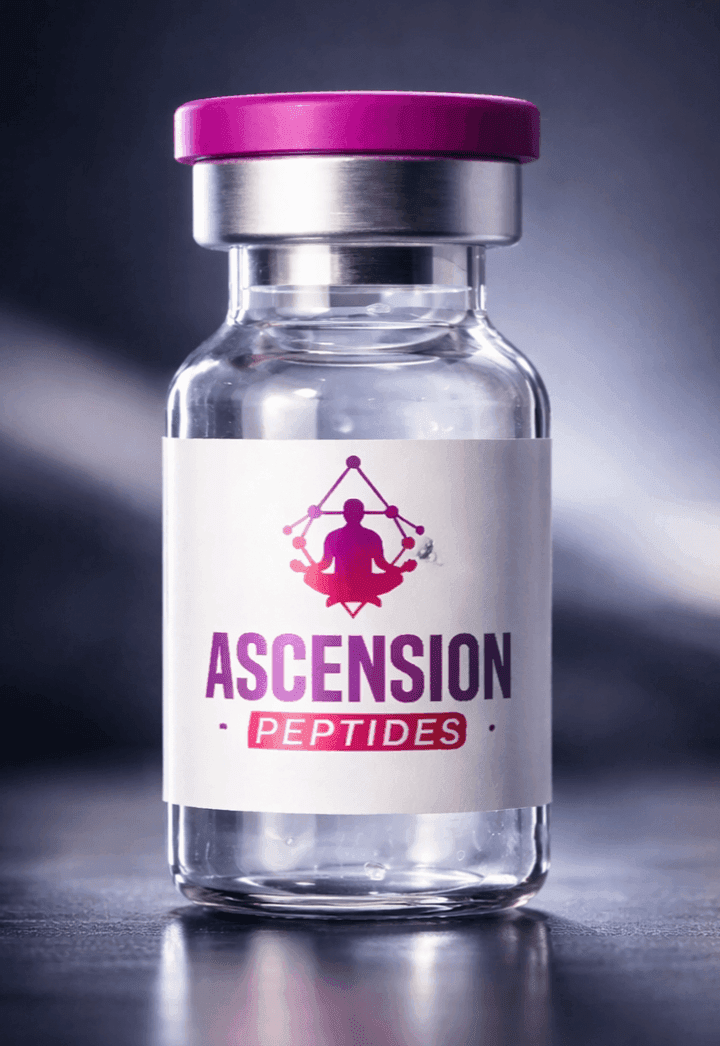
Side-effect data assumes the vial matches the label. If you source it anyway, Ascension Peptides lists a 10 mg ARA-290 vial at $60.00 as of 2026-10-11 (list $79.99). Kovera Labs tests every batch (HPLC, LC-MS identity, net content, endotoxin, sterility and heavy metals), more than 98 percent of tested batches pass, and batch certificates are public. Prices are in US dollars, shipping is US only and all sales are final. Treat the certificate as a minimum, and every Reddit report on this page as an anecdote.
Medical Disclaimer: ARA-290 (cibinetide) is an investigational research peptide. It is not approved by the FDA or any comparable regulator for any condition and is sold for laboratory research use only. This article reports published and user-reported information for education. It is not medical advice or a recommendation for personal use. Consult a qualified healthcare professional about any health concern.