This ARA-290 dosage chart keeps two things apart that most dosing pages blend: the amounts human studies actually injected, and the amounts people on Reddit say they use. The studies are small, short and run in specific diseases. The Reddit sample is smaller still. ARA-290 (cibinetide) has no approved dose anywhere, so nothing here is a prescription.
Key Takeaways
- Human studies gave 2 mg intravenously three times a week or 4 mg a day under the skin for 4 weeks. A 64-person dose-ranging trial tested 1, 4 and 8 mg a day, and only the 4 mg arm beat placebo on its main endpoint
- The longest course was 12 weeks at 4 mg a day, in 9 people with diabetic macular edema and no placebo group. It did not improve the main eye measures
- Only 10 Reddit accounts named a dose: 4 mg a day (3), 1 mg, 2 to 3 mg, 5 mg and 8 mg a day (1 each), one nasal 5 mg a week, and two with unclear units
- Maths: a 10 mg vial with 1 mL of water is 10 mg/mL, so 4 mg is 0.4 mL, or 40 units on a U-100 syringe. At 4 mg a day, one 10 mg vial lasts 2.5 days
- ARA-290 is not FDA-approved and is sold as a research chemical. This is published and self-reported information, not medical advice
For what the peptide is and how the evidence stacks up overall, see our ARA-290 peptide guide. This page is the dose-focused companion, and our ARA-290 side effects page covers the safety record.
ARA-290 dosage chart: what the published studies used
Start with the table, because it answers the question most people arrive with. Every figure was checked against the study abstract or full text on Europe PMC and PubMed Central, and the route matters as much as the number.
ARA-290 doses as written in published human studies
| Dose as published | Route and schedule | What it was | |
|---|---|---|---|
| Sarcoidosis pilot, 2012 | 2 mg | Intravenous, three times a week for 4 weeks | 22 patients: 12 on drug, 10 on placebo (PMID 23168581) |
| Sarcoidosis, 2013 | 4 mg | Subcutaneous, once daily for 28 days | 38 enrolled: 21 on drug, 17 on placebo (PMID 24136731) |
| Type 2 diabetes, 2015 | 4 mg | Subcutaneous, daily for 28 days, then 28 days off | 48 analyzed, self-injected 0.5 mL in the thigh (PMID 25387363) |
| Dose-ranging, 2017 | 1, 4 or 8 mg | Subcutaneous, once daily for 28 days | 64 patients, corneal nerve fiber area (PMID 28475703) |
| Macular edema, 2020 | 4 mg | Subcutaneous, once daily for 12 weeks | 9 enrolled, 8 completed, no control arm (PMID 32674280) |
| Volunteer PK, in the 2013 paper | 2 mg IV vs 2, 4, 6 mg subcutaneous | Single doses, crossover | 10 healthy volunteers |
| Approved label | None | None | No regulator has approved a dose |
The first trial in the chart gave 2 mg intravenously, three times a week for 4 weeks, to 12 people with sarcoidosis-related small fiber neuropathy symptoms against 10 on placebo. The drug group improved on a neuropathy symptom score, while the pain and fatigue scales improved about equally in both groups, which is the usual trouble with pain endpoints (PMID 23168581). The next trial switched to a daily subcutaneous injection of 4 mg for 28 days in 38 people with sarcoidosis. Its full text reports no injection-site pain or irritation and no anti-drug antibodies (PMID 24136731).
The type 2 diabetes study used the same 4 mg daily for 28 days, self-injected into the thigh with a rotating site, and followed people for another 28 days with no drug. Neuropathic symptoms on the PainDetect questionnaire improved, and so did HbA1c and lipid measures (PMID 25387363). Neither of those two trials varied the dose.
The 2017 trial did. It randomized 64 people with sarcoidosis-related small nerve fiber loss to 1, 4 or 8 mg a day or placebo for 28 days. The placebo-corrected change in corneal nerve fiber area was 109 (95% CI -429 to 647) at 1 mg, 697 (159 to 1,236; P = 0.012) at 4 mg and 431 (-130 to 992) at 8 mg. Pain improved in every group, including placebo (PMID 28475703). Read plainly: 4 mg separated from placebo, 1 mg and 8 mg did not, and nobody can say from 16 people per arm whether 8 mg is truly no better or just noisy.
The longest course in the chart is the 2020 macular edema study: 4 mg a day for 12 weeks in 9 people, 8 of whom finished. There was no change in visual acuity or retinal thickness, though a vision questionnaire score rose slightly, and no serious adverse events or antibodies were seen (PMID 32674280). Longer is not a proven upgrade. Nothing in that study shows a 12-week course does more than a 28-day one.
A small pharmacokinetic crossover inside the 2013 paper compared 2 mg intravenous with 2, 4 and 6 mg subcutaneous in 10 healthy volunteers. Only the 6 mg dose differed from the others on exposure, and the paper does not report a half-life. Secondary summaries put the plasma half-life at a few minutes. We could not confirm a primary figure, so treat it as unverified.
Why 4 mg is not simply "the dose"
The 4 mg figure now travels without its context. It won one three-arm comparison, in people with one disease, measured on corneal imaging, over 28 days. It was also the dose chosen for the diabetes and macular edema studies, but those were single-dose designs, so they say nothing about whether 3 or 6 mg would have worked.
Two other points matter. First, every human dose was a flat amount, not adjusted for body weight, so the published data cannot tell a 55 kg person from a 110 kg person. Second, we found no efficacy trial in people without a disease, so the numbers describe patients with documented nerve loss, not general use. The repeated cycle-then-rest patterns seen online come from habit, not from a trial. In every study above, people took one course and stopped.
What Reddit users report taking
To see what happens outside trials, we read two Reddit scrapes on ARA-290: 38 items from 5 threads (r/smallfiberneuropathy, r/Peptidesource, r/Biohackers, r/Biohacking) and 143 items from 7 threads (r/smallfiberneuropathy, r/NTNPerformance, r/RotatorCuff, r/PeptidePathways, r/BiohackPhilippines). Most items were questions, source requests, bots, off-topic replies or vendor pitches, which we dropped. Only 10 accounts stated a daily or weekly amount for themselves, 9 in r/smallfiberneuropathy and one in r/PeptidePathways. That is thin: a small, self-selected group of people with neuropathy who chose to post.
What 10 Reddit accounts said they take, by daily ARA-290 amount
The mode was 4 mg a day, matching the trials, and two of the three described copying the published 28-day protocol. A 2022 poster said they followed the published phase II protocol, 4 mg a day for 28 days into rotating thigh sites, reported benefit that took about 12 days to appear, and bumped to 8 mg for the last two days. The same poster offered a view on low doses: "Lower doses will not be nearly as effective, and anything below 2mg/day probably wouldn't even beat placebo." (a r/smallfiberneuropathy poster, Jun 2022, link). That is opinion, not data, though it is consistent with the 1 mg arm missing significance in the trial.
Others varied. One person ran 2 mg a day for two weeks and later about 3 mg a day for 21 days, writing "Been running about 3mg a day. Last time was 2mg." (a r/smallfiberneuropathy poster, Sep 2026, link). Another reported 5 mg a day alongside KPV for a compressed nerve. Another wrote about 5 mg a week intranasally with GHK-Cu, a route for which we found no human dose data. A commenter in the side-effects scrape said they used 8 mg a day for about 3 months within a 5 to 6 month period and noticed no meaningful change in autonomic symptoms.
Two accounts show a hazard of the topic: units. One user wrote 20 mg on an insulin needle every other day and later 10 mg every two or three days, and another wrote 20 mg-or-units about once a week. On a U-100 syringe, 20 units is 0.2 mL, which is 2 mg only if the vial was mixed at 10 mg/mL. Without the vial size and water volume, a reader cannot tell. Treat any Reddit dose without those two numbers as unusable.
Treat the 8 mg and nasal reports as outliers. One person doing fine on a high amount is not a safety study, and no human dose-escalation toxicity data exist.
Reconstitution math: mg, mL and syringe units
Dosing threads on this peptide are mostly reconstitution threads. The vial holds a fixed mass of freeze-dried powder, and the water you add changes only the concentration. The formula is: units on a U-100 syringe = dose in mg divided by concentration in mg/mL, times 100.
Worked example: a 10 mg vial with 1 mL of bacteriostatic water is 10 mg/mL. A 4 mg dose is 4 / 10 = 0.4 mL, which is 40 units. Add 2 mL instead and the concentration halves to 5 mg/mL, so the same 4 mg becomes 0.8 mL, or 80 units. One commenter advised a simple one-to-one ratio of 1 mL per 10 mg vial, then said to draw to 4 on the syringe for 4 mg. That mark is 4 units, or 0.4 mg, not 40 units, which shows how easily units get mixed up. Another said the volume does not matter as long as the powder dissolves, which is true if you recompute: "if 1mL of solution is enough to dissolve the peptide and pull it through the syringe, that is all you need." (a r/Peptidesource commenter, Jun 2026, link).
Syringe units for 2, 4 and 8 mg (U-100 syringe, 100 units = 1 mL)
| Concentration | 2 mg | 4 mg | 8 mg | Doses per vial at 4 mg | |
|---|---|---|---|---|---|
| 10 mg + 1 mL | 10 mg/mL | 20 units | 40 units | 80 units | 2.5 |
| 10 mg + 2 mL | 5 mg/mL | 40 units | 80 units | 160 units (1.6 mL) | 2.5 |
| 16 mg + 2 mL | 8 mg/mL | 25 units | 50 units | 100 units | 4 |
| 16 mg + 4 mL | 4 mg/mL | 50 units | 100 units | 200 units (2 mL) | 4 |
Vial size drives the maths. At 4 mg a day, a 10 mg vial gives 2.5 doses and a 16 mg vial gives 4. A 28-day course at 4 mg is 112 mg, about 11 vials of 10 mg. At 8 mg it doubles to 224 mg. At the Ascension price below, that is roughly $672 and $1,344 before shipping, which fits the $600 to $700 a month a 2022 poster paid. Cost is the main reason the Reddit accounts we read stretched doses or stopped.
ARA-290 also has a solubility quirk. Three Reddit accounts reported the powder gelling or clumping in plain water, one mentioned needing 2.5 mL plus a splash of sodium bicarbonate, and another reported a 16 mg vial clearing in a minute with 1.5 mL of PBS. One 2022 poster said it required phosphate-buffered saline and that their supplier shipped it pre-buffered. These are anecdotes about changing the pH of an injectable. Do not improvise it. Ask the seller whether the vial is buffered, read the certificate, and discard anything cloudy, lumpy or gelled.
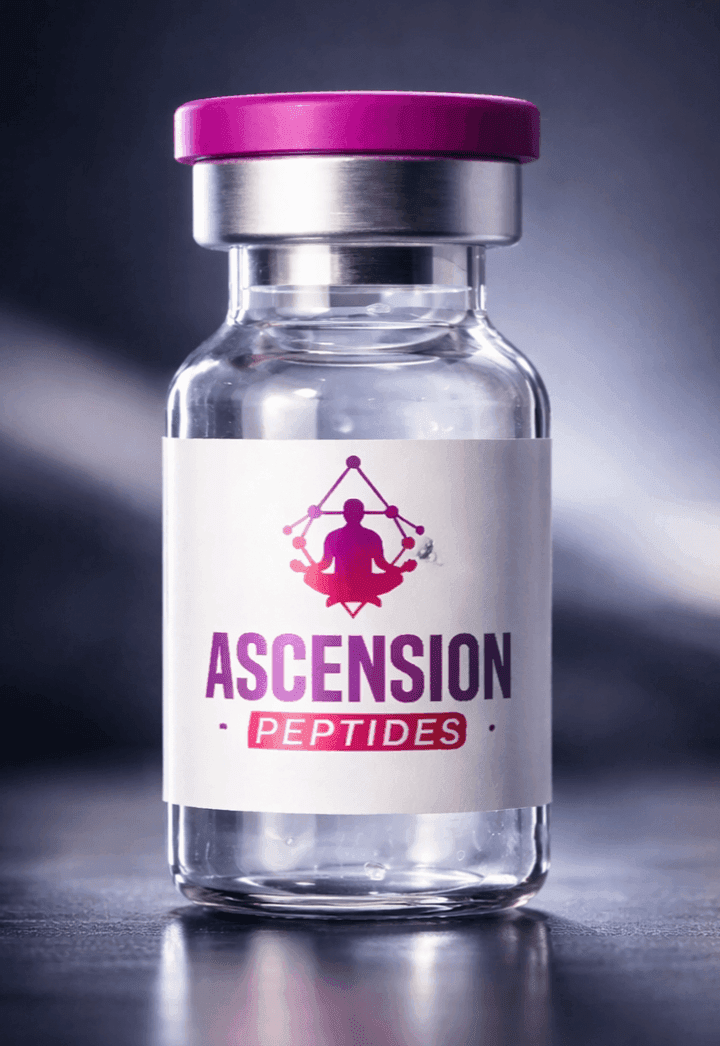
If you want one supplier to check against, Ascension Peptides sells a 10 mg ARA-290 vial at $60.00 as of 2026-10-11 (list $79.99, $6.00 per mg). Kovera Labs tests every batch (HPLC, LC-MS identity, net content, endotoxin, sterility and heavy metals), more than 98 percent of tested batches pass, and batch certificates are public. Prices are in US dollars, shipping is US only and all sales are final. New customers can use code PEPTIDEDECK for 50 percent off. Our where to buy ARA-290 guide covers how to read a certificate of analysis.
Timing, frequency and cycle length
No study compared schedules. The trials used once-daily injections (or three times a week in the 2 mg intravenous pilot), so daily dosing is the only subcutaneous pattern with human data. Reddit accounts also describe once daily, with a few outliers: every other day, every 2 to 3 days after a loading period, and weekly.

On cycle length, the pattern is 28 days in trials and nearly all the 4 mg accounts, with one 12-week course in the macular edema study. Reddit accounts mention 14-day and 21-day runs, a full month, 5 to 6 months, and more than 2 years with no dose given. One person described feeling better for 3 to 4 months after a 2 to 3 week course, then repeating it. Another said symptoms flared in the middle of a course. Whether a repeat course helps, and whether benefit lasts after stopping, has not been tested; one 2022 poster could not say whether their benefit would persist off the drug.
The best-supported summary: one daily subcutaneous injection for 4 weeks, in patients under medical supervision. Anything longer or repeated is extrapolation.
What changes the dose
None of these can be quantified, but each changes what a number on a chart means.
Disease and reason for use. Trial doses came from sarcoidosis and diabetes studies. A person using it for a herniated disc, shoulder pain or post-shingles nerve pain, as several Reddit accounts do, is outside the evidence entirely.
Route. Intravenous, subcutaneous and nasal are different experiments. The intravenous 2 mg pilot cannot be converted to a subcutaneous dose.
Body weight and age. Trials gave flat amounts. Nothing tested whether size matters.
Kidney function and other medicines. The diabetes paper reports one person whose borderline kidney function worsened after a diuretic dose was raised, and the safety committee stopped ARA-290. Anyone with kidney disease or on regular medicines should involve a clinician first. See the side effects page for detail.
Product quality. If the vial holds less than the label says, every calculation changes. A batch certificate with HPLC purity, mass-spec identity (about 1,257 Da) and net content is the minimum.
Frequently Asked Questions
What is the ARA-290 dosage?
There is no approved or established dosage. In human studies the common amount was 4 mg a day by subcutaneous injection for 28 days, and a 64-person trial found only the 4 mg arm beat placebo on its main endpoint. Reddit accounts most often reported 4 mg a day too, with a spread from 1 to 8 mg.
How many units is 4 mg of ARA-290?
It depends on the water. A 10 mg vial with 1 mL gives 10 mg/mL, so 4 mg is 40 units on a U-100 syringe. With 2 mL it is 80 units. A 16 mg vial with 2 mL gives 8 mg/mL, so 4 mg is 50 units. Divide the dose by the concentration, then multiply by 100.
How long do you take ARA-290?
Trials used 28 days, and one small study used 12 weeks. Reddit accounts mention 2 to 3 weeks up to several months. No study tested repeat cycles or long-term daily use, so the cycle lengths online are habits, not evidence.
Does a higher ARA-290 dose work better?
Not in the one trial that compared doses. The 8 mg arm gained 431 square micrometers of corneal nerve fiber area, with a confidence interval running below zero, against 697 at 4 mg with p = 0.012. Doubling the dose did not clearly double the effect, and the safety of higher amounts is unknown.
Is ARA-290 legal and FDA-approved?
It is not FDA-approved for any use. It holds an EU orphan designation for sarcoidosis (EU/3/13/1191), which is not a marketing authorization. Secondary sources report a US orphan designation; we could not confirm that in the FDA database. It is sold as a research chemical, and one commercial site claims its developer has closed, which we could not verify.
Checking a vial before you do any math
The dose maths assumes the label is true, so confirm lot, purity and mass first. Ascension Peptides lists the 10 mg vial at $60.00 as of 2026-10-11, with per-batch Kovera Labs testing and public batch certificates; US shipping only and all sales are final. Write units out in full, and treat every Reddit number here as an anecdote.
Medical Disclaimer: ARA-290 (cibinetide) is an investigational research peptide. It is not approved by the FDA or any comparable regulator for any condition and is sold for laboratory research use only. This article reports published and user-reported figures for education. It is not medical advice, a dosing protocol or a recommendation for personal use. Consult a qualified healthcare professional about any health concern.