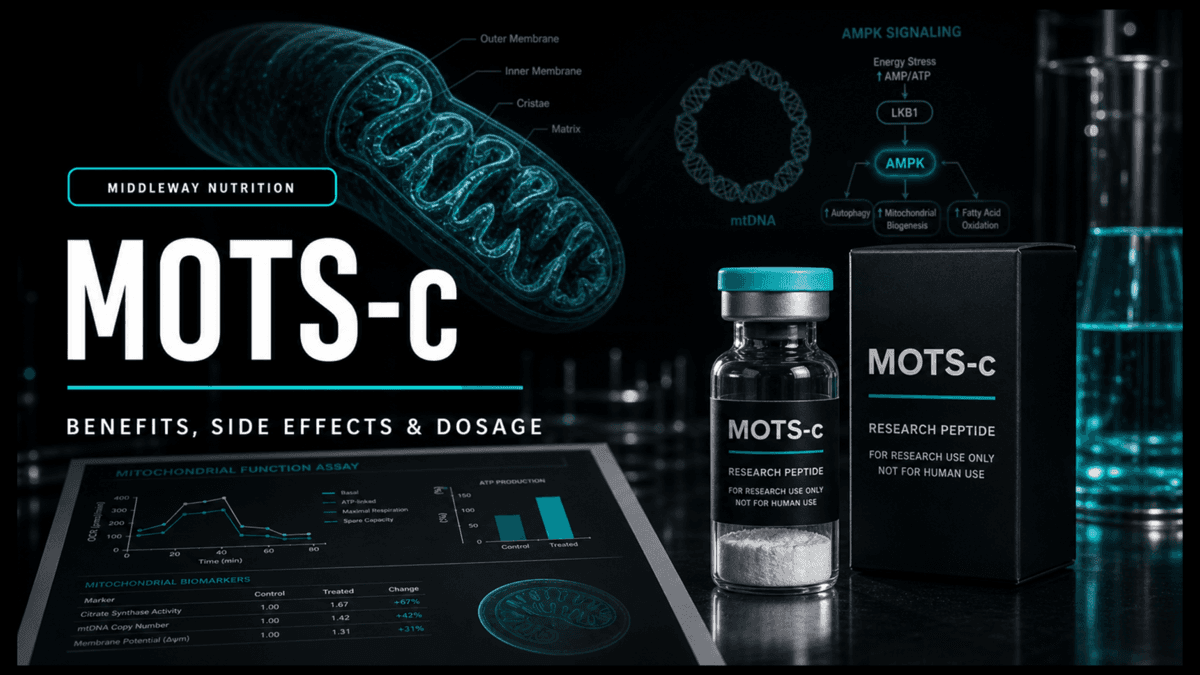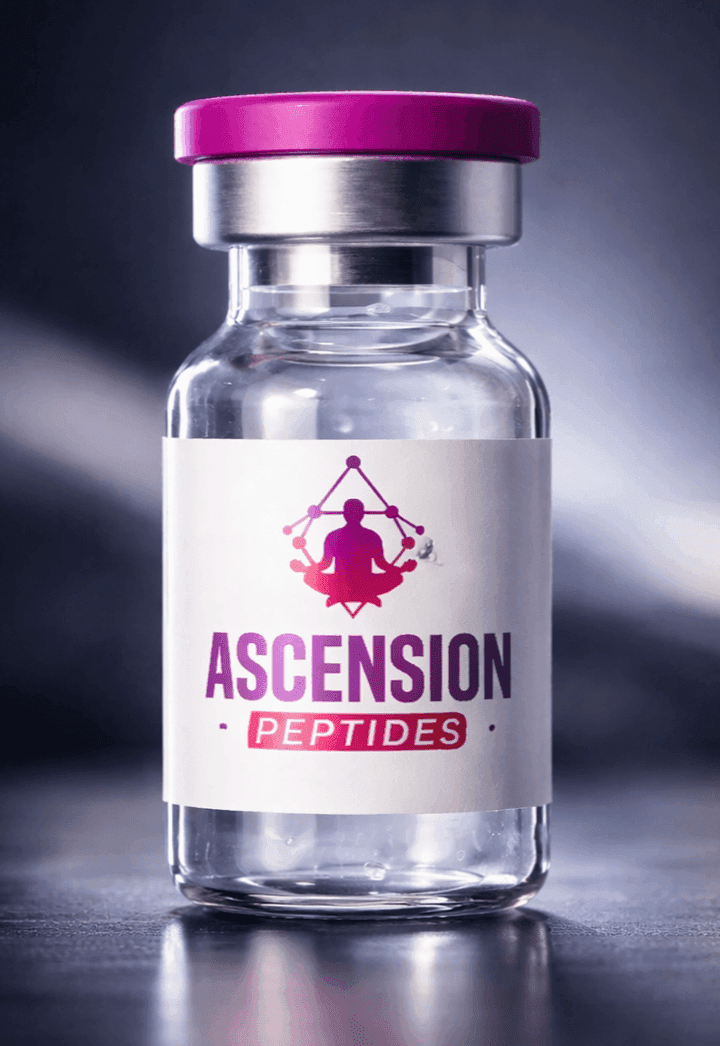
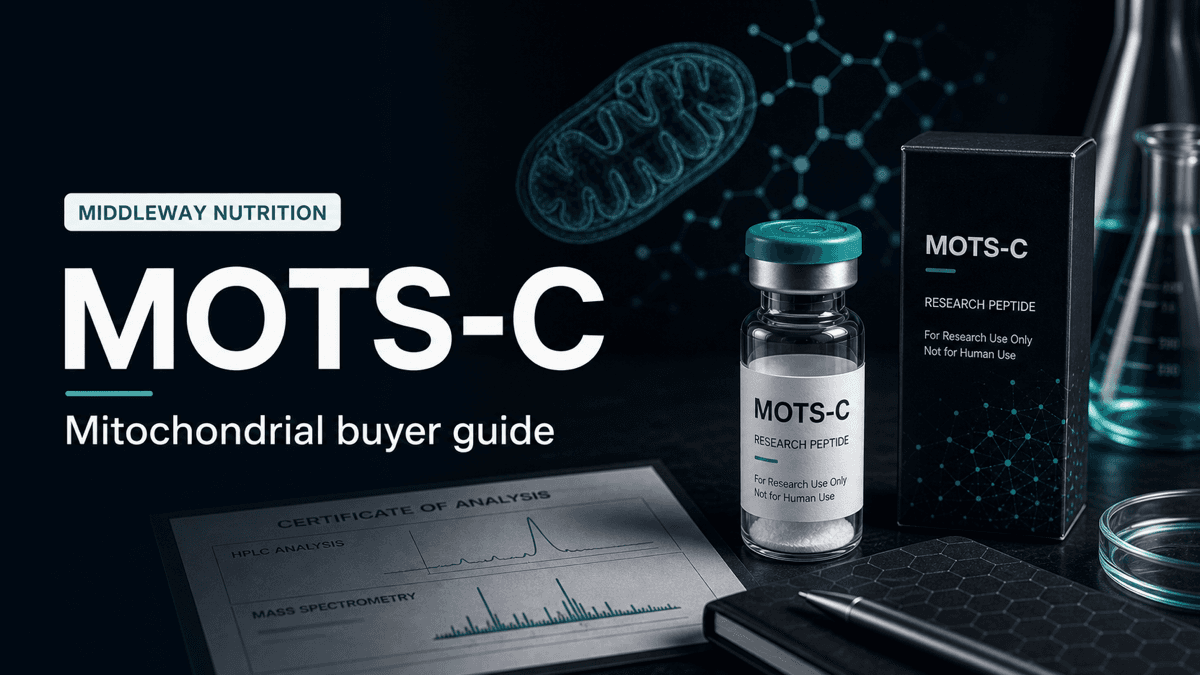
MOTS-C for sale runs $62.00 for a 10mg vial at the source we use, in a market where a comparable 10mg vial was listed as high as $116. Below is the current pricing, then the batch-level checks that separate a real vial from a printed purity claim.
For a side-by-side look at multiple sellers, our where to buy MOTS-C guide handles vendor comparison. This page is for buyers who have already decided and want price plus proof.
Key Takeaways
- A 10mg vial is the standard research size. Expect $65 to $120 across most US-facing sellers in 2026.
- A certificate of analysis only counts if its lot number matches the code printed on your vial. Product-level PDFs prove nothing.
- Ask for both HPLC purity with a chromatogram and a mass spec identity result near 2,174 g/mol. Purity alone does not tell you what the powder is.
- A vial can be 99% pure by HPLC and still be underfilled, which is why per-batch testing beats any headline percentage.
- MOTS-C carries two methionine residues, which makes oxidation impurities a real and checkable failure mode.
MOTS-C Price and Specs
| Spec | Detail |
|---|---|
| Size | 10mg vial |
| Price | $62.00 USD |
| Cost per mg | $6.20/mg |
| Purity | Above 98% by HPLC (the certificate pass mark) |
| Batch testing | Independent third-party lab (currently Kovera Labs): HPLC purity, LC-MS identity, net content, endotoxin, sterility screen, heavy metals |
| Certificate of analysis | Batch-specific certificates published in a public library |
| Shipping | Free over $250, ships within the United States only |
| Returns | All sales final; damaged or incorrect items replaced if reported quickly |
| Form | Research use only |
Ascension Peptides pricing as verified on 27 September 2026, in USD. Prices move. New customers get 50% off with code PEPTIDEDECK.
Current source: Ascension Peptides. Every batch is tested by an independent third-party lab, currently Kovera Labs, and the batch-specific certificates sit in a public library of 85 COAs rather than one recycled product PDF. The Kovera reports cover HPLC purity, LC-MS identity, net content per vial, endotoxin, a rapid sterility screen and heavy metals. We checked one Kovera report against the lab's own records, and it matched.
What "MOTS-C For Sale" Actually Means
When a website lists MOTS-C for sale, it is not a pharmacy. It is a chemical supplier. Read the footer of any major seller and the same language appears: sold for research, laboratory or analytical purposes only, not for human or animal consumption, statements not evaluated by the FDA.
Three practical consequences follow.
No prescription exists. No physician can write you a MOTS-C script and no pharmacy will fill one. Any site implying a medical pathway is misrepresenting something more consequential than shipping times.
Nobody inspects the product. No FDA batch release, no pharmacopoeial monograph enforcement, no recall mechanism. A run that comes out well below its advertised purity has nothing external to catch it.
The vendor's own testing is the entire control system. Which is why the quality of that testing, and whether you can confirm it independently, is the only variable worth arguing about.
Pricing Sanity Check
Across reputable US-facing sellers in 2026, a 10mg vial of MOTS-C generally lands somewhere between about $65 and $120, with most established sellers clustered in the upper half of that range. Five milligram vials commonly run under $70. Modest multi-vial discounts are standard and unremarkable.
If you find a 10mg vial at $20, ask what got cut, because something did. Synthesizing a 16-residue peptide has a real floor cost, and independent testing adds a fixed charge per batch. Testing is the first expense a lazy supplier drops, because it stays invisible until an experiment fails to reproduce. Cheap is not automatically fake, but an outlier low price should trigger more scrutiny of the COA, not less. A second MOTS-C for sale listing is useful for confirming a vendor is still in stock, because MOTS-C sells out more often than most.
What You Are Actually Buying
MOTS-C stands for mitochondrial open reading frame of the 12S rRNA type-c. Unlike nearly every other peptide on the research market it is encoded by mitochondrial DNA rather than the nuclear genome, which is why researchers class it as a mitokine.
Its sequence is Met-Arg-Trp-Gln-Glu-Met-Gly-Tyr-Ile-Phe-Tyr-Pro-Arg-Lys-Leu-Arg, molecular formula C101H152N28O22S2, molecular weight approximately 2,174 g/mol. Those numbers are not trivia. They are the reference values you check a certificate against.
Interest centers on activation of AMPK, the cell's energy-sensing pathway, with downstream effects on glucose handling and fat oxidation. Those findings come overwhelmingly from cell and rodent work.
How to Read a MOTS-C COA
Most buyers see a large number next to the word purity and stop reading. Here is the actual sequence of checks.
Match the lot number and the date. Your vial carries a lot code and the certificate should reference that same code, dated close to the synthesis run. If the COA shows no lot number, a different one, or a test date years older than your order, it describes material you did not receive. Reusing one PDF across years of stock is common, and it is the easiest failure to catch.
Demand the chromatogram, not the headline number. A real HPLC report shows the trace: a main peak with a retention time, plus impurity peaks and their individual percentages. A page stating only "Purity: 99.4%" in a text box takes minutes to fake in a word processor.
Find the mass spec and check the number yourself. This is the step people skip and the one that catches fraud. HPLC tells you how pure the sample is; mass spectrometry tells you what the sample is. A supplier shipping a cheaper substitute can still produce a clean HPLC figure, because a wrong compound can be genuinely pure. For MOTS-C you want an observed mass near 2,174 g/mol. If the reported mass is nowhere near that figure, the certificate either describes a different compound or was assembled carelessly.
Look for the methionine tell. MOTS-C contains two methionine residues and one tryptophan, all prone to oxidation during synthesis and storage. Oxidized methionine appears as a species 16 daltons heavier than the parent peptide. A thorough certificate accounts for these related-substance peaks in small amounts rather than pretending a peptide is a single perfect species.
Name the lab. The certificate should identify the facility that ran the test, with a report identifier you can quote back. A named laboratory and a report number you can quote back are the kind of detail a real testing chain produces and a fake one does not.
Third-Party Testing, or It Does Not Count
In-house testing is a vendor grading its own homework. Not worthless, but not verification either, because the party with a financial interest in a passing result is the party producing it.
Third-party means an independent laboratory with no stake in whether your vial sells. The certificate should carry that lab's name, its report identifier, the instrument method and a date. Two dodges to watch for: a certificate from a lab that turns out to be the manufacturer's own subsidiary, and a cropped chromatogram with the header removed, which hides lot number, date and lab identity at once.
What Actually Arrives
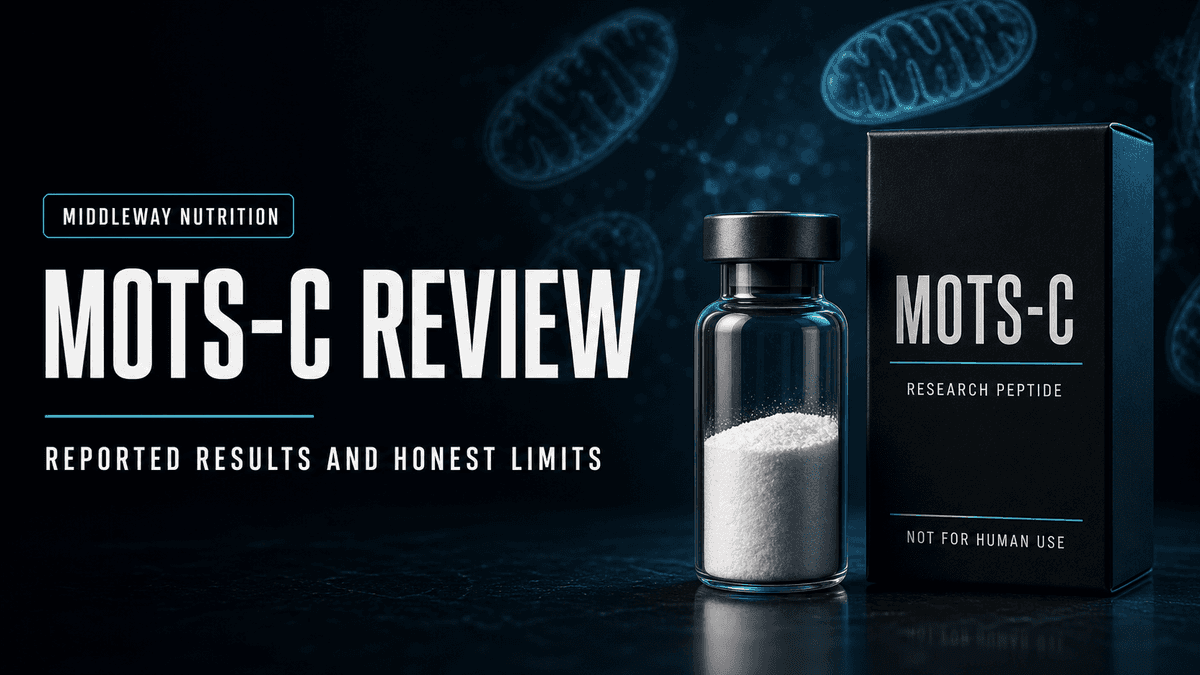
You should receive a small sealed glass vial of lyophilized powder, a thin white cake or film at the bottom. Ten milligrams looks like almost nothing, so first-time buyers often realize only later that the vial is not empty. It should be stoppered and crimp-sealed, labeled with compound name, quantity and a lot number matching your paperwork. Lyophilized material tolerates ambient temperature in transit, but long-term storage belongs in a freezer. Anything arriving pre-mixed in liquid is a problem: solution-phase peptide degrades over weeks, not years.
Red Flags That Mean Walk Away
- No lot number on the vial. Without it no certificate can be tied to your material.
- A single COA reused across every batch. One PDF, no dates, no lot references.
- Purity stated with no chromatogram. A number in a box is not data.
- No mass spec, or an identity mass that does not sit near 2,174 g/mol.
- Pre-mixed liquid vials sold as ready to use.
- Dosing protocols and human results in the product copy, from a supplier claiming research-only use.
- Price far below the field with no explanation.
- No published testing page, only a claim in the description.
Legal and Safety Reality
MOTS-C is not FDA-approved for treating any condition. It is sold in the US as a research chemical, which is why every legitimate vendor labels it for laboratory use only. Buying research material in that framing is generally legal; marketing it for human use is not, and vendors who blur that line take a regulatory risk on your behalf without telling you.
The safety picture is incomplete: human data is limited, long-term data essentially absent, and purity problems add a second unknown on top of the compound itself.
Quick Pre-Purchase Checklist
- Does the product page link a real, dated, lot-specific COA?
- Does that lot match the vial you receive?
- Is HPLC purity shown with a chromatogram, not just a percentage?
- Is there a mass spec result near 2,174 g/mol?
- Is the testing lab independent and named?
- Is the per-mg price defensible against the $65 to $120 per 10mg band?
- Does it ship as lyophilized powder, not liquid?
- Is it framed as research use, without human dosing advice?
Frequently Asked Questions
How much does MOTS-C cost?
A 10mg vial currently runs $62.00 USD at Ascension Peptides, which works out to about $6.20/mg, with free shipping once an order passes $250. The broader 2026 market sits between about $65 and $120 per 10mg vial, so that is at the low edge of the band. Prices far below the band usually indicate skipped third-party testing or an underfilled vial.
Is MOTS-C legal to buy?
In the US, MOTS-C is sold as a research chemical for laboratory use rather than as a drug, and purchasing it in that framing is generally legal. It is not FDA-approved for any human use, and marketing it for human consumption is not permitted. Rules differ by country, so check your own jurisdiction.
How do I know the MOTS-C I bought is real?
Verify the batch, not the brand. Match the lot number on the vial to a dated certificate from a named third-party lab, look at the chromatogram rather than the headline purity figure, and check that the mass spectrometry identity result sits near 2,174 g/mol. If any of the three is missing, you have a marketing claim rather than evidence.
Do I need a prescription for MOTS-C?
No, because no prescription pathway exists. MOTS-C is not an approved medication, so no physician can write a script and no pharmacy will dispense it. Any seller implying otherwise is misrepresenting the product's legal status.
Where to Buy MOTS-C
If you have worked the checklist and want a source to start from, Ascension Peptides is where we send people: 10mg vials at $62.00 USD, certificates showing above 98% HPLC purity from independent third-party testing (currently Kovera Labs), and a public library of batch-specific certificates covering purity, LC-MS identity, net content, endotoxin, sterility and heavy metals. Shipping is free over $250 within the United States, and buying 3, 5 or 10 vials saves 3%, 5% or 10%. All sales are final, though damaged or incorrect items are replaced if reported quickly.
Whatever you decide, verify before you buy rather than after. The certificate is the product.
Medical disclaimer. MOTS-C is sold for research and laboratory use only. It is not FDA-approved for treating any condition, and nothing on this page is medical advice or a recommendation for human use. This information is educational. Consult a qualified healthcare professional about any health decision.