
SS-31 (Elamipretide) is unusual in this category because it has been through real human clinical trials rather than resting on mouse data, and reading those trials carefully gives a more mixed picture than the marketing suggests. This SS-31 (Elamipretide) review covers the mechanism, which is genuinely elegant, and the results, which include both encouraging biomarker findings and a headline trial that did not meet its primary endpoint.
That combination is the honest story, and it is more useful than either half on its own.
SS-31 (Elamipretide) Review: What It Is
SS-31 belongs to the Szeto-Schiller peptide family, developed in academic research and taken into clinical development under the name elamipretide, also seen as MTP-131 and Bendavia.
It is a tetrapeptide, just four amino acids, alternating aromatic and basic residues. That arrangement binds it tightly to cardiolipin, and cardiolipin is essentially confined to one place in the cell: the inner membrane of the mitochondrion.
The targeting is the clever part. Rather than needing a receptor, SS-31 concentrates in mitochondria because of where cardiolipin is, which produces selectivity through chemistry rather than through biology.
The Mechanism
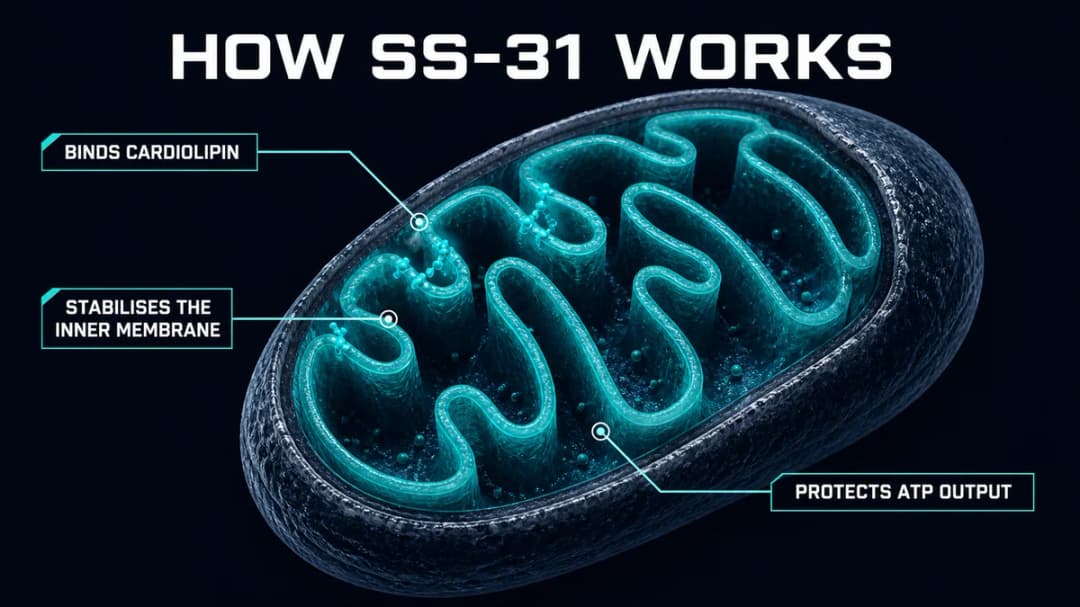
Cardiolipin is structural. It holds the components of the electron transport chain in the arrangement they need to work efficiently, essentially acting as scaffolding for the machinery that produces ATP.
Cardiolipin degrades with age and in various disease states. When it does, the electron transport chain becomes less efficient, ATP production falls and reactive oxygen species increase, which damages the mitochondria further. It is a self-reinforcing decline.
SS-31 binds cardiolipin and stabilises it, which is proposed to preserve that structural arrangement and restore efficiency.
This is a meaningfully different approach from most mitochondrial supplements. NAD precursors and CoQ10 supply substrates for the process. SS-31 targets the physical structure the process depends on. Whether that is better is unresolved, but it is not the same thing.
What the Human Trials Found
This is the section that matters, and the reason to be more careful than most write-ups are.
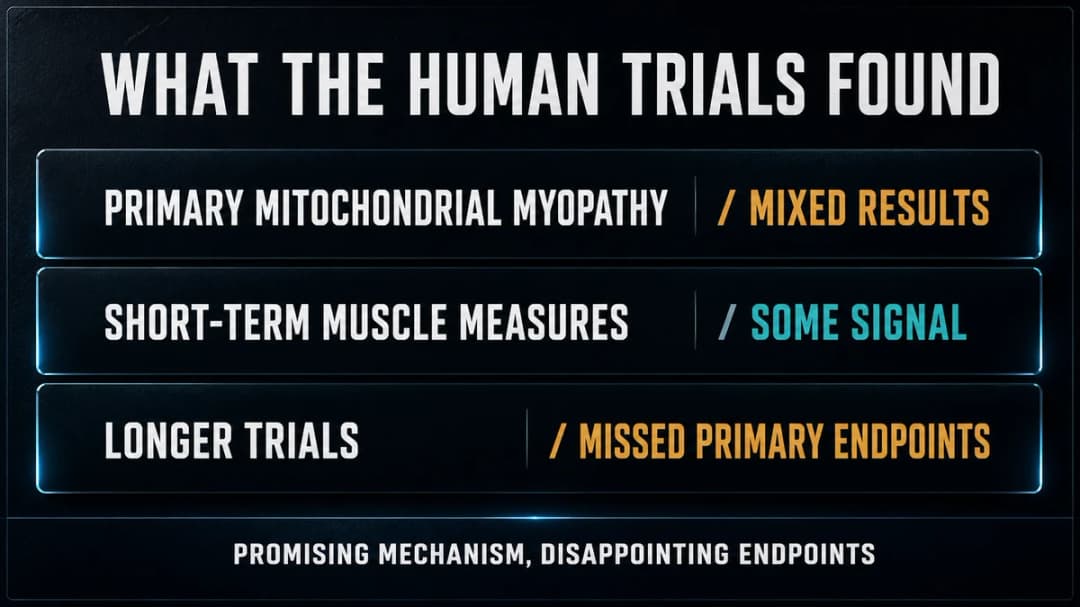
Elamipretide has been studied across several conditions, including primary mitochondrial myopathy, a rare cardiac condition called Barth syndrome, heart failure and eye disease. That is a real clinical programme with real patients and measured outcomes.
The results are genuinely mixed.
The encouraging findings have generally been in biomarkers and specific functional measures: studies in older adults have reported improvements in skeletal muscle energetics, and work in rare mitochondrial disease has reported functional improvement on some measures.
The complication is that the largest trial in primary mitochondrial myopathy did not meet its primary endpoint. That is not a footnote. Primary endpoints are chosen in advance precisely so that a programme cannot be judged on whichever measure happened to look good afterwards, and missing one is the strongest single piece of evidence available about a drug.
The furthest-advanced regulatory work has been in Barth syndrome, an ultra-rare genetic condition. That is a very narrow population, and results there say little about what the compound does in a healthy 50-year-old.
What This Means for General Use
The evidence supports a compound that does something measurable to mitochondrial function, in populations with mitochondrial disease, with inconsistent effects on the functional outcomes that matter most.
What it does not support is the general longevity and energy positioning it is sold under. There is no trial showing that SS-31 improves energy, exercise capacity or healthy aging in people without mitochondrial disease. The extrapolation from rare disease to general use is exactly the kind of leap that the trial process exists to prevent.
The honest framing: better evidenced than almost anything else in the longevity peptide category, and still not evidence for the use most buyers have in mind.
Dosing in Circulation
| Parameter | Commonly reported |
|---|---|
| Dose | Low milligram range per day |
| Route | Subcutaneous |
| Frequency | Daily, or several times weekly |
| Course | Several weeks to months, often cycled |
Clinical trials have used specific dosing under supervision, and figures circulating in the research compound market are approximations of those rather than validated protocols. There is no established dose for self-administration in healthy adults, because that population has not been studied.
Side Effects
Reported effects in the clinical programme have generally been mild, with injection site reactions the most common. That is a stronger safety statement than can be made for most compounds in this space, because it comes from monitored trials rather than user reports.
It applies to the doses and durations studied. Long-term use in healthy people has not been evaluated.
How It Compares With Other Mitochondrial Compounds
| Compound | Approach | Evidence |
|---|---|---|
| SS-31, elamipretide | Stabilises cardiolipin structure | Human trials, mixed results |
| MOTS-c | Mitochondrial-derived peptide, metabolic signalling | Animal data, minimal human trials |
| NAD precursors | Supply substrate for NAD-dependent enzymes | Human trials, generally modest effects |
| CoQ10 | Electron transport chain substrate and antioxidant | Long human use, effects mostly in deficiency states |
Anyone building a mitochondrial protocol should notice how similar the pattern is across all four: plausible mechanisms, clear effects on biomarkers, and modest or inconsistent effects on outcomes people actually care about.
For related reading, see our SS-31 guide and the MOTS-c overview. If you are weighing up sources, our guide on where to buy SS-31 covers vendor checks, certificate red flags and what to expect from a legitimate seller.
Frequently Asked Questions
Does SS-31 actually work?
It has demonstrated measurable effects on mitochondrial function in human studies, which puts it ahead of nearly everything else in this category. The functional results have been inconsistent, and the largest trial in primary mitochondrial myopathy did not meet its primary endpoint. So it does something real, and whether that translates into a benefit you would notice is unresolved.
Is elamipretide the same as SS-31?
Yes. SS-31 is the research designation from the Szeto-Schiller peptide series, and elamipretide is the name used in clinical development. MTP-131 and Bendavia refer to the same compound at different stages.
Will SS-31 improve my energy levels?
There is no trial evidence supporting that use. The human studies were conducted in people with mitochondrial disease or in older adults with specific measured deficits, not in healthy people looking for more energy. Extrapolating from one to the other is not supported.
How does SS-31 differ from NAD supplements?
NAD precursors supply raw material for enzymes that depend on NAD. SS-31 stabilises cardiolipin, the structural phospholipid that holds the electron transport chain in working order. One supplies inputs, the other targets the machinery, and neither has shown large effects on functional outcomes in healthy people.
Is SS-31 approved?
There is no approved product for general or longevity use. Clinical development has been focused on rare mitochondrial conditions, which is a very narrow population, and material sold by research vendors is not prepared for human consumption.