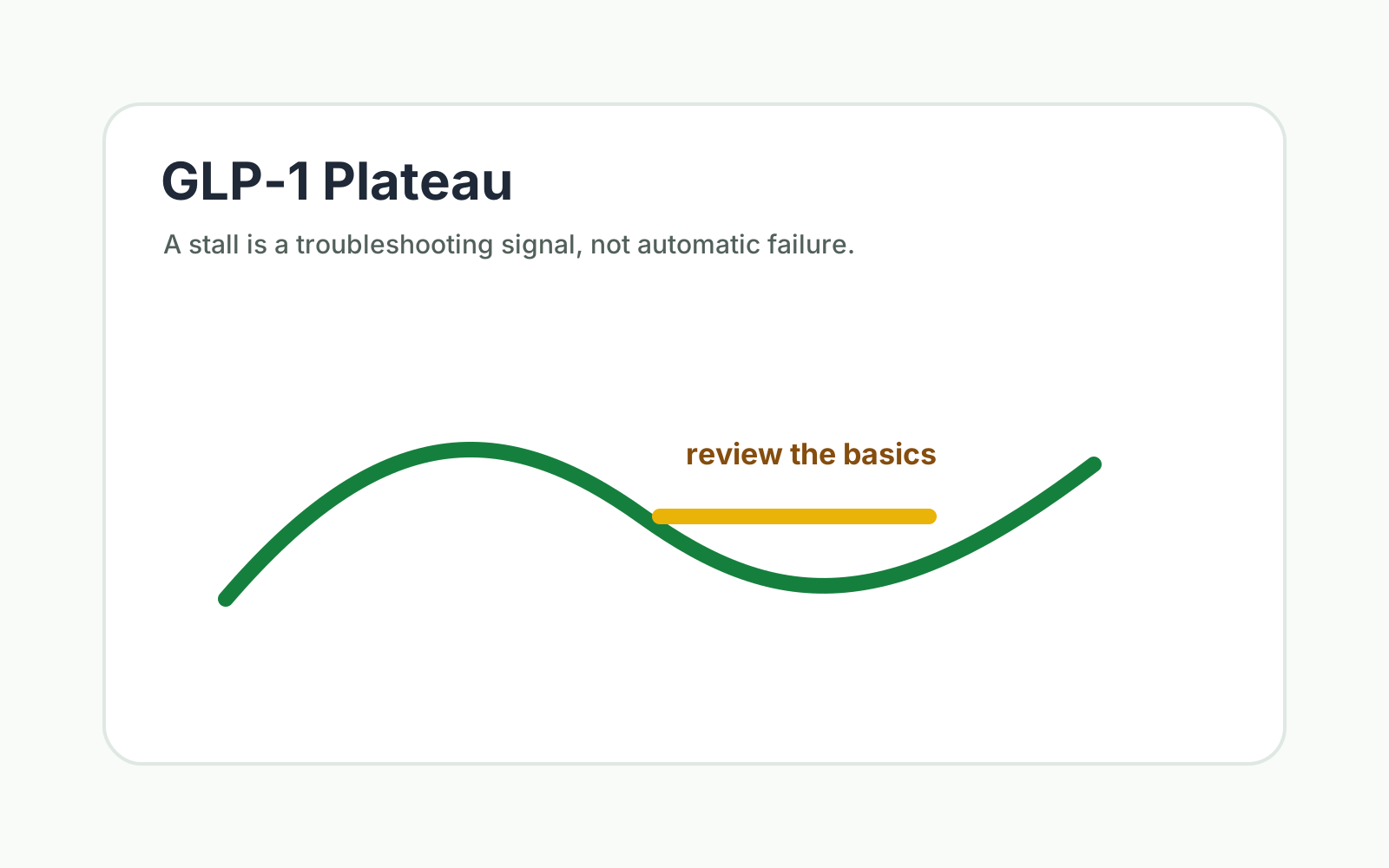
A GLP-1 plateau is when weight loss on a GLP-1 medication like semaglutide (Ozempic, Wegovy) or tirzepatide (Mounjaro, Zepbound) stalls for several weeks despite staying on treatment. Weight loss on GLP-1 medication usually slows over time — that does not always mean the medication stopped working. It often means the body is smaller, calorie needs changed, appetite is creeping up, adherence drifted, or the current dose has reached its useful effect.
Plateaus often surface around the same window we cover in what to expect after 3 months on a GLP-1.
Direct answer: Treat a GLP-1 plateau as a troubleshooting problem, not a panic signal. First confirm it is a real plateau over at least 3 to 4 weeks. Then work through the fixes below — adherence, protein, total calories, resistance training, sleep, and side-effect control — before assuming you need a higher dose. A dose increase helps some people, but it should come after the basics are dialed in.
What Does a GLP-1 Plateau Mean?
A plateau means the scale has genuinely flattened, not just paused for a few days. Weight naturally fluctuates 1 to 3 pounds day to day from water, food volume, sodium, and bowel timing. A true GLP-1 plateau is a flat trend line across 3 to 4 weeks or more, measured the same way each time.
It is normal and expected. In the STEP 1 trial, once-weekly semaglutide produced an average weight change of about -15% over 68 weeks, but the rate of loss tapered steadily as participants got lighter. This is called adaptive thermogenesis: as you get smaller, the body defends the lower weight by reducing energy needs. After losing roughly 10% of body weight, daily calorie burn can fall by around 15%, so a deficit that once drove steady loss quietly becomes maintenance. The same medication, dose, and diet then produce slower loss over time. Hitting a plateau usually means the plan needs a tune-up, not that it failed.
True Plateau Or Normal Slowdown?
| Pattern | What it may mean |
|---|---|
| One week flat | Normal noise, not a plateau |
| 3 to 4 weeks flat | Possible real plateau |
| Measurements improving but scale flat | Recomposition, water, bowel changes |
| Hunger returned | Dose, schedule, sleep, stress, or food quality may matter |
| Side effects remain high | Increasing dose may backfire |
How To Break a GLP-1 Plateau
Once you have confirmed a real plateau, work through these in order. Most stalls break on the basics before any dose change is needed.
- Confirm adherence. Are you taking the full dose, on schedule, with no missed or delayed injections? Even one missed weekly dose can stall progress.
- Recount your calories honestly. Appetite suppression can fade as the body adapts. Track intake for a week — portions and snacks often creep up without notice.
- Protect protein. Aim for roughly 0.7 to 1 g of protein per pound of goal body weight (about 1.2 to 1.6 g/kg) every day — see how much protein on GLP-1. Low protein during weight loss costs muscle, which lowers metabolism and deepens the plateau.
- Add or restore resistance training. Muscle preserves your resting metabolic rate. Aim for 2 to 3 sessions a week. If training dropped off, restarting it is one of the highest-value moves to break a stall.
- Audit liquid calories and alcohol. Alcohol, sweetened coffee, and juice add calories without the satiety GLP-1s rely on.
- Fix constipation and fluids. Constipation can mask fat loss on the scale and worsen appetite signals. Aim for at least 64 oz of fluid a day, plus fiber.
- Protect sleep and lower stress. Target 7 to 9 hours of sleep. Short sleep raises hunger hormones and undercuts appetite suppression.
- Then consider a dose change. If the basics are solid, side effects are controlled, and the plateau is real, talk to your prescriber about increasing the dose or whether you have reached a sensible maintenance phase.
What To Check First
- Are you taking the medication consistently?
- Did you miss or delay doses?
- Has alcohol increased?
- Has protein dropped?
- Are calories higher than you think?
- Are you constipated?
- Did exercise decrease?
- Are you sleeping less?
- Are you close to a healthier maintenance weight?
Is Your Injection Technique or Storage Undermining the Dose?
"Confirm adherence" above usually gets read as "did I take the shot" — but a dose taken on schedule can still under-deliver if the technique or the pen itself is compromised. Two checkable culprits sit inside that same adherence question.
Injection site rotation. FDA labeling for both semaglutide (Wegovy) and tirzepatide (Zepbound) instructs patients to inject in the abdomen, thigh, or upper arm and to rotate the site with every dose, rather than reusing the same spot. Repeatedly injecting into the same few square inches is a well-established way subcutaneous injections lose consistency — the tissue there can toughen, and absorption becomes less predictable than in fresh, rotated tissue. See GLP-1 injection sites and why rotation matters for the full rotation pattern. If your shots have quietly settled into one comfortable spot every week, spreading them across the labeled sites is a free, zero-risk check.
Pen storage and appearance. Semaglutide pens belong in the refrigerator at 36°F to 46°F, must never be frozen, and should be kept away from light and heat. Before every injection, look at the solution: it should be clear and colorless. If it is cloudy, discolored, contains particles, or the pen is past its expiration date, the label instructs against using it — a compromised pen can under-dose you while looking, from the outside, like a normal injection. This is easy to miss if a pen traveled in a hot car, sat past its room-temperature window, or ended up in a freezer door by mistake.
Neither of these explains every plateau, but both are free to check, take under a minute, and are worth ruling out before assuming the dose itself has stopped working.
Could Another Medication or Health Condition Be Stalling Your Weight Loss?
If everything on the checklist above comes back clean — adherence solid, calories honest, protein and training in place — and the scale still has not moved in a month, widen the lens beyond the GLP-1 itself. Two quiet plateau drivers sit outside the diet-and-dose conversation entirely: other prescriptions, and untreated health conditions. Both belong in the same visit as the prescriber questions at the end of this guide.
Other prescriptions can push against the GLP-1. The Endocrine Society's clinical practice guideline on obesity pharmacotherapy notes that many medications commonly prescribed for diabetes, depression, and other chronic diseases have weight effects of their own, and recommends choosing options with a favorable weight profile whenever possible. Commonly implicated examples include insulin and sulfonylureas, corticosteroids such as prednisone, several antidepressants (mirtazapine, paroxetine, and the older tricyclics), most atypical antipsychotics, gabapentin and pregabalin, and some beta-blockers. The effect is measurable at the population level: in a 10-year UK cohort of nearly 300,000 adults, people taking antidepressants had about a 21% higher rate of gaining 5% or more of their body weight than people not taking them. If your stall began around the time one of these medications was started or changed, say so at your next appointment — a weight-neutral alternative often exists. Never stop or swap a prescribed medication on your own; that trade-off belongs to you and your prescriber together.
A few health conditions slow loss on their own.
- An underactive thyroid (hypothyroidism) modestly lowers resting energy use. Checking thyroid function is a simple blood test, and it is reasonable to ask about when a stall arrives together with fatigue, cold intolerance, constipation, or hair and skin changes.
- The menopause transition changes what the scale is telling you. In the SWAN cohort, the rate of fat gain roughly doubled and lean mass began to decline right at the start of the transition, continuing until about two years after the final menstrual period — while total body weight looked deceptively steady. A plateau in this window can partly reflect that composition shift, which makes the muscle side of the plan — protein and resistance training — more important, not less.
- Untreated obstructive sleep apnea fragments exactly the sleep this guide keeps telling you to protect, and short, broken sleep feeds next-day hunger. If you snore heavily, wake unrefreshed, or fight daytime sleepiness, screening is worth raising: weight loss improves apnea, treating apnea supports weight loss, and the overlap is strong enough that GLP-1s are now used for sleep apnea itself.
- Insulin resistance, including PCOS-related insulin resistance, tends to slow the pace of loss rather than stop it. It is a reason for patience and consistent basics, not a dead end.
None of these is an excuse, and none is untreatable. Each is checkable — a medication review takes one appointment, thyroid function is one blood test, sleep apnea has effective treatment. That is exactly why a month-long stall with clean basics is a clinical conversation, not a willpower problem.
What Not to Do During a GLP-1 Plateau
A stall tempts people into moves that usually make it worse. These are the ones to avoid.
- Do not crash-diet. Cutting calories hard to force the scale down accelerates muscle loss and deepens the metabolic adaptation already driving the plateau. In an extreme example, six years after rapid weight loss on the television program The Biggest Loser, participants' resting metabolic rate was still about 700 calories a day below where it started, and roughly 500 calories a day below what their body size alone predicted. The adaptation persisted even as weight came back. On a GLP-1, where appetite is already suppressed, cutting further also risks under-eating — too little protein and too few calories to protect lean mass.
- Do not stop the medication to "reset" it. There is no evidence that a drug holiday restores sensitivity, and stopping reliably reverses progress. In the STEP 1 trial extension, participants regained about two-thirds of their lost weight within a year of coming off semaglutide, with mean weight loss falling from 17.3% to 5.6% of baseline. If stopping is the goal, do it deliberately rather than as a plateau tactic — see how to stop a GLP-1 without regaining weight.
- Do not self-escalate the dose or double up after a missed dose. Moving up faster than the label schedule raises nausea, vomiting, and dehydration risk without guaranteeing more weight loss. Dose changes belong with your prescriber — see when to increase your GLP-1 dose.
- Do not buy "plateau breaker" supplements. A systematic review of 315 randomized trials covering 14 supplements and alternative therapies concluded that the evidence base for weight-loss efficacy is limited and largely low quality. Among the minority of well-conducted trials that beat placebo at all, the difference was roughly 0.3 to 4.9 kg.
- Do not pile on cardio while eating less. Adding training volume on top of an existing deficit, without enough protein, costs muscle — the tissue that keeps resting metabolic rate up. Resistance training paired with adequate protein is the combination with evidence behind it.
- Do not read daily scale noise as failure. A 1 to 3 lb swing across a few days reflects water, food volume, and bowel habits, not fat regain. Judge the trend over three to four weeks before calling it a plateau.
How Long Does a GLP-1 Plateau Last?
There is no fixed timeline. A plateau can last a few weeks and break once you tighten the basics, or it can mark the start of a longer maintenance phase if you are near a healthy weight for your body. The useful question is not "how long" but "is this plateau being driven by something fixable." If adherence, protein, training, and intake are all solid for a month and the scale still has not moved, that is the point to review the dose and overall plan with a clinician rather than waiting it out.
When Do GLP-1 Plateaus Usually Happen?
Timing varies by drug and starting weight, but the trial data gives useful landmarks. Use this as a rough map, not a deadline.
| Timeframe | What typically happens |
|---|---|
| Weeks 1–3 flat | Usually noise, not a true plateau |
| Months 1–3 | Active loss phase — a true plateau here is uncommon and worth investigating |
| Months 4–8 | Most common window for the first real slowdown as titration finishes |
| Months 9–12 | Loss commonly flattens as you approach trial-level results (~15% semaglutide, ~20% tirzepatide) |
| Months 12+ | Often the start of maintenance; further loss usually needs a dose, diet, or training change |
In the STEP and SURMOUNT-4 programs, weight loss continued for roughly a year before flattening — so a stall in the first few months is much more likely a fixable basics problem than a true ceiling.
Semaglutide vs Tirzepatide Plateaus
The plateau pattern is similar across drugs, but the levers differ slightly.
- Semaglutide (Ozempic, Wegovy): Loss commonly slows after the early months and around full dose. If you have stalled on Ozempic or Wegovy at a sub-maximal dose with controlled side effects, a planned escalation is often the next conversation. If you are already at the top dose, the focus shifts to nutrition, training, and maintenance.
- Tirzepatide (Mounjaro, Zepbound): Tirzepatide has more dose steps, so a Zepbound or Mounjaro plateau at a lower dose more often has room for titration. The same basics — protein, calories, resistance training — still apply first.
- Retatrutide (investigational triple agonist): Plateaus follow the same principles, though the higher dose ceiling can delay them — see our dedicated retatrutide plateau guide for the trial-specific detail.
In both cases, a higher dose is a tool, not a guarantee. It tends to help most when appetite has clearly returned and side effects are mild.
When Dose Changes Make Sense
Dose changes are more reasonable when side effects are controlled, the label schedule allows it, the plateau is real, and the current dose is no longer meeting the clinical goal.
They make less sense when nausea, constipation, dehydration, or under-eating are already present.
Will Switching GLP-1 Medications Break a Plateau?
Sometimes, but it is a clinician's decision rather than a default move. A switch makes the most sense in one specific situation: you have reached the top approved dose of your current medication, the basics above are genuinely dialed in, side effects are controlled, and the scale still will not move. In that case, moving to a more potent agent can add loss for some people, because the two main drugs are not equally strong. If you want patient impressions of each option before that conversation, see our GLP-1 reviews roundup.
The clearest evidence is the head-to-head SURMOUNT-5 trial, which randomly assigned 751 adults with obesity (without diabetes) to tirzepatide or semaglutide for 72 weeks. Tirzepatide produced an average weight reduction of about 20.2%, versus 13.7% for semaglutide, a difference of roughly 6.5 percentage points. So if you have plateaued near the ceiling of semaglutide (Ozempic, Wegovy), switching to tirzepatide (Mounjaro, Zepbound) is a reasonable option to raise with your prescriber, covered in switching from semaglutide to tirzepatide.
A few honest caveats before you count on a switch:
- A trial average is not your personal guarantee. SURMOUNT-5 shows tirzepatide wins on average; it does not promise a switch will break your particular plateau. Individual response varies widely.
- A switch restarts titration. You begin the new drug at its lowest dose and step up over weeks, so expect a temporary pause, and the early nausea, before any added benefit appears.
- Potency is not the only reason to switch. People also move the other direction, or switch for tolerability, cost, or supply. The right call depends on your goals and your clinician's read, not on the trial number alone.
- A new drug will not out-run the basics. Switching does not fix creeping calories, low protein, or lost muscle. If the fundamentals above are not solid, a new medication tends to stall in the same place.
Should You Keep Taking GLP-1 Through a Plateau?
In almost all cases, yes. A plateau is not a reason to stop. The SURMOUNT-4 trial makes this concrete: after an initial lead-in, people who continued tirzepatide lost an additional 5.5% of body weight, while those switched to placebo regained about 14%. Longer-term semaglutide data is similar — in STEP 5, average loss reached about 15.2% at 104 weeks. Stopping during a plateau tends to give back hard-won progress, whereas staying on treatment while you fix the basics usually protects it.
Why Does Hunger Come Back During a Plateau?
Adaptive thermogenesis, covered above, is only half of how the body defends its old weight — it lowers the calories you burn. The other half works on the calories you take in. After weight loss, the hormones that govern hunger and fullness shift to push appetite back up, and they stay shifted for a long time.
The clearest evidence comes from a New England Journal of Medicine study by Sumithran and colleagues. Fifty adults with overweight or obesity lost an average of about 13.5 kg on a 10-week diet, and researchers tracked their appetite hormones for the following year. A full year later, the hunger hormone ghrelin was still elevated above pre-diet levels, while the fullness signals leptin, peptide YY, and cholecystokinin were still suppressed — and participants still reported more hunger than they had at baseline. These were not short-lived post-diet blips: the authors concluded that the circulating appetite signals "that encourage weight regain after diet-induced weight loss do not revert to the levels recorded before weight loss," even at one year.
That is the biology a plateau sits on top of. As you get lighter, the body burns a little less and asks for a little more at the same time — a quiet, two-sided push back toward your previous weight. It is why a plan that once felt easy starts to feel like a fight, and why returning hunger tends to show up right when the scale stalls.
This is also exactly the pressure a GLP-1 is designed to counter: the medication supplies a steady appetite and fullness signal the body cannot easily turn down. That is why stopping tends to unmask the rebound, and why staying on through a plateau protects the loss, as the SURMOUNT-4 and STEP results above show. So hunger creeping back at a plateau is a predictable biological signal, not a personal failure or proof the drug has quit — and the response is the hunger-blunting basics this guide keeps returning to: enough protein and fiber, steady fluids, protected sleep, and a dose that is genuinely controlling appetite.
Are You Eating More Than You Think? The Hidden Calorie Creep Behind a Plateau
The returning hunger described above does not just feel harder to ignore — it quietly changes what you eat. As GLP-1 appetite suppression softens between doses or as the body adapts, portions grow, snacks reappear, and the bites and tastes stop getting counted. Almost nobody notices it happening. Estimating your own food intake is genuinely hard, and the errors run mostly in one direction: down.
The most striking evidence is a classic New England Journal of Medicine study by Lichtman and colleagues. They studied obese adults who repeatedly failed to lose weight despite reporting they ate under 1,200 calories a day, and measured their metabolism and body composition directly. Energy expenditure turned out to be normal — within 5% of what each person's body composition predicted — so a "broken" or unusually slow metabolism was ruled out. The real gap was measurement: these participants were actually eating about 47% more than they reported, and overestimating their physical activity by about 51%. The calories they could not account for, not a metabolic defect, explained the stall.
That pattern is not unique to those volunteers. Validation studies using doubly labeled water — the gold-standard way to measure real-world energy use — show that self-reported food intake systematically understates true intake, with individual underestimates of 50% not uncommon, and the largest bias in people who carry more weight. This is not about honesty or willpower; it is a well-documented limit of remembering and eyeballing what we eat. None of it cancels the adaptive thermogenesis covered earlier — the body really does burn less as you shrink — but that effect is modest, and unrecognized intake is often the larger, more fixable half of a stall.
The practical answer is to measure instead of estimate. For one to two weeks, weigh and log everything — including cooking oils, sauces, liquid calories, alcohol, and weekend meals — before concluding the dose has stopped working or your metabolism has given out. It is the fastest way to separate a true plateau from quiet calorie creep, and it pairs directly with the honest recount and protein targets this guide already recommends. If an accurate week of logging shows your intake really is where it should be, that itself is useful information to bring to a dose conversation.
Is It What You Eat, Not Just How Much? Food Quality and Eating Speed
Counting calories honestly, covered above, quietly assumes every calorie pushes back on hunger the same way. It does not. The type of food and the speed you eat it both change how much you end up eating — and, more to the point on a GLP-1, how strongly your own fullness signals fire. A stall can hide inside a diet that looks reasonable on a tracker but is built from foods that blunt satiety.
Ultra-processed foods drive up intake even when the numbers match. The cleanest evidence is an NIH inpatient randomized controlled trial by Hall and colleagues. Twenty adults lived on a metabolic ward and ate either ultra-processed or minimally processed meals for two weeks each, then switched. The two menus were deliberately matched for presented calories, energy density, sugar, sodium, fat, and fiber, and people were told to eat as much or as little as they liked. On the ultra-processed diet they spontaneously ate about 508 calories a day more and gained 0.9 kg; on the unprocessed diet they lost 0.9 kg — over just two weeks, from the food type alone. Ultra-processed meals tend to be softer, faster to eat, and less filling per calorie, so the same tracked total leaves you hungrier sooner. Shifting toward whole, minimally processed, protein- and fiber-forward foods is not about "clean eating" morality — it makes each calorie work harder on the appetite side the medication is already trying to hold down.
How fast you eat changes your own satiety hormones. Speed matters through the same gut-hormone pathway a GLP-1 acts on. In a crossover study by Kokkinos and colleagues, 17 volunteers ate an identical 675-calorie serving of ice cream either in 5 minutes or in 30. The slow meal produced a markedly larger release of the body's own fullness hormones — peptide YY and GLP-1 — along with a trend toward feeling fuller, from the exact same food. Eating quickly outruns those signals, so you can finish a meal before your gut has told your brain you have had enough. Slowing down — putting the fork down between bites, giving a meal 20 minutes or more — is a free way to amplify the same satiety machinery your prescription is boosting.
Neither of these replaces the honest calorie recount above; they explain why the recount can look fine and the scale still stalls. If your logged intake is where it should be but hunger and portions keep drifting up, the fix is often qualitative — fewer ultra-processed foods, a slower pace — before it is a dose change.
Does Alcohol Quietly Stall a GLP-1 Plateau?
Alcohol is the input most likely to slip through an otherwise honest calorie count, and on a GLP-1 it works against you on two fronts at once — the calories it adds and what it does to fat burning while your body clears it. It rarely gets logged, and on a plateau that blind spot is easy to underestimate.
A drink's calories are extra, not swapped. Unlike food, the energy in alcohol does not reliably switch off hunger or get subtracted from what you eat later. A review by Yeomans found that energy from alcohol is largely additive to the rest of the day's intake — the body compensates for it poorly — and that a drink before or with a meal tends to increase how much food people eat, likely by making food more rewarding in the moment. That runs directly against what the medication is doing: a GLP-1 supplies a steady fullness signal, and alcohol nudges appetite back up just as you are trying to hold it down. The honest caveat is that population data are mixed — light-to-moderate drinking is not clearly a cause of weight gain, especially in women — so this is less about any single glass than about drinks quietly stacking onto an already-tight deficit.
While you are drinking, fat burning drops. The body treats alcohol as a priority fuel and burns it first, which sends fat oxidation to the back of the queue. In a classic indirect-calorimetry study by Suter and colleagues, adding alcohol to the day's diet cut 24-hour fat oxidation by about 36% — roughly a third less fat burned — with the effect concentrated in the hours the alcohol was being metabolized. On a plateau, that means a couple of drinks can blunt fat loss on an evening even when the calorie total looks fine.
Together these are the same two levers this guide keeps returning to: quiet extra calories, like the calorie creep above, and a temporary shift away from burning fat. The move is not a rule about never drinking — it is to count it the way you count food. For the same one to two weeks you are logging intake, log every drink honestly; if alcohol has crept up, trimming it is one of the lower-effort ways to reopen the deficit before assuming the dose has stopped working.
Are You Quietly Moving Less? The Hidden Activity Drop Behind a Plateau
The energy you burn through ordinary daily movement — walking around, taking the stairs, standing, even fidgeting — is one of the largest and most variable parts of daily energy use. Physiologists call it non-exercise activity thermogenesis (NEAT), and it is separate from the calories burned in a deliberate workout. A classic overfeeding study by Levine and colleagues showed how powerful it is: when volunteers ate 1,000 extra calories a day for eight weeks, the people whose bodies unconsciously ramped up everyday movement resisted fat gain, while those who did not gained readily — differences in NEAT alone accounted for a roughly tenfold spread in how much fat people stored.
That lever also works in reverse. As you get lighter and eat less, everyday movement tends to drift down without any conscious decision — you sit a little more, fidget a little less, take fewer incidental steps. That quiet decline is part of the same metabolic adaptation that lowers your resting burn, and it shrinks the calorie deficit that was driving the loss. It rarely shows up in a food log or a workout tracker, which is exactly why it can stall the scale while everything on paper looks unchanged.
It also explains a common frustration: adding workouts often moves the scale less than the arithmetic predicts. Total daily burn does not rise in a straight line with exercise. In the constrained energy-expenditure model described by Pontzer and colleagues, daily energy expenditure climbs with activity at low levels but then flattens at higher activity, because the body adapts — trimming movement elsewhere to hold total burn within a fairly narrow range. You cannot reliably out-exercise a plateau, and treating workouts as a calorie bank to spend against tends to disappoint.
The practical move is to protect everyday movement, not only to schedule workouts. Deliberately keeping daily steps up — short walks, standing breaks, taking the stairs — defends the slice of your burn that erodes quietly during a plateau, and it stacks with the protein and resistance training this guide already emphasizes for protecting muscle. None of it replaces the dose-and-diet basics, but a stall is often the moment daily activity has slipped without anyone noticing.
Are Poor Sleep and Stress Quietly Stalling Your Weight Loss?
A GLP-1 works by turning appetite down, so anything that turns appetite back up is working against the drug — and few things do that as reliably as short sleep. In a controlled crossover study of healthy young men, curtailing sleep lowered the fullness hormone leptin by about 18% and raised the hunger hormone ghrelin by about 28%, with self-reported hunger climbing roughly 24% and cravings shifting toward calorie-dense foods. That is the exact appetite signal a GLP-1 is prescribed to suppress, pushed in the opposite direction — so a run of poor nights can quietly erode the intake control that was driving your loss.
Sleep also changes what you lose, not just how hungry you feel. In a randomized crossover trial, dieters held to the same calorie deficit but allowed only 5.5 hours in bed lost 55% less body fat — and shed 60% more fat-free mass, largely muscle — than when they slept 8.5 hours, alongside more hunger and reduced fat burning. Losing muscle instead of fat is precisely the pattern that stalls the scale and lowers your resting burn, compounding the metabolic adaptation described above. It is a common hidden reason the numbers stop moving even when the food log looks unchanged.
The encouraging flip side is that sleep is a lever you control. In a randomized trial of adults with overweight who habitually slept too little, coaching that added about 1.2 hours of sleep a night cut daily calorie intake by roughly 270 calories — with no instruction to eat less. Aim for a consistent 7 to 9 hours on a regular schedule before assuming a stall is about your dose. And if your sleep is broken rather than merely short, untreated obstructive sleep apnea fragments exactly the sleep this section relies on and is worth screening for.
Chronic stress works along the same channels. A review of the pathways linking stress and obesity describes how stress promotes overeating of high-calorie, high-fat, and high-sugar foods, reduces everyday physical activity, shortens sleep, and shifts appetite-regulating signals such as ghrelin. Stress rarely creates a plateau on its own, but it stacks on top of the same appetite and energy-balance pressures a GLP-1 is fighting. Protecting sleep and managing stress belong on the basics checklist alongside protein, calories, and activity — worth working through before you conclude you need a dose change.
Is the Drug Itself Losing Its Grip? What the Brain Science Shows
Semaglutide does not do most of its work in the stomach. Its primary site of action is a cluster of GLP-1 receptor neurons in the area postrema, a hindbrain region that helps set appetite and fullness. (Drugs differ here — retatrutide, for example, engages a different receptor combination, covered in retatrutide's mechanism of action.)
A 2026 Nature Metabolism study from the National Institutes of Health looked inside those cells. In mice, semaglutide raised cAMP — a second-messenger signal — in area postrema GLP-1 receptor neurons, and when researchers disrupted that Gs/cAMP pathway, semaglutide's weight-loss effect was abolished entirely. The cAMP response was graded rather than all-or-nothing: individual neurons responded along a continuum. Blocking PDE4, the enzyme that breaks cAMP down, enhanced and sustained the signal.
This is worth understanding precisely, because it is widely misreported:
- It does not show that your neurons are "burning out" or that you built a tolerance. The study tested which signalling pathway semaglutide needs in order to work at all — not tolerance, receptor loss, or long-term plateaus.
- It does not mean a PDE4 drug will break your plateau. PDE4 inhibition was a laboratory manipulation in mice. No PDE4 inhibitor is approved, tested, or dosed for weight-loss plateaus in people, and coverage hinting at a "plateau cure" runs far ahead of the evidence.
- It is mouse work. Mechanistic results in mice often do not carry over to human dosing.
The practical read is unchanged. In people, the best-supported explanation for a stall is still energy balance plus metabolic adaptation — not a drug that quit on you. That is exactly why continuing treatment through a plateau still adds weight loss in trials, and why the fixes that actually work are the unglamorous ones: protein, resistance training, sleep, and an honest look at intake.
Can You Gain Weight During a GLP-1 Plateau?
A small, temporary uptick on the scale during a plateau is usually water, sodium, hormonal cycles, or constipation rather than fat regain. Genuine regain while still on a stable, adequate dose is less common and is worth reviewing with your prescriber — it can signal a missed-dose pattern, a need for dose adjustment, or intake that has quietly climbed above maintenance.
The GLP-1 Nutrition Filter
For a GLP-1 plateau, the goal is not to create a stricter diet. The goal is to make a smaller appetite nutritionally useful. A good GLP-1 plan protects protein, fluids, fiber, micronutrients, and muscle while reducing the foods or habits that trigger side effects.
A helpful filter is to ask four questions before a meal: Where is the protein? Is the portion small enough to tolerate? Is there a fiber source that will not worsen bloating? Have fluids been steady today? If the answer is no to several of those questions, the meal may be filling but not supportive.
| Priority | Practical examples |
|---|---|
| Protein | Greek yogurt, eggs, fish, poultry, tofu, cottage cheese, beans, protein shake |
| Gentle carbs | Rice, oats, potatoes, toast, fruit, soup noodles |
| Fiber | Berries, oats, cooked vegetables, beans, chia, ground flax |
| Fluids | Water, low-sugar electrolytes, broth, non-carbonated drinks |
| Tolerance | Smaller meals, slower eating, lower-fat choices during escalation |
Small Appetite Meal Strategy
When appetite is very low, trying to eat a normal-sized meal can worsen nausea or reflux. A smaller meal schedule often works better. Think in protein anchors rather than large plates: yogurt plus fruit, eggs plus toast, soup with shredded chicken, tofu with rice, cottage cheese with berries, or a smoothie with protein and a gentle carbohydrate.
If intake is too low for several days, symptoms like fatigue, dizziness, constipation, headache, poor workouts, and hair shedding risk can become more likely. That is a reason to discuss the dose and nutrition plan, not a sign that the medication is working perfectly.
Adjustments by Side Effect
| If this is happening | Try discussing or testing |
|---|---|
| Nausea | Smaller meals, lower fat, slower eating, bland protein |
| Constipation | More fluids, gradual fiber, regular meals, movement |
| Diarrhea | Lower-fat reset, electrolytes, review sugar alcohols |
| Reflux | Earlier dinner, less carbonation, stay upright after meals |
| Fatigue | Protein, hydration, electrolytes, sleep, dose review |
Internal Reading Path
- When to increase GLP-1 dose
- GLP-1 maintenance phase
- How much protein on GLP-1
- What to eat on GLP-1
Questions to Bring to the Prescriber or Pharmacist
- Does my current dose and timing match the official label or my prescription?
- Is this plateau expected at my stage, or does it suggest changing the plan?
- Should I delay escalation, hold steady, or increase the dose now?
- Are any of my other medications affecting progress, especially insulin, sulfonylureas, blood pressure medication, or diuretics?
- What symptoms should make me call urgently or seek same-day care?
- If cost or supply interrupts therapy, what is the safest backup plan?
FAQ
Is a GLP-1 plateau normal?
Yes. Weight loss almost always slows as body weight falls and the body adapts. In the STEP 1 trial, once-weekly semaglutide produced an average weight change of about -15% over 68 weeks, with the rate of loss tapering over time.
How do I break a GLP-1 plateau?
Work the basics first: confirm full-dose adherence, recount calories, protect protein, restore resistance training, cut liquid calories and alcohol, fix constipation, and protect sleep. If all of that is solid for 3 to 4 weeks and the scale still has not moved, ask your prescriber whether a dose increase or a maintenance plan fits your goals.
What does a GLP-1 plateau mean?
It means weight has genuinely flattened for 3 to 4 weeks or more, not just paused for a few days. It usually signals the plan needs a tune-up — or that you are entering maintenance — rather than that the medication failed.
How long does a GLP-1 plateau last?
There is no fixed length. Many plateaus break within a few weeks once the basics are tightened. Others mark the start of maintenance if you are near a healthy weight. If a month of solid effort produces no movement, review the dose and plan with a clinician.
Should I increase my dose during a plateau?
Maybe, but only if side effects are controlled and your clinician agrees it fits the medication schedule and goals.
Does a plateau mean I need to stop?
No. It may mean you are entering maintenance or need a nutrition, training, sleep, or dose review.
Why have I stopped losing weight on Ozempic or Zepbound?
Most often appetite suppression has partly adapted, intake has crept up, or you have reached the useful effect of your current dose. Check adherence and calories first; if you are below the maximum dose with mild side effects, a planned escalation may be the next step.
Does intermittent fasting or skipping meals break a GLP-1 plateau?
Not reliably. Meal timing only helps a plateau if it lowers your total weekly calories — and on top of GLP-1 appetite suppression, eating in a narrow window can quietly push intake too low rather than just right. In the TREAT randomized trial, time-restricted eating produced no more weight loss than eating across the day. Work the basics first — full-dose adherence, protein, and honest calorie counting — and use intermittent fasting only if it helps you hit those targets without slipping into under-eating.
Does a GLP-1 plateau mean the medication stopped working or that I built up a tolerance?
Usually not. A stall almost always reflects your body settling into a new energy balance at a lower weight rather than the medication losing its effect. Some effects do ease over time — nausea and other early side effects often fade as your body adapts — but that is not the same as the appetite and metabolic benefit wearing off. In the SURMOUNT-4 trial, people who kept taking tirzepatide after their initial loss went on to lose about 5.5% more, and 89.5% held on to at least 80% of their weight loss, while those switched to placebo regained roughly 14%. If a plateau meant the drug had truly stopped working, continuing it would not still protect and extend results. Treat a plateau as a cue to review adherence, calories, protein, training, and whether you have reached your current dose ceiling — not as proof the medication failed.
Why am I losing inches but not pounds on a GLP-1?
A flat scale does not always mean stalled progress. If your waist is shrinking or your clothes fit looser while the scale holds, you are likely losing fat while holding on to lean muscle — especially if you have added resistance training and protected your protein. Water retention from a new workout, salty days, or constipation can also hide fat loss for a week or two. Waist size is often a better progress marker than body weight alone: an international consensus statement recommends tracking waist circumference as a clinical "vital sign" because it predicts health risk independently of BMI and can improve with or without a change in scale weight. Measure your waist and track how clothes fit alongside the scale before concluding you have truly plateaued.
Bottom Line for GLP-1 Plateau
The practical answer to a GLP-1 plateau is rarely one number or a single food rule. The safest approach is to confirm the plateau is real, work through adherence, protein, calories, training, sleep, and side-effect control, and only then weigh a dose change with your prescriber or pharmacist. Most plateaus break on the basics — and the ones that do not are exactly the ones worth bringing to a clinician.
References
- Wilding et al., STEP 1 trial, New England Journal of Medicine 2021 (PubMed) — once-weekly semaglutide 2.4 mg produced a mean weight change of -14.9% over 68 weeks (vs -2.4% with placebo), with weight loss slowing over time.
- Aronne et al., SURMOUNT-4 trial, JAMA 2024 (PubMed) — continuing tirzepatide produced an additional 5.5% mean weight loss, while switching to placebo led to ~14% regain.
- Aronne et al., SURMOUNT-5 trial, New England Journal of Medicine 2025 (PubMed) — head-to-head open-label trial in 751 adults with obesity without diabetes; at 72 weeks tirzepatide produced greater mean weight loss than semaglutide (-20.2% vs -13.7%).
- Garvey et al., STEP 5 trial, Nature Medicine 2022 (PubMed) — semaglutide 2.4 mg produced a mean weight change of about -15.2% at 104 weeks.
- Lowe et al., TREAT trial, JAMA Internal Medicine 2020 (PubMed) — time-restricted eating produced no significantly greater weight loss than a consistent meal schedule.
- Ross et al., IAS/ICCR Consensus Statement on waist circumference, Nature Reviews Endocrinology 2020 (PubMed) — waist circumference predicts morbidity and mortality risk independently of BMI, and reductions are a treatment target that can occur with or without a change in body weight.
- Fothergill et al., Obesity 2016 (PubMed) — six years after rapid weight loss, resting metabolic rate remained about 704 kcal/day below baseline, with metabolic adaptation persisting at about -499 kcal/day.
- Wilding et al., STEP 1 trial extension, Diabetes Obesity and Metabolism 2022 (PubMed) — one year after withdrawal of semaglutide, participants regained roughly two-thirds of their prior weight loss (17.3% to 5.6% of baseline at week 120).
- Batsis et al., Obesity 2021 (PubMed) — systematic review of 315 randomized trials; dietary supplements and alternative therapies for weight loss have a limited high-quality evidence base of efficacy.
- Gao et al., Nature Metabolism 2026 (PubMed) — in mice, semaglutide drives weight loss through Gs- and cAMP-dependent signalling in GLP-1 receptor neurons of the area postrema; disrupting cAMP signalling abolished semaglutide-induced weight loss, and PDE4 inhibition enhanced and sustained the cAMP response.
- Apovian et al., Endocrine Society Clinical Practice Guideline, Journal of Clinical Endocrinology and Metabolism 2015 (PubMed) — many medications commonly prescribed for diabetes, depression, and other chronic diseases have weight effects; prescribers are advised to choose drugs with favorable weight profiles whenever possible.
- Gafoor et al., BMJ 2018 (PubMed) — population-based cohort of about 295,000 UK adults followed for 10 years; antidepressant use was associated with a roughly 21% higher incidence of gaining at least 5% of body weight (11.2 vs 8.1 events per 100 person-years).
- Greendale et al., SWAN study, JCI Insight 2019 (PubMed) — during the menopause transition the rate of fat gain approximately doubled and lean mass declined, beginning at transition onset and continuing until about two years after the final menstrual period, while total weight change remained deceptively steady.
- Sumithran et al., New England Journal of Medicine 2011 (PubMed) — one year after a mean 13.5 kg diet-induced weight loss, ghrelin remained elevated while leptin, peptide YY, and cholecystokinin remained suppressed and subjective hunger stayed increased; these appetite-hormone adaptations favoring weight regain persisted at 62 weeks and did not return to pre-weight-loss levels.
- Wegovy (semaglutide) injection, FDA-approved prescribing information via DailyMed (National Library of Medicine) — instructs patients to inject in the abdomen, thigh, or upper arm and rotate injection sites with each dose.
- Zepbound (tirzepatide) injection, FDA-approved prescribing information via DailyMed (National Library of Medicine) — instructs patients to inject in the abdomen, thigh, or upper arm and rotate injection sites with each dose.
- Semaglutide injection, MedlinePlus Drug Information (National Library of Medicine) — store pens refrigerated at 36°F to 46°F, do not freeze, and inspect the solution for clarity before each injection.
- Levine et al., Science 1999 (PubMed) — during 8 weeks of 1,000 kcal/day overfeeding, changes in non-exercise activity thermogenesis (NEAT) accounted for most of the increase in daily energy expenditure and predicted a roughly tenfold difference in fat storage between individuals.
- Pontzer et al., Current Biology 2016 (PubMed) — doubly-labeled-water study across five populations supporting a constrained total-energy-expenditure model, in which daily energy expenditure rises with physical activity at low levels but plateaus at higher activity as the body adapts to keep total expenditure within a narrow range.
- Spiegel et al., Annals of Internal Medicine 2004 (PubMed) — in healthy young men, sleep restricted to 4 hours lowered the satiety hormone leptin by 18% and raised the hunger hormone ghrelin by 28%, increasing hunger by 24% and appetite by 23%, especially for calorie-dense foods.
- Nedeltcheva et al., Annals of Internal Medicine 2010 (PubMed) — in a randomized crossover trial on an identical calorie deficit, dieters lost 55% less fat (0.6 vs 1.4 kg) and 60% more fat-free mass (2.4 vs 1.5 kg) when sleeping 5.5 rather than 8.5 hours, with more hunger and reduced fat oxidation.
- Tasali et al., JAMA Internal Medicine 2022 (PubMed) — randomized trial in adults with overweight who habitually slept under 6.5 hours; sleep-extension counseling added about 1.2 hours of sleep per night and reduced energy intake by roughly 270 kcal/day versus usual sleep.
- Tomiyama, Annual Review of Psychology 2019 (PubMed) — review of the pathways linking stress and obesity: stress promotes overeating of calorie-dense foods, reduces physical activity, shortens sleep, and shifts appetite-regulating hormones.
- Lichtman et al., New England Journal of Medicine 1992 (PubMed) — obese adults with self-reported "diet resistance" had normal energy expenditure but underreported actual food intake by about 47% and overestimated physical activity by about 51%.
- Schoeller, Metabolism 1995 (PubMed) — doubly-labeled-water validation shows self-reported energy intake systematically understates true intake, with individual underestimates of 50% not uncommon and the largest bias in people with obesity.
- Hall et al., Cell Metabolism 2019 (PubMed) — NIH inpatient randomized crossover trial in 20 adults; on diets matched for presented calories, energy density, macronutrients, sugar, sodium, and fiber, people ate about 508 kcal/day more and gained 0.9 kg on an ultra-processed diet, while losing 0.9 kg on a minimally processed diet.
- Kokkinos et al., Journal of Clinical Endocrinology and Metabolism 2010 (PubMed) — crossover study in 17 adults; eating an identical 675-kcal meal over 30 minutes rather than 5 produced a larger postprandial rise in the anorexigenic gut hormones peptide YY and GLP-1, with a trend toward greater fullness.
- Suter et al., New England Journal of Medicine 1992 (PubMed) — in an indirect-calorimetry study of eight men, adding alcohol at about 25% of energy needs reduced 24-hour fat (lipid) oxidation by about 36%, with the effect concentrated while the alcohol was being metabolized.
- Yeomans, Physiology & Behavior 2010 (PubMed) — review finding that energy consumed as alcohol is largely additive to other intake (poor short-term compensation) and that alcohol before or with a meal tends to increase food intake, while moderate intake is not clearly associated with obesity in epidemiological data.