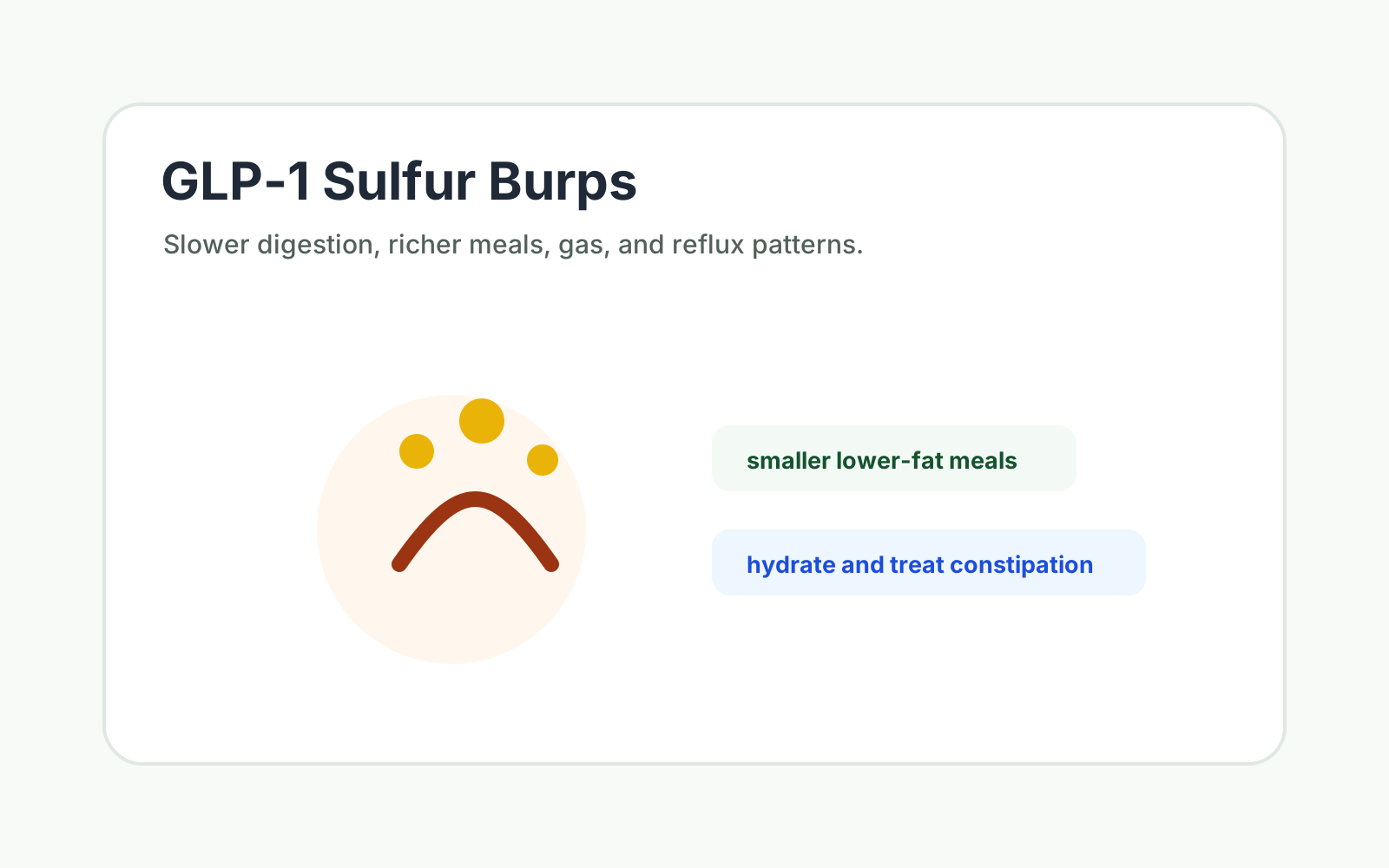
Sulfur burps smell like rotten eggs because of hydrogen sulfide gas. They can happen on GLP-1 medication when digestion slows and food sits longer than usual.
Direct answer: Try smaller meals, reduce high-fat and very rich foods, avoid carbonated drinks and alcohol during flares, stay hydrated, walk after meals, and treat constipation if present. Call a clinician if sulfur burps come with severe abdominal pain, repeated vomiting, fever, dehydration, black stool, or symptoms that are new and intense.
Where The Rotten-Egg Smell Comes From
Hydrogen sulfide is one of the main malodorous compounds in human gas (Suarez et al., Gastroenterology 1998). Gut bacteria make it out of sulfur you ate. Two substrate pools matter:
- Sulfur-containing amino acids, cysteine and methionine, which are abundant in animal-source protein and relatively low in plants.
- Plant sulfur compounds, mainly the glucosinolates in cruciferous vegetables and the cysteine sulfoxides in alliums such as garlic and onion (Hill et al., Critical Reviews in Food Science and Nutrition 2023).
Add the drug effect and the pattern makes sense. GLP-1 medication slows gastric emptying, so a meal clears more slowly and its sulfur load reaches the bacteria in a slower-moving gut. The eating pattern most people adopt on these drugs pushes in the same direction: protein first, small total volume, fiber quietly crowded out.
That combination is measurable. In a crossover study of healthy volunteers, one week of an animal-based low-fiber diet produced higher fecal hydrogen sulfide production than one week of a plant-based high-fiber diet, with a median difference of 29 ppm/g — though 2 of 11 people went the other way, so this is not universal (Teigen et al., Clinical Nutrition 2022). A review of the same literature puts it more usefully: dietary protein intake tracks positively with hydrogen sulfide production, but fiber intake can lower it even when roughly 30% of calories come from protein (Teigen et al., Current Opinion in Clinical Nutrition and Metabolic Care 2023).
One honest limit: those studies measured hydrogen sulfide from stool samples, not from burps, and nobody has measured sulfide in the breath of people taking GLP-1 drugs. Treat the sulfur-substrate explanation as the best available account of why the smell appears, not as a proven chain from your protein shake to your burp.
Common Triggers
| Trigger | Why it can worsen burps |
|---|---|
| Large meals | More food sitting in a slower stomach |
| Fried or high-fat foods | Slower digestion and reflux |
| Carbonated drinks | More gas and belching |
| Alcohol | Can worsen reflux and nausea |
| Constipation | Slower downstream motility can worsen upper GI symptoms |
| Dose increases | GI symptoms often flare during escalation |
What To Eat During A Flare
Use smaller, simpler meals for a few days:
- Eggs or yogurt if tolerated
- Soup with lean protein
- Rice, potatoes, toast, or crackers
- Fish, chicken, tofu, or turkey in smaller portions
- Cooked vegetables instead of large raw salads
- Water, tea, broth, or electrolyte drinks if appropriate
High-Sulfur Foods And What To Swap
Sulfur burps are usually a substrate problem, so the fastest diagnostic is to change one sulfur category at a time for three or four days and watch. Do not cut everything at once: protein intake matters on these drugs, and a blanket elimination tells you nothing about which category was responsible.
| Sulfur source | Where it shows up | Swap to test |
|---|---|---|
| Sulfur amino acids (cysteine, methionine) | Eggs, beef, poultry, fish, dairy | Smaller portions, spread across more meals |
| Concentrated dairy protein | Whey and casein shakes, protein bars, high-protein yogurts | Try a plant protein or a different brand for a few days |
| Glucosinolates | Broccoli, cauliflower, cabbage, Brussels sprouts, kale | Cooked carrots, zucchini, squash, green beans |
| Cysteine sulfoxides | Garlic, onion, leeks, shallots | Herbs, ginger, citrus, olive oil for flavor |
| Added sulfites | Dried fruit, wine, some processed foods, listed on the ingredient label | Fresh fruit, and skip alcohol during a flare |
| Fermentable load plus gas | Beer, carbonated drinks | Still water, tea, broth |
Two things not to do. Do not drop total protein to chase the smell, because protein intake is doing other work during weight loss; adjust portion size and source first. And do not strip fiber, since fiber intake is associated with lower hydrogen sulfide production even at high protein intakes (Teigen 2023) — add it back gradually, because a fast increase can worsen bloating and constipation.
What Actually Helps, And What Is Behind It
| Move | What is known about it |
|---|---|
| Smaller, lower-fat meals | Reduces the volume sitting in a slower stomach; standard advice for GLP-1 GI symptoms |
| Rotate the sulfur category, not the whole diet | Targets the substrate the bacteria are working on |
| Keep fiber in, increase it slowly | Fiber intake is associated with lower hydrogen sulfide production even at high protein intake |
| Treat constipation | Slower downstream transit can worsen upper GI symptoms including belching |
| Walk after meals | Low-risk, commonly helps gas and reflux symptoms |
| Bismuth subsalicylate (Pepto-Bismol and equivalents) | Binds hydrogen sulfide directly. In 10 healthy adults taking 524 mg four times a day for 3 to 7 days, fecal hydrogen sulfide release fell by more than 95% (Suarez 1998) |
| Simethicone | Works on bubble surface tension, not on sulfide, so it addresses a different complaint |
The bismuth finding is the one worth reading carefully. It was measured in the colon, not in burps, and it has never been tested for GLP-1-related sulfur burps specifically. Before using it, three cautions:
- It turns the tongue and the stool black. That is harmless in itself, but it will mask black stool, which this article lists as a reason to call a clinician. If you are taking bismuth, say so before anyone interprets a dark stool.
- It is a salicylate. That matters if you have an aspirin allergy, take an anticoagulant, or are managing a bleeding risk, and it is not for children or teenagers recovering from flu or chickenpox.
- Ask the pharmacist first, especially about spacing it from other medications, and follow the dose on the package rather than the dose used in the study.
What Not To Ignore
Sulfur burps alone are usually not an emergency, but they can overlap with reflux, severe constipation, gallbladder symptoms, or other GI problems.
Call for severe abdominal pain, persistent vomiting, inability to keep fluids down, chest pain, fever, yellowing skin or eyes, black stool, or worsening symptoms after a dose increase.
When Sulfur Burps Are Not The GLP-1
Timing does most of the diagnostic work. Symptoms that start within days of an injection or a dose increase, worsen after large or high-fat meals, and settle between doses fit the drug. Symptoms that run for weeks without tracking meals or dose changes deserve a different question.
One worth raising with a clinician is small intestinal bacterial overgrowth. In a study of duodenal aspirates, subjects at or above the 1,000 CFU/mL threshold had enhanced microbial pathways for hydrogen and hydrogen sulfide production, and those pathways correlated with the severity of abdominal pain, diarrhea and bloating (Leite et al., Clinical Gastroenterology and Hepatology 2024). That is a bacterial source of the same gas, diagnosed and treated differently from a dose-related side effect, and it is not something to self-treat.
Reflux, gallbladder disease, an intestinal infection, and food intolerances can all present with foul belching too. Persistent, unexplained, or worsening symptoms are a clinician's question, not a diet-experiment question.
Internal Reading Path
FAQ
Are sulfur burps a known GLP-1 side effect?
Burping and GI symptoms are commonly discussed by patients, though labels usually list broader GI effects rather than "sulfur burps" specifically.
Do sulfur burps mean I should stop?
Not automatically. First assess meal size, fat intake, constipation, hydration, and dose timing. Call if symptoms are severe or persistent.
Can constipation cause sulfur burps?
It can contribute. Slower movement through the gut can worsen bloating, nausea, reflux, and belching.
What foods cause sulfur burps on GLP-1 medication?
The sulfur ones. Cysteine and methionine come mostly from animal protein, including the whey and casein in protein shakes; glucosinolates come from broccoli, cauliflower, cabbage and Brussels sprouts; cysteine sulfoxides come from garlic, onion and leeks; sulfites are added to dried fruit, wine and some processed foods. Human diet studies show higher hydrogen sulfide production on an animal-based low-fiber pattern than on a plant-based high-fiber one, with real individual variation (Teigen 2022). Test one category at a time rather than cutting all of them.
Does Pepto-Bismol help sulfur burps?
Bismuth subsalicylate binds hydrogen sulfide, and in healthy adults it reduced fecal hydrogen sulfide release by more than 95% (Suarez 1998). That study measured colonic gas, and no one has tested it against GLP-1-related sulfur burps, so treat it as plausible rather than proven. It also turns the tongue and stool black, which can hide a genuine red flag, and it is a salicylate. Ask a pharmacist before adding it, and follow the package dose.
Why This Symptom Can Happen on GLP-1 Treatment
GLP-1 Sulfur Burps: Why They Happen and What Helps usually needs to be understood in the context of delayed gastric emptying, appetite suppression, dose escalation, lower food intake, hydration changes, and other medications. GLP-1 and GIP/GLP-1 drugs can change how quickly food moves, how full someone feels, and how much they naturally eat or drink. Those changes can improve weight and glucose outcomes, but they can also create side effects when the dose, meal pattern, or hydration plan is not matched to the person's tolerance.
Symptoms often show up during the first few weeks or after a dose increase. They can also appear after a large meal, high-fat meal, alcohol, dehydration, constipation, or a long gap between meals. The timing is useful because it helps a clinician decide whether the symptom is likely dose-related, food-pattern related, or possibly unrelated to the medication.
First 24 to 48 Hours: What to Track
A useful symptom log does not need to be complicated. Record the dose date, dose strength, meals, fluids, bowel movements, alcohol, caffeine, exercise, and any other medications. Include severity from 1 to 10 and whether the symptom affects eating, drinking, sleeping, work, or exercise.
| Track this | Why it helps |
|---|---|
| Dose timing | Symptoms may peak after injection or escalation |
| Meal size and fat content | Large or greasy meals often worsen GI symptoms |
| Fluid intake | Dehydration can worsen headache, dizziness, constipation, and palpitations |
| Bowel pattern | Constipation can drive bloating, reflux, and abdominal pain |
| Blood sugar, if diabetic | Low or high glucose can mimic other symptoms |
| Red flags | Severe, persistent, or systemic symptoms need care |
Dose Escalation Questions
Many side effects become more disruptive when the dose is increased before the previous dose feels stable. Before moving up, it is reasonable to ask whether symptoms are mild and improving, whether protein and fluids are adequate, whether constipation is controlled, and whether work or daily function is being affected.
Do not adjust the dose independently. The practical question for the prescriber is whether to hold the current dose longer, step down, treat the symptom, review meal timing, or evaluate another cause.
Questions to Bring to the Prescriber or Pharmacist
- Does my current dose and timing match the official label or my prescription?
- Are my symptoms or concerns expected at this stage, or do they suggest changing the plan?
- Should I delay escalation, restart lower, hold steady, or be evaluated before continuing?
- Are any of my other medications increasing risk, especially insulin, sulfonylureas, blood pressure medication, diuretics, or drugs affected by delayed gastric emptying?
- What exact symptoms should make me call urgently or seek same-day care?
- If cost or supply interrupts therapy, what is the safest backup plan?
Bottom Line for GLP-1 Sulfur Burps: Why They Happen and What Helps
The practical answer is rarely just one number, food list, or yes-or-no rule. For GLP 1 sulfur burps, the safest approach is to combine the direct answer with the variables that change it: product type, dose, timing, side effects, storage history, other medications, and the person's medical context. When those variables are unclear, the best next step is to ask the prescriber or pharmacist before acting.
Additional Scenarios Readers Commonly Compare
| Scenario | How to think about it |
|---|---|
| Symptoms started after a dose increase | Treat escalation as a likely contributor and ask whether to hold the dose longer |
| The plan changed because of supply | Confirm whether a restart or lower dose is safer after the gap |
| Advice online conflicts with the label | Use the label, pharmacy, and prescriber as the authority |
| The medication is compounded | Verify concentration, BUD, storage, sterility, and dose instructions directly with the pharmacy |
| The goal is maintenance | Prioritize sustainable intake, resistance training, monitoring, and follow-up |
More FAQ
Why do different websites give different answers?
Most differences come from assuming different products, concentrations, patient goals, dose histories, or risk tolerance. A chart or tip can be mathematically correct but still wrong for a specific prescription.
What information should I keep in my notes?
Keep the medication name, dose, date taken, pharmacy label, concentration if vial-based, side effects, food and fluid changes, weight trend, and any clinician instructions. This makes follow-up safer and more specific.
When is it better not to troubleshoot at home?
Do not troubleshoot at home when symptoms are severe, rapidly worsening, involve chest pain or fainting, include repeated vomiting or dehydration, suggest allergic reaction, or involve a possible dosing or storage error.
References
- Semaglutide — StatPearls, NIH National Library of Medicine (semaglutide delays gastric emptying)
- Gastrointestinal adverse events with GLP-1 receptor agonists: incidence and consequences — PMC
- Clinical consequences of delayed gastric emptying with GLP-1 receptor agonists and tirzepatide — PMC
- Bismuth subsalicylate markedly decreases hydrogen sulfide release in the human colon — Suarez et al., Gastroenterology 1998
- Differential hydrogen sulfide production by a human cohort in response to animal- and plant-based diet interventions — Teigen et al., Clinical Nutrition 2022
- Impact of diet on hydrogen sulfide production: implications for gut health — Teigen et al., Current Opinion in Clinical Nutrition and Metabolic Care 2023
- Sulfur compounds: from plants to humans and their role in chronic disease prevention — Hill et al., Critical Reviews in Food Science and Nutrition 2023
- Defining small intestinal bacterial overgrowth by culture and high throughput sequencing — Leite et al., Clinical Gastroenterology and Hepatology 2024