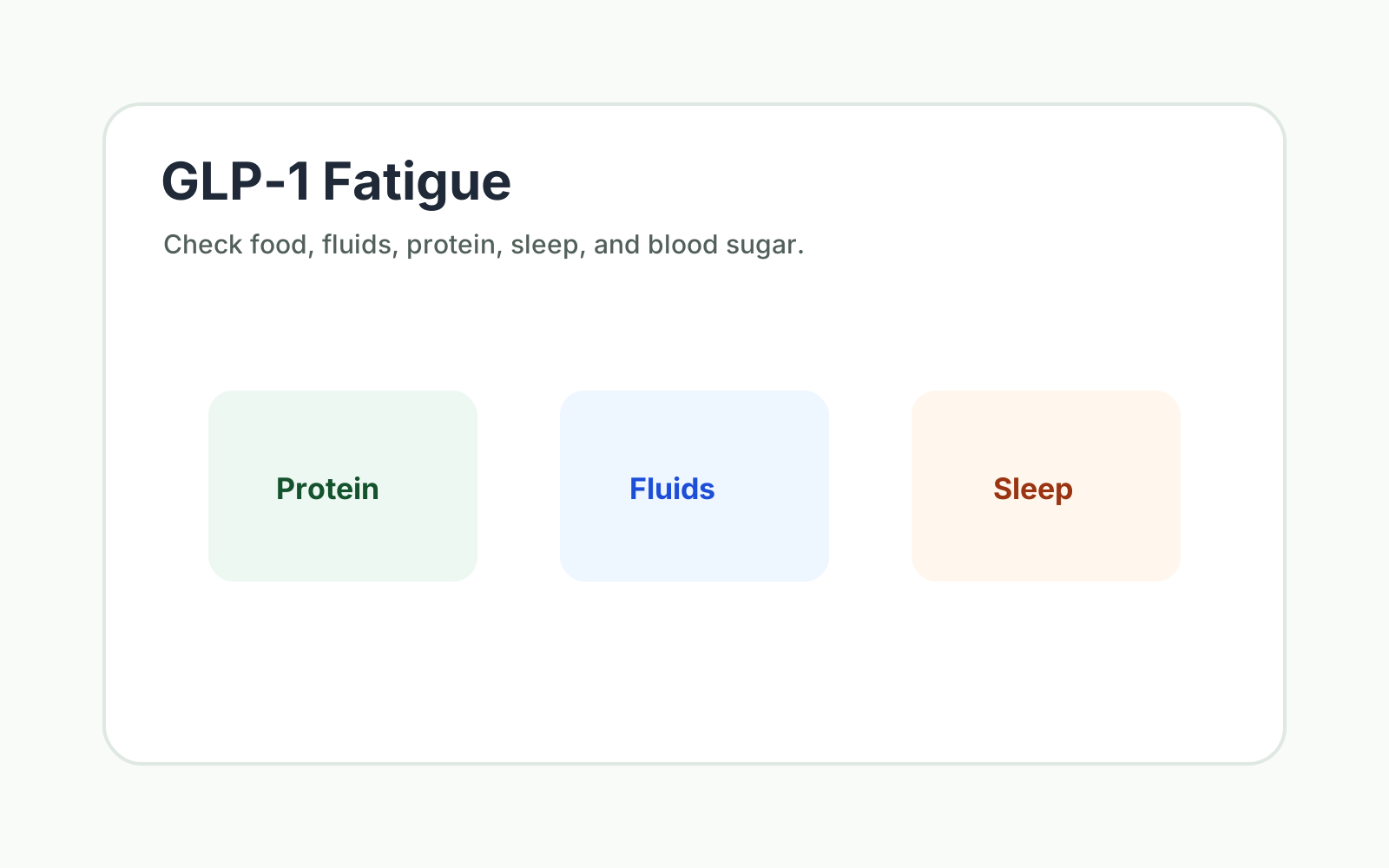
Fatigue can show up after starting a GLP-1, after increasing the dose, during rapid weight loss, or when nausea and constipation make eating harder.
Fatigue is not the only musculoskeletal complaint people report; some also notice GLP-1 related joint pain.
Direct answer: Check food intake, protein, fluids, electrolytes, sleep, constipation, nausea, blood sugar, and dose timing before assuming the medication itself is the only cause. Call a clinician if fatigue is severe, sudden, paired with dizziness or fainting, associated with very low intake, or concerning in the context of diabetes or other medical conditions.
Common Causes
| Cause | What it looks like |
|---|---|
| Too few calories | Cold, weak, low motivation, poor training |
| Low protein | Soreness, poor recovery, hair shedding risk |
| Dehydration | Headache, dizziness, dark urine, constipation |
| Electrolyte mismatch | Lightheadedness, cramps, low energy |
| GI side effects | Nausea or constipation reducing intake |
| Blood sugar shifts | Shakiness, sweating, confusion, unusual sleepiness |
How Common Is Fatigue on a GLP-1? What the Labels Report
Yes, GLP-1 and GIP/GLP-1 drugs can cause fatigue, and it is common enough that the FDA-approved labels list it as an adverse reaction with a measured rate. These are the numbers from each product's own prescribing information.
| Product (FDA label) | Dose studied | Fatigue on drug | Fatigue on placebo | Trial pool |
|---|---|---|---|---|
| Wegovy (semaglutide) | 2.4 mg weekly | 11% | 5% | Pooled weight-management trials, 2,116 on drug vs 1,261 on placebo |
| Wegovy (semaglutide) | 7.2 mg weekly | 11% | 5% | Separate 7.2 mg pool; the 2.4 mg comparator in that same pool was 9% |
| Zepbound (tirzepatide) | 5 mg weekly | 5% | 3% | Pooled Studies 1 and 2, 958 on placebo |
| Zepbound (tirzepatide) | 10 mg weekly | 6% | 3% | Same pool |
| Zepbound (tirzepatide) | 15 mg weekly | 7% | 3% | Same pool |
| Ozempic (semaglutide) | 0.5-1 mg weekly | Listed above 0.4%, no rate published | Not reported | Type 2 diabetes trials |
Three things worth reading out of that table:
- The placebo rate is not zero. Between 3% and 5% of people on placebo reported fatigue too. A share of the tiredness during any weight-loss attempt is the diet, the sleep debt, or the rest of life rather than the injection.
- The excess is smaller than it feels. Semaglutide 2.4 mg adds about 6 percentage points over placebo, roughly one extra person in seventeen. Tirzepatide 15 mg adds about 4 points, roughly one in twenty-five. Fatigue that is severe or disabling is not what these rates describe.
- It tracks with dose. Tirzepatide fatigue rises 5% to 6% to 7% across 5 mg, 10 mg and 15 mg. Semaglutide shows the same pattern inside one trial pool: 9% at 2.4 mg, 11% at 7.2 mg. This is the strongest label-level argument for holding a dose rather than escalating while you already feel flat.
Both labels bundle related terms into the fatigue count. Wegovy counts fatigue plus asthenia; Zepbound counts asthenia, fatigue, lethargy and malaise. So the rate covers general weakness and low energy, not only sleepiness.
What To Try First
- Eat protein earlier in the day.
- Add a small carbohydrate source if meals are very low carb.
- Sip fluids steadily.
- Treat constipation early.
- Avoid escalating dose while intake is poor.
- Track sleep and alcohol.
- Ask about labs if fatigue persists.
When To Call
Call promptly for fainting, confusion, severe weakness, repeated vomiting, dehydration symptoms, chest pain, shortness of breath, very low glucose, or fatigue that feels out of proportion.
Extreme Fatigue: What To Rule Out First
Extreme fatigue is a different problem from the flat, low-energy feeling most people describe in the first weeks. Tiredness that stops you working, keeps you in bed, or arrives suddenly is worth treating as a symptom of something specific rather than a side effect to wait out. Three rule-outs come straight from the prescribing information.
1. Low blood glucose. Tirzepatide's label reports hypoglycemia below 54 mg/dL in 4.2% of treated patients with type 2 diabetes versus 1.3% on placebo, and in 10.3% of those also taking a sulfonylurea versus 2.1% of those not. The same label notes hypoglycemia in adults without type 2 diabetes. If you take insulin or a sulfonylurea and the fatigue arrives with shakiness, sweating or confusion, check a glucose reading before anything else.
2. Dehydration and volume depletion. Tirzepatide's label carries a warning for acute kidney injury, in some cases requiring hemodialysis, mostly in patients whose nausea, vomiting or diarrhea led to dehydration. Extreme fatigue stacked on several days of poor fluid intake or repeated vomiting is a same-day call, not a tracking exercise.
3. Something the drug is masking. Fatigue that does not improve once intake, fluids and sleep improve deserves labs. Anemia, thyroid disease, sleep apnea and B12 deficiency all produce this exact picture, and all get easier to miss when there is an obvious drug to blame.
Dizziness alongside the fatigue raises the priority. Semaglutide 2.4 mg lists dizziness at 8% versus 4% on placebo, and extreme tiredness paired with lightheadedness points at glucose or fluid volume rather than at an ordinary dose adjustment.
Internal Reading Path
FAQ
Is fatigue normal on GLP-1 medication?
It is reported by some users, especially early or after dose increases. It should improve with better intake, hydration, and dose pacing, but persistent fatigue deserves evaluation.
Why do GLP-1 drugs cause fatigue?
The labels record the rate but do not name a mechanism. The plausible drivers are the ones in the causes table above, and most of them are downstream of the drug doing its job: appetite suppression cuts calorie and protein intake, delayed gastric emptying and nausea cut fluid intake, and fast weight loss runs a real energy deficit. Two are drug-specific rather than intake-specific, a drop in blood glucose and volume depletion from vomiting or diarrhea. That is why the first move is to check intake, fluids and glucose before deciding the medication itself is the cause.
Does fatigue mean I am losing weight too fast?
It can. Rapid loss plus low protein and low calories can make people feel depleted.
Should I take supplements?
Do not guess. Food, fluids, sleep, and labs are better starting points. Supplements should match a real need.
Why This Symptom Can Happen on GLP-1 Treatment
GLP-1 Fatigue: Why You Feel Tired and What To Check usually needs to be understood in the context of delayed gastric emptying, appetite suppression, dose escalation, lower food intake, hydration changes, and other medications. GLP-1 and GIP/GLP-1 drugs can change how quickly food moves, how full someone feels, and how much they naturally eat or drink. Those changes can improve weight and glucose outcomes, but they can also create side effects when the dose, meal pattern, or hydration plan is not matched to the person's tolerance.
Symptoms often show up during the first few weeks or after a dose increase. They can also appear after a large meal, high-fat meal, alcohol, dehydration, constipation, or a long gap between meals. The timing is useful because it helps a clinician decide whether the symptom is likely dose-related, food-pattern related, or possibly unrelated to the medication.
First 24 to 48 Hours: What to Track
A useful symptom log does not need to be complicated. Record the dose date, dose strength, meals, fluids, bowel movements, alcohol, caffeine, exercise, and any other medications. Include severity from 1 to 10 and whether the symptom affects eating, drinking, sleeping, work, or exercise.
| Track this | Why it helps |
|---|---|
| Dose timing | Symptoms may peak after injection or escalation |
| Meal size and fat content | Large or greasy meals often worsen GI symptoms |
| Fluid intake | Dehydration can worsen headache, dizziness, constipation, and palpitations |
| Bowel pattern | Constipation can drive bloating, reflux, and abdominal pain |
| Blood sugar, if diabetic | Low or high glucose can mimic other symptoms |
| Red flags | Severe, persistent, or systemic symptoms need care |
Dose Escalation Questions
Many side effects become more disruptive when the dose is increased before the previous dose feels stable. Before moving up, it is reasonable to ask whether symptoms are mild and improving, whether protein and fluids are adequate, whether constipation is controlled, and whether work or daily function is being affected.
Do not adjust the dose independently. The practical question for the prescriber is whether to hold the current dose longer, step down, treat the symptom, review meal timing, or evaluate another cause.
Questions to Bring to the Prescriber or Pharmacist
- Does my current dose and timing match the official label or my prescription?
- Are my symptoms or concerns expected at this stage, or do they suggest changing the plan?
- Should I delay escalation, restart lower, hold steady, or be evaluated before continuing?
- Are any of my other medications increasing risk, especially insulin, sulfonylureas, blood pressure medication, diuretics, or drugs affected by delayed gastric emptying?
- What exact symptoms should make me call urgently or seek same-day care?
- If cost or supply interrupts therapy, what is the safest backup plan?
Bottom Line for GLP-1 Fatigue: Why You Feel Tired and What To Check
The practical answer is rarely just one number, food list, or yes-or-no rule. For GLP 1 fatigue, the safest approach is to combine the direct answer with the variables that change it: product type, dose, timing, side effects, storage history, other medications, and the person's medical context. When those variables are unclear, the best next step is to ask the prescriber or pharmacist before acting.
Additional Scenarios Readers Commonly Compare
| Scenario | How to think about it |
|---|---|
| Symptoms started after a dose increase | Treat escalation as a likely contributor and ask whether to hold the dose longer |
| The plan changed because of supply | Confirm whether a restart or lower dose is safer after the gap |
| Advice online conflicts with the label | Use the label, pharmacy, and prescriber as the authority |
| The medication is compounded | Verify concentration, BUD, storage, sterility, and dose instructions directly with the pharmacy |
| The goal is maintenance | Prioritize sustainable intake, resistance training, monitoring, and follow-up |
More FAQ
Why do different websites give different answers?
Most differences come from assuming different products, concentrations, patient goals, dose histories, or risk tolerance. A chart or tip can be mathematically correct but still wrong for a specific prescription.
What information should I keep in my notes?
Keep the medication name, dose, date taken, pharmacy label, concentration if vial-based, side effects, food and fluid changes, weight trend, and any clinician instructions. This makes follow-up safer and more specific.
When is it better not to troubleshoot at home?
Do not troubleshoot at home when symptoms are severe, rapidly worsening, involve chest pain or fainting, include repeated vomiting or dehydration, suggest allergic reaction, or involve a possible dosing or storage error.
References
- Semaglutide — StatPearls, NIH National Library of Medicine (fatigue listed as an adverse effect; hypoglycemia risk increases with insulin or sulfonylureas; delays gastric emptying)
- Weight loss outcomes associated with semaglutide treatment for overweight or obesity (fatigue reported as an adverse event) — PMC
- Clinical consequences of delayed gastric emptying with GLP-1 receptor agonists and tirzepatide — PMC
- WEGOVY (semaglutide) prescribing information - DailyMed, U.S. National Library of Medicine (fatigue 11% vs 5% placebo at 2.4 mg; dizziness 8% vs 4%)
- ZEPBOUND (tirzepatide) prescribing information - DailyMed, U.S. National Library of Medicine (fatigue 5-7% by dose vs 3% placebo; hypoglycemia and acute kidney injury warnings)