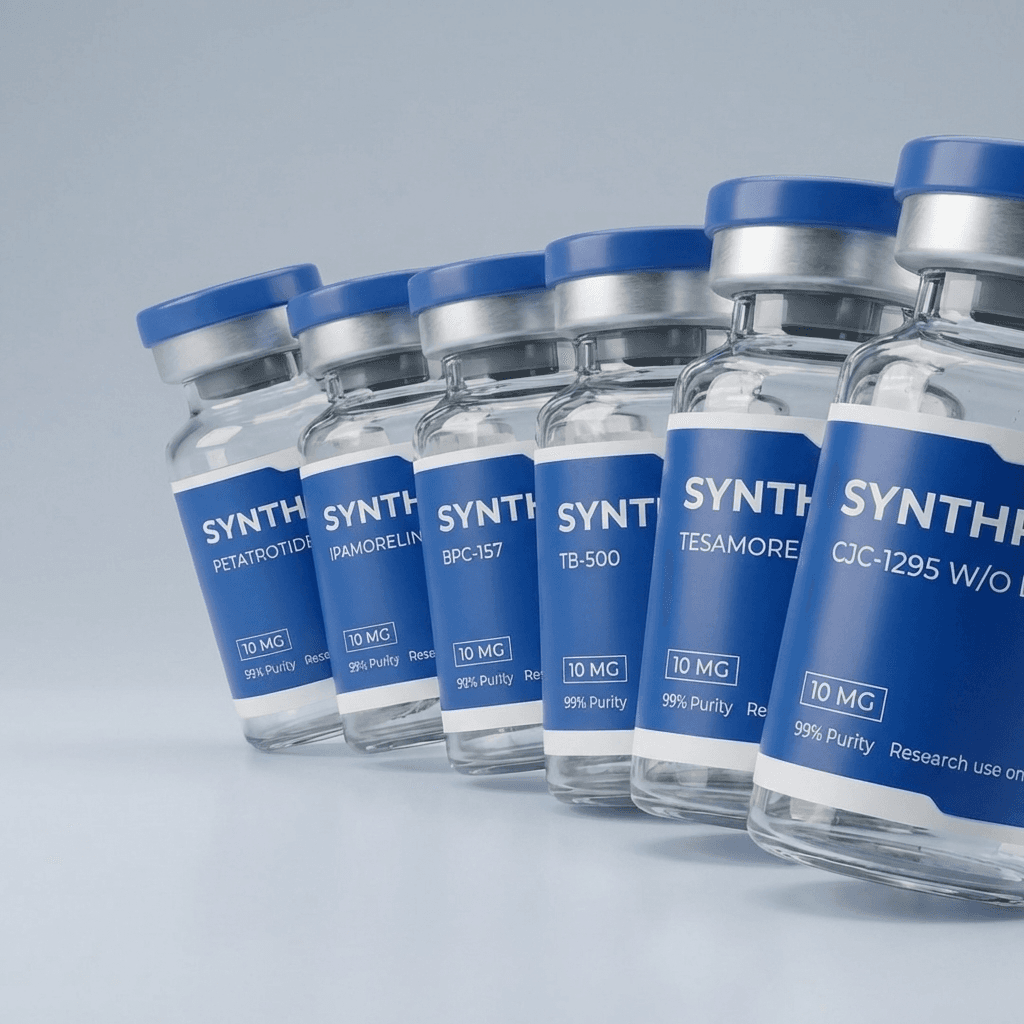

Noom GLP-1 programs sit in an odd spot in 2026. Noom built its name on a psychology-based weight-loss app, then bolted a telehealth prescribing arm — Noom Med — on top of it. The result is one of the cheapest all-in compounded GLP-1 bundles on the market, and one of the few big platforms still selling compounded semaglutide at all after the FDA's 2025-2026 crackdown pushed Hims out of the category entirely.
Direct answer: Noom Med is Noom's telehealth prescribing program. It cut entry pricing on July 27, 2026 (new accounts only), so the numbers below are lower than most Noom GLP-1 reviews still quote. As of August 2026, its cash-pay plans bundle the medication, clinical visits, and the Noom app into one price: Microdose GLP-1Rx at $49 to get started, then $179/month; standard GLP-1Rx at $129, then $249/month (compounded semaglutide); and GLP-1Rx Plus at $149, then $299/month (compounded tirzepatide). Ongoing plans are billed quarterly, not monthly. If you want branded Wegovy, Zepbound, Ozempic, Mounjaro, or one of the new GLP-1 pills, Noom's telehealth-for-branded-med track runs $39 to get started, then $99/month — with the medication billed separately through insurance or the manufacturer's cash program. All plans are FSA/HSA eligible; the compounded plans do not take insurance, and insurance never covers the Noom program fee itself.
If you are still deciding whether you'd even be approved, start with our GLP-1 qualification guide — Noom's clinicians apply the same BMI math as everyone else.
What Noom Med Actually Is
Noom Med is a telehealth layer: you complete an intake survey covering health history and weight-loss goals, a licensed clinician reviews it, and — if you meet criteria — prescribes a GLP-1. The medication ships from a partner pharmacy, and the subscription includes unlimited clinician access, refills where clinically appropriate, dose-optimization guidance, and Noom's behavior-change program with 1:1 coaching.
The care model is mostly asynchronous. Noom verifies identity, requires a full-body photo and a comprehensive medical intake before treatment, then runs the clinical relationship through in-app chat, with synchronous video visits in some programs (the branded track can require one for the initial prescription, and a late cancel or no-show there can trigger a $72 charge). Titration runs on Noom's "SmartDose" protocol, medication in the plans with medication included ships in 3-7 business days, and members can request a certificate of analysis for their batch from the care team.
The pitch is that medication plus behavior change beats medication alone. That part is fair — the appetite window a GLP-1 opens is easier to use with structured food and habit tracking. The catch is that you are paying for the bundle whether or not you use the app side.
Noom GLP-1 Plans and Pricing (August 2026)
| Plan | First payment | Ongoing | Medication | Insurance |
|---|---|---|---|---|
| Microdose GLP-1Rx | $49 (cut from $79) | $179/month, billed quarterly | Compounded semaglutide, 0.6 mg max | No |
| Microdose GLP-1Rx Plus | Sold under the Microdose track, from $49 | Not published separately | Compounded tirzepatide, 3 mg max | No |
| GLP-1Rx | $129 | $249/month, billed quarterly | Compounded semaglutide | No |
| GLP-1Rx Plus | $149 | $299/month, billed quarterly | Compounded tirzepatide, 8.75 mg max | No |
| Proactive Health GLP-1Rx | $149 every 4 weeks | First term 15 weeks, renewals 16 weeks | Microdose compounded GLP-1 + 17-biomarker home lab testing | No |
| Telehealth for branded meds | $39 | $99/month, billed quarterly; medication separate | Wegovy, Zepbound, Ozempic, Mounjaro, Wegovy pill, Foundayo, liraglutide | Yes, plus cash-pay |
| Weight Loss Pill | $69 | $99/month, billed quarterly | Metformin | No |
Noom's own footnote on the Microdose plan reads "final pricing depends on program selection," which is how the tirzepatide microdose option is priced — it does not get its own line on the pricing page.
Four pricing details matter more than the headline numbers:
- Quarterly billing. After the intro period, Noom charges roughly three months at once — about $537 for microdose, $747 for GLP-1Rx, $897 for GLP-1Rx Plus. There is no mid-cycle refund lever, so the real commitment per decision is quarterly.
- The advertised entry prices are intro prices. "$49" buys an initial 3-week subscription with 4 weeks of medication, not your run rate. Budget against $179-$299/month.
- On the branded track, the $99/month is just the program. Wegovy or Zepbound costs land on top — your copay if insured, or manufacturer cash pricing if not: $199/month for the first two fills of Wegovy 0.25 mg and 0.5 mg through December 31, 2026 and $349/month for standard doses after that ($399 for the 7.2 mg HD pen) via NovoCare, or $299-$449/month for Zepbound vials and KwikPens via LillyDirect. We walk through that whole path in how to get Zepbound.
- Refunds stop the moment a prescription exists. On plans with medication included, Noom's stated policy is that refunds are unavailable once a prescription has been written. On the branded track, the window is 7 days from the first charge and closes as soon as a clinical visit happens. Renewal charges are not refundable at all.
Which GLP-1s Noom Prescribes Now
As of August 2026, Noom Med's menu spans compounded semaglutide (microdose and full dose), compounded tirzepatide (microdose Plus and full-dose Plus), branded Wegovy, Zepbound, Ozempic and Mounjaro (Ozempic and Mounjaro for type 2 diabetes — see how to get Ozempic for why weight-loss patients get routed to Wegovy instead), the oral Wegovy pill, Lilly's new Foundayo (orforglipron) tablet, generic liraglutide, and metformin as a budget pill. That is the widest menu of any major platform.
Tirzepatide at Noom: Which Program, Which Dose, What Price
Tirzepatide is the piece most Noom pricing pages bury, because the plan names say "Plus" rather than the drug. Both Plus programs are compounded tirzepatide, and the difference between them is the dose ceiling, not the ingredient.
| Route | Program | Dose ceiling | What you pay |
|---|---|---|---|
| Compounded tirzepatide, low dose | Microdose GLP-1Rx Plus | 3 mg | Priced within the Microdose track, from $49 to start |
| Compounded tirzepatide, full titration | GLP-1Rx Plus | 8.75 mg | $149 to start, then $299/month billed quarterly |
| Branded Zepbound, vial or KwikPen | Telehealth for branded meds | 15 mg (label maximum) | $39, then $99/month, plus $299-$449/month self-pay through LillyDirect |
| Branded Mounjaro | Telehealth for branded meds | 15 mg (label maximum) | $39, then $99/month, plus insurance copay or cash price |
Two constraints worth knowing before you pick. The Microdose GLP-1Rx Plus program is not offered in Alabama, Louisiana, or Mississippi. And Noom's full-dose compounded tirzepatide stops at 8.75 mg — well under Zepbound's 15 mg ceiling — so if you expect to titrate high, the branded track is the only route that gets there.
Inside the Noom Microdose GLP-1Rx Program
Microdose program reviews usually quote the "$49" and the "up to 17 pounds in 60 days" headline and stop there. The structure underneath is more specific than that.
- What $49 buys: an initial 3-week subscription that includes 4 weeks of medication, then 12-week subscriptions at $179/month plus tax. Cancel anytime, but see the refund rule above.
- Semaglutide ceiling: 0.6 mg. That is the maximum dose in the Microdose GLP-1Rx program. Wegovy's approved maintenance dose is 2.4 mg, so this is roughly a quarter of the branded target dose.
- Tirzepatide ceiling: 3 mg on Microdose GLP-1Rx Plus, against a 15 mg label maximum for Zepbound.
- Why people pick it: fewer and milder side effects at low dose, a lower monthly number, and the same clinical team, coaching, and app access as the full-dose plans.
- Who it fits badly: anyone with a lot of weight to lose on a deadline, or anyone who already knows they tolerate a standard starting dose. A 0.6 mg ceiling is a floor disguised as a plan if your goal is 15% or more of body weight.
Noom's Proactive Health GLP-1Rx plan is the same microdose idea aimed at prevention rather than weight loss, billed at $149 every 4 weeks with a 15-week first term and 16-week renewals, and it bundles at-home testing of 17 biomarkers.
The Compounded Semaglutide Question
This is the part of any honest Noom GLP-1 review that needs dates. The FDA declared the semaglutide shortage resolved in early 2025, which formally ended mass compounding of "essentially a copy" versions. Most large players retreated; Hims discontinued compounded GLP-1s for new patients after settling with Novo Nordisk in March 2026. Noom kept going through the patient-specific 503A prescription route — and in April 2026 the FDA proposed removing semaglutide and tirzepatide from the 503B bulk compounding list and issued roughly 30 warning letters, with a comment period running through June 29, 2026.
Noom's own pages now carry the disclaimer twice: "The FDA does not review any compounded medication for safety or efficacy." Practically, that means two things. First, the $179-$299 plans buy a non-FDA-approved formulation. Second, the regulatory floor under those plans could shift again within months. If you start a compounded plan, have a branded exit plan — insurance, NovoCare, or LillyDirect pricing.
What Noom does claim on the quality side, in its own words: it partners with USP-compliant, state-regulated pharmacies, sources active ingredients only from suppliers on the FDA's green list, has every batch tested by a third-party facility, and will provide a certificate of analysis on request through the care team. Those are Noom's assurances, not an FDA finding, and that distinction is the whole point of the disclaimer.
Is the GLP-1 From Noom the Same as Wegovy?
Not on the compounded plans, and the difference is bigger than the label.
- Regulatory status. Novo Nordisk is the only US company with FDA-approved semaglutide (Ozempic, Wegovy, Rybelsus) and Lilly the only one with FDA-approved tirzepatide (Zepbound, Mounjaro). A compounded version is prepared for an individual patient and is not reviewed by the FDA for safety, efficacy, or quality — Noom states this on every relevant page.
- Dose. The efficacy numbers people quote come from specific doses: in 68- and 72-week trials, Wegovy at 2.4 mg and Zepbound at 15 mg produced average weight loss of about 15% and 20% respectively, versus 2.4% and 3.1% with diet and exercise alone. Noom's compounded ceilings are 0.6 mg semaglutide on microdose and 8.75 mg tirzepatide on GLP-1Rx Plus. You cannot assume trial-dose results at sub-trial doses.
- The branded route is genuinely identical, because it is the same product. On the $39/$99 telehealth track you get real Wegovy or Zepbound; Noom is selling the prescription and the coaching, not the molecule.
WeightWatchers sits on the other side of that line: its clinic program (Weight Watchers Med+) prescribes FDA-approved medications — Wegovy, Zepbound, Saxenda, plus non-GLP-1 options like metformin — at $25 for the first month and $74/month on the 12-month plan, with medication billed separately. So "Noom or WeightWatchers" is not one category. WeightWatchers is branded-only with a membership fee; Noom offers both, and only its cheap plans are compounded.
Noom's GLP-1 Pill Options
Noom's own compounded plans are injections. Every oral option runs through the branded track or the metformin plan.
| Pill | What it is | Fulfilled by | Cash price |
|---|---|---|---|
| Wegovy pill | Oral semaglutide, FDA-approved for weight management | NovoCare Pharmacy | $149/month for 1.5 mg or 4 mg through August 31, 2026, then $199/month for 4 mg |
| Foundayo (orforglipron) | Once-daily oral small-molecule GLP-1, FDA-approved in 2026 | LillyDirect, fulfilled by Gifthealth | $149 (0.8 mg), $199 (2.5 mg), $299 (5.5 mg through 17.2 mg, with refill inside 45 days; otherwise $349 at 14.5 mg and 17.2 mg) |
| Metformin | Not a GLP-1, and not FDA-approved for weight loss | Included in Noom's Weight Loss Pill plan | $69 to start, then $99/month |
Foundayo starts at 0.8 mg once daily, taken with or without food, and steps up no sooner than every 30 days to a maximum of 17.2 mg. Add Noom's $39 first month and $99/month program fee on top of the medication price for either GLP-1 pill. If you are commercially insured with coverage, both manufacturers advertise copays as low as $25/month.
Noom GLP-1 Reviews: What the Results Data Actually Says
Noom publishes outcome numbers, and reading its footnotes is more informative than reading testimonials. As of August 2026:
| Claim | Where it appears | The footnote |
|---|---|---|
| "Lose up to 17 pounds in 60 days" | Microdose plan, pricing page | Top 25th percentile of self-reported data from 1,185 Noom Med users on compounded GLP-1s; average was 13 pounds |
| "Lose up to 17 pounds in 60 days" | Microdose landing page | Study of 3,562 self-reported users with BMI of at least 27; average expected weight loss for those who followed the titration protocol was 5.8 pounds, with no timeframe given |
| "Up to 11 pounds lost in 60 days at microdose levels" | GLP-1 transparency page | Top 25th percentile on a microdose |
| "Lose up to 35 lbs in 6 months" (33 lbs in one variant) | GLP-1Rx plan, pricing page | Top 25th percentile of 1,597 self-reported users; average was 25 pounds |
| "Lose 37% more weight with Noom habits" | Branded track | January 2026 analysis of 14,203 members over 40 weeks, grouped by app-open quantile; Noom's own footnote says the association "does not imply causation" |
Three takeaways. The headline figures are top-quartile outcomes, not expectations. Noom's own microdose average ranges from 5.8 to 13 pounds depending on which page you read, which is a fair reason to treat the 17-pound number as a ceiling. And the engagement claim is correlational by Noom's own admission — people who open the app more may simply be people who were going to adhere anyway. The stories and star quotes on Noom's site are marketing assets, so we don't score them, and we don't publish a user rating we haven't collected ourselves.
Noom vs Hims vs Ro
| Noom Med | Hims | Ro | |
|---|---|---|---|
| Membership/program | Bundled into plan price | $39 first month, then $149/month | $45 first month, then $145/month ($74/mo prepaid annually) |
| Compounded GLP-1 | Yes, $179-$299/month all-in | No — exited 2026 | No — branded focus |
| Branded Wegovy | Via insurance track | $299/month (oral $249) | $199/month first 2 months, then $349 |
| Branded Zepbound | Via insurance track | $399/month | Vials from $299/month |
| Insurance help | Yes, on branded track | Yes | Yes, concierge (no Medicare/Tricare) |
| Behavior program | Strongest (core product) | Light | Moderate |
The pattern: Hims and Ro are now branded-medication storefronts with a membership fee. Noom is the only one of the three where a sub-$200/month all-in compounded option still exists — and the only one where the coaching layer is genuinely the main product.
Pros and Cons
Pros: cheapest all-in compounded pricing among major platforms, now $179/month on microdose after the July 2026 cut; medication, clinician, and app in one bill; widest medication menu including both GLP-1 pills and a Medicare route; FSA/HSA eligible; real behavior-change content rather than a token app.
Cons: quarterly billing with no monthly off-ramp; intro prices mask the run rate; no refund once a prescription has been written; compounded plans are not FDA-approved products, cap out at 0.6 mg semaglutide or 8.75 mg tirzepatide, and sit on shifting regulatory ground; branded-track medication costs are extra; results claims ("up to 17 lbs in 60 days") describe the top quartile, with Noom's own averages ranging from 5.8 to 13 lbs.
Who Noom Med Fits
Noom fits a cash-pay patient who wants the lowest bundled monthly number and actually wants coaching; an insured patient can use the $99/month branded track as a prescription-plus-paperwork service. It is a poor fit if you want brand-name medication at the lowest possible markup (go direct via LillyDirect or NovoCare routes) or if quarterly prepayment is a dealbreaker. Other platforms are compared in our GLP-1 online guide.
Don't qualify, or can't get it covered? Pallas Health — a 100% online visit reviewed by a US-licensed clinician, who prescribes only when it is clinically appropriate. FDA-approved options, or compounded medication prepared by US-licensed pharmacies. Ships free if you are eligible, with no membership or platform fees. (Partner link: we may earn a commission. Compounded medications are not FDA-approved and are not generic versions of brand-name drugs.)
Frequently Asked Questions
How much does Noom GLP-1 cost per month? Compounded plans: $179/month (microdose), $249/month (standard), or $299/month (tirzepatide Plus) after intro pricing of $49-$149, billed quarterly — roughly $537 to $897 per charge. The branded-medication track is $99/month after a $39 first month, plus the medication itself. Noom lowered the microdose entry price from $79 to $49 and the ongoing rate from $199 to $179 on July 27, 2026, for new accounts.
How much does tirzepatide cost at Noom? Compounded tirzepatide is the GLP-1Rx Plus program: $149 to start, then $299/month billed quarterly, with a 8.75 mg ceiling. The lower-dose Microdose GLP-1Rx Plus caps at 3 mg and is priced within the Microdose track from $49. Branded Zepbound or Mounjaro instead runs $39 then $99/month for Noom, plus $299-$449/month for self-pay Zepbound through LillyDirect.
Does Noom prescribe real Wegovy or Zepbound? Yes. Noom Med can prescribe branded Wegovy, Zepbound, Ozempic, and Mounjaro, plus the oral Wegovy pill and Lilly's Foundayo tablet, on its telehealth track, with insurance support or manufacturer cash programs covering the medication separately.
Does Noom offer a GLP-1 pill? Two of them, both branded: the Wegovy pill (oral semaglutide) through NovoCare at $149/month for the 1.5 mg or 4 mg dose through August 31, 2026, and Foundayo (orforglipron) through LillyDirect at $149 to $299/month depending on dose. Noom's own compounded plans are injections only; the in-plan "Weight Loss Pill" is metformin, which is not a GLP-1.
Will Noom send a branded GLP-1 prescription to my own pharmacy, like Costco? Only if you are using insurance. Noom's stated policy is that insured members have the prescription sent to their preferred local or online pharmacy, so a Costco, CVS, or mail-order pharmacy works on that route. If you self-pay, the prescription goes to the manufacturer's pharmacy instead and ships to your home — Wegovy and the Wegovy pill through NovoCare (fulfilled by CoAssist and CenterWell), Zepbound and Foundayo through LillyDirect (fulfilled by Gifthealth) — and shipments are capped at a 4-week supply at a time. Compounded plans always ship from Noom's partner pharmacy and cannot be filled at a retail pharmacy.
Does Noom GLP-1 take insurance? Not for the compounded plans — those are cash-pay (FSA/HSA eligible). Insurance can cover branded medication on the telehealth-for-branded-med track, where Noom's fee is $99/month after a $39 first month. Insurance does not cover the Noom program fee itself on any plan.
Does Noom work with Medicare? Yes, through the Medicare GLP-1 Bridge program on the branded track: a $50/month copay for Wegovy, Zepbound, or Foundayo, separate from Part D, with prescriptions sent to Amazon Pharmacy and prior authorization submitted by Noom's care team. Eligibility runs on BMI 35 and above, BMI 30 and above with heart failure with preserved ejection fraction, uncontrolled hypertension or stage 3a-plus chronic kidney disease, or BMI 27 and above with prediabetes, prior heart attack or stroke, or symptomatic peripheral artery disease. Type 2 diabetes, moderate-to-severe obstructive sleep apnea, and MASH are excluded because Part D already covers them.
Is Noom's compounded semaglutide still legal in 2026? It remains available via patient-specific 503A prescriptions, but the FDA's April 2026 proposal and warning letters have tightened the category, and Noom discloses that compounded medications are not FDA-reviewed for safety or efficacy.
Can I get a refund if I change my mind? On the plans with medication included, no — Noom's policy is that refunds stop once a prescription has been written. On the Telehealth for Branded Meds plan, refunds may be available within 7 days of the first charge, but not after a clinical visit has taken place. Renewal charges are not refundable on any plan, so cancel before the quarterly renewal date rather than after.
Do you have to use the Noom app to get the medication? The app and coaching come bundled with every plan and are part of the price. You are not forced to log meals, but you cannot unbundle them for a discount.
Last reviewed: August 20, 2026
Sources
- Noom Med Plans & Pricing — Noom
- Noom Med — GLP-1 Medications for Weight Loss — Noom
- Microdosing GLP-1 — Noom Microdose GLP-1Rx Program — Noom
- GLP-1 Trust and Transparency — Noom
- Noom Microdose GLP-1Rx Plus Program — Noom Support
- Noom GLP-1Rx Plus Program — Noom Support
- Telehealth for Branded Meds: Prescriptions & Pharmacy — Noom Support
- Telehealth for Branded Meds Medication Orders & Shipment — Noom Support
- Telehealth for Branded Meds: Medicare Bridge — Noom Support
- Noom Med Medication Shipping — Noom Support
- Noom Refund Policy — Noom Support
- Zepbound® at Noom — Noom
- Wegovy® Savings Offer and NovoCare® Pharmacy Pricing — NovoCare
- Zepbound Self-Pay Pricing — LillyDirect
- Foundayo Self-Pay Pricing — LillyDirect
- FOUNDAYO (orforglipron) Prescribing Information — DailyMed
- WeightWatchers Clinic — WeightWatchers
- Noom GLP-1 Weight Loss Review — U.S. News
- Noom Med Review 2026: GLP-1 Program Pricing and Results — Telehealth Ally
- Compounded Semaglutide & Tirzepatide Legal Status 2026: FDA 503B Ban — Loti Labs
- Is Compounded Semaglutide Still Legal? (2026 Update) — GLP-1 After Denial
- Weight Loss Program Pricing — Ro
- Ro introduces one-month $199 Wegovy new patient offer — Ro Press