
Pramlintide (Symlin) is a synthetic version of amylin, a hormone the pancreas releases alongside insulin at every meal, and it remains the only approved amylin analogue. Dosage for pramlintide (Symlin) is per meal rather than daily: people with type 1 diabetes start at 15 mcg and titrate to 30 or 60 mcg, while people with type 2 start at 60 mcg and move to 120 mcg.
It is approved as an addition to mealtime insulin, not as a weight loss drug, though it does produce weight loss and that is why it keeps reappearing in conversations about obesity treatment.
What Amylin Does and Why It Was Missing
Insulin and amylin are secreted together from the same pancreatic beta cells. They do different jobs. Insulin moves glucose into cells. Amylin controls how quickly and how much glucose arrives in the bloodstream from a meal in the first place.
In type 1 diabetes, where beta cells are destroyed, amylin is essentially absent alongside insulin. In many people with type 2 diabetes the amylin response is blunted. Replacing insulin without replacing amylin restores half a system.
Amylin acts through three mechanisms:
- Slowing gastric emptying, so food leaves the stomach more gradually and the post-meal glucose spike is flattened
- Suppressing glucagon, blunting the inappropriate post-meal rise that tells the liver to release more glucose
- Promoting satiety, acting on receptors in the hindbrain to reduce food intake
The first mechanism is also the source of most of the nausea, and the third is where the weight effect comes from.
Native human amylin is unusable as a drug because it aggregates into clumps. Pramlintide solves that by substituting three of the 37 amino acids with proline residues, which keeps it soluble while preserving the biology. It was approved in the US in 2005.


Pramlintide (Symlin) Dosage for Type 1 and Type 2
Dosing is per major meal, by subcutaneous injection immediately before eating. The short half-life, roughly 48 minutes, is why it cannot be dosed once daily.
| Type 1 diabetes | Type 2 diabetes | |
|---|---|---|
| Starting dose | 15 mcg before each major meal | 60 mcg before each major meal |
| Titration | Increase in 15 mcg steps as tolerated | Increase to 120 mcg as tolerated |
| Target dose | 30 to 60 mcg per meal | 120 mcg per meal |
| When to increase | Only once nausea has settled at the current dose | Same |
Two rules that are not optional:
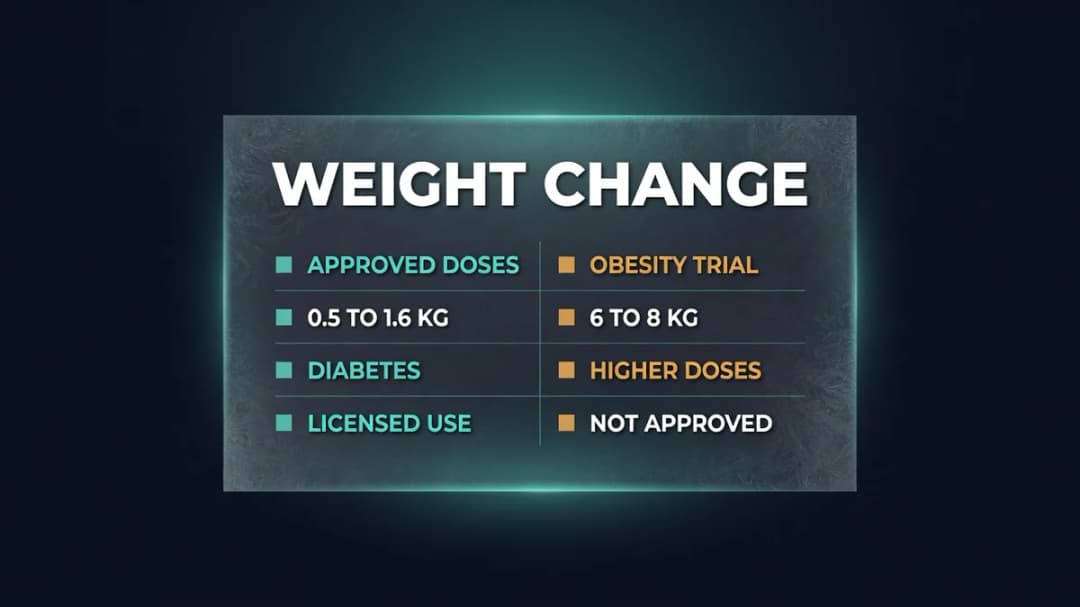
Insulin doses must be reduced when starting. Mealtime insulin is typically cut by half at initiation, because pramlintide flattens the post-meal glucose rise and the previous insulin dose then becomes an overdose. This is the mechanism behind the boxed warning.
It cannot be mixed with insulin in the same syringe. They are separate injections, at separate sites, at the same time. Mixing them alters the pharmacokinetics of both.
Injection sites are the abdomen or thigh, rotated, and separated from the insulin injection site by a couple of inches.
The Boxed Warning
Pramlintide carries a boxed warning for severe insulin-induced hypoglycaemia.
The mechanism is straightforward and worth understanding rather than memorising. Pramlintide does not cause low blood sugar by itself. It flattens the post-meal glucose rise, so an unchanged insulin dose has less glucose to work against and drives blood sugar too low. The risk window is the first three hours after injection.
This is why insulin reduction at initiation is mandatory rather than advisory, and why the drug is only appropriate for people who can monitor blood glucose reliably and recognise hypoglycaemia when it happens.
Contraindications:
- Gastroparesis, since slowing an already-slow stomach makes it worse
- Hypoglycaemia unawareness, since the main risk becomes undetectable
- Poor adherence to insulin regimens or glucose monitoring
- HbA1c above roughly 9 percent, where the priority is elsewhere
What the Weight Loss Data Shows
This is where expectations need managing, because the amylin pathway is currently fashionable and pramlintide is being retrospectively promoted as a weight loss drug it was never approved to be.
| Population | Reported weight change |
|---|---|
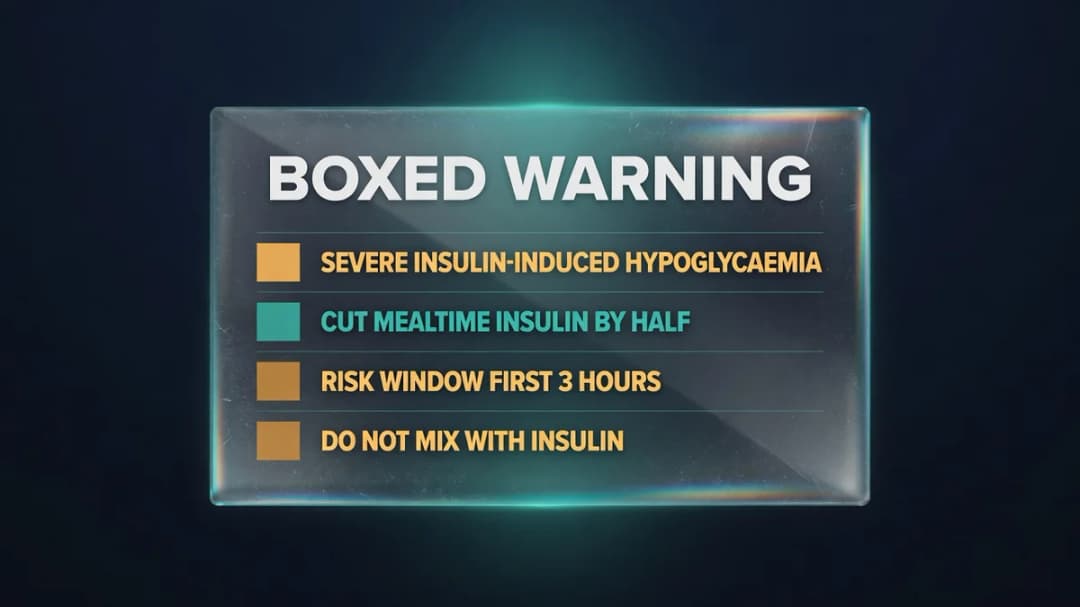
| People with diabetes, at approved doses | Roughly 0.5 to 1.6 kg |
| Obesity trial, higher doses over 12 months with lifestyle support | Roughly 6 to 8 kg |
The first row is what happens at the doses this drug is licensed at, and it is modest. The second row comes from a dedicated obesity trial using higher doses, and it is more substantial, but it is not what a person taking Symlin as prescribed for diabetes should expect.
For comparison, semaglutide and tirzepatide produce 15 to 21 percent of body weight in their trials. Pramlintide is not in that category, and the three-injections-a-day burden is considerable for the return.
See our guides to amylin agonists and cagrilintide.
Side Effects
Nausea dominates, particularly in the first weeks and at each dose increase. It is the direct consequence of slowed gastric emptying, and slow titration is the main way to manage it.
Vomiting, less common.
Reduced appetite, which is the intended satiety effect.
Headache and fatigue, both reported.
Injection site reactions, standard.
Hypoglycaemia, which as above is an insulin interaction rather than a direct effect.
Most of the gastrointestinal effects settle over a few weeks at a stable dose, which is the same pattern seen across drugs that slow gastric emptying.
Why Pramlintide Matters More Than Its Prescribing Numbers Suggest
Pramlintide is not widely used. Three injections a day on top of insulin injections is a demanding regimen for a modest benefit, and prescribing reflects that.
Its significance is as proof of concept. It established that the amylin pathway can deliver both glucose control and weight loss in humans, which is the foundation the current generation of amylin drugs is built on. Cagrilintide, the long-acting amylin analogue being developed alongside semaglutide, is essentially an attempt to do what pramlintide does with weekly rather than per-meal dosing and a smoother tolerability profile.
If the amylin class delivers what its trials suggest, pramlintide will be remembered the way exenatide is: the first drug to prove a pathway worked, superseded by everything it made possible. See our pages on cagrisema and new GLP-1 drugs.
FAQ
What is the correct pramlintide dose?
It depends on diabetes type. Type 1 starts at 15 mcg before each major meal and titrates to 30 or 60 mcg. Type 2 starts at 60 mcg and moves to 120 mcg. Mealtime insulin is reduced, typically by half, when starting.
Can pramlintide be used for weight loss alone?
It is not approved for that and it is not used that way in practice. It is licensed only as an addition to mealtime insulin, and the weight loss at approved doses is modest, generally a kilogram or two.
Why can't it be mixed with insulin?
Mixing changes the absorption profile of both drugs, so the timing of each becomes unpredictable. They are given as separate injections at the same time, at sites a couple of inches apart.
Why does pramlintide cause hypoglycaemia?
Not directly. It flattens the post-meal glucose rise, so an unchanged insulin dose becomes too much for the glucose actually arriving. This is why insulin is reduced at initiation and why the boxed warning exists.
How does pramlintide compare with a GLP-1 drug?
Different hormone pathway, different dosing burden, much less weight loss. GLP-1 drugs are dosed daily or weekly and produce far larger weight reductions. Pramlintide's strength is specifically post-meal glucose control in people already on mealtime insulin.
Is pramlintide still available?
Yes, it remains on the market, though it is not widely prescribed given the per-meal injection burden. Availability by country should be confirmed with a pharmacy.