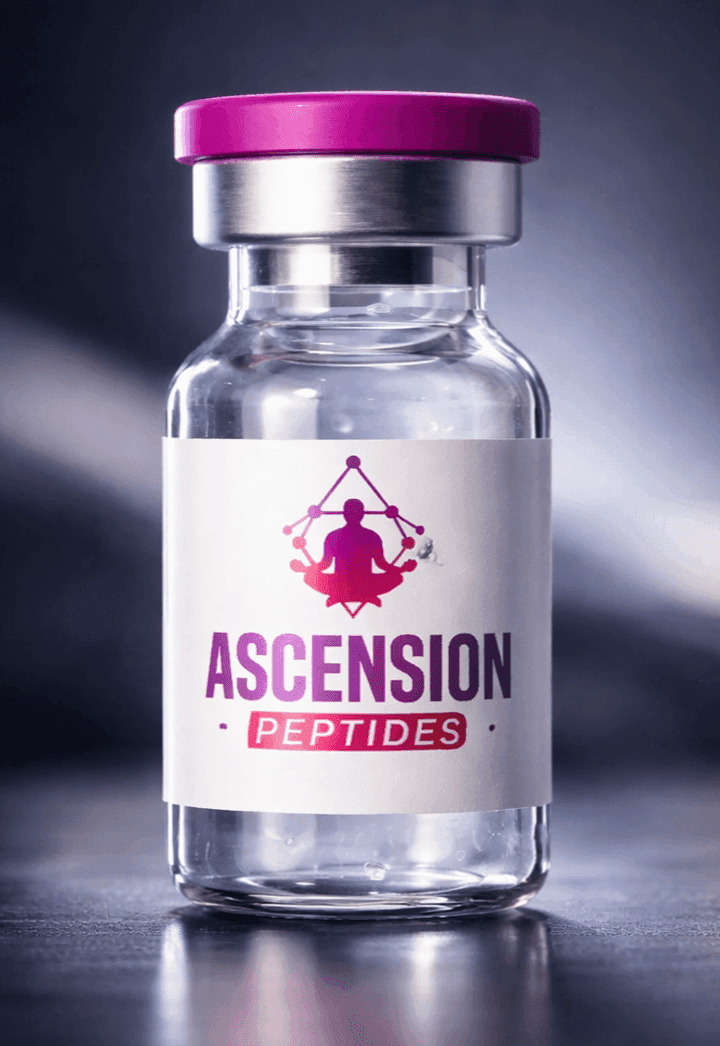

Most peptides require a pin and a bit of courage to use. 5-Amino-1MQ is sold as a capsule instead. You swallow it in the morning and move on with your day. That convenience is the entire pitch, and it rests on an absorption claim the animal data does not settle cleanly. But is this actually worth taking?
That is the right question to ask before you buy anything. Here is what the evidence actually shows.
What 5-Amino-1MQ Does Differently
5-Amino-1MQ is a small molecule, not a peptide in the traditional sense. It is a quinolinium derivative, and its chemistry makes it cell-permeable and stable.
You will see the name written several ways. 5-Amino-1MQ, 5 amino 1MQ, 5 amino 1 MQ, or run together as 5amino1mq. Some vendors label the product capsules, others call them pills. It is all one molecule: 5-amino-1-methylquinolinium, an NNMT inhibitor.
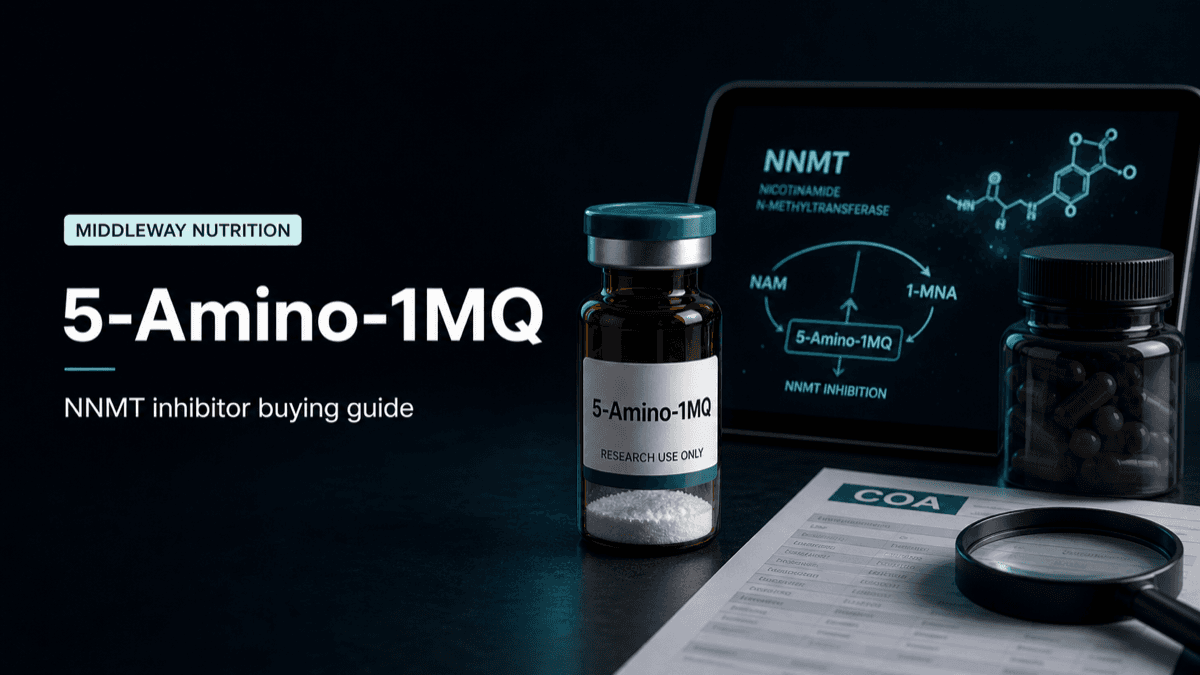
Its actual function is NNMT inhibition. NNMT stands for nicotinamide N-methyltransferase. Your fat cells have a metabolic rate. When those cells enlarge, which is what happens when you gain weight, they start overproducing NNMT. NNMT is an enzyme that converts nicotinamide (a form of vitamin B3) into a waste byproduct. That conversion removes nicotinamide from the NAD+ salvage pathway. Less nicotinamide available means lower NAD+ levels. Lower NAD+ means slower cellular metabolism in fat tissue.
This creates a self-reinforcing loop. More fat leads to more NNMT, which slows fat metabolism, which leads to more fat accumulation. NNMT also drives inflammatory signals that worsen metabolic dysfunction.
5-Amino-1MQ blocks that enzyme. In cultured adipocytes, treatment lowered the NNMT reaction product 1-MNA and raised intracellular NAD+ and SAM, which is the measured half of the story. The rest is the proposed downstream sequence: higher NAD+ activates SIRT1, SIRT1 increases fatty acid oxidation and reduces fat storage, and the fat cell starts behaving more like it did before it became enlarged and inflamed. That downstream chain is the working model these researchers are testing, not something the 5-Amino-1MQ studies measured directly.
You will also read that 5-Amino-1MQ converts white adipose tissue into beige adipose tissue, which burns energy rather than storing it. No published study of this compound shows that. Neither of the two mouse obesity studies measured beiging or thermogenic markers at all. The idea appears once, in the discussion section of the 2018 mouse paper, explicitly flagged as speculation about what higher SAM levels could do to adipogenic and thermogenic genes, with the authors noting that future studies would have to validate it. Treat white-to-beige conversion as a hypothesis someone turned into marketing copy.
What the Capsule Route Actually Rests On
Most peptides cannot be taken orally. They get broken down in the gastrointestinal tract before they reach the bloodstream. 5-Amino-1MQ is a small molecule rather than a peptide chain, so it starts from a better position. How much better is the question, and this is where you should slow down, because the whole product category is capsules.
The cell data is genuinely good. In a Caco-2 intestinal monolayer assay, 5-Amino-1MQ moved across the membrane at 34.2 x 10⁻⁶ cm/s in the absorptive direction, with an efflux ratio of 1.33, which the researchers classified as high permeability with no detectable efflux. That is a screening assay that predicts absorption. It is not a measurement of absorption in a living animal.
The living-animal data splits by species, and it splits hard.
In rats, oral bioavailability was 38.4%. That comes from a 2021 pharmacokinetic study that dosed rats intravenously and orally, and measured a mean peak plasma concentration of 2252 ng/mL after oral dosing with an oral half-life of about 6.9 hours. By small-molecule standards, that is a workable oral drug.
In mice, oral bioavailability was 3.5%. That comes from a 2024 study that dosed mice at 30 mg/kg orally and recorded a peak plasma concentration of 14.5 ng/mL, roughly 150 times lower than the rat figure, with a delayed 4-hour time to peak. The authors attributed the gap to limited absorption in the intestine combined with heavy first-pass metabolism in the liver, noting the compound's half-life in mouse liver cells was under 7 minutes.
Both numbers are real. Neither is human. And nobody has published an absorption measurement for 5-Amino-1MQ in a person, at any dose, by any route.
The practical consequence shows up in how the efficacy studies were actually run. Every published in vivo study of this compound delivered it by subcutaneous injection, not by mouth. The 2018 mouse obesity study used three injections a day for 11 days. The 2024 mouse study used once-daily injections for 30 days, and reported the 3.5% oral figure in the same paper. The aged-muscle studies injected it too. The researchers had oral data available and dosed by needle anyway.
The convenience claims that do hold up are the boring ones. No reconstitution. No refrigeration. Room temperature storage is fine. You take a capsule and move on. Just understand that you are betting on the rat number rather than the mouse number, and that nobody has checked which one describes you.
The injectable form exists and some users prefer it for exactly this reason. There is no head-to-head trial in humans comparing oral to injectable, and no human data on either route.
The Veteran Trial You Keep Reading About
Search this compound and you will run into the same sentence on vendor page after vendor page. A 12-week double-blind, placebo-controlled study in U.S. military veterans, oral 5-Amino-1MQ, significant weight loss, no reported adverse effects. It is the single strongest-sounding claim in the entire category, and it is the reason people treat this compound as more proven than the alternatives.
We went looking for it. Here is what we found, checked in August 2026.
PubMed returns nothing for 5-amino-1MQ. Searching the full chemical name, 5-amino-1-methylquinolinium, returns three papers: a bladder cancer study, a study of gut bacteria in obese mice, and a cell-culture experiment in a cancer cell line. No human trial. Filtering the wider NNMT inhibitor literature to clinical trial publications returns zero results.
ClinicalTrials.gov returns zero registered studies for 5-amino-1MQ, zero for the full chemical name, and zero for NNMT inhibitors in any indication.
So there is no protocol you can read, no registration record, no enrollment number, no published methods, no results table, no author list, no sponsor, and no peer review. There may well be an unpublished study somewhere behind the claim. There is no way for you or for us to check it, which means it cannot function as evidence for anything, including a dose.
Treat it for what it is: an unpublished, unregistered, vendor-circulated report. It is not a reason to expect a particular result, and it is not a source you should let anyone use to justify a number on a label. The moment it gets published or registered, this section gets rewritten. Until then, the honest position is that no human efficacy or safety data exists for this compound.
The rest of the evidence is animal and cell data, and it is worth knowing.
In diet-induced obese mice, 5-Amino-1MQ produced about 5.1% body weight loss over 11 days, delivered by subcutaneous injection three times a day. Control mice gained about 1.4% over the same period. Total cholesterol dropped roughly 30%. Adipocyte size reduced by over 30%, and epididymal fat mass by about 35%. Critically, food intake showed no significant difference between treated and control animals, at 26.2 g and 28.1 g cumulative. The fat loss was metabolic, not appetite-driven. Separately, in cultured pre-adipocytes rather than in the animals, lipogenesis fell by 50% at 30 micromolar and 70% at 60 micromolar.
A second mouse study, in 2024, injected the compound once daily for 30 days and found dose-dependent limits on body weight and fat mass gain, better glucose tolerance and insulin sensitivity, less hepatic steatosis, and normalized ALT and AST.
In people, NNMT expression is approximately 2-fold higher in the omental and subcutaneous adipose tissue of patients with type 2 diabetes compared to controls, and drops again after interventions that improve insulin sensitivity. That human finding comes from a 2015 study of surgical, exercise and bariatric cohorts. The 2-fold figures that circulate alongside the original Nature knockdown work are mouse tissue, not human tissue, so it is worth keeping the two straight.
5-Amino-1MQ Benefits: What Each One Actually Rests On
The benefits people search for are real claims, but they sit on very different evidence. Here is each one with the data behind it, so you can see which are established and which are extrapolated.
| Claimed benefit | What drives it | Evidence behind it |
|---|---|---|
| Fat loss without appetite suppression | NNMT inhibition raises NAD+ in fat cells, with SIRT1 and fatty acid oxidation as the proposed next step | Mouse, injected: 5.1% body weight lost in 11 days, no significant difference in food intake |
| Smaller fat cells | Less lipid stored per adipocyte | Mouse, injected: adipocyte size reduced by over 30% |
| Less new fat synthesis | Lipogenesis suppressed in adipose tissue | Cell culture only: lipogenesis down 70% at 60 micromolar in pre-adipocytes, not measured in the animals |
| Lower total cholesterol | Shift in adipose lipid handling | Mouse, injected: total cholesterol down 30% |
| White fat converted to beige fat | Beige adipose burns energy instead of storing it | No data. Speculation in one paper's discussion section, never measured |
| Insulin sensitivity support | SIRT1 activation downstream of higher NAD+ | Mouse, injected: improved glucose tolerance and insulin sensitivity over 30 days, plus human tissue showing NNMT roughly 2-fold higher in type 2 diabetes |
| Muscle regeneration alongside training | Signal seen when NNMT inhibition is paired with exercise | Aged mice, injected. Never tested in humans, and never tested orally |
| No injections, no reconstitution, no fridge | Storage stability and capsule format | True of the product. Oral absorption is 38.4% in rats and 3.5% in mice, and unmeasured in humans |
| Weight loss in people | Same NNMT mechanism | No published or registered human trial exists |
Notice what is not on that list. There is no appetite suppression, no rapid scale movement, no cardiovascular outcome data, and no human study you can pull up and read. Notice something else: every efficacy row in that table comes from an injected animal.
If you want the honest one-line version: the mechanism is well characterized, the animal results are genuinely impressive, and there is no human evidence at all. That is enough to make 5-Amino-1MQ interesting and nowhere near enough to make it proven.
Body Recomposition Results: Realistic Expectations
5-Amino-1MQ is not a weight loss drug in the way that GLP-1 agonists are. You will not feel dramatically less hungry. The mouse data showed no significant difference in food intake between treated and control groups.
What the mechanism predicts is a metabolic shift in how your fat cells operate. What the animal data supports is gradual fat loss and improved body composition in injected rodents. The magnitude, if it translates at all, is likely smaller than what you would see with tirzepatide or semaglutide.
The appeal for body recomposition is specific. If you are already training, eating protein adequately, and maintaining a caloric deficit, the theory is that 5-Amino-1MQ helps your body access stored fat more efficiently. The muscle data behind that theory is worth stating precisely, because it is often stretched. Two studies in aged mice, both using injections, found that NNMT inhibition improved muscle outcomes: roughly 2-fold larger regenerating fibers and about 70% greater peak torque after an induced injury in 24-month-old mice, and about 40% greater grip strength in sedentary aged mice over eight weeks, rising to 60% when combined with weighted wheel running against 20% for exercise alone. Those are large effects in old mice recovering from injury or sarcopenia. They are not results in trained humans, and nothing about them has been tested orally.
Realistic expectation: unknown in humans, with a mechanism that argues for modest fat loss over 8 to 12 weeks alongside diet and exercise. If you want dramatic scale drops, look at GLP-1 agonists. If you are willing to spend money on an unproven mechanism that at least does not suppress appetite or erode lean mass in animals, 5-Amino-1MQ is worth knowing about.
Dosage Guide
There is no evidence-based human dose for this compound, because there is no published human study. The 50-150mg figures you see everywhere trace back to vendor labels and community protocols, and then get repeated until they sound official. They are a convention, not a finding.
Dosage Table
| Context | Dose | Route | Duration |
|---|---|---|---|
| Published human dosing evidence | None exists | Not applicable | Not applicable |
| Community starting dose | 50mg/day | Oral | Weeks 1-2 |
| Community standard protocol | 100-150mg/day | Oral | Weeks 3-12 |
| Vendor capsule size | 50mg | Oral | Per capsule |
| Mouse efficacy dosing, context only | 10-34mg/kg/day | Subcutaneous injection | 11 to 30 days |
That last row is there for scale, not for conversion. Rodent milligram-per-kilogram doses do not translate to human capsule doses by arithmetic, and the route is different besides.
Within the community convention, the usual approach is to start at 50mg daily for the first 1-2 weeks to assess tolerance, then increase to 100-150mg daily if you handle it well. Most protocols settle at 100mg as the maintenance dose. Understand that you are following a convention rather than a validated dose.
Vendors sell 5-Amino-1MQ in 50mg capsules, which is the standard unit these protocols are built around. One capsule per day for the first two weeks, then two to three capsules per day depending on your response.
Side Effects: What We Know Versus What We Do Not
Start with the honest headline: there is no human safety data for this compound. No trial has published adverse event rates, no registry is tracking it, and no exposure duration in people has been formally documented. Everything below is either animal data or user reporting.
What animal studies showed: negligible toxicity and no observable adverse effects at the doses that produced weight loss in mice. In the 2024 mouse study, liver enzymes moved in the helpful direction, with ALT and AST normalizing in treated obese mice rather than rising. No comparable liver safety work has been published in rats, and none in humans.
One off-target finding is worth knowing. Screened at 10 micromolar against a broad panel of receptors, enzymes and transporters, 5-Amino-1MQ showed no significant activity anywhere except monoamine oxidase A, which it inhibited by 67.4%. That is a single in vitro result at a concentration well above what a capsule is likely to produce, and it has never been followed up in an animal or a person. It is not a reason to panic. It is a reason to mention the compound to your physician if you take anything serotonergic.
What we do not know: essentially all of the long-term picture. No multi-year data, no Phase 2 or Phase 3 trials, no drug interaction studies, no data in pregnancy, no data in liver or kidney impairment.
Community reports describe a manageable side effect profile. These are the mild side effects that come up repeatedly, when they tend to appear, and what people do about them:
| Reported effect | When it shows up | Usual response |
|---|---|---|
| Mild gastrointestinal discomfort | First week, typically transient | Usually resolves on its own with continued use |
| Slight stimulant effect, felt as increased energy | Early use in particular | Generally treated as expected rather than managed |
| Occasional mild headaches | Usually dose-related | Step back to the lower 50mg dose |
| Mild insomnia | When taken too late in the day | Move the dose to the morning |
None of these are documented adverse events from a trial. They are user reports, which means frequency is unknown and reporting is skewed toward people who kept taking the compound.
The key unknown is the cancer connection. NNMT is overexpressed in several human cancers, including glioblastoma, papillary thyroid cancer, renal clear cell carcinoma, bladder cancer, gastric cancer, and colorectal cancer. Higher NNMT expression in tumor tissue is associated with lower overall survival rates.
This does not mean 5-Amino-1MQ causes cancer. The data does not support that conclusion. What it means is that if you have a personal or family history of cancer, you need a real conversation with a physician who has access to your full medical history before using this. Not a telehealth approval. An actual doctor who knows your situation.
Cycling Recommendations
The absence of any human safety data is the primary reason cycling exists. A common protocol is 8-12 weeks on, followed by 4-8 weeks off. This gives your system a break from a compound with no human long-term data and, in theory, helps maintain sensitivity to it.
The off period also lets you assess whether the metabolic benefits persist or diminish. Some users report that body composition gains are partially maintained after discontinuation, which would be consistent with genuine metabolic adaptation rather than temporary appetite suppression.
No post-cycle therapy is described as necessary. 5-Amino-1MQ is not a hormone and there is no evidence it suppresses testosterone or disrupts the HPA axis. Note the shape of that sentence: no study has measured those endpoints in humans, so the accurate statement is that there is no signal rather than that it has been ruled out.
Morning dosing is preferred to align with your natural metabolic peak. Consistent timing matters more than the exact hour.
Frequently Asked Questions
What is 5-Amino-1MQ?
5-Amino-1MQ, chemically 5-amino-1-methylquinolinium, is a small molecule that inhibits NNMT, an enzyme that enlarged fat cells overproduce. Blocking NNMT keeps nicotinamide in the NAD+ salvage pathway instead of being excreted as waste, which raises NAD+ inside fat tissue and is proposed to activate SIRT1. What it is sold for is fat loss and body recomposition, in capsules typically dosed at 50-150mg per day on vendor and community protocols rather than on trial evidence. It is not a stimulant, it is not a hormone, and it does not suppress appetite.
Do 5-Amino-1MQ capsules actually get absorbed?
Partly, probably, and nobody has measured it in a human. Cell monolayer assays predict good intestinal absorption, with high permeability and no detectable efflux. Then the animal data splits: oral bioavailability was 38.4% in rats and 3.5% in mice, where researchers pinned the low figure on poor intestinal absorption plus heavy first-pass liver metabolism. Every published in vivo efficacy study injected the compound rather than dosing it by mouth. If you buy capsules, you are betting that human absorption looks more like the rat than the mouse, and that bet has not been tested.
Is 5-Amino-1MQ a peptide or a supplement?
Strictly, neither. It gets searched and sold as a peptide, which is why you see it called a 5 amino peptide, but it has no amino acid chain at all. It is a quinolinium small molecule. It is not an approved drug either. There is no FDA approval behind these capsules and no published human efficacy trial, which means vendor third-party purity testing is the only quality signal you actually get. Judge sellers on whether they publish those results.
What do 5-Amino-1MQ reviews actually say?
There is no verified, aggregated review dataset for this compound. No registry, no published patient-reported outcome study. What exists is community reporting, and it converges on a few points: the effect is gradual rather than dramatic, appetite is unchanged, energy tends to tick up in the first two or three weeks, and the people reporting the best results were already training and already in a caloric deficit. Reviews claiming GLP-1-scale weight loss from capsules alone do not match anything in the published data. Single-vendor testimonial pages are marketing, not evidence.
Is 5-Amino-1MQ the same as NAD+ precursors like NMN or NR?
No. NAD+ precursors provide more substrate for NAD+ synthesis. 5-Amino-1MQ prevents nicotinamide from being diverted away from the NAD+ pathway. Different mechanisms. They can theoretically be used together, though combining compounds always warrants caution.
Will 5-Amino-1MQ suppress my appetite?
No. The mouse studies showed no significant difference in food intake between treated and control groups, at 26.2 g and 28.1 g cumulative over 11 days. Weight loss occurred through metabolic change, not reduced food consumption. If appetite suppression is your priority, look at tirzepatide for weight loss or semaglutide.
How is this different from MK-677 capsules?
MK-677 capsules work through ghrelin receptor agonism to stimulate growth hormone release. 5-Amino-1MQ works through NNMT inhibition to shift fat cell metabolism. Different mechanisms, different side effect profiles, and different expected outcomes. MK-677 increases appetite as part of its mechanism. 5-Amino-1MQ does not affect appetite signaling. For a wider comparison, see 5-Amino-1MQ versus other fat-loss peptides.
Do I need to cycle 5-Amino-1MQ?
The standard community recommendation is 8-12 weeks on, 4-8 weeks off. No study supports that schedule specifically. It exists because there is no human safety data at any duration, and a conservative default is the sensible response to that.
Can I take 5-Amino-1MQ if I am on other medications?
Drug interaction data is limited to nonexistent. Theoretically, compounds affecting NAD+-dependent pathways could interact. The one concrete signal is in vitro monoamine oxidase A inhibition at high concentration, which is worth raising if you take antidepressants or anything else serotonergic. Discuss with your physician, especially if you are on diabetes medications, blood pressure medications, or anything affecting metabolic or liver function.
Does 5-Amino-1MQ cause cancer?
NNMT is overexpressed in several human cancers. However, existing data does not establish that 5-Amino-1MQ causes cancer. What it establishes is that you should disclose any cancer history or strong family cancer history to your physician before using this. If you have active cancer or are undergoing cancer treatment, do not use this compound.
If you found this useful, explore more on metabolic optimization. I have covered tirzepatide for weight loss as a comparison point for GLP-1 agonists and how they stack against non-appetite-suppressing approaches. I have also written about MK-677 capsules in detail for those evaluating growth hormone secretagogues.
References
- Neelakantan et al., Biochemical Pharmacology (2018) — small-molecule NNMT inhibitors reverse high-fat-diet-induced obesity in mice — 5-Amino-1MQ given as three daily subcutaneous injections for 11 days lowered body weight by about 5.1% from baseline, cut adipocyte size by over 30% and total cholesterol by about 30%, without a significant change in food intake. Lipogenesis suppression of 50% and 70% was measured in cultured pre-adipocytes, not in the animals. Caco-2 permeability 34.2 x 10⁻⁶ cm/s with an efflux ratio of 1.33.
- Kraus et al., Nature (2014) — NNMT knockdown protects against diet-induced obesity — establishes NNMT as a regulator of adipose NAD+/SAM and SIRT1 signaling driving metabolic dysfunction. The 1.5 to 2-fold NNMT elevations reported here are mouse white adipose tissue.
- Awosemo et al., Journal of Pharmaceutical and Biomedical Analysis (2021) — LC-MS/MS assay and oral bioavailability of 5-amino-1-methylquinolinium in rats — oral bioavailability 38.4% in rats, mean oral peak plasma concentration 2252 ng/mL, oral half-life 6.90 hours.
- Babula et al., Diabetes, Obesity and Metabolism (2024) — NNMT inhibition mitigates obesity-related metabolic dysfunction — oral bioavailability 3.5% in mice, oral peak plasma concentration 14.5 ng/mL, attributed to limited enteric absorption and high first-pass metabolism. The 30-day efficacy arm used once-daily subcutaneous injection at 10 and 32 mg/kg/day and normalized ALT and AST. Off-target screening at 10 micromolar found 67.4% inhibition of monoamine oxidase A.
- Kannt et al., Diabetologia (2015) — NNMT mRNA in human adipose tissue and plasma 1-methylnicotinamide in insulin resistance — patients with type 2 diabetes had approximately 2-fold higher NNMT expression in both omental and subcutaneous white adipose tissue than controls. This is the human source for the 2-fold figure.
- Neelakantan et al., Biochemical Pharmacology (2019) — NNMT inhibitor activates senescent muscle stem cells in aged skeletal muscle — in 24-month-old mice treated after induced muscle injury, regenerating fiber cross-sectional area was nearly 2-fold greater and peak torque about 70% higher than controls.
- Dimet-Wiley et al., Scientific Reports (2024) — NNMT inhibition mimics and boosts exercise-mediated improvements in muscle function in aged mice — 22-month-old female mice given 5-amino-1MQ by subcutaneous injection at 10 mg/kg for eight weeks gained about 40% grip strength while sedentary, 60% when combined with weighted wheel running, against 20% for exercise alone.
- PubMed search for 5-amino-1-methylquinolinium — checked August 2026, returns three papers, all cell-line or rodent work. No human clinical trial of the compound is indexed, and filtering the wider NNMT inhibitor literature to clinical trial publications returns zero results.
- ClinicalTrials.gov registry search — checked August 2026 through the registry API, no registered trial of 5-Amino-1MQ, of 5-amino-1-methylquinolinium, or of any NNMT inhibitor in any indication.