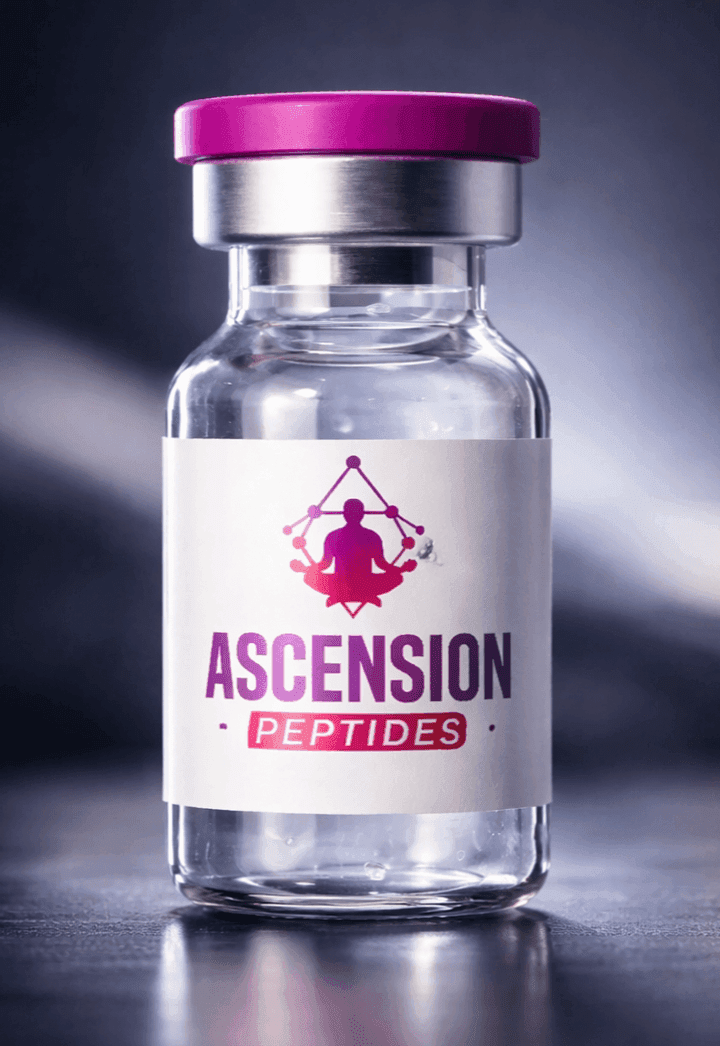
Ascension Peptides Reviews (2026): Is It Legit? Honest COA & Pricing Audit
Almost every "Ascension Peptides review" you'll find online was written to earn a commission, and this page now carries affiliate links too. Middleway earns a commission on purchases made through our Ascension links. That doesn't change the method: I'm going to tell you exactly where the company is strong, where it's thin, and the one weakness the affiliate crowd keeps skipping.
If you've been reading Ascension Peptides reviews trying to figure out whether the vendor is legit before you spend money, here's the honest version. Ascension Peptides is a US-based research-peptide supplier that publishes batch COAs, shows >98% HPLC purity on every current certificate, and ships within the US only. It checks the boxes that matter. It also has real limitations — a US-only footprint, almost no independent community blind-buy testing, and a lost-package policy that puts the risk on you. Below is the full audit.
Key Takeaways
- Verdict: legit. Ascension Peptides publishes a searchable library of 85 batch certificates, its current batches test between 98.9% and 99.9% HPLC purity against a >98% pass mark
- Testing: batch-specific COAs from Kovera Labs (current batches) and MZ Biolabs (older batches), covering HPLC purity, LC-MS identity, net content, endotoxin, a rapid sterility screen and heavy metals
- Shipping: US domestic only, a $15 flat rate or free over $250, and their own pages disagree on transit time. They are not liable for lost packages — add Route protection at checkout
- Biggest weakness: very little third-party blind-buy data in the community (e.g. Finnrick), so you're trusting the vendor's own COAs more than crowd-verified results
Research peptides are a market where the marketing almost always outruns the testing. A vendor can slap "99% pure, third-party tested" on a page in thirty seconds. What separates a real supplier from a reshipper is whether you can pull a batch-specific certificate of analysis, see a named lab, and verify it against the lot number on your vial. So that's the lens for this review: documentation first, reputation second, price last.
Who Is Ascension Peptides?
Ascension Peptides is a US research-peptide retailer. It doesn't say where it operates or ships from; the only address it publishes is a mailing address in Kansas City, Missouri. The company is a relative newcomer — most vendor trackers place its launch in the 2024 wave of US peptide suppliers, though Ascension doesn't state a founding date on its own site, so treat the exact age as approximate. Contact is straightforward for the category: a published phone line ((303) 518-6550), email support at sales@ascensionpeptides.com, and stated business hours of Monday–Friday, 9am–5pm CST. Purchases are restricted to buyers 21 and older. The name gets mistyped constantly — you will see "Acension Peptides" and "Ascension Peptide" in forum threads and search boxes — but there is one company, at ascensionpeptides.com.
The positioning is "premium research-grade." Products are sold strictly for laboratory research use — not for human consumption — which is the standard (and legally important) framing for everything in this space. Nothing Ascension sells is an FDA-approved drug.
Are Ascension Peptides Legit? The Short Answer
Yes — based on the evidence available, Ascension Peptides is a legitimate vendor, not a scam reshipper. Two things support that:
- Public, searchable COAs. They host a certificate-of-analysis library — 85 records as of September 27, 2026, each with a batch number and test date — searchable by product name, SKU, batch/lot, cap color, purity and date. That's more transparency than a large share of the market offers.
- Consistent third-party purity data. The current batches, tested by Kovera Labs, run from 98.9% to 99.9% HPLC purity against a >98% pass mark. We checked one Kovera report (KVR-2026-410047, for DSIP) against the lab's own records, and it matched.
That said, "legit" is not the same as "flawless." The honest caveat — covered in detail below — is that Ascension has very little presence in independent community blind-buy testing pools, so most of the purity confidence rests on COAs the vendor commissions rather than on anonymous crowd-sourced retests.
Lab Testing and COAs — How to Verify It Yourself
This is where most Ascension Peptides reviews wave their hands ("independent US lab, trust us") and move on. Here's how to actually verify a batch yourself:
- Find the COA database. Ascension links a certificates-of-analysis page from its site. Search it by the lot/batch number printed on your vial — not just the product name. A real COA is batch-specific; a generic "product certificate" that applies to every vial ever sold is a red flag anywhere, including here.
- Confirm the tests. A complete peptide COA should show HPLC for purity (look for an actual chromatogram and a number, ideally ≥98–99%), mass spectrometry for identity (does the measured mass match the peptide's molecular weight?), and ideally an endotoxin (LAL) result. Ascension's current Kovera certificates cover these, plus net content (mg per vial), a rapid sterility screen and heavy metals (lead, arsenic, cadmium, mercury).
- Check the lab. Ascension's COA library overview doesn't name the testing lab, but the individual product pages do. Each listing now displays its batch certificates inline with the lab, the batch number and the test date attached — for example, BPC-157, R-30 and S-5 all show batches tested by Kovera Labs in May and June 2026 and by MZ Biolabs earlier in the year. Two labs across a compound's batches, each with its own date, is a stronger setup than a single house lab. Not every product has both: HCG and the 10mL GHK-Cu show only MZ Biolabs certificates, while Epithalon, the FIT Stack, the 3mL GHK-Cu, Oxytocin and Pinealon show only Kovera. Cross-check that the lab on your specific COA is one you can look up.
- Note the two-lab pattern. Where a product carries certificates from two different labs on two different batches, you can compare them. Where it carries one, you cannot. That difference is visible on the product page before you buy.
If you've read our BPC-157 buying guide or the TB-500 guide, this is the same COA discipline applied to a single vendor. The skill is the same: lot number, named lab, HPLC chromatogram, mass-spec identity. No exceptions.
The honest weakness: Ascension has minimal representation in independent community blind-buy programs (where anonymous buyers send off-the-shelf product to labs like Janoshik or aggregate results on Finnrick). Their own COAs look strong, but there's less of the crowd-verified, "didn't-know-it-was-being-tested" data that builds the highest tier of trust. That's not evidence of a problem — it's an absence of a particular kind of evidence. Weigh it accordingly.
Purity Results by Compound
HPLC purity in Ascension's own certificate library clusters near the top of the range, but not uniformly:
- Current Kovera batches (all compounds): 98.86% (R-10) to 99.93%, against the >98% pass mark printed on every Kovera certificate
- All 85 listed certificates: 97.53% to 99.98%. The low end is an October 2025 NAD+ 500mg batch, and a handful of listed certificates sit below 99%
- Fill weight: one older MZ Biolabs certificate, for Ipamorelin 5mg lot 18-01260229, measured 3.59 mg in the vial, which is why net content matters as much as purity
- Blends/stacks (KLOW, GLOW): COAs published per component
Treat these as representative rather than guaranteed for your specific vial — which is exactly why you check the COA for your lot.
What Peptides Does Ascension Sell?
Ascension's catalog spans the common research categories:
- Healing / recovery: BPC-157, TB-500 (and BPC-157/TB-500 blends)
- GH secretagogues: Ipamorelin, CJC-1295, Sermorelin, Tesamorelin (availability varies)
- Longevity / metabolic: NAD+, Epithalon, MOTS-c, 5-Amino-1MQ
- Cosmetic / other: GHK-Cu, Melanotan 1 & 2
- Proprietary stacks: KLOW, GLOW, FIT Stack, Wolverine Stack
One point worth flagging: there is conflicting information across review sites about whether Ascension still sells GLP-1-class compounds (semaglutide, tirzepatide, retatrutide). Legacy COAs for semaglutide exist, but at least one tracker reports GLP-1s are no longer in the active catalog — likely a response to tightening regulation. If you're specifically after a GLP-1, confirm current availability on the live shop before ordering rather than trusting any review (including this one) on that point.
Does Ascension Still Sell GLP-1 Peptides? What the Live Catalog Shows
We pulled the store's full product list on August 21, 2026, and again on September 27, 2026. The answer is yes — but not under any name you could search for on the shop. The GLP-1-class items are listed under letter-number SKUs with no drug name in the product title. Most of the descriptions give them away anyway, because they specify molecular formula, amino acid count or receptor target, and the batch certificates now name the compound outright.
| SKU | Price on site | What the product page says | What that identifies |
|---|---|---|---|
| S-5 (5 mg) | $59.00 | 31-amino acid peptide, formula C187H291N45O59, MW 4114 g/mol, two substitutions (Aib8, Arg34), acylation at Lys26 | Semaglutide. The formula, mass and substitution pattern match exactly |
| T-10, T-30 (10 mg, 30 mg) | $80.00 / $160.00 | 39-amino acid dual agonist at the GIP receptor "and a second key metabolic receptor," with a C20 fatty diacid modification | Tirzepatide |
| C-10 (10 mg) | $100.00 | Long-acting amylin analogue, amylin receptor agonist | Cagrilintide — one of the two batch COAs on the page is titled "Cagrilintide 10mg" outright |
| R-10, R-30 (10 mg, 30 mg) | $80.00 / $200.00 | Only "synthetic triple agonist peptide targeting GIP, glucagon, and a third class of peptide receptors." No formula, no amino acid count | Retatrutide. The product pages never use the name, but the batch certificate pages are titled "Retatrutide 10mg" and "Retatrutide 30mg" |
Three things to take from that:
- "They stopped selling GLP-1s" is wrong. So is any review that describes the catalog as GLP-1-free. What changed is the labeling, not the availability — which is exactly why reviews written off other reviews got it wrong.
- Coded SKUs are a compliance posture, not a quality signal. Selling semaglutide as "S-5" shrinks a vendor's trademark and regulatory surface area. It says nothing about what is in the vial. It does mean you cannot confirm what you are buying from the product name, so the COA stops being optional.
- R-10 and R-30 still have the thinnest product pages. They describe a triple agonist by receptor targets and nothing more, so the product page alone won't tell you the molecule. The certificates do: open the one for your batch and confirm what the lab actually assayed before you order.
These are also among the most expensive things Ascension sells: R-30 at $200.00 is the priciest item in the catalog.
Pricing
On sticker price, Ascension sits in the premium band — roughly $49 to $133 per vial for single peptides and stacks, depending on the compound and size (e.g., BPC-157 10mg at $49.00; FOXO4-DRI 10mg at $133.00), with the GLP-1-class codes running $59.00 to $200.00. Almost every listing shows a strikethrough "regular" price above the selling price, so judge what you actually pay rather than the markdown. Per-milligram, that ranges from very cheap (NAD+) to a few dollars per mg on the smaller specialty peptides.
Judge those numbers on a per-milligram basis against what else is on the market, because at list price Ascension is asking premium money. On the compounds where mid-tier vendors publish comparable documentation, the gap is real and it is worth doing the arithmetic before you check out.
Shipping, Payment, and Returns
Practical details the affiliate reviews tend to gloss over:
- Where they ship: US domestic only. Ascension does not ship internationally, citing recent regulations. If you're outside the US, this vendor is a non-starter.
- Cost & speed: a flat $15 fee on all domestic shipments, per the shipping policy page. On transit time their own pages disagree: the shipping policy says 2–5 business days via UPS or USPS, while the FAQ says standard UPS Ground takes 5–7 business days, so we don't quote a speed. There is a second contradiction on cost: the shipping policy states the flat $15 with no exceptions, while every product page displays a "Free Shipping on orders over $250" banner. Both were still live on September 27, 2026. Check the cart total before assuming either one.
- Volume discounts: the product pages offer tiered pricing on multiples of the same item — 3% off at 3 vials, 5% at 5, 10% at 10. Small, but it applies across the catalog.
- Lost packages — read this: Ascension states it is not responsible for lost or damaged packages once shipped and recommends adding Route Shipping Protection at checkout. For higher-value orders, that small add-on is worth it; otherwise the risk is entirely yours.
- Payment: the FAQ lists credit cards (Visa, Discover and American Express), Apple Pay, Google Pay and ACH bank draft; the older shipping policy names only Visa and ACH. Checkout requires creating an account and confirming you are 21 or older. If a specific payment method matters to you, confirm before ordering.
- Returns — all sales are final. The published return policy is explicit and strict: no returns, no exchanges and no refunds for any reason, on any product. A damaged, defective or incorrect order has to be reported within 24 hours of delivery, and the remedy is a replacement, not a refund — and only where Ascension is at fault. Past 24 hours, they state they will not refund or exchange. Orders cannot be cancelled or modified once processed. There is no satisfaction guarantee of any kind, and the lyophilized form of the product is itself listed as a non-refundable condition. Their FAQ is looser, saying 48 hours and "a replacement or a refund as needed", but the return policy is the stricter document. Verified on their return policy page, September 27, 2026.
Real Customer Reviews — What Buyers Actually Say
Pulling from Trustpilot and aggregated community sentiment (rather than asserting it):
What buyers praise:
- Fast dispatch and delivery
- Responsive, helpful customer service (frequently described as "no questions asked" on issues)
- Solid packaging
- A COA available for every product
What buyers criticize:
- High sticker prices
- US-only shipping
- Support is primarily email/phone during business hours — no 24/7 chat
- A small thread of "didn't feel it working" reviews — common across the entire category and hard to attribute to the vendor versus the compound or the individual
- Narrower catalog than the largest incumbents
Overall sentiment is positive and, importantly, free of the payment-fraud or non-delivery complaint clusters that flag genuinely sketchy operations.
Pros and Cons
Pros
- Searchable, batch-specific COA library (85 records)
- Current batches test 98.9%–99.9% HPLC purity against a >98% pass mark
- Named, verifiable testing labs (Kovera Labs, MZ Biolabs)
- Responsive support, per buyer reports
- Free shipping on US orders over $250
Cons
- US-only — no international shipping
- Minimal independent community blind-buy data (the trust gap)
- Not liable for lost packages without paid Route protection
- Premium sticker pricing
- GLP-1-class compounds sold under letter-code SKUs; the R-10 and R-30 pages describe the compound only by receptor targets, so you need the certificate to confirm it
- Homepage purity marketing runs ahead of the >98% pass mark printed on its own certificates, and its policy pages contradict each other on shipping cost, transit time and the damage-report window
- All sales final: no returns, exchanges or refunds, with only a 24-hour window to report damage
Ascension Peptides vs. Alternatives
How Ascension stacks up against other vendors buyers commonly compare it to:
Top Vendors
Ranked by purity, third-party testing, COA availability, and price.
>98% HPLC pass mark · Kovera Labs / MZ Biolabs · US only, $15 flat or free over $250
≥99% claimed · Published COA · US domestic
≥99% claimed · Third-party · US + international
≥99% claimed · Published COA · Free over $200
"Lab tested" · Unverified · Varies
The takeaway: against the established premium vendors, Ascension is competitive on documentation, but it asks premium money at list price and trails the largest incumbents on catalog breadth and on the depth of independent, crowd-verified testing.
Who It's For (and Who Should Skip It)
Good fit if you: are in the US, want batch COAs you can actually pull, and value responsive support.
Skip it if you: need international shipping, require the deepest possible independent blind-buy verification before trusting a vendor, or want the widest catalog on the market.
Frequently Asked Questions
How This Review Was Put Together
Vendor reviews in this category are mostly written from other vendor reviews, which is how the "they stopped selling GLP-1s" error propagated. Here is the actual basis for this one, so you can weigh it yourself.
Checked directly, on August 21, 2026 and again on September 27, 2026: the live product catalog (41 products pulled from the store's own product feed), individual product pages including price, stock status, volume tiers and the batch COAs displayed on them, the certificates-of-analysis library and its record count, the shipping policy page, the FAQ, and the return policy page. We also checked one Kovera report (KVR-2026-410047, DSIP) against the lab's own records, and it matched. Anything in this article sourced from those is quoted or paraphrased from what Ascension itself publishes.
Taken from elsewhere, and labeled as such in the text: the summary of buyer sentiment. We did not commission testing and have not sent an off-the-shelf vial to a lab ourselves.
Deliberately not asserted: the company's founding date, where it ships from, and a delivery speed. Each of those is flagged as unverified where it appears rather than filled in with a guess.
No manufactured social proof. There are no testimonials, star ratings or customer quotes in this article that we wrote, solicited, or received in exchange for anything. Where buyer sentiment is summarized, it is aggregated from public review platforms and identified that way.
Commercial relationship: when this review was first written we had none with Ascension Peptides. We do now: Middleway earns a commission on purchases made through our Ascension links. The criticisms above were kept as they were, and the facts were re-checked against Ascension's own pages rather than softened.
The Bottom Line on Ascension Peptides
If you came here to answer one question — is Ascension Peptides legit? — the answer is yes, with eyes open. They do the fundamentals well: batch COAs you can actually search, >98% purity on every current certificate, named testing labs, free shipping on US orders over $250, and a strong support reputation. The real trade-offs are a US-only footprint, a lost-package policy that shifts risk to you, a strict all-sales-final return policy, and a thinner record of crowd-verified blind-buy testing than the longest-standing incumbents.
That assessment stands, and it is why Ascension is now the vendor we link to. If you are in the US and ready to order, shop Ascension Peptides: new customers get 50% off with code PEPTIDEDECK, and buying 3, 5 or 10 units of the same item saves 3%, 5% or 10%.
Current prices for what people usually come to this page for: BPC-157 10mg at $49.00, TB-500 5mg at $54.00, the BPC-157 + TB-500 Wolverine Stack at $90.00, GHK-Cu 100mg (3mL) at $59.00, CJC-1295 no DAC 10mg at $70.00, Ipamorelin 5mg at $50.00, Epithalon 10mg at $50.00, MOTS-c 10mg at $62.00, NAD+ 1,000mg at $104.00, Tesamorelin 5mg at $50.00 and 5-Amino-1MQ 10mg at $52.00, plus the GLP-1-class codes from $59.00 (S-5) to $200.00 (R-30). Ascension does not sell bacteriostatic water, so that has to come from elsewhere.
Whichever way you go, the discipline is the same one this review is built on: pull the certificate for your lot number, check the named lab and the test date, and read the return and lost-package policy before you pay.
Affiliate disclosure: the Ascension links on this page are referral links, and Middleway earns a commission if you buy through them. That doesn't change the assessment above, criticisms included — the verdict is the same one we reached when we had no stake either way.
Medical Disclaimer: This article is for informational purposes only and does not constitute medical advice. Research peptides are sold for laboratory research use only and are not FDA-approved to diagnose, treat, cure, or prevent any disease. Always consult a qualified healthcare provider before considering any new compound. The purchase and use of research peptides carries legal and health risks that vary by jurisdiction and individual circumstances.