TB-500 is one of the most counterfeited "recovery" peptides on the grey market, partly because almost nobody verifies the synthetic fragment they're actually buying. A vial labeled "TB-500" can contain anything from a 99% pure peptide to underdosed filler with a recycled certificate stapled to it.
If you've been searching where to buy TB-500, this guide skips the marketing and gives you the part that matters: which vendors publish real batch testing, how to read a certificate of analysis without getting fooled, what fair pricing looks like in 2026, and the red flags that the average affiliate guide leaves out because they cost commission. TB-500 is sold strictly as a research chemical, it is not an FDA-approved drug, and the quality gap between vendors is enormous.
Key Takeaways
- TB-500 is NOT FDA-approved. It is sold only as a research chemical for laboratory use, never as a treatment or supplement
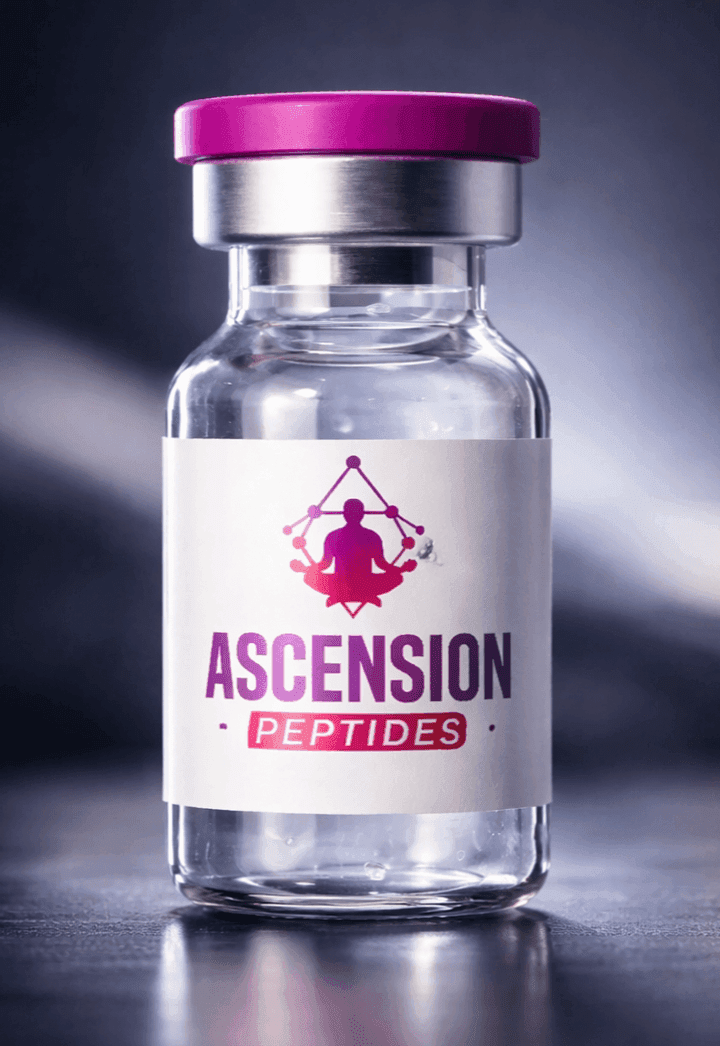
- Ascension Peptides is our top-rated vendor: every batch independently tested by a third-party lab, certificates showing >98% HPLC purity, and batch-specific certificates in a public library
- Always demand a batch-specific COA that matches the lot number on your vial — not a generic product certificate
- A 5mg vial should land around $50–$90. A $25 vial almost always means skipped testing or underdosing
- TB-500 is WADA-prohibited, so any drug-tested athlete should treat it as off-limits
What TB-500 Actually Is
TB-500 is a synthetic peptide based on the active region of thymosin beta-4 (Tβ4), a naturally occurring protein involved in actin regulation, cell migration, and tissue repair. The full thymosin beta-4 molecule is a 43-amino-acid peptide, and TB-500 products on the research market are typically sold as the synthetic acetate version with the same sequence (CAS 77591-33-4, molecular weight ~4963 g/mol).
In preclinical research, thymosin beta-4 has been studied for wound healing, angiogenesis (new blood vessel formation), inflammation modulation, and cardiac and corneal tissue repair. Pharmaceutical-grade thymosin beta-4 (as RGN-259) has gone through human clinical trials for eye conditions like dry eye and corneal injury, but no version of TB-500 is approved for general human use. That distinction matters: the compound has a legitimate research history, while the recovery-peptide market built around it is unregulated. This is exactly why people stack it with BPC-157 in the Wolverine stack and why honest sourcing is so important.
Where to Buy TB-500 in 2026
There is no pharmacy counter for TB-500. No prescription pathway, no insurance, no retail supplement shelf. Every realistic option runs through research-chemical and peptide vendors who sell it "for laboratory research use only." That leaves you with essentially three tiers:
Reputable research-peptide vendors. These are the operators worth your money. They synthesize or source from verified labs, send every batch to an independent testing lab, publish batch-specific COAs you can open without an account, and never tell you how to dose it for your body. This tier is where you want to be.
Generic grey-market sellers. Hundreds of them. Many resell the same raw material with their own label, some test, many don't. Quality is a coin flip and the COA is often recycled across batches.
Marketplace and social-media sellers. Listings on general marketplaces, forums, or messaging apps with no testing, no traceable lot numbers, and no recourse. Avoid entirely.
The honest answer to "where to buy TB-500" is that the compound is easy to find and quality vendors are not. The whole game is vendor selection, and that is where the rest of this guide focuses.
Best Place to Buy TB-500: Ascension Peptides
Ascension Peptides is the vendor we recommend for TB-500, and not because of commissions. They do the boring, unglamorous quality work that most sellers skip.
Testing on every batch. Every Ascension batch is independently tested by a third-party lab, currently Kovera Labs (older batches went to MZ Biolabs in Tucson). The certificates cover HPLC purity, LC-MS identity, net content per vial, endotoxin, a rapid sterility screen and heavy metals, and 85 batch-specific certificates are published in a public library, which is exactly the lot-matching check this guide keeps insisting on.
Purity that holds up. The certificate pass mark is >98% by HPLC, and recent batches have tested between 98.9% and 99.9%. Plenty of cheaper vendors sit at 90–95% or simply don't show a chromatogram, and that gap matters when you're trying to run consistent research.
Clear pricing and terms. TB-500 supply comes and goes across this market. Ascension's TB-500 is a 5mg vial at $54.00 USD, inside the fair 5mg range below, so a 10mg research supply means two vials, and buying 3, 5 or 10 vials saves 3%, 5% or 10%. It ships within the United States only, with free shipping on orders over $250. All sales are final, though damaged or incorrect items are replaced if reported quickly. New customers get 50% off with code PEPTIDEDECK.
Honest framing. Ascension sells TB-500, like the rest of its 41-product catalogue, for research use only. You can check current pricing and batch availability directly at Ascension Peptides.
How to Verify TB-500 Quality: The COA Deep-Dive
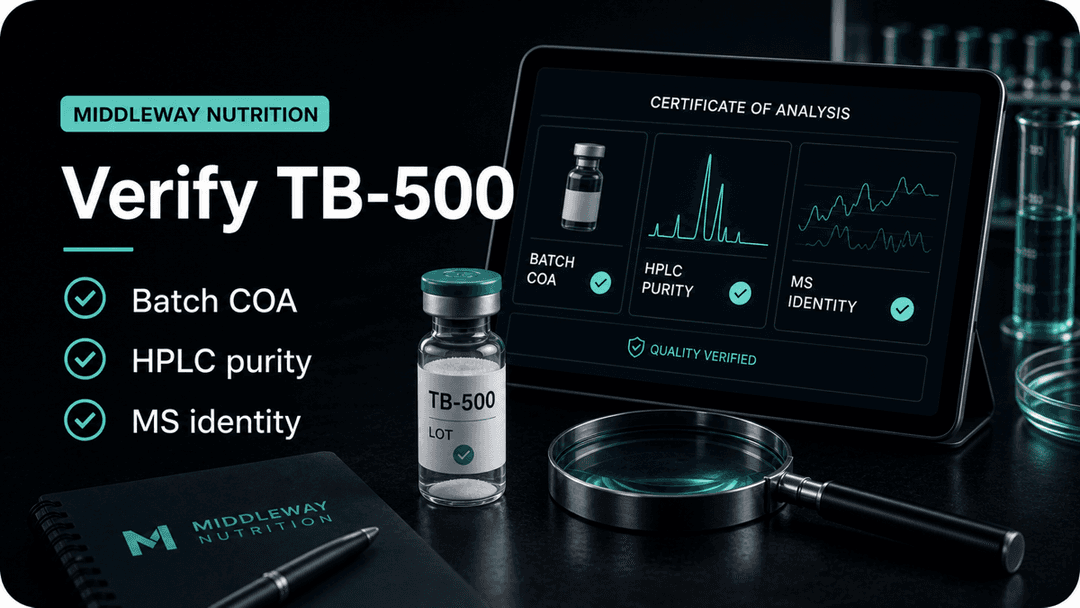
Most guides tell you to "look for third-party testing" and stop there. Here's what that actually means for TB-500.
Batch-specific vs. product-level COAs
A product-level COA is one certificate slapped onto an entire product line. It might reflect a synthesis run from six months ago. Some vendors recycle the same PDF indefinitely.
A batch-specific COA references the exact lot number printed on your vial, with a test date, batch ID, and results for that run. The lot number on your vial should match the lot number on the certificate. If a vendor can't produce that, treat the purity claim as unverified.
HPLC and mass spec — you want both
HPLC measures purity: what percentage of the sample is actually the peptide. For TB-500, look for ≥98%. Mass spectrometry confirms identity by matching the molecular weight (~4963 g/mol) to the TB-500 structure. HPLC alone can show "high purity" of the wrong compound, so the strongest COAs include both.
Real testing labs
Labs like Janoshik and MZ Biolabs actively test research peptides and provide verifiable certificates. If a COA names a lab you can't find online, has no lot number, lists a test date over six months old, or shows a flat "99%" with no chromatogram attached, that's a fail.
What TB-500 Costs in 2026
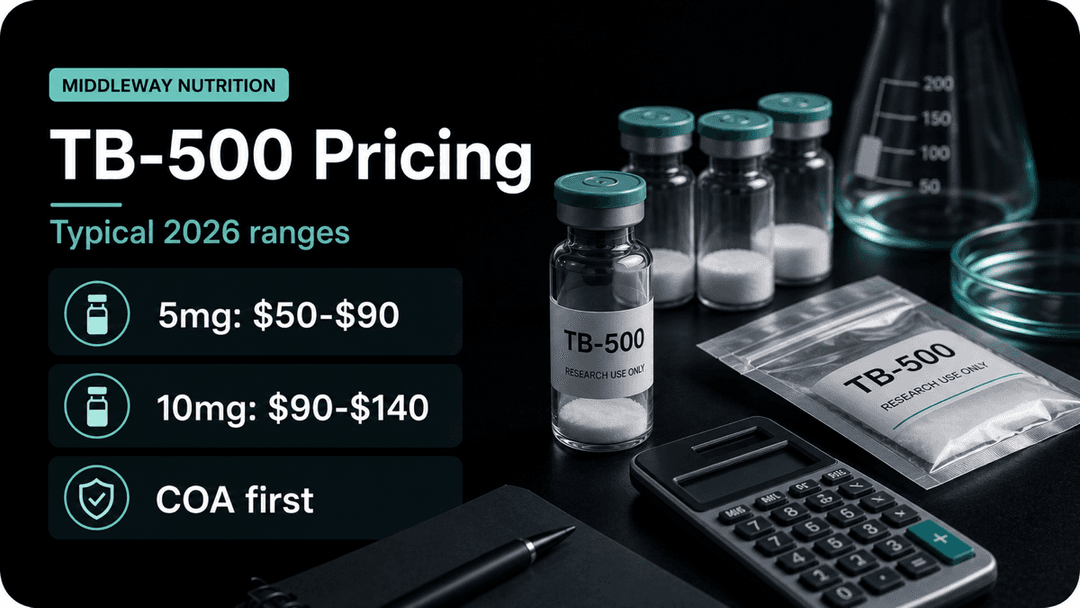
Pricing is all over the map, which tells you a lot about how uneven this market is.
- 5mg vials: roughly $50–$90 from quality vendors. The most common purchase size.
- 10mg vials: roughly $90–$140. Better per-mg value if the testing is real.
- Suspiciously cheap: some sellers list 5mg around $25. That price doesn't cover proper synthesis plus independent testing. Something got cut, usually the COA.
Bulk discounts of 5–10% for buying multiple vials are normal and legitimate. What isn't normal is a brand-new "research lab" undercutting the entire market by half. Spend the extra $20–30 and get the documentation. With a peptide this easy to counterfeit, the cheap vial is the expensive mistake.
Red Flags to Avoid
- No COA, or generic COA only. No batch-specific certificate means no sale.
- Prices far below market. A $25 "5mg" vial almost always means skipped testing or underdosing.
- Medical or dosing claims. Any vendor telling you how to inject TB-500 "for your shoulder" while also calling it a research chemical is talking out of both sides of its mouth.
- No traceable lot numbers or reputation. Check r/Peptides and community boards. Vendors with zero footprint, good or bad, deserve caution.
- Fake scarcity and countdown timers. Pressure tactics correlate strongly with low-quality operations.
How to Get TB-500
Since TB-500 isn't a prescription product, "how to get TB-500" comes down to ordering online from a vetted research-peptide vendor. There's no doctor's visit, no pharmacy, and no insurance involved — but also no regulatory safety net, so the verification work is on you.
The practical sequence: pick a vendor that publishes batch-specific COAs, confirm the purity is ≥98% by HPLC with a matching lot number, place the order (credit card gives you chargeback protection that crypto does not), and check that the lot on the delivered vial matches the certificate. TB-500 ships as a lyophilized (freeze-dried) powder and would be reconstituted with bacteriostatic water in a research setting — never plain tap or non-sterile water. If you're researching it alongside BPC-157, our Wolverine stack dosage breakdown covers how the two are typically paired in the literature, and our look at peptides for recovery is an honest read on where the evidence is actually strong versus thin.
Vendor Comparison Table
Top Vendors
Ranked by purity, third-party testing, COA availability, and price.
>98% HPLC (pass mark) · Kovera Labs, every batch · US only, free over $250
99.4% HPLC · MZ Biolabs · US domestic
>99% · COA provided · Free over $200
Listed · LC + MS docs · Free over $200
≥99% claimed · Stated, limited · Free over $175
≥98% · MZ Biolabs · US domestic
Prices are approximate and change often. Always verify current pricing and COA availability before buying.
Related Buying Guides
Use these next if you are comparing adjacent research-peptide sourcing decisions:
- Where to buy BPC-157
- Where to buy Wolverine Stack
- Where to buy GLOW peptide stack
- Where to buy ARA-290
Frequently Asked Questions
Where can I buy TB-500?
TB-500 is sold by research-peptide and research-chemical vendors online, not by pharmacies or supplement shops. Our top recommendation is Ascension Peptides, which has every batch independently tested by a third-party lab, publishes batch-specific certificates with a >98% HPLC pass mark, and sells TB-500 as a 5mg vial at $54.00 USD within the United States only. Whichever vendor you choose, confirm the lot number on the vial matches the certificate before trusting it.
Is TB-500 legal to buy?
In the US, TB-500 is not a controlled substance and can be sold for laboratory research use. It is not FDA-approved as a drug or supplement, so it cannot legally be marketed for human consumption. It is also on the World Anti-Doping Agency (WADA) prohibited list under peptide hormones (S2), meaning any drug-tested athlete should avoid it. Laws vary by country, so check your local regulations.
How much does TB-500 cost?
In 2026, a 5mg vial from a quality vendor typically runs $50–$90, and a 10mg vial runs about $90–$140. Vials priced around $25 should raise suspicion, since that price rarely covers proper synthesis plus independent batch testing. Bulk orders usually earn a 5–10% discount.
How do I know my TB-500 is real and high purity?
Demand a batch-specific certificate of analysis whose lot number matches your vial. It should show ≥98% purity by HPLC and, ideally, mass-spec identity confirmation matching the ~4963 g/mol molecular weight. Verify that the testing lab (for example Janoshik or MZ Biolabs) is real and that you can open the COA without an account. No lot number or no chromatogram means treat it as unverified.
Do I need a prescription for TB-500?
No. TB-500 is not an approved prescription medication, so there is no prescription pathway. It is sold only as a research chemical from peptide vendors. That also means there is no medical oversight or regulatory guarantee of quality, so verifying the COA yourself is essential.
What is the difference between TB-500 and BPC-157?
Both are popular research peptides studied for tissue repair, but they're different molecules with different mechanisms. TB-500 is based on thymosin beta-4 and is studied largely for actin regulation, cell migration, and angiogenesis, while BPC-157 is a gastric-derived peptide studied for gut and connective-tissue healing. They're frequently researched together in the Wolverine stack.
The Bottom Line on Where to Buy TB-500
TB-500 is easy to find and easy to get burned on. The compound itself has a real research pedigree through thymosin beta-4, but the grey market around it is full of recycled certificates, mystery purity, and prices that are too good to be true. Your framework should stay simple: COA first, reputation second, price last.
Ascension Peptides clears all three bars with batch-specific third-party certificates, a >98% HPLC pass mark, and a 5mg price inside the fair range. If you're ready to order, that's where I'd start — and verify the lot number against the COA the moment it arrives.
Medical Disclaimer: This article is for informational purposes only and is not medical advice. TB-500 is not FDA-approved and is sold strictly as a research chemical, not for human or veterinary use. It is not intended to diagnose, treat, cure, or prevent any disease. TB-500 is prohibited by WADA for competitive athletes. Always consult a qualified healthcare provider before considering any new compound, and understand that purchasing research peptides carries legal and health risks that vary by jurisdiction.