Most people find BPC-157 the same way. They hear it heals tendons, gut issues, and joints. They search for the easiest way to take it. Capsules pop up everywhere with bold claims and clean packaging. Some guy on a podcast says he takes five a day and his shoulder feels great.
So you buy a bottle.
What nobody tells you upfront is that swallowing a peptide capsule is nothing like swallowing a fish oil pill. The mechanism matters. The form matters. And most of what passes for advice online is either copied from a vendor's sales page or filtered through so much hype that the actual science got lost three upvotes ago.
This is the article I wish existed when I started looking into this.
The Stats at a Glance
| What You Want to Know | The Short Answer |
|---|---|
| Oral bioavailability of standard BPC-157 | Low. Peptides get broken down in your gut before absorption |
| What arginate form changes | Better stability through digestive tract, higher absorption potential |
| Typical capsule dose | 250 mcg to 1,000 mcg per capsule |
| How long to know if it is working | 2 to 4 weeks minimum for gut issues, 4 to 6 weeks for tendons and joints |
| Best capsule form for gut targeting | Standard BPC-157 capsules, because local GI exposure is the goal |
| Best capsule form for systemic goals | Stable BPC-157 arginate, because it survives digestion better |
Key Takeaways
BPC-157 capsules work differently than you probably think they do. The gut lining absorbs intact peptides very poorly in most cases, but BPC-157 is an exception for a specific use case: gut-directed therapy. If you want systemic healing in tendons and muscles, injectable is the more reliable route. Stable arginate capsules are the exception, representing a genuine attempt to solve the absorption problem. Side effects exist and are specific enough to name. And the supplier you choose matters more than the form you choose.
What People Think BPC-157 Capsules Do (And Where the Thinking Goes Wrong)
The fantasy goes like this. You swallow a capsule. The peptide dissolves in your stomach. It travels through your bloodstream. It finds the damaged tissue. Healing happens.
That is not how oral peptides work for most people.
Your digestive system is a hostile environment for proteins and peptides. Stomach acid denudes them. Proteolytic enzymes chew them apart. By the time anything reaches your small intestine intact, the dose you swallowed has been materially reduced. This is true for almost every peptide you can name.
BPC-157 is different in one specific way. Researchers have studied its stability in gastric juice and found it holds up better than most peptides under acidic conditions. This stability is the scientific basis for the entire oral BPC-157 market. But stability in a lab vial and effective absorption in a human gut are not the same thing.
Studies using radio-labeled BPC-157 in rats showed some intact peptide appearing in blood plasma after oral administration, but the percentage absorbed was small relative to injected equivalents. No large-scale human oral bioavailability study exists. The numbers floating around online claiming specific percentages like "5% oral bioavailability" are extrapolations from animal data, not measured human data.
Where this matters most: if you are taking capsules for a systemic effect like tendon repair or muscle healing, the amount of intact peptide that reaches your bloodstream may be substantially lower than the dose on the label.
The one legitimate exception is gut-directed use. If your goal is treating a stomach ulcer, leaky gut, or inflammatory bowel condition, then oral BPC-157 makes more sense. You do not need systemic absorption. You need the peptide to interact with the gut lining directly. For that specific use case, standard capsules are a legitimate option.
How BPC-157 Actually Works
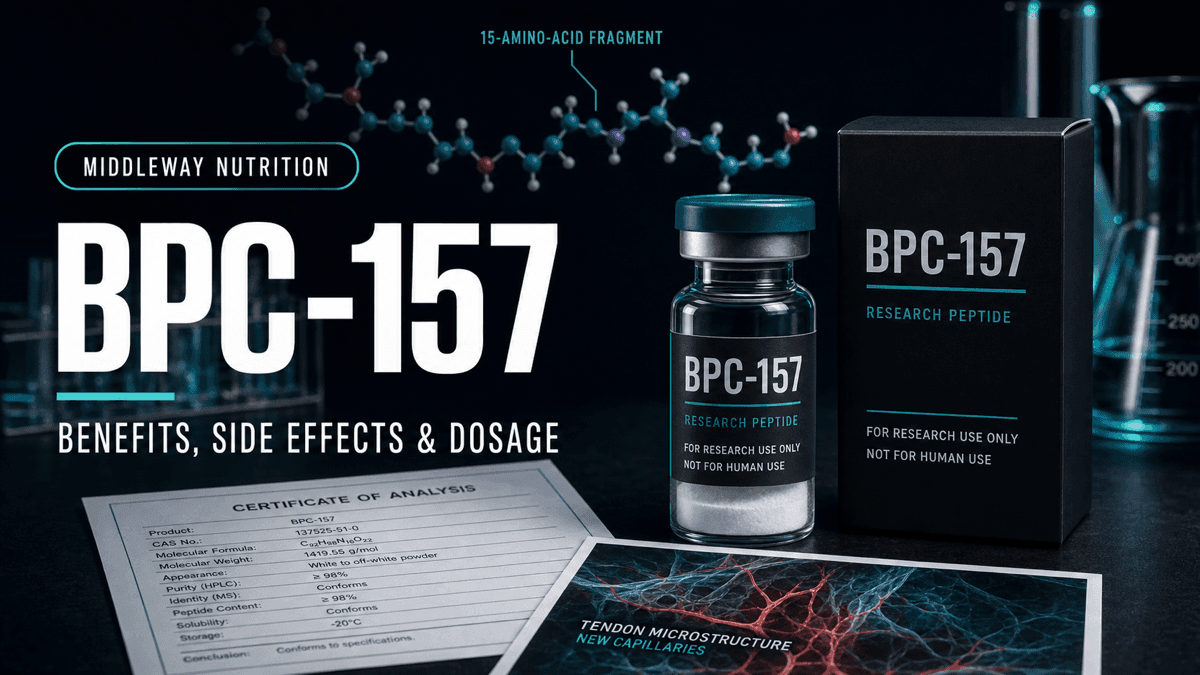
BPC-157 stands for Body Protection Compound-157. It is a synthetic peptide made of 15 amino acids, modeled after a protein fragment found naturally in human gastric juice.
Researchers in Croatia discovered it in the 1990s while studying how the stomach protects and repairs its own lining. What they found was a compound that appeared to do three things consistently across animal studies.
First, it promotes angiogenesis, encouraging new blood vessels to grow into damaged tissue. Without blood supply, nothing heals. Second, it modulates inflammatory pathways, guiding inflammation toward resolution rather than shutting it down entirely. Third, it appears to stabilize the gastrointestinal lining and protect it against damage from NSAIDs, alcohol, and stress. This third effect is the most reproduced finding and the reason gut-focused oral use has any scientific basis.
The mechanism is not fully characterized. Researchers describe BPC-157 as having pleiotropic effects, meaning it seems to do multiple things and we are not entirely sure which one is driving the results. It interacts with the nitric oxide pathway, growth factor signaling, and has been shown to upregulate genes involved in tissue repair.
In rats and mice, these effects have generated over 35 published preclinical studies. The human data is where things thin out considerably.
What Oral Bioavailability Actually Looks Like
Whole peptide molecules in oral formulations face a brutal gauntlet. Your digestive system is optimized for breaking down the things you eat. Peptides are proteins. Your body treats them like food unless specific engineering prevents it.
BPC-157 has a documented advantage: it shows stability in gastric juice for hours in vitro. But resistance to acid is not the same as absorption.
For a peptide to be systemically available from an oral dose, it must survive the stomach, resist intestinal enzymes, cross the gut epithelium, and exit into portal circulation without being further degraded in the liver on first pass. This is a tall order for any 15-amino-acid molecule.
What the research literature demonstrates is that oral BPC-157 produces measurable effects in the gastrointestinal tract of animals, with lower systemic distribution compared to injected forms.
Capsule proponents argue that the arginate salt form or absorption-enhancing formulations solve this problem. Some of that argument has merit. But nobody has published a head-to-head human bioavailability study comparing oral BPC-157 capsules to injectable in the same subjects. The data you see online is either manufacturer claims, extrapolated animal numbers, or user anecdotes.
If you want to maximize systemic peptide exposure, injectable is the more reliable delivery method. If you want to target gut tissue specifically, oral capsules are a reasonable approach with some mechanistic backing.
What BPC-157 Capsules CAN Do (And What They Cannot)
Capsules can deliver BPC-157 to your gut lining. The peptide can interact with GI tissue directly, which is why people with stomach ulcers, gut inflammation, or leaky gut have a legitimate rationale for oral use that goes beyond convenience.
Capsules cannot reliably deliver meaningful systemic doses. If you are taking capsules hoping to heal a torn rotator cuff, a chronic Achilles tendon issue, or generalized muscle damage, you are working at a disadvantage compared to someone injecting.
Capsules with the stable arginate form sit in a gray zone. The arginate modification protects the peptide through digestion. Some manufacturers claim significantly higher bioavailability for arginate versus standard acetate forms. The science is plausible but not confirmed in solid human trials. Products like ProHealth's Stable BPC-157 Arginate publish third-party testing, which is more than most vendors offer.
Capsules also cannot substitute for injectable BPC-157 in acute injury protocols. If you have a serious tendon rupture, surgical recovery, or significant joint injury, the evidence for systemic peptide therapy strongly favors injection.
Stable BPC-157 Arginate Form: Is It Different?
BPC-157 arginate is BPC-157 bound to arginine, an amino acid. The modification serves a specific purpose. Arginine salts tend to be more stable in acidic environments than peptide acetates.
Standard BPC-157 is often supplied as an acetate salt. It is cheaper to produce and widely available. But acetate forms can be less stable through the GI tract. Arginate forms address this.
Products like Stable BPC-157 Arginate represent a genuine attempt to solve the bioavailability problem rather than just market around it. Whether arginate form significantly outperforms standard capsules for systemic absorption remains an open research question. The pharmacology is more favorable.
If you are going to take capsules and you care about absorption, the arginate form is worth paying for.
Who Should Take Capsules vs Who Should Inject
Take capsules if your primary goal is gut repair, if you have an absolute aversion to needles, or if you are using BPC-157 as a supportive GI protective agent alongside other therapies.
Inject if you are targeting tendons, ligaments, muscle tears, joint damage, or any condition where systemic distribution matters. Injectable BPC-157 has better documented tissue penetration in animal models.
Some people stack both. Oral capsules for gut maintenance, injectable for targeted injury work. This is not unreasonable, though it adds cost.
Do not let the convenience of capsules override the reality of what you are trying to accomplish. A capsule that is easier to take but delivers insufficient peptide to the right tissue is not a good trade.
Side Effects: Be Specific
BPC-157 is not side-effect free. Here is what is actually reported.
Nausea and digestive upset are the most common short-term effects, particularly with oral capsules taken on an empty stomach. Taking capsules with a small amount of food can reduce this.
Headaches appear in a subset of users, typically early in the protocol and resolving within the first week. This may relate to nitric oxide pathway modulation.
Temporary blood pressure changes have been reported anecdotally. BPC-157 interacts with the nitric oxide system, which regulates vascular tone. Some users report mild hypotension shortly after dosing. Worth knowing if you are on blood pressure medication.
Injection site reactions are specific to injectable forms and include pain, redness, and in some cases nodules with repeated subcutaneous administration. Rotating injection sites mitigates this.
Angiogenesis concern deserves its own mention. BPC-157 promotes new blood vessel formation. This is the mechanism behind most of its healing benefits. It is also the theoretical basis for concern about tumor growth, since tumors require new blood vessels to expand. There is no evidence BPC-157 causes cancer in humans. There is also no long-term safety data. Anyone with a personal or family history of cancer should discuss this with a physician before using BPC-157.
Contamination risk is real and under-discussed. Because BPC-157 is unregulated in most markets, contaminated or mislabeled products cause the most severe adverse events attributed to BPC-157. Buying from sources without third-party COA verification is not a place to cut costs.
Where to Get BPC-157 Capsules If You Decide Capsules Are Right for You
If you have read this far and decided that capsules are the right format for your situation, your sourcing decision matters enormously.
The gray market for peptides is exactly as dangerous as described. Untested capsules from Amazon, eBay, or unknown overseas laboratories have been analyzed in independent testing and found to contain wrong dosages, contaminants, and in some cases nothing resembling the labeled peptide.
My first choice for BPC-157 is Ascension Peptides, with one important caveat: Ascension sells the injectable vial only (BPC-157, 10mg), not capsules. Every batch is independently tested by a third-party lab, and the batch-specific certificates in its public COA library cover HPLC purity (>98% pass mark), LC-MS identity, net content, endotoxin, sterility and heavy metals, so the results you are reading belong to a specific lot rather than to a sample from last year. The 10mg vial is $49.00 USD, and shipping is US-only, free over $250. If a vial works for your protocol, that is the batch documentation I would want behind it, and vial sizes and lot verification are covered in our BPC-157 for sale guide.
Do not buy peptides from vendors who will not share their Certificate of Analysis. The only evidence that matters is a third-party lab test showing purity and potency for the specific batch you are buying. For a broader vendor comparison, see our guide on where to buy peptide capsules online.
Frequently Asked Questions
Are BPC-157 capsules as effective as injectable? No, for systemic effects. Injectable BPC-157 delivers the peptide directly to systemic circulation. Capsules deliver lower systemic doses, particularly with standard formulations. For gut-directed use, oral capsules may actually be preferable because they concentrate the peptide where you want it.
How long does it take for BPC-157 capsules to work? For gut-related issues, some users report improvement within 1 to 2 weeks. For tendon and joint applications, plan on a minimum of 4 to 6 weeks before assessing effect. If nothing changes after 8 weeks at appropriate dosing, the format or source may be the problem.
What is the difference between BPC-157 acetate and arginate? Acetate is the standard salt form, cheaper, and less stable through digestion. Arginate is modified for better GI stability and potentially higher absorption. If choosing capsules, arginate forms are worth the extra cost.
Can I take BPC-157 capsules with other supplements? Generally yes, but separate them from heavy protein meals or digestive enzyme supplements, which may degrade the peptide before absorption. Most users take capsules on an empty stomach twice daily.
Is BPC-157 legal? BPC-157 is not FDA-approved for any medical use. It is not a controlled substance for personal possession in most jurisdictions. However, compounding pharmacies cannot legally create it for human use under current FDA guidance, and WADA bans it in athletic competition.
Does BPC-157 cause cancer? There is no direct evidence that BPC-157 causes cancer in humans. The angiogenesis mechanism raises theoretical concern in people with existing tumors or high cancer risk. Anyone with a cancer history should not use this compound without explicit physician guidance.
Related Articles
If you found this useful, you might also want to read about what is the wolverine stack and the wolverine stack side effects before considering any peptide protocol.
References
- Sikiric P, Rucman R, Turkovic B, et al. Stable Gastric Pentadecapeptide BPC 157, Robert's Stomach Cytoprotection/Adaptive Cytoprotection/Organoprotection, and Selye's Stress Coping Response. PMC, National Library of Medicine. PMC7096228
- Modulatory effect of gastric pentadecapeptide BPC 157 on angiogenesis in muscle and tendon healing. PubMed. 20388964