Ipamorelin for sale runs about $50.00 for a 5mg vial, or $10.00 per milligram, and the only thing separating a real vial from an expensive one is a batch-matched certificate of analysis you can actually read. Prices, market ranges and the verification steps are below.
Key Takeaways
- Current 5mg pricing sits around $50.00, or $10.00 per milligram, so compare per milligram, because larger vials usually win on value
- Novo Nordisk developed ipamorelin and abandoned it before approval. Nothing sold today is a medicine, and no vendor can legally sell it for human use
- A COA is only worth reading if its lot number matches the one printed on your vial. Generic product certificates prove nothing
- HPLC purity tells you how clean the sample is. Mass spectrometry tells you whether it is ipamorelin at all. You need both
- CJC-1295/ipamorelin blends are the easiest listing to fake, because one combined purity number hides the ratio
Ipamorelin price and specs
| Spec | Detail |
|---|---|
| Vial size | 5mg |
| Price | $50.00 USD |
| Cost per mg | $10.00/mg |
| Purity | >98% by HPLC (certificate pass mark), every batch third-party tested |
| Third-party COA | Batch-specific, current batches by Kovera Labs, in a public library |
| Form | Lyophilized powder, sealed glass vial |
| Shipping | US only; free over $250 |
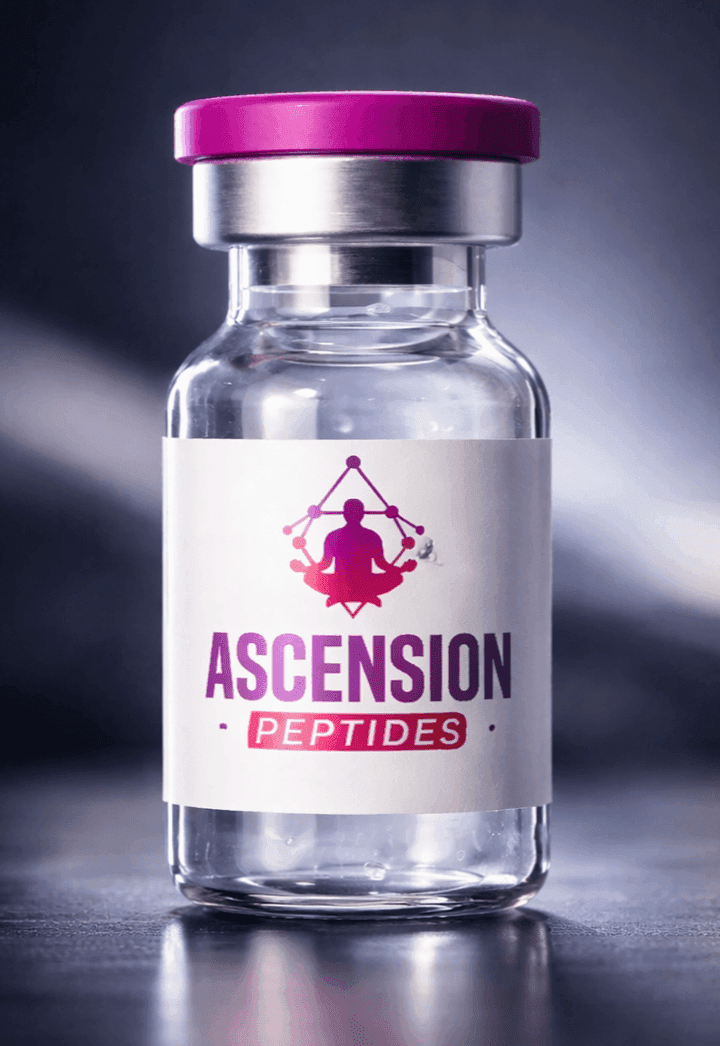
Ascension Peptides pricing as checked on 27 September 2026. Prices move, so check the live listing before ordering: Ascension Peptides publishes batch-specific certificates covering HPLC purity, LC-MS identity, net content and endotoxin in a public certificate library, so you can match the report to the batch you received.
Across the wider market, 5mg vials generally run $30 to $55 and 10mg vials $30 to $70, with bulk tiers lower. Compare per milligram, not per vial, because the 10mg is usually better value. Prices far below that floor are a warning rather than a bargain: a seller pricing under the cost of producing and testing real material skipped the testing, underfilled the vial, or is shipping something else. A high price, on its own, buys you nothing. Price is a filter, never a proxy for quality.
For the vendor-by-vendor comparison, see our guide to where to buy Ipamorelin. The rest of this page is about the document that decides whether your vial is real.
What you are actually buying
Ipamorelin is a synthetic pentapeptide, sequence Aib-His-D-2-Nal-D-Phe-Lys-NH2, molecular weight near 712 g/mol. It acts as a selective agonist at the ghrelin/growth hormone secretagogue receptor, prompting the pituitary to release a pulse of growth hormone. Its reputation rests on that selectivity: unlike earlier secretagogues, it triggered GH release without meaningfully dragging cortisol, ACTH, and prolactin along with it.
Novo Nordisk developed it and never carried it to approval, which is the whole reason a grey market exists. Everything on sale today is research material from contract synthesis labs of varying competence, relabeled and resold. The molecule is well characterized. The supply chain is not.
When a pharmacy sells you a drug, four parties have already checked it: the manufacturer under audited quality systems, the regulator, the distributor, and the pharmacist. When a peptide site sells you ipamorelin, one party has checked it, and that party is the one taking your money. That is not automatically sinister. Plenty of vendors do honest work. But the burden of verification transfers entirely to you, and the "research use only" line on every checkout page is doing real legal work. It is the condition under which the sale is legal at all.
So you are not comparing brands. You are comparing evidence.
How to read an Ipamorelin COA
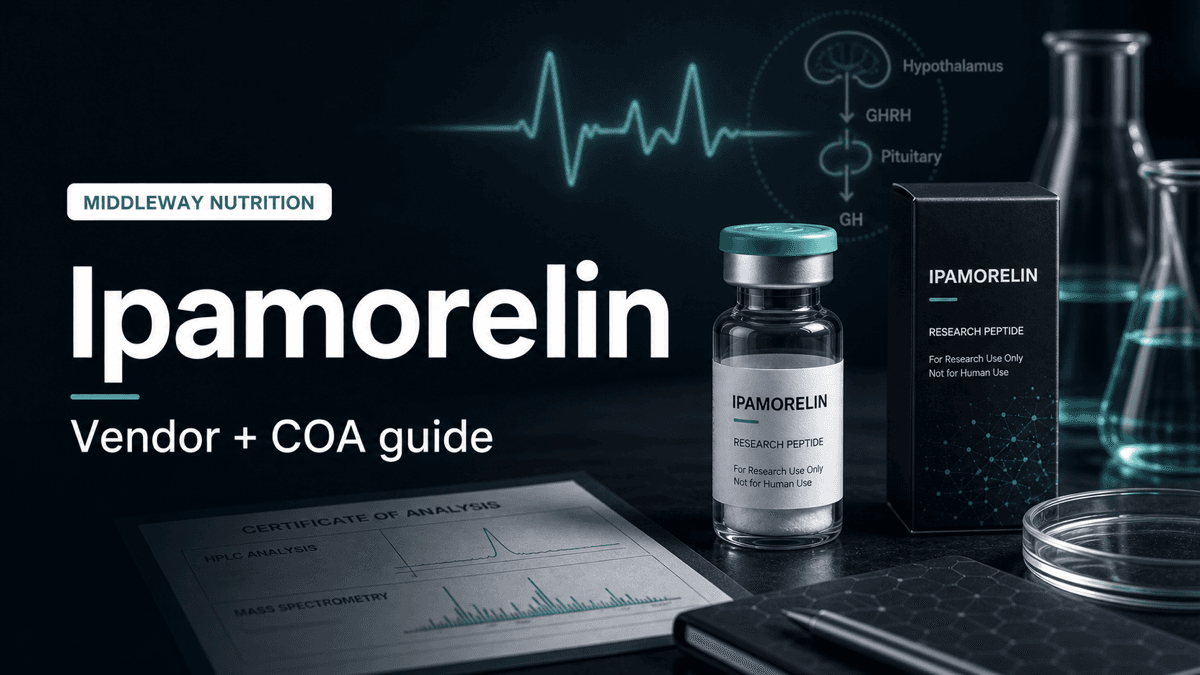
Most buyers glance at a COA, see a big purity number, and stop. That number is the least useful thing on the page, because it is trivially easy to type. Work through it in this order instead.
Start with the lot number. The batch number on the certificate and the one printed on the vial must match. If the vendor publishes a COA for the product rather than the batch, that is marketing, not analysis. Synthesis runs vary, and a certificate from a run eighteen months ago says nothing about the vial in your hand.
Check the analysis date. Lot-specific and within roughly six months. An undated report is a non-report.
Read the identity test before the purity test. Mass spectrometry should confirm a mass near 712 Da. This is the line that rules out substitution: 99% purity means nothing if the 99% is a cheaper peptide, and GHRP-2 and GHRP-6 both are. Without a mass spec trace you cannot exclude them.
Then read HPLC purity. For research-grade material, 98% or higher is the working standard, the low-to-mid 90s is mediocre, and anything below that is unsuitable. Look for the actual chromatogram. It shows the main peak and the impurity peaks beside it; a typed "99.9%" with no trace behind it is just an assertion.
Look for what is missing. Water content, net peptide content, and endotoxin data are routinely omitted. Net peptide content matters more than buyers realize: lyophilized powder carries residual salts and water, so a vial can be genuinely 99% pure by HPLC and still hold less peptide than the label claims.
The blend problem
Ipamorelin is often sold blended with CJC-1295, and blends are where verification gets slippery. A blend COA must establish two things separately: the purity of each peptide and the ratio between them. Many report one combined figure, which cannot tell you whether the vial is 5mg/5mg or 8mg/2mg. Insist on per-component data, or buy the two separately.
Third-party testing: independent or it does not count
In-house testing is the vendor grading its own homework. Not worthless, but not evidence. You want a report from an analytical lab with no financial stake in the sale.
Labs appearing frequently in this market include Janoshik Analytical, MZ Biolabs, Kovera, and Peptide Test. Seeing one of those names on a PDF is the beginning of the check, not the end. PDFs are editable and fabricated reports circulate constantly. Where a lab offers report verification, use it rather than trusting the copy hosted on the seller's own server.
Independent testing costs real money per batch and takes weeks. Vendors who pay for it name the lab and publish the report per lot. Silence about testing is usually silence for a reason, and so is a bare purity percentage with no lab attached to it.
What actually arrives
Expect a small sealed glass vial holding a white lyophilized cake or powder, typically 5mg or 10mg, with a flip-top cap. It ships dry and unmixed, without sterile water. Reputable vendors do not ship it pre-reconstituted, because peptides in solution are far less stable than the freeze-dried form.
Store the sealed vial cold and out of light per the vendor's stated conditions. Be suspicious of any seller that includes personal-use dosing instructions in the box. That crosses the line the market's legal footing rests on, and a vendor casual about that is unlikely to be rigorous elsewhere.
Red flags that mean walk away
- No COA, or a COA that appears only after you ask twice
- One certificate reused across every product and every batch
- Vial lot number that does not match the certificate, or an unlabeled vial
- A purity figure with no chromatogram behind it
- No mass spec identity data, leaving substitution entirely unexcluded
- Analysis dates that are old or absent
- A blend sold with one combined purity number and no ratio data
- Pricing far below the market with no stated reason
- A vendor who cannot name the testing lab
- Crypto-only payment plus no refund policy or company details
Any one of these is enough to stop.
The legal and safety reality
Ipamorelin is legal to sell and buy as a research chemical, not for human consumption, and it is approved by no major regulator. It also sits on the World Anti-Doping Agency prohibited list as a growth hormone secretagogue, which matters if you are a tested athlete.
Buying it for personal use sits outside the regulated medical system entirely. No pharmacist reviews it, no manufacturing audit stands behind it, and no liability backstop exists if a batch is contaminated or misidentified. That is the honest trade-off, and no vendor polish changes it.
Quick pre-purchase checklist
- Does a lot-specific COA exist, dated within roughly six months?
- Does the lot number on the certificate match the vial?
- Is there mass spec identity data consistent with ipamorelin, near 712 Da?
- Is HPLC purity 98% or higher, with a visible chromatogram?
- Is net peptide content stated, not just gross vial weight?
- Was the testing done by an independent lab you can name and verify with?
- If it is a blend, are both components reported separately with a ratio?
- Is the price within the normal market range, per milligram?
If you cannot answer yes to all eight, keep your money.
FAQ
How much does Ipamorelin cost?
A 10mg vial runs about $35.88 at current pricing, roughly $3.59 per milligram. Market-wide, expect $30 to $55 for 5mg and $30 to $70 for 10mg. Compare cost per milligram rather than per vial.
Is Ipamorelin legal to buy?
Yes, as a research chemical for laboratory use. It is not FDA-approved for any human indication, so there is no prescription route, and it cannot legally be sold for human consumption. Buying it for personal use falls outside the regulated medical system.
How do I know Ipamorelin is real?
Demand a batch-specific COA showing mass spectrometry identity near 712 Da and HPLC purity of 98% or higher, chromatogram visible, from a named independent lab. Confirm the lot number matches your vial and verify the report with the lab, not the seller's PDF. Identity data is what rules out cheaper substitutes like GHRP-2 or GHRP-6.
Do I need a prescription for Ipamorelin?
No, because there is no approved product to prescribe. Some clinics arrange GH-secretagogue protocols through compounding pharmacies, but that is a separate, more restricted channel, not a prescription for research material sold online.
Where to buy with the paperwork intact
If you have worked the checklist and want a source that already satisfies it, Ascension Peptides is where we send readers: 5mg vials at $50.00, every batch tested by an independent lab (currently Kovera Labs) against a >98% HPLC purity pass mark, LC-MS identity, net-content and endotoxin results, and 85 batch-specific certificates in a public library instead of vague "pharmaceutical grade" language. New customers get 50% off with code PEPTIDEDECK. Verify the COA yourself anyway. That habit is the point of this page.
Medical disclaimer: This article is informational only, not medical advice. Ipamorelin is not an FDA-approved drug and is sold for laboratory research use only, not for human or veterinary consumption. Nothing here endorses self-administering any research compound. Consult a qualified clinician before making any health decision.