PT-141 for sale runs about $25 to $50 for a 10mg vial as of 2026. What separates a real vial from a repackaged one is a batch-specific COA you can open before you pay.
Key Takeaways
- Expect $25 to $50 for a 10mg research-grade vial in 2026. Listings far under that band are usually skipping the testing
- The powder sold online is labeled research use only. The approved product is Vyleesi, a prescription injectable. Same molecule, entirely different oversight
- PT-141 has an unusual identity problem: parent compound Melanotan II differs by roughly 1 Da, so a sloppy mass spec readout cannot tell them apart
- Require a batch-specific COA matching the lot on your vial, plus a visible chromatogram rather than a summary table
- Purity and peptide content are different numbers, and almost no vendor page reports the second
- Our pick is Ascension Peptides: a 10mg vial at $49.00, with batch-specific third-party certificates that include net content per vial
Comparing sellers side by side is a different job; our PT-141 vendor comparison guide covers sourcing in detail.
Our pick: Ascension Peptides
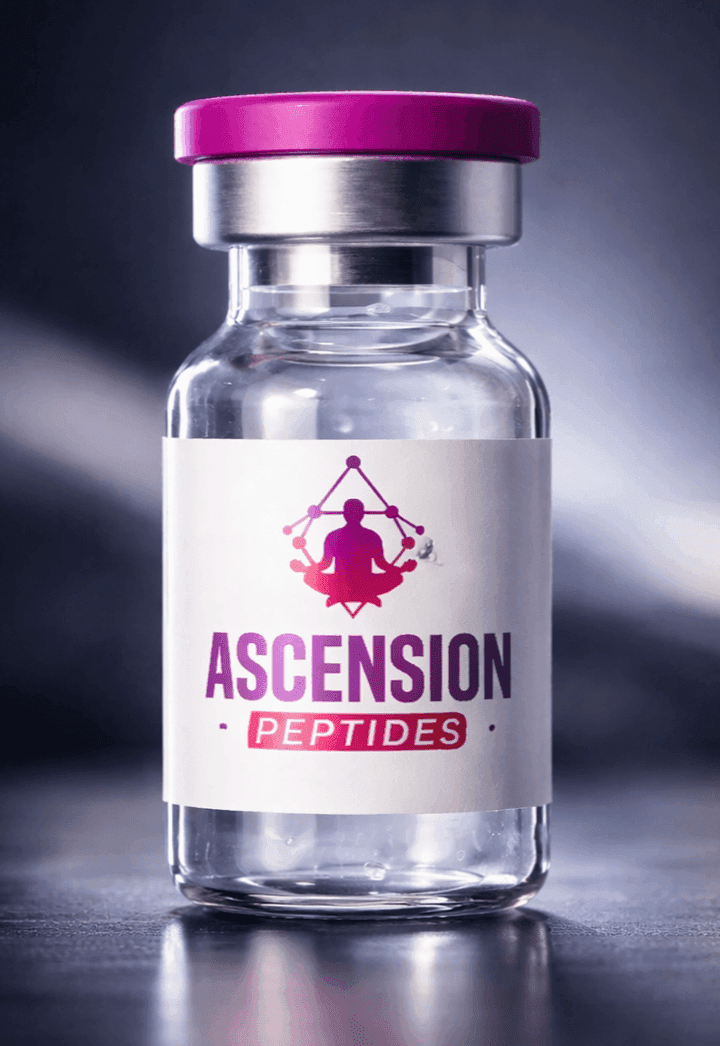
Ascension Peptides is where we would buy PT-141. Its 10mg vial is $49.00 (USD), inside the normal band, and buying 3, 5 or 10 units saves 3%, 5% or 10%.
Every batch is independently tested by a third-party lab, currently Kovera Labs (older batches by MZ Biolabs). The certificates cover HPLC purity, LC-MS identity, net content in mg per vial, endotoxin, a rapid sterility screen and heavy metals, with a pass mark of >98% purity. That net-content line answers the peptide-content question most listings skip. The 85 batch-specific certificates sit in a public COA library you can open before you pay, and when we checked one Kovera report against the lab's own records, it matched.
Ascension ships within the United States only, free over $250. All sales are final, though damaged or incorrect items are replaced if reported quickly. New customers get 50% off with code PEPTIDEDECK.
What you are actually buying
PT-141, or bremelanotide, is a synthetic cyclic seven-amino-acid peptide acting as an agonist at central melanocortin receptors, mainly MC3R and MC4R. It is the deamidated metabolite of Melanotan II. The reference numbers you should expect on paperwork: molecular formula C50H68N14O10, molecular weight approximately 1025.2 g/mol, CAS 189691-06-3.
When a site advertises PT-141 for sale, it is offering a laboratory chemical marketed explicitly as not for human or animal consumption. No agency verifies purity, sterility, fill accuracy, or endotoxin load before shipping. The seller alone decides which tests to run and publish, and there is no pharmacist, no chain of custody, and no recall mechanism if a batch is wrong.
Here is the trap specific to this compound. Bremelanotide was approved by the FDA in 2019 as Vyleesi, a prescription injectable from Palatin Technologies. That is a real approval of a real drug, and it says nothing about a grey-market vial. Research powder shares the molecule and nothing else. When a listing leans on "clinically studied" or "FDA-approved compound," it is borrowing credibility that does not transfer to the lot in your hand.
Reading a PT-141 COA properly
Most buying advice stops at "look for a COA." That is the easy part. The certificates on product pages fall into very different tiers: empty placeholders, links that reference reports without displaying one, and genuine chromatography and mass spec documents. That gap is the whole ballgame.
Match the lot number. A product-level certificate describes a product line and may reflect a synthesis run from a year ago. A batch-specific certificate names the exact lot printed on your vial. If those two strings do not match, the document tells you nothing about what you received.
HPLC purity. Chromatography reports what fraction of the sample is the intended compound. Treat 98% as the floor. Honest certificates show the actual trace rather than a number typed into a table, and a page-level purity graphic with no document behind it is worth nothing.
Mass spectrometry identity, with a caveat that matters here. The expected mass is about 1025.2 Da. Melanotan II, the cheaper parent compound, comes in near 1024.2 Da, roughly one mass unit apart. A low-resolution or vaguely reported mass spec result is therefore not sufficient identity confirmation for this peptide, in a way that is not true for most others. You want a spectrum resolved enough to separate them, ideally alongside a retention time on the chromatogram. Substituting the cheaper melanocortin is the most economically obvious adulteration in this category, and a summary table hides it perfectly.
Peptide content and endotoxin. Lyophilized peptides carry counter-ions such as acetate or TFA plus residual moisture, so a vial can be 99% pure by HPLC and still fall short of the labeled milligrams. Purity answers what fraction of the material is PT-141; peptide content answers how much PT-141 is in the vial. A LAL endotoxin result is a differentiator nearly every listing omits.
Third-party testing: independent, or it does not count
In-house testing is a vendor grading its own homework. Independent analysis means the batch traveled to an outside lab whose report can be checked against that lab, not merely downloaded from the seller. A familiar lab name is not the finish line, because a PDF is a file anyone can edit. This is why a certificate naming both the lab and a report number you can quote back is more useful than a bare percentage: you can go and check it. No findable lab, or no report ID and lot number, means the claim is unsupported.
Pricing sanity check
PT-141 is a short peptide and inexpensive to synthesize, which keeps legitimate pricing in a fairly narrow band:
- 10mg vial: roughly $25 to $50 from a vendor that publishes testing.
- Bulk tiers: modestly lower per vial at three, five, or ten units. Single-digit percentage steps are typical.
- Coupon stacking: many sites list a high "regular" price and cut it steeply with a code. The discounted number is the real price; the original is marketing.
Use price as a diagnostic, not a target. Independent analysis costs real money per batch, so a price well under the pack usually means testing was skipped, the fill is short, or the material is not what the label says. A mid-range vial with a verifiable chromatogram and a resolved mass spectrum beats a cheap one carrying a "99.9% pure" graphic. Paying above the range guarantees nothing either. For a wider spread of suppliers, a broader PT-141 for sale comparison is worth scanning first.
What physically arrives
A small sealed glass vial with a flip-top cap, holding white to off-white lyophilized powder as a thin cake or barely visible film. At 10mg the quantity is small, so a vial that looks nearly empty is normal, not evidence of being cheated. Diluent is essentially never included.
The label should carry the compound name, quantity, and a legible lot number you can match against the certificate. Handwritten labels, or a vial arriving loose, point to corner-cutting upstream.
Red flags that mean walk away
- No COA, or a COA with no lot number. No document, no purchase.
- A certificate placeholder, or a "COA available" link that goes nowhere. Common even on well-ranked, professional-looking stores.
- One certificate reused across every product. A marketing asset, not a test result.
- Purity claimed on the page but absent from the document. A banner is a claim; a chromatogram is data.
- Mass spec reported only as a rounded number. Given the one-unit gap to Melanotan II, that is not identity confirmation.
- Human dosing instructions on a research-use-only listing. A seller explaining how to inject what it legally cannot sell for injection will say anything.
- Crypto-only or wire-only payment, prices far below the market band, or manufactured scarcity from a vendor with no traceable history.
Legal and safety reality
Research-grade PT-141 is not a controlled substance in the US, which is why these listings are openly public. It is also not approved for any use in the form being sold, and the research-use-only label is legally load-bearing rather than a formality. There is no prescription route for research material, so no clinician reviews your health history and no adverse-event system captures what happens next. Import rules also vary: material shipping freely inside the US can be detained at other borders.
Pre-purchase checklist
- Form and size: 10mg lyophilized powder, not a pre-mixed spray.
- COA public and open-able before you add to cart.
- Certificate lot number matches the lot on the vial.
- HPLC purity 98%+ with the chromatogram shown.
- Mass spec near 1025.2 Da, resolved enough to exclude Melanotan II at 1024.2.
- Testing lab exists independently of the seller.
- Price inside the $25 to $50 band.
- Research framing, no dosing instructions.
- Payment method that preserves a dispute path.
- On arrival: sealed vial, printed label, legible lot number.
Frequently Asked Questions
How much does PT-141 cost?
Roughly $25 to $50 for a 10mg research-grade vial. Prices well below that band usually reflect skipped testing or a short fill rather than a deal.
Is PT-141 legal to buy?
PT-141 is not a controlled substance in the US and sells legally as a research chemical labeled not for human consumption. Bremelanotide is separately approved as the prescription drug Vyleesi, but that approval covers the pharmaceutical product, not grey-market powder.
How do I know PT-141 is real?
Documentation, not appearance. Require a batch-specific COA whose lot matches your vial, HPLC purity of 98%+ with a visible chromatogram, and mass spectrometry confirming a mass near 1025.2 Da with enough resolution to rule out Melanotan II at 1024.2. Then confirm the lab exists independently of the seller.
Do I need a prescription for PT-141?
Not for the research powder, which is exactly why verification falls entirely on you. A prescription is required only for Vyleesi, the approved bremelanotide product.
Where to buy with verification you can actually check
If you have worked the checklist and want a source that already satisfies most of it, judge candidates on their paperwork rather than their presentation: per-batch third-party certificates from named outside labs, carrying report numbers you can quote back, tied to the lot printed on your vial rather than to the product line, and open-able before you pay. It is research material, not medicine, and a listing that pretends otherwise has told you something. Our starting point is Ascension Peptides, whose PT-141 10mg is $49.00 with public batch certificates, and code PEPTIDEDECK takes 50% off a first order. Whatever you decide: open the certificate before you open your wallet.
Medical disclaimer: Research-grade PT-141 is sold for laboratory use only. It is not approved by the FDA in this form, is not intended to diagnose, treat, cure, or prevent any disease, and is not for human or animal consumption. The approved drug form, Vyleesi (bremelanotide), is available only by prescription for a specific indication. This article is informational, not medical advice, and not an endorsement of self-administering an unapproved compound. Consult a qualified healthcare professional before considering any new compound.