This SS-31 dosage chart keeps three kinds of numbers apart: the dose on the FDA label for elamipretide, the doses used in published trials, and the much smaller amounts people on Reddit say they inject. Elamipretide is the same molecule as SS-31, and since September 2025 it has had one approved use and one approved dose. Everything else, including every number below the label, is research or anecdote, not a prescription.
Key Takeaways
- SS-31 and elamipretide are the same peptide. The FDA granted accelerated approval to the brand Forzinity on September 19, 2025, for Barth syndrome in patients weighing at least 30 kg. The labeled dose is 40 mg subcutaneously once daily, or 20 mg if eGFR is under 30 and the patient is not on dialysis
- Human subcutaneous trials used 40 mg a day, apart from one 4 mg arm in a heart failure study. The larger trials outside Barth syndrome missed their main endpoints
- Of 10 Reddit comments that named a daily dose, all started at 5 mg or less and none reported more than 10 mg. That is a small, self-selected sample, not advice, and it is far below the label dose
- A 10 mg vial plus 2 mL of water is 5 mg/mL, so 50 units on a U-100 syringe is 2.5 mg, not 10 mg. Unit errors are the most common mistake in vial questions
- Research-vial SS-31 is not the licensed product. This page is information, not medical advice
SS-31 dosage chart: what the label and trials used
Start with the numbers that come from a regulator or a paper, because the rest of the internet mostly skips them. The table below lists every dose I could verify against the FDA label or a PubMed abstract.
SS-31 (elamipretide) doses as written on the label and in published studies
| Dose as published | Route and schedule | What it was | |
|---|---|---|---|
| FDA label, Barth syndrome | 40 mg | Subcutaneous, once daily, patients 30 kg or more | Accelerated approval, September 2025 |
| Label, severe kidney impairment | 20 mg | Subcutaneous, once daily; eGFR under 30 and not on dialysis | Half the standard dose |
| TAZPOWER, Barth syndrome | 40 mg per day | Subcutaneous; 12 weeks, then open-label extension to 168 weeks | 12 patients; primary endpoints missed |
| MMPOWER-2, mitochondrial myopathy | 40 mg per day | Subcutaneous for 4 weeks, crossover | 30 patients |
| MMPOWER-3, mitochondrial myopathy | 40 mg per day | Subcutaneous for 24 weeks | 218 patients; primary endpoints missed |
| PROGRESS-HF, heart failure | 4 mg or 40 mg per day | Subcutaneous for 28 days | 71 patients; no change in heart volume |
| Infusion trials | 0.005 to 0.25 mg/kg per hour | Intravenous, 1 to 4 hours | Heart failure, heart attack, myopathy |
| Aged mice | 3 mg/kg | One intraperitoneal injection | Animal study, muscle energetics |
The pattern is blunt. When elamipretide was given under the skin to people, the dose was 40 mg a day. The one exception is a 71-patient heart failure study that also tested a 4 mg arm for 28 days and saw no difference in left ventricular volume against placebo at either dose (PMID 32068002). The label adds that exposure rises in proportion to dose across 2 to 80 mg daily, which says the drug behaves predictably, not that a lower dose works.
The infusion rows are easy to misread. Intravenous studies gave 0.005 to 0.25 mg/kg per hour for one to four hours (PMIDs 29217757, 29500292 and 26586786). That is a rate, not a daily injection. Some online charts turn "0.25 mg/kg" into a daily subcutaneous dose, and that conversion appears in none of these papers.
Results matter for context. The phase 3 trial in primary mitochondrial myopathy randomized 218 people to 40 mg a day or placebo for 24 weeks and missed both primary endpoints, with a six-minute walk difference of -3.2 meters (PMID 37268435). The Barth syndrome crossover also missed its primary endpoints at 12 weeks (PMID 33077895). A 168-week extension followed 8 of the 10 patients who continued (PMID 38602181). In a single 2-hour infusion given to 39 older adults with poorly functioning mitochondria, muscle mitochondrial capacity rose right afterward and the effect was gone by day 7 (PMID 34264994). Nothing here shows what a low daily dose does in a healthy adult.
Is SS-31 approved, and what does that cover?
I checked the FDA press release, the label (revised September 2025) and the current DailyMed listing, which carries the same dose text. Forzinity is approved under accelerated approval to improve muscle strength in adults and children with Barth syndrome weighing at least 30 kg. The approval rests on knee extensor strength seen in the open-label extension, not on the randomized portion, and the FDA label states the drug was not superior to placebo on the trial's primary endpoints. A confirmatory trial is required. Company news says a phase 4 trial has started, but I did not verify its status from a primary source.
The product is a ready-to-use solution at 80 mg/mL, supplied as a 280 mg vial, where 0.5 mL delivers 40 mg. It contains benzyl alcohol as a preservative, is refrigerated, and any opened vial is discarded after 8 days. The label's main safety items are injection site reactions (all 12 treated patients had redness, against 3 of 12 on placebo) and hypersensitivity reactions that can be serious.
What that does not cover: a lyophilized "SS-31" vial from a research supplier is a different article. It is not made or inspected as a drug, it carries no label dose, and the approval says nothing about using it for energy, longevity, kidney disease or athletics. For the overview of what the peptide is, see our SS-31 peptide guide.
What Reddit users report taking
I read a file of 343 posts and comments from 25 threads across 16 subreddits, dated October 2025 to October 2026. Most of it was off-topic cheat-sheet chatter, bot notices, questions and vendor material. Seventeen comments were first-hand accounts of using SS-31, from three subreddits (13 in r/BodyHackGuide, 2 in r/kidneydisease, 2 in r/NTNPerformance). Ten of them named a daily dose. That is only 17 usable reports, so treat this as a small, self-selected group of people who chose to inject an unapproved product.
Daily SS-31 doses named by Reddit commenters (n = 10 self-reported comments from 2 subreddits, not a study)
The dose range was narrow and low. Three people used 1 to 3 mg, two used about 3.3 to 4 mg, and five started at 4 to 5 mg. Two raised the dose: one went to 7.5 mg in week two, and one said they doubled a 5 mg dose. Eight of 11 comments that gave a frequency said daily, two said five days a week and one said three times a week. Durations ran from 30 days to about 8 weeks, including one 50-day run.
Compare that with the second-hand claim that circulates in the same threads: "SS-31 trials were 40mg a day. Common dosages on Reddit are significantly lower (10mg a day)." (a r/BodyHackGuide commenter, Jun 2026). The first half matches the label. The second half overstates what the people who actually posted a number were taking: none reported 10 mg as a starting dose.
Reported effects were modest and inconsistent. Of the 17 first-hand comments, three described more energy or less lethargy (one after about a week), two kidney patients described easier breathing or better lab values, two reported no noticeable effect, and ten gave no outcome. One commenter who doubled the dose wrote: "I’m not sure if it placebo or actually working but I’m less lethargic." (a r/BodyHackGuide commenter, Jul 2026). The only side effect anyone named was redness and itching at the injection site, from one person, which matches the label. Another commenter in that same thread was blunter about the evidence: "there is just no clinical evidence of any benefit outside of individuals with Barth." (a r/BodyHackGuide commenter, May 2026).
Two accounts came from r/kidneydisease and describe kidney lab values improving. Both people were also using other peptides, a bioregulator supplement, or blood pressure medication, and one noted their underlying disease still progressed. Those are uncontrolled stories, not evidence about SS-31 and kidneys. They are also a safety flag: the label says elamipretide and its breakdown products leave through the urine, and it halves the dose for severe kidney impairment. A person with advanced kidney disease dosing by Reddit anecdote is exactly the case where a clinician should be involved.
Six comments described running SS-31 for two to four weeks before adding MOTS-c. No study has tested that sequence. See MOTS-c vs SS-31 for how the two differ.
Three community cheat sheets in the file also give ranges: 1 to 10 mg a day for 4 to 8 weeks, 5 to 10 mg a day, and a tiered 1 to 2, 3 to 5 and 5 to 10 mg scheme. These are written by community authors, often with affiliate links, and none cites a trial that used those amounts. I did not count them as user reports.
Reconstitution and vial math
Most "dosage" questions in the data were really math questions: how much water for a 50 mg vial, and how many units to draw. One person asked whether 50 units daily was reasonable from a 10 mg vial mixed with 2 mL. That vial is 5 mg/mL, so 50 units is 0.5 mL, which is 2.5 mg. The person may have thought they were drawing 10 mg. The FDA product uses the same 0.5 mL volume for 40 mg, which is sixteen times more concentrated.
The formula: concentration is vial mg divided by mL of water, volume is dose divided by concentration, and units are mL times 100.
Where a 2 mg or 5 mg dose lands on a U-100 syringe
| Concentration | 2 mg draw | 5 mg draw | |
|---|---|---|---|
| 10 mg vial + 1 mL water | 10 mg/mL | 0.2 mL = 20 units | 0.5 mL = 50 units |
| 10 mg vial + 2 mL water | 5 mg/mL | 0.4 mL = 40 units | 1 mL = 100 units |
| 10 mg vial + 3 mL water | 3.33 mg/mL | 0.6 mL = 60 units | 1.5 mL = more than a 1 mL syringe holds |
| 50 mg vial + 2 mL water | 25 mg/mL | 0.08 mL = 8 units | 0.2 mL = 20 units |
| 50 mg vial + 3 mL water | 16.67 mg/mL | 0.12 mL = 12 units | 0.3 mL = 30 units |
| 50 mg vial + 5 mL water | 10 mg/mL | 0.2 mL = 20 units | 0.5 mL = 50 units |
Vial size sets how many days a vial lasts. A 10 mg vial holds five days at 2 mg a day and two days at 5 mg. One commenter used ten 10 mg vials for 3.33 mg a day over 30 days, which is 100 mg in total. At Ascension's current list price of $79.99 per 10 mg vial (checked 2026-10-11), ten vials is $799.90 before shipping. The same 30 days at the 40 mg label dose would need 1,200 mg, or 120 such vials, which is one reason no one reports using it.
Two cautions on the diluent. Two Reddit posts from supplier-affiliated communities say isotonic saline is preferred over plain bacteriostatic water for SS-31. I could not confirm that against a primary source, so I mark it unverified, and the FDA product itself is a buffered solution at pH 4.7 to 6.1, not a mix of powder and water. Also check whether a vial's stated milligrams are net peptide or a salt: the label's 40 mg dose equals 46.8 mg of elamipretide hydrochloride, a 17 percent gap that a certificate of analysis should state.
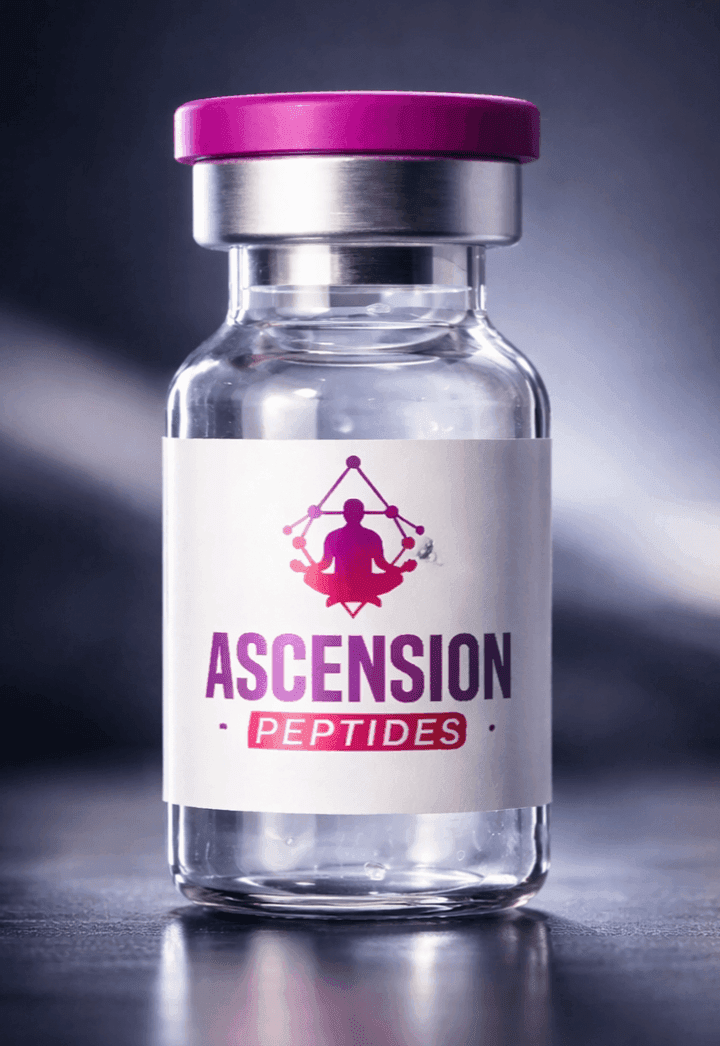
Ascension Peptides lists SS-31 at 10 mg for $79.99 as of 2026-10-11. Kovera Labs tests every batch (HPLC, LC-MS identity, net content, endotoxin, sterility and heavy metals), more than 98 percent pass, and batch certificates are public. Shipping is US only and all sales are final. New customers can use code PEPTIDEDECK for 50 percent off. It is a research chemical, not the licensed drug.
Timing, cycle length and duration
The label gives one instruction: take the dose at the same time each day, skip a missed dose rather than doubling, inject into the abdomen at least 2 inches from the navel or the outer thigh, and rotate the site daily. Absorption peaks 0.5 to 1 hour after a subcutaneous dose and bioavailability is about 92 percent, according to the label.
The trials ran continuously, with no cycling: 4 weeks in the shortest subcutaneous study, 12 and 24 weeks in the larger ones, and up to 168 weeks in the open-label extension. Reddit users do something different. They run it for 30 days to about 8 weeks, then stop, and one cheat sheet suggests 4 to 8 weeks on and 2 to 4 weeks off. No human study tests an off-period, so that schedule is custom. One commenter took the dose in the morning and noted a modest energy lift. Morning dosing is common advice in the same communities, but it has no trial support.
On timing of effects, the data are thin. Only one commenter gave a number (feeling great after about a week). The Barth syndrome data show the opposite shape: no strength change in the 12-week randomized period and gains appearing over months in the extension. Neither source predicts what a healthy person would notice.
What changes the dose
Weight is the first factor. The approval is limited to patients at 30 kg or more, and the label gives one flat dose, so a per-kilogram protocol has no label basis. Kidney function is the second: eGFR under 30 and not on dialysis means 20 mg, and the label says there is not enough information to recommend a dose for people on dialysis. In severe renal impairment, exposure to two inactive breakdown products rose by up to 280 and 640 percent.

Formulation is the third. The label dose is the active peptide in a buffered solution; a research vial may be a salt, a different purity, or off in fill weight. Route matters too: the infusion studies used mg/kg per hour, and the mouse study used 3 mg/kg by injection into the abdominal cavity, which cannot be turned into a human dose with a simple multiplication.
Indication is the last. The 40 mg figure is a Barth syndrome dose, backed by a 12-patient randomized trial and its 10-patient extension. The 218-patient myopathy study found no benefit at the same dose, and no published trial tests any dose for general energy, aging or performance in healthy adults. An open registry entry (NCT07275424) describes a four-week pilot of daily injections in about 30 adults aged 65 to 80, but its primary objective is safety and tolerability and no results are posted.
Frequently asked questions
What is the SS-31 dosage?
There is one approved dose: 40 mg subcutaneously once daily for Barth syndrome in patients weighing at least 30 kg, with 20 mg for eGFR under 30 and not on dialysis. Trials outside that indication also used 40 mg a day, with one 4 mg arm. Among 10 Reddit comments that named a dose, all started at 5 mg or less.
How many units of SS-31 is 5 mg?
It depends on the water you added. With a 10 mg vial and 1 mL it is 50 units, with 2 mL it is 100 units, and with 3 mL it is 150 units. With a 50 mg vial and 3 mL it is 30 units. Divide the dose by the concentration in mg/mL and multiply by 100.
How long do people run SS-31?
Reddit commenters mention 30 days up to about 8 weeks, with a break afterward. The label and trials use continuous daily dosing, and no study tests cycling. These are habits, not evidence.
Is SS-31 FDA-approved?
Elamipretide, sold as Forzinity, has FDA accelerated approval for Barth syndrome in patients weighing at least 30 kg. That approval is conditional on a confirmatory trial. SS-31 sold as a research chemical is not that approved product, and I did not verify any other country's status.
Does SS-31 work for energy or aging?
Not shown. The trials were in disease populations and two of the larger ones missed their primary endpoints. A few Reddit commenters noted slightly more energy, others noted nothing, and none of it is controlled.
Checking a vial before you do any math
Dose math assumes the label on the vial is true. If you choose to buy a research product despite everything above, confirm the batch certificate, the net peptide content and the testing lab first. Ascension Peptides sells SS-31 10 mg at $79.99 as of 2026-10-11, with per-batch Kovera Labs testing and public certificates, US shipping only. For more on sourcing, see where to buy SS-31. The only licensed elamipretide comes through a prescriber.
Medical Disclaimer: SS-31 sold as a research chemical is not approved by the FDA for any use. Elamipretide (Forzinity) is a prescription drug approved only for Barth syndrome in patients weighing at least 30 kg. This article reports label, published and user-reported figures for education. It is not medical advice, a dosing protocol or a recommendation for personal use. Consult a qualified healthcare professional about any health concern.