This Thymosin Alpha-1 dosage chart puts the one dose that has a label behind it, 1.6 mg under the skin twice a week, next to what published studies actually used and what people on Reddit say they inject. Thymosin alpha-1 (thymalfasin, sold abroad as Zadaxin) is not FDA-approved, so nothing here is a prescription, and every Reddit number is an anecdote.
Key Takeaways
- The only labelled dose is 1.6 mg (900 µg/m²) subcutaneously twice a week for 6 to 12 months, with 40 µg/kg for patients under 40 kg
- FDA's December 2024 review found clinical studies used daily doses of roughly 1 to 16 mg, most often 1.6 mg, and that no thymosin alpha-1 drug is approved in the United States
- In 19 first-hand Reddit accounts, 9 named an amount, from 100 mcg to 15 mg. Most sat between 0.8 and 1.5 mg, two to three times a week. That is a small, self-selected sample, not a recommendation
- Reconstitution math: a 10 mg vial with 2 mL of water is 5 mg/mL, so 1.6 mg is 0.32 mL, or 32 units, which does not fit in a 0.3 mL syringe
- This page is information, not medical advice. The peptide is sold as a research chemical
For what the peptide is and how the evidence stacks up overall, see our thymosin alpha-1 peptide guide. This page is the dose-focused companion.
Thymosin Alpha-1 dosage chart: what the label and studies used
Start with the table, because it answers the question most people arrive with: what number appears on a label or in a paper. One number, 1.6 mg, anchors almost everything.
Thymosin alpha-1 doses as written on the label and in published human work
| Dose as published | Schedule and duration | What it was | |
|---|---|---|---|
| Zadaxin label | 1.6 mg (900 µg/m²) | Subcutaneous, twice weekly, 6 to 12 months | Chronic hepatitis B; the same dose is cited for cancer adjuvant use |
| Label, under 40 kg | 40 µg/kg | Same schedule | Weight-based adjustment printed in the label |
| Healthy men, pharmacokinetics | 900 µg/m² once, then daily for 5 days | Subcutaneous | Peak at about 2 hours, half-life about 2 hours, no accumulation |
| Hepatitis B monotherapy | Up to 1.6 mg | Twice weekly, up to 12 months | Five small studies, 1998 to 2005; the placebo-controlled one found 20% vs 21% undetectable HBV DNA |
| Melanoma, 488 patients | 1.6, 3.2 or 6.4 mg with chemotherapy and interferon | Repeated every 4 weeks, up to 6 cycles | Response 7.2%, 10.3% and 6.1% vs 4.1% in the control arm, not significant |
| Flu vaccine, older adults | 0.9 mg/m² (about 1.6 mg) | Twice weekly for 2 to 5 weeks after the shot | Small studies, 1986 to 2012; FDA called the evidence insufficient |
| Stem-cell transplant | 1.6 mg daily | 16 weeks | Single-arm study, 14 recipients |
| Radiotherapy plus PD-1 drug | 1.6 or 3.2 mg daily | 7-day loading course | Retrospective, 48 patients, no control group |
| COPD flare | 1.6 mg | Subcutaneous, 4 weeks | Double-blind, 84 patients; FDA found the reported detail too thin |
| United States | None | None | No FDA-approved product and no DailyMed label |
The 1.6 mg figure comes from body surface area. The Zadaxin product information, reproduced by RxList, gives 900 µg/m² and rounds it to 1.6 mg for an average adult. A person with a surface area of about 1.9 m² would work out to roughly 1.7 mg, and the label switches to 40 µg/kg below 40 kg, so a 30 kg child would get 1.2 mg. That arithmetic is mine; the label only prints the two formulas.
The FDA's briefing for its Pharmacy Compounding Advisory Committee (December 4, 2024, available here) is the most useful neutral summary I found. It says clinical studies used daily doses of about 1 to 16 mg, usually subcutaneous, for anywhere from one day to 12 months, and that 1.6 mg was the most common. It also reports pharmacokinetics from healthy men: absorption peaked near 2 hours, the half-life was about 2 hours, and five days of daily dosing showed no accumulation.
Does more help? The data that exist do not show it. In the 488-patient melanoma trial, the 1.6 mg, 3.2 mg and 6.4 mg arms had response rates of 7.2%, 10.3% and 6.1%, with no significant difference from control. A 2025 meta-analysis of severe acute pancreatitis (5 trials, 706 patients, PMID 40599771) found that lower-dose regimens reduced C-reactive protein while higher-dose regimens did not, though that is a subgroup comparison across different trials. Neither proves a higher dose is worse. Nobody has demonstrated a dose-response curve in humans, and FDA noted the same gap in the animal work.
The 7-day loading course in the table raised T-cell counts in 48 patients, but it was retrospective with no control group (PMID 41293232). The label schedule has simply been borrowed for new purposes, rarely tested in healthy adults.
Where the labelled dose can legally come from
In the United States, there is no approved thymosin alpha-1 drug. FDA states that it has approved no product containing it, a DailyMed search returned no label (database dated 2026-10-09), and the agency's briefing says it is not approved in Japan or Europe except Italy. The manufacturer, SciClone, reported approvals across parts of the Asia-Pacific region, Latin America, Eastern Europe and the Middle East in its 2014 annual report, which FDA said it could not independently verify country by country.
The same briefing proposed against adding thymosin alpha-1 to the list of bulk substances that compounding pharmacies may use, citing weak characterization, immunogenicity risk and a lack of effectiveness evidence for the conditions reviewed. I could not confirm how the committee voted, so I can't say whether a US pharmacy can compound it today. In practice, the 10 mg vials sold online are labelled for research use only, and getting the labelled dose as a prescription means a physician in a country where Zadaxin is registered, or a clinical trial.
What Reddit users report taking
To see what people do in practice, I read 327 posts and comments from 22 threads across 17 subreddits, mostly 2025 and 2026. After dropping bot notices, removed comments, cheat sheets, vendor promotion and off-topic chatter, 19 comments were first-hand accounts of using thymosin alpha-1, spread over 8 subreddits and 9 threads. Nine of them named a per-injection amount: seven described their own use and two described a plan. One more described a daily microdose of 0.1 with no unit, so I left it out of the chart. That is a very thin sample.
Here is how the nine distribute.
What 9 Reddit comments said they inject per dose of thymosin alpha-1
The common pattern is a label-like dose reached by steps. The most detailed report came from a r/MCAS poster (Aug 2026) who started at 500 mcg, moved to 750 mcg, then 1 mg, injecting every Tuesday and Friday, and said they planned 3 months on and 1 month off. Their note shows how unit confusion creeps in: "I have 10mg vials that I reconned with 2ml BAC water and I started at 10cc's on those days." (link). Ten units on a U-100 syringe is 0.1 mL, which at 5 mg/mL is 500 mcg, so the 10 cc's meant units, not cubic centimeters.
Smaller starts were common in the sensitive communities. One r/MCAS poster took 250 mcg on two consecutive days, felt much better after the first, then slept for nearly a day after the second. A r/covidlonghaulers commenter said they were starting at 100 mcg a day. A 2023 r/HealWithPeptides poster reported 1 mg twice weekly for 3 months alongside thymosin beta-4. A r/Biohackers commenter (Mar 2026) described a short course: "I typically do 5mg total over 2ish weeks..." (link), which they said they repeat two or three times a year. In the same r/Biohackers thread, replies pointed to dose-calculator sites, and one reply noted that the site had no thymosin alpha-1 dosing information.
Reference posts that are not first-hand say much the same: 1 to 3 mg two or three times a week for 4 to 12 weeks, or 1.5 mg twice weekly for 8 weeks. They read like the label dose with a course length added, and none cites a trial for the course length.
One outlier needs a flag. A r/covidlonghaulers poster (May 2026) reported scaling from 1 mg to 3 mg to 5 mg, then 5 mg a day, and "Right now I'm taking 15mg every other day based on muscle testing." (link). They credited it with a large recovery in fatigue, noticed about two weeks in, and said the high dose was temporary. Fifteen mg is about 9 times the label dose, and every other day works out to roughly 16 times the label's weekly total. FDA's range for studied daily doses reaches about 16 mg, so one injection is not unheard of, but I found no study of repeated 15 mg dosing, and muscle testing is not a dosing method. One person feeling better is not a safety study.
Reconstitution math: mg, mL and syringe units
Thymosin alpha-1 arrives as a freeze-dried powder, usually in 5 mg or 10 mg vials. Adding water does not change the mass, only the concentration and therefore the volume you draw. The formula is: units on a U-100 syringe = dose in mcg divided by concentration in mcg/mL, times 100.
A worked example: a 10 mg vial plus 2 mL of bacteriostatic water is 10,000 mcg in 2 mL, or 5,000 mcg/mL. A 1.6 mg dose is 1,600 divided by 5,000, which is 0.32 mL, or 32 units. A 500 mcg dose is 10 units.
Syringe units by vial size and water volume (U-100 syringe, 100 units = 1 mL)
| Concentration | 500 mcg | 1 mg | 1.6 mg | |
|---|---|---|---|---|
| 10 mg vial + 2 mL | 5 mg/mL | 10 units | 20 units | 32 units |
| 10 mg vial + 3 mL | 3.33 mg/mL | 15 units | 30 units | 48 units |
| 10 mg vial + 5 mL | 2 mg/mL | 25 units | 50 units | 80 units |
| 5 mg vial + 2 mL | 2.5 mg/mL | 20 units | 40 units | 64 units |
That table has a practical catch. A common 0.3 mL insulin syringe holds 30 units, and one Reddit newcomer on a 10 mg vial and 2 mL wrote that 1.5 mg at 30 units seemed like the entire syringe. They were right. At 5 mg/mL the full label dose of 1.6 mg (32 units) will not fit in one, so people either use a 1 mL syringe or add more water.
More water is also worth a second look for a different reason. The FDA briefing cites water solubility of up to 2 mg/mL for the free base and up to 1 mg/mL for the acetate, and notes that the highest concentration in any clinical study was 2 mg/mL. A 10 mg vial in 2 mL is 5 mg/mL, and FDA raised aggregation as a concern for stronger solutions. I can't tell you what a particular vendor's powder contains, since some lyophilized products carry bulking agents, so treat this as a reason to look at the solution rather than a rule. One r/LOVE4DIYAESTHETICS commenter said their vials arrived cloudy, which is the kind of thing worth noticing.
Scaling by vial size is simple division. A 10 mg vial holds about six 1.6 mg doses, which is roughly three weeks at twice weekly, or 20 doses of 500 mcg. A 12-week course at 1.6 mg twice weekly is 38.4 mg, or about four 10 mg vials. At the Ascension list price below, that is roughly $273 pro rata. Storage guidance is thin: FDA's summary says a reconstituted free-base solution was stable for 2 to 7 days at 4 degrees C, which is much shorter than the 30 days some guides repeat, so I treat 30 days as unverified.
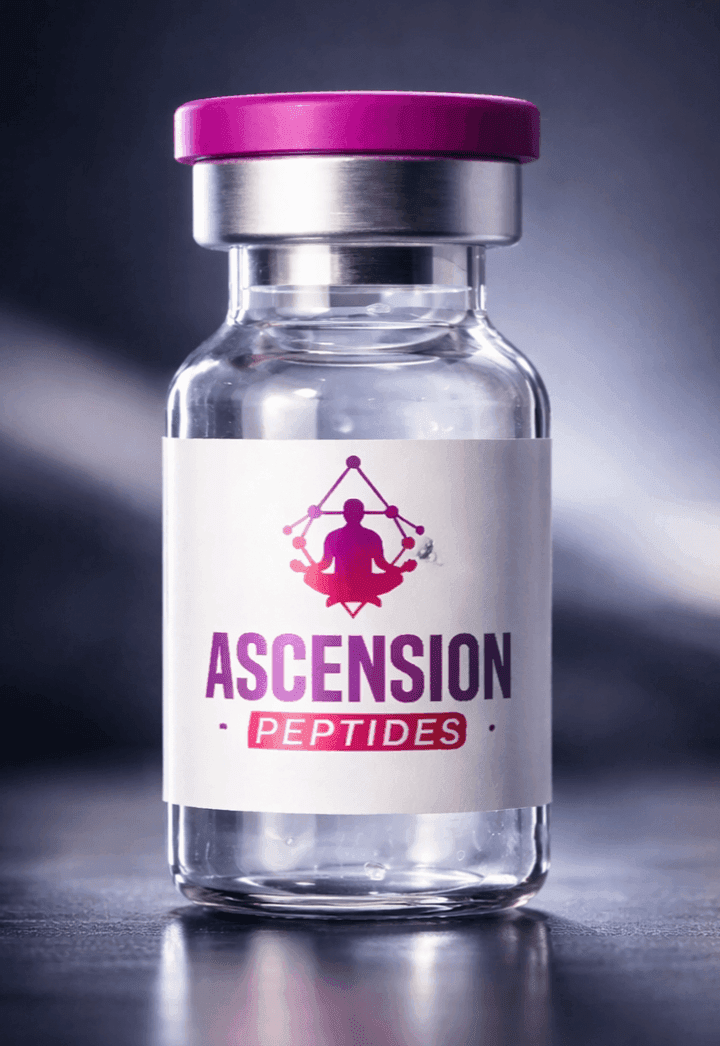
If you want one vendor to check against, Ascension Peptides sells a thymosin alpha-1 10 mg vial at $71.00 as of 2026-10-11 ($7.10 per mg). Kovera Labs tests every batch (HPLC, LC-MS identity, net content, endotoxin, sterility and heavy metals), more than 98 percent of tested batches pass, and batch certificates are public. Prices are in US dollars, shipping is US only and all sales are final. New customers can use code PEPTIDEDECK for 50 percent off. It is a research chemical, labelled not for human use. Our where to buy thymosin alpha-1 guide covers certificates of analysis.
Timing, frequency and course length
The label schedule is twice a week, and the vaccine studies used the same rhythm. With a half-life near 2 hours, the peptide is largely cleared within about a day, so a twice-weekly schedule is not about holding a steady blood level. Why that cadence was chosen is a question about immune effects rather than concentration, and I found no study that compared schedules head to head.

One 2023 poster injected in the evening to avoid daytime tiredness; the label specifies no time of day.
Course length is the weakest area. The label runs 6 to 12 months for hepatitis B. Trials in other settings ran 7 days, 4 weeks or 16 weeks. Reddit cycles cluster at 8 to 12 weeks with a 4-week break, 3 months on and 1 off, or a 2-week course a few times a year. One commenter relayed a doctor's view that peptides cannot be used continuously because of tolerance. I found no data showing tolerance to thymosin alpha-1, and equally none showing that breaks help.
What changes the dose
These variables are said to matter. Only the first two are written into a label.
Body size. The label scales by surface area and by weight below 40 kg. Community charts give one flat number to everyone.
Indication. The label doses hepatitis B and cancer adjuvant use identically. Trials in sepsis, vaccine response and cancer borrowed it, and dosing for healthy immune support has no trial at all.
Immune status. The label lists deliberate immunosuppression, such as in transplant recipients, as a contraindication unless benefit clearly outweighs risk. FDA flagged graft-versus-host disease and engraftment failure as concerns. That is a clinician's call, not a dose adjustment.
Sensitivity. Reddit users in the long COVID, ME/CFS and MCAS communities often start at 100 to 500 mcg because early reactions can be strong. See our thymosin alpha-1 side effects page for what they describe, and our thymosin alpha-1 benefits page for how strong the evidence is for each claim.
Combinations. The label says drug interactions were not fully evaluated and to use caution with other immune-modulating drugs. Several trials paired it with interferon, so a dose from one of them may not carry over.
Product quality. If the vial holds less than the label says, or is contaminated, every figure above is off. This is the least discussed reason two people on the same dose report different results.
Frequently Asked Questions
What is the thymosin alpha-1 dosage?
The only labelled dose is 1.6 mg (900 µg/m²) subcutaneously twice a week for 6 to 12 months, or 40 µg/kg for patients under 40 kg, as printed in the Zadaxin product information. Reddit users most often report 0.8 to 1.5 mg two or three times a week, but those are anecdotes, and the peptide is not FDA-approved for any use.
How many units is 1.6 mg of thymosin alpha-1?
It depends on the water added. A 10 mg vial with 2 mL is 5 mg/mL, so 1.6 mg is 0.32 mL, or 32 units on a U-100 syringe. With 3 mL it is 48 units, and with 5 mL it is 80 units. Divide the dose by the concentration, then multiply by 100.
How often is thymosin alpha-1 dosed?
The label and most trials use twice weekly. Some studies gave it daily for short courses, up to 16 weeks in one transplant study. Reddit users report anything from every other day to a few short courses a year, with no evidence that one schedule beats another.
How long do people take thymosin alpha-1?
The label runs 6 to 12 months for hepatitis B. Reddit reports cluster at 8 to 12 weeks, sometimes with a 4-week break, and one commenter planned 3 months on and 1 month off. No study defines the best course for healthy adults.
Is thymosin alpha-1 FDA-approved?
No. FDA says it has approved no drug containing it, and it is not approved in Japan or most of Europe. The manufacturer reports approvals in other regions that FDA could not verify. In the US, online vials are sold as research chemicals, so ask a clinician rather than assuming.
Checking a vial before you do any math
The dose math assumes the label is true, so confirm lot, purity and mass first. Ascension Peptides lists the thymosin alpha-1 10 mg vial at $71.00 as of 2026-10-11, with per-batch Kovera Labs testing and public batch certificates; US shipping only and all sales are final. Write units out in full, check the solution for cloudiness, and treat every Reddit number here as an anecdote.
Medical Disclaimer: Thymosin alpha-1 is not approved by the FDA for any condition and is sold in the United States for laboratory research use only. This article reports published and user-reported figures for education. It is not medical advice, a dosing protocol or a recommendation for personal use. Consult a qualified healthcare professional about any health concern.