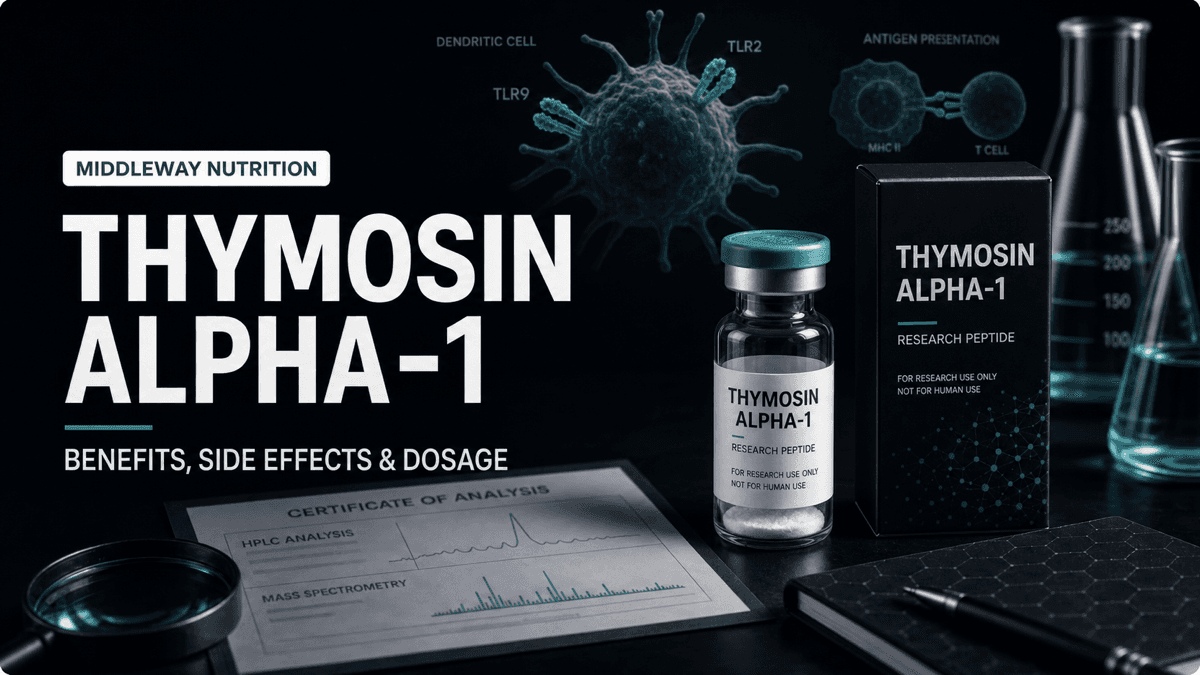
Thymosin alpha-1 benefits are better studied than those of most research peptides, yet far narrower than the marketing. The human evidence sits in hospitalized patients, people with viral hepatitis and cancer patients, usually as an add-on. This page ranks each claimed benefit by the best evidence behind it, then sets that beside what Reddit users say they noticed.
Key Takeaways
- The strongest signal is in sepsis: a 2025 meta-analysis of 11 trials found lower 28-day mortality (odds ratio 0.73), but the high-quality and multicenter subgroups were not significant
- A 2026 Cochrane review of hepatitis B trials rated the evidence very low certainty, and FDA's December 2024 review found insufficient evidence of effectiveness for all 12 uses it examined
- Of 20 Reddit accounts that described an outcome, 10 reported a clear benefit, 6 a partial one, 3 a real but fading one and 1 none. Those people were mostly chronically ill and often using other treatments
- No trial tests thymosin alpha-1 as an immune booster in healthy adults
- It is not FDA-approved. This page is information, not medical advice
For what the peptide is and how it works, see our thymosin alpha-1 peptide guide. This page grades the claims.
Thymosin alpha-1 benefits: evidence by claim
The table sorts each claim into a tier: human trials, small human studies, anecdote or unproven. Read the right-hand column too, because most positive findings come with a catch.
Thymosin alpha-1 benefits ranked by the best evidence behind each claim
| Best evidence | Evidence tier | Main caveat | |
|---|---|---|---|
| Chronic hepatitis B | Cochrane 2026: 10 trials, 1,349 people; possible lower mortality (risk ratio 0.53) | Human trials, very low certainty | Mostly older trials with weak assays; effective antivirals exist |
| Chronic hepatitis C | Placebo-controlled add-on trial: sustained response 12.7% vs 10.5% | Human trial, no added benefit | Direct-acting antivirals cure over 90% |
| Sepsis | Meta-analysis, 11 trials: 28-day mortality odds ratio 0.73 | Human trials, mixed | High-quality subgroup not significant (0.82, 0.65 to 1.03); mostly Chinese hospitals |
| Severe COVID-19 | Retrospective, 76 people: mortality 11% vs 30%; pilot trial, 49 people: more CD4 cells, recovery not significant | Small human studies, conflicting | FDA: 3 of 4 meta-analyses found no mortality drop |
| Cancer add-on | Gastric cancer meta-analysis, 20 trials, 1,704 people: better response and immune markers; melanoma trial, 488 people: no significant gain | Small human studies, mixed | Evidence graded very low to moderate; mostly retrospective or Chinese data |
| Severe acute pancreatitis | Meta-analysis, 5 trials, 706 people: higher CD4 percentage | Human trials, lab markers | Immune markers, not survival |
| Flu vaccine response, older adults | Five small studies, 1986 to 2012 | Small human studies, old | FDA: insufficient to judge |
| ME/CFS and long COVID | FDA found no clinical studies in ME/CFS | Anecdote only | Reddit reports are uncontrolled |
| Allergy, MCAS, hair loss, thyroid antibodies | No trials found | Anecdote and mechanism only | Cannot separate peptide from placebo or other treatments |
| Immune boost in healthy adults | No trials found | Unproven | The label and trials are all in patients |
Three patterns explain most of the table. First, the best trials are in settings where the immune system is already failing: sepsis, severe pancreatitis, cancer treatment and chronic viral infection. The peptide is a modulator of T cells and dendritic cells, at least in part through the TLR9 receptor, per FDA, so a benefit in someone with a depleted immune system says little about a healthy one.
Second, many results are about lab markers. A retrospective study of 48 cancer patients found that a 7-day course raised total T-cell counts from 422.5 to 614.0 per µL (PMID 41293232), and the pancreatitis meta-analysis found higher CD4 percentages (PMID 40599771). Those are real changes, but in HIV, FDA notes, immune counts are not validated stand-ins for clinical outcomes, and several studies saw no CD4 gain at all.
Third, the clinical outcomes are mixed. The sepsis meta-analysis (PMID 40969554) is the most encouraging, with an odds ratio of 0.73 for 28-day mortality, though the authors say the sample is too small to be sure and the benefit differs across subgroups. In severe COVID-19, a 76-person retrospective study reported mortality of 11.1% versus 30.0% (PMID 32442287), while a randomized pilot of 49 people found more CD4 cells but no significant gain in recovery (PMID 36056913); FDA noted that three of four meta-analyses found no mortality reduction. In hepatitis B, the 2026 Cochrane review (PMID 42713852) found possible lower mortality (risk ratio 0.53) but called the evidence very low certainty and could not say whether it works. In hepatitis C, a placebo-controlled trial of the add-on did not improve the on-treatment response, and sustained response was 12.7% vs 10.5%.
The honest limits
Four limits recur. Most trials were run in China, so the patients and hospital care may not match elsewhere. Many used old comparators, such as interferon, that are no longer standard. Many were unblinded. And FDA's overall conclusion was blunt: it found a lack of evidence of effectiveness for the 12 uses it reviewed, none of the US clinical practice guidelines it checked recommends the peptide, and approved drugs exist for most of those conditions.
None of that means it does nothing. It means the claim to prove is narrow. If a clinician in a country where Zadaxin is registered prescribes it for hepatitis B, or a trial enrols you, that is a different situation from buying a research vial for general immune support. For the dose side of that distinction, see our thymosin alpha-1 dosage chart.
What Reddit users say they notice
The benefits data set was the thinnest of the three. Of 186 posts and comments from 20 threads in 8 subreddits, only one was a usable first-hand report, and it described a plant-based pill rather than the injectable peptide, so I excluded it. The rest were cheat sheets, tier lists and guides. To avoid writing from nothing, I also counted outcome statements in the other two thymosin alpha-1 data sets from the same research, which gave 20 first-hand accounts from 8 subreddits: long COVID, ME/CFS, MCAS, Lyme, alopecia areata and a few peptide and biohacking communities.
How 20 Reddit commenters described the result of using thymosin alpha-1
Half described a clear benefit. The most common were more energy and fewer crashes in long COVID and ME/CFS, fewer allergy-type reactions in MCAS, and fewer or shorter infections. A r/covidlonghaulers commenter (Sep 2025) wrote that two weeks in they felt the benefits, naming "Clearer head, heightened energy, just the general absence of malaise." (link). A r/covidlonghaulers commenter (Jun 2026) said a six-week course at roughly half the label dose, alongside other immune and antiviral measures, ended post-exertional crashes that had not returned 18 months later. A r/BiohackingU post said starting it at the first symptoms halved recovery time; a r/LOVE4DIYAESTHETICS commenter (Oct 2025) wrote "Every time my kids get sick I inject it. It has worked 7/8 times..." (link). Another claimed thyroid antibodies fell on 2 mg three times a week, and an alopecia areata user saw some regrowth and calmer inflammatory markers after a 12-week cycle but called it not worth much.
The qualified and fading answers are as informative. One commenter in the first long COVID thread said it had given "Mild benefit at first. Didnt last." (link) (Jun 2025). Another felt much better the day after each shot, but the effect was gone within two days. A third said it helped during a flare or infection without lasting effects. One MCAS commenter tried it and noticed nothing either way.
The mix of communities matters. Long COVID, ME/CFS and MCAS groups are full of people who have run out of conventional options, who try several peptides in sequence and who report back in detail. That makes them rich sources of anecdotes and poor sources of proof. The same posts that describe a clear benefit often describe a plan to try a different peptide next.
Why treat these numbers cautiously? Many of these users were taking several things at once: Truvada, antihistamines and ketotifen, KPV, BPC-157, prednisone. Illnesses like long COVID, MCAS and ME/CFS rise and fall on their own, which makes any change easy to credit to whatever was started last. Nothing was blinded, so placebo response is unfiltered. And people who improve are more likely to post than people who do not, though the long COVID threads did include plenty of disappointment. One commenter in a long COVID thread said that about 90 percent of the accounts they had read described mild benefit that did not last once the course stopped. I can't verify that figure, but it matches the three fading reports here.
When Reddit commenters said they first noticed a change
- Next day
Felt better the day after each shot, but the effect was gone by day 2 (1 report) - 2 days
Clearer sinuses and fewer pet-allergy reactions, in a 2023 post (1 report) - About 2 weeks
Clearer head, more energy, or the sense it was working (3 reports) - About 1 month
Food and dust reactions easing, or lower thyroid antibodies on labs (2 reports) - 6 weeks
Exercise crashes gone after a course at about half the label dose (1 report) - 2 months to 1.5 years
Helpful but not a miracle (2 reports)
Claims that no trial supports
Several claims are common online and untested. The idea that it rejuvenates an aging thymus or serves as a general longevity peptide rests on the mechanism and on reviews, such as a 2025 summary on aging (PMID 41373628) that notes improved vaccine response in older adults, a finding FDA judged inconclusive. Tier-list posts on Reddit rank it near the top of longevity peptides, which tells you about popularity, not evidence.
Benefits for MCAS, allergies, Hashimoto's antibodies, alopecia and long COVID are plausible by mechanism and appear as anecdotes. FDA found no clinical studies in ME/CFS. For the opposite side of this ledger, see our thymosin alpha-1 side effects page, where several of the same communities describe flu-like reactions and crashes.
What a realistic expectation looks like
If you take the evidence at face value, the plausible benefit is modest, specific and clinical: support for T-cell recovery in someone who is acutely ill or immunosuppressed by treatment, under supervision. For a healthy adult, the honest range runs from no noticeable effect to a reaction that leaves you feeling worse for a few days, which is what several Reddit users describe. Anyone hoping to replace vaccination, antivirals or standard treatment with it is working against the evidence, since FDA noted that approved options exist for most conditions studied. A useful test for any claim is to ask who was studied, what was measured and whether there was a control group. A rise in CD4 cells in hospitalized patients is not a lower chance of catching a cold in an office worker.

If you still decide to check a vial
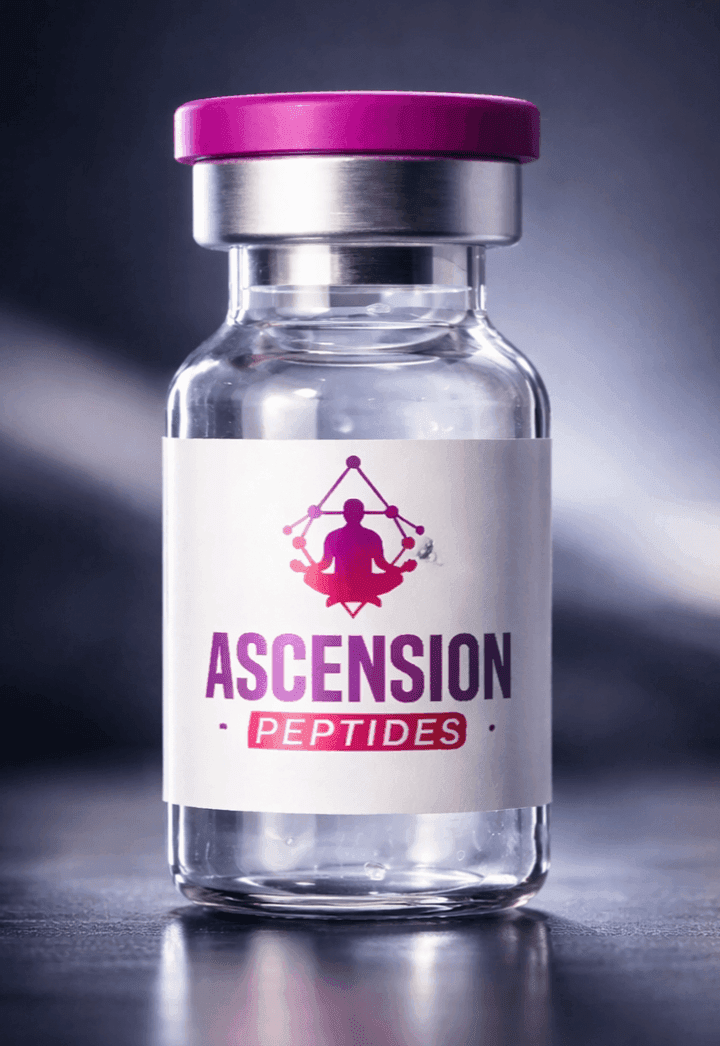
If you want one vendor to check against, Ascension Peptides sells a thymosin alpha-1 10 mg vial at $71.00 as of 2026-10-11 ($7.10 per mg). Kovera Labs tests every batch (HPLC, LC-MS identity, net content, endotoxin, sterility and heavy metals), more than 98 percent of tested batches pass, and batch certificates are public. Prices are in US dollars, shipping is US only and all sales are final. New customers can use code PEPTIDEDECK for 50 percent off. It is a research chemical, labelled not for human use. Our thymosin alpha-1 for sale page explains what to check on a certificate.
Frequently Asked Questions
What are the benefits of thymosin alpha-1?
The best-supported ones are in patients: a possible reduction in 28-day mortality in sepsis, higher immune-cell counts in several illnesses, and a role as an add-on in hepatitis B and some cancers in countries where it is approved. Every one carries caveats, and FDA found insufficient evidence of effectiveness for the 12 uses it reviewed.
Does thymosin alpha-1 boost the immune system?
It modulates it. In patients with depleted T cells, trials show higher counts. No trial shows that it improves outcomes such as fewer infections in healthy adults, so the immune boost claim is unproven.
Does thymosin alpha-1 work for long COVID?
Unknown. Reddit users in long COVID communities report everything from major improvement in fatigue to no lasting effect, and some describe crashes. No controlled trial exists, and FDA found no clinical studies in ME/CFS.
How long does thymosin alpha-1 take to work?
Reddit commenters mention anything from the next day to about two weeks for a first sense of change, and weeks to months for lasting effects. Those are recollections from people using other treatments, not trial findings.
Is thymosin alpha-1 FDA-approved?
No. FDA says it has approved no drug containing it. The manufacturer reports approvals in parts of Asia, Latin America, Eastern Europe and the Middle East, which FDA could not verify country by country.
Before you buy any vial
Ascension Peptides lists the thymosin alpha-1 10 mg vial at $71.00 as of 2026-10-11, with per-batch Kovera Labs testing and public batch certificates; US shipping only and all sales are final. Treat every benefit claim above as unproven for healthy use.
Medical Disclaimer: Thymosin alpha-1 is not approved by the FDA for any condition and is sold in the United States for laboratory research use only. This article reports published and user-reported outcomes for education. It is not medical advice or a recommendation for personal use. Consult a qualified healthcare professional about any health concern.