Thymosin alpha-1 side effects look mild on paper and messier on Reddit. The label and trials mostly log injection-site irritation, while a self-selected group of users describe flu-like days and energy crashes after early doses. This page sets the documented list beside those reports, and says which is which.
Key Takeaways
- The Zadaxin label calls adverse experiences infrequent and mild; FDA's December 2024 review says local irritation, redness and injection-site discomfort are the most common
- Specific warnings exist: ALT flares in hepatitis B, thyroid (TSH) changes in hepatitis C, and fatal immune hemolytic anemia with engraftment failure in a small transplant study
- Of 30 first-hand Reddit accounts, 18 reported at least one unwanted effect, mostly fatigue or crashes (10) and flu-like days (8). Two of the source threads were about side effects, so that share overstates the real rate
- The 2026 Cochrane review of hepatitis B trials found serious adverse events were not higher than in controls (risk ratio 0.72, low certainty)
- Transplant recipients and anyone on immunosuppressants should not self-start. This is information, not medical advice
For background on what the peptide is, see our thymosin alpha-1 peptide guide. This page covers risks only.
Thymosin alpha-1 side effects: what the label and trials document
Start with what is written down. The table collects every effect I could trace to a label, to FDA's own review or to a trial, along with how often the source says it happens.
Thymosin alpha-1 side effects documented in labels, FDA's review and trials
| Source | What the source says | |
|---|---|---|
| Injection-site redness or discomfort | Label; FDA review | The most common effect in clinical studies. The label calls adverse experiences infrequent and mild |
| Rash, joint pain with hand swelling, rare muscle wasting | Label | Listed without frequencies |
| Liver enzyme (ALT) flares | FDA review, citing a 2005 study; an Indonesian label | Seen in people with chronic hepatitis B; no frequency given |
| Thyroid (TSH) changes | FDA review, citing a 1998 study | Hepatitis C patients also on interferon; cause unclear |
| Nipple pain | FDA review, citing a 2009 study | One liver cancer study; no frequency |
| Fatal immune hemolytic anemia, engraftment failure | FDA review, citing a 2010 study | Stem-cell transplant recipients; small single-arm study |
| Serious adverse events, hepatitis B | Cochrane review, 2026 (5 trials, 1,056 people) | Risk ratio 0.72 vs control (0.53 to 0.99), low certainty; not higher than controls |
| Grade 3 or worse events with radiotherapy and a PD-1 drug | Retrospective study, 48 patients | 2 patients (4.2%); attribution to the peptide unclear |
The Zadaxin product information, reproduced by RxList, says adverse experiences have been infrequent and mild and cites fewer than 1 percent drug-related adverse events across indications. It lists injection-site redness and discomfort, rare muscle wasting, joint pain with hand swelling and rash, with no per-reaction frequencies. Contraindications are hypersensitivity to the peptide and deliberate immunosuppression, such as in organ transplant recipients, unless the benefit clearly outweighs the risk. Pregnancy is Category C, and it is unknown whether it passes into breast milk.
FDA's briefing for its December 4, 2024 compounding committee meeting (here) is blunter about the gaps. In most studies, it says, thymosin alpha-1 was not tied to significant adverse events at 1 to 16 mg given subcutaneously for up to 12 months. But it also lists the ALT flares, thyroid changes, nipple pain and the transplant deaths shown above, and flags immunogenicity: a 28-amino-acid peptide injected under the skin can provoke an immune response, and aggregates or synthesis impurities can raise that risk. The only adverse-event report in FDA's own database that it described came from a patient also on peginterferon, which confounds it.
The reassuring evidence is real but limited. The monograph summary FDA read found no toxicity signals in mice, rats and marmosets at up to 1 mg/kg/day for 26 weeks, though FDA could not see the underlying data and found no carcinogenicity or published reproductive studies. In humans, the 2026 Cochrane review of 10 hepatitis B trials (1,349 people, PMID 42713852) found that serious events were not higher with the peptide and may have been lower (risk ratio 0.72, low certainty), and the authors judged the evidence overall to be too uncertain for firm conclusions. A 2026 meta-analysis of 20 gastric cancer trials (1,704 people, PMID 42827862) found fewer gastrointestinal reactions and less myelosuppression when it was added to chemotherapy, with quality ranging from very low to moderate.
What none of this covers is healthy adults using it for months, or the multi-milligram self-titration some users describe. Those are the cases where there is no safety record at all.
What Reddit users report
I read 449 posts and comments from 24 threads across 16 subreddits. After removing bot notices, removed comments, cheat sheets, vendor posts and off-topic chatter, I found 30 first-hand accounts of using thymosin alpha-1 in 6 subreddits and 7 threads. Eighteen reported at least one unwanted effect. One said plainly that they had no side effects on 2 mg three times a week for a month. The rest said nothing about tolerability.
Be careful with that 18 out of 30. Two of the seven threads were built around problems (one a warning about the peptide, the other asking whether anyone gets side effects or an immune reaction), and the people who join them are the ones who had one. The communities are also unusual: long COVID, ME/CFS, MCAS and Lyme groups, where people are already ill and often trying several things at once.
Unwanted effects reported by 18 Reddit commenters, by type
Fatigue and flu-like symptoms dominate. A r/covidlonghaulers poster (Dec 2025) injected 0.5 mg and the next morning felt what they described as the start of a cold or flu: taste off, feverish, chills. That person recovered after 8 days and did not continue. A r/cfs poster (Sep 2025) with mild ME/CFS took a single 100 mcg shot and reported "the first 3 days my lymphnodes all swoll and i slept horrible" (link), then a crash that left them at moderate severity three weeks later and unable to work part-time. They said thymosin beta-4 later eased it, which is one person's claim.
Others described different problems. A r/covidlonghaulers commenter (Jul 2026) wrote that two hours after a 1.25 mg injection "OMG. I got so nauseous and anxious. Bad panic attacks." (link) and stopped. Another (Sep 2026), after about a month that began at a high dose and fell to 500 mcg, reported "Early last week started feeling very sleepy, followed by grogginess and then developing flu like symptoms." (link) plus a bad taste and blisters at the back of the throat, and stopped. One user with MCAS and connective-tissue problems said it caused a flare that calmed within a week; one reported about 20 pounds of water weight over two months, worse dysautonomia and tendon and muscle pain that eased after stopping.
How should you read this? Several readings fit and the data cannot separate them. Some reactions look like the immune activation people expect from an immunomodulator. Some coincide with infection: one user was already getting sick the first week, another had just had a virus. A commenter on the cfs thread suggested endotoxin contamination, a plausible idea since FDA notes that endotoxin levels were not characterized for these substances. One commenter described a model of repeated immune waves clearing old debris and said it came from ChatGPT, so treat it as unverified. And FDA found no clinical studies of thymosin alpha-1 in ME/CFS, so there is no trial to say what a crash means there.
How long it lasts and how people respond
Timing varies, and the reports are rough. The chart gathers what people said, not what is typical.
When Reddit commenters said the reaction hit and how long it lasted
- About 2 hours
Nausea, anxiety and panic after a 1.25 mg injection (1 report) - Next morning to 24 hours
Flu-like feeling after 0.5 mg and after 1.5 mg (2 reports) - First 3 days
Swollen lymph nodes and poor sleep after one 100 mcg shot (1 report) - Day 8 of daily dosing
Body aches and hypersensitive skin on 250 mcg a day, still there 7 days after stopping (1 report) - 8 days
Recovery time after a single 0.5 mg dose (1 report) - 3 weeks
ME/CFS still worse than before a single 100 mcg shot (1 report)
The range of doses is the interesting part. Reactions were reported at 100 mcg, 250 mcg, 500 mcg, 1.2 to 1.25 mg and 1.5 to 1.6 mg, so a low dose was no guarantee of a quiet response, and the pattern looks as much like individual sensitivity as dose. Seven of the 30 said they stopped after a bad reaction, and one more took a single shot and did not repeat it. Others said they lowered the dose, spaced doses out (one moved to every third day) or paused until symptoms cleared. A commenter replying in October 2026 said people were starting far too high and should climb in 100 mcg steps each week, which is an opinion, not a protocol.
Not everyone had trouble. Alongside the 18 were users on long courses with no complaints: one Lyme commenter had used it for a year and a half with no side effects mentioned, and a few were two months in and mentioned no problems. Silence is not proof of safety, though, since people with no complaints rarely post.
Product quality: some reactions may be the vial
A fair share of any grey-market reaction can come from the vial rather than the molecule. FDA's review found thymosin alpha-1 substances poorly characterized in impurities, aggregates, bioburden and endotoxin. A r/LOVE4DIYAESTHETICS commenter said their vials arrived cloudy. And one r/Peptidesource poster asked whether body aches and sensitive skin after nine days of 250 mcg were normal, a question nobody can answer without knowing what was in the vial.

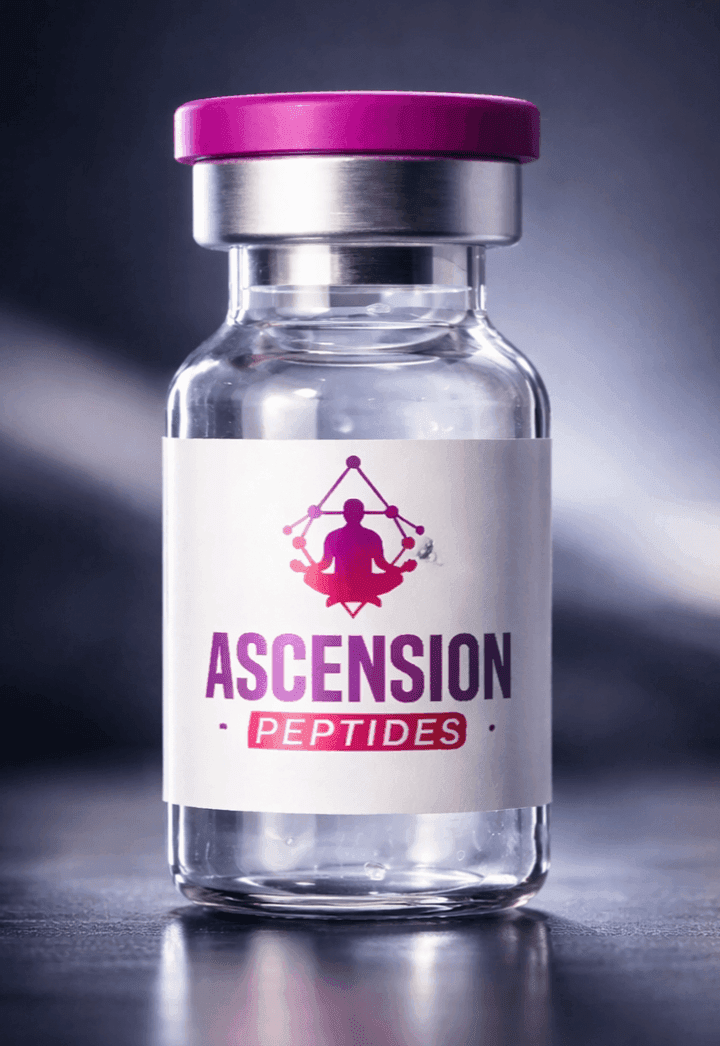
If you want one vendor to check against, Ascension Peptides sells a thymosin alpha-1 10 mg vial at $71.00 as of 2026-10-11 ($7.10 per mg). Kovera Labs tests every batch (HPLC, LC-MS identity, net content, endotoxin, sterility and heavy metals), more than 98 percent of tested batches pass, and batch certificates are public. Prices are in US dollars, shipping is US only and all sales are final. New customers can use code PEPTIDEDECK for 50 percent off. It is a research chemical, labelled not for human use. A good certificate cannot rule out a reaction, but it removes one variable from an already hard-to-read picture.
When to stop and see a clinician
None of these are instructions, but they are reasons the sources and a sensible reader would not wait. Seek medical advice promptly for hives, facial or throat swelling or trouble breathing; a high fever or symptoms that keep worsening; yellow skin or eyes or dark urine, especially with known hepatitis B; spreading redness, warmth or pus at an injection site; or a flare of an existing autoimmune or mast-cell condition. Anyone with a transplant, on immunosuppressants, pregnant or breastfeeding should talk to a clinician before using it at all.
Who should avoid it, and what it interacts with
The label's contraindication is deliberate immunosuppression, and FDA specifically raised graft-versus-host disease and engraftment failure in stem-cell transplant recipients. Foreign labels FDA reviewed carry warnings for children, pregnancy, breastfeeding, autoimmune disease and immunosuppressed patients. Autoimmune disease is a theoretical worry, because the mechanism is T-cell activation, and no adequate trial in a flare has been published that I found. Reddit users with autoimmune conditions report both benefit and trouble.
On interactions, the label says they were not fully evaluated and advises caution with other immune-modulating drugs. Hepatitis B patients carry the ALT-flare risk. FDA found insufficient safety data for use alongside influenza vaccines. One r/covidlonghaulers commenter planned to add it to a prednisone and hydroxychloroquine stack, which is the kind of combination the label tells you to run past a clinician. If you want the dose side, see our thymosin alpha-1 dosage chart, and for what it may actually do, our thymosin alpha-1 benefits page.
Frequently Asked Questions
What are the side effects of thymosin alpha-1?
The documented ones are mostly local: redness, discomfort or irritation at the injection site, and rarely rash or joint pain. Specific warnings exist for liver enzyme flares in hepatitis B, thyroid changes in hepatitis C and serious problems in stem-cell transplant recipients. On Reddit, fatigue, flu-like days and crashes are the most common complaints.
Why do I feel sick after thymosin alpha-1?
Several things can cause it and Reddit cannot separate them. It may reflect immune activation, a coincident infection, an underlying illness such as ME/CFS, or a contaminated or aggregated product. Reactions were reported across doses from 100 mcg to 1.6 mg. Persistent or severe symptoms are a reason to speak to a clinician.
Is thymosin alpha-1 safe long term?
Long-term data exist only in patients, for up to about 12 months at 1 to 16 mg. FDA's review found no long-term safety data in healthy adults and no carcinogenicity studies. Nobody has followed healthy people on repeated courses for years.
Can thymosin alpha-1 make autoimmune disease worse?
It is a theoretical risk, not a proven one. The peptide activates T cells, and foreign labels carry autoimmune warnings, but I found no trial in an active flare. Some Reddit users with autoimmune disease say it helped and others describe flares, so do not self-start without medical input.
How long do thymosin alpha-1 side effects last?
Reddit commenters described anything from a day or two to about 8 days for a single dose, and up to 3 weeks of worse ME/CFS after one shot. These are anecdotes. A reaction that does not settle is worth a clinician's attention.
Before you buy any vial
Ascension Peptides lists the thymosin alpha-1 10 mg vial at $71.00 as of 2026-10-11, with per-batch Kovera Labs testing and public batch certificates; US shipping only and all sales are final. Check the batch certificate, look at the solution, and treat every Reddit account here as an anecdote.
Medical Disclaimer: Thymosin alpha-1 is not approved by the FDA for any condition and is sold in the United States for laboratory research use only. This article reports published and user-reported effects for education. It is not medical advice or a recommendation for personal use. Consult a qualified healthcare professional about any health concern.