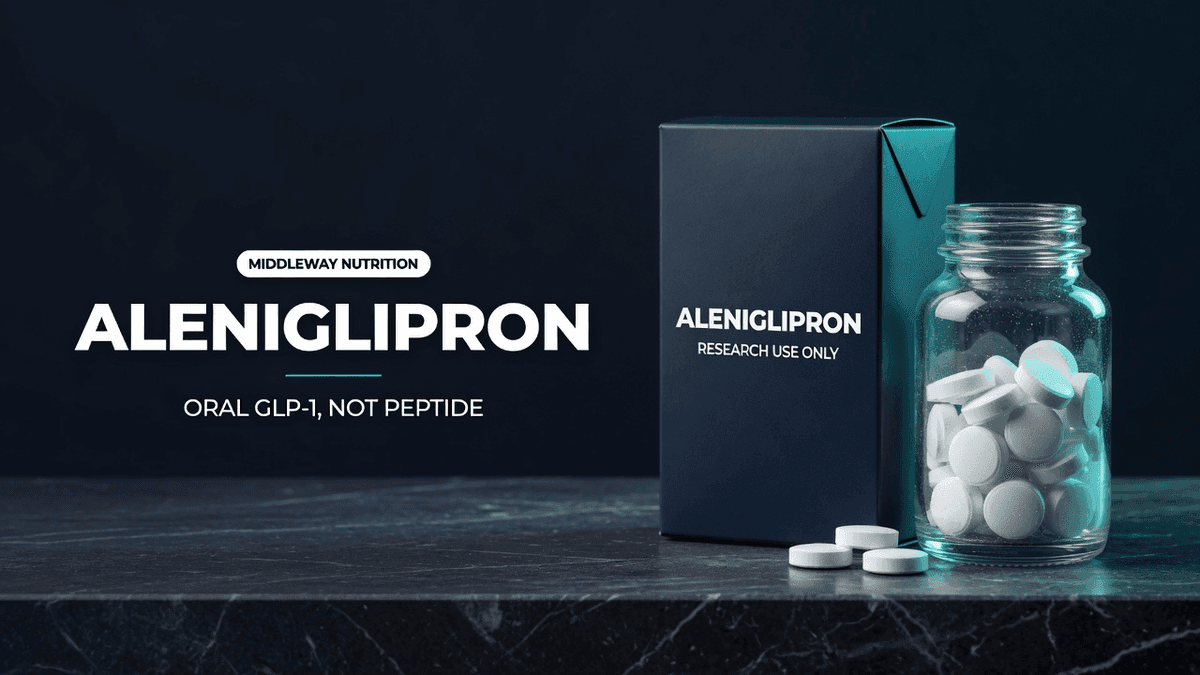
Aleniglipron (GSBR-1290) is an investigational oral GLP-1 receptor agonist that is not a peptide. It is a small molecule designed to activate the same receptor as semaglutide while surviving digestion, which is what makes a once-daily tablet possible. It completed phase 2 and has moved into phase 3, with a starting titration dose of 2.5 mg once daily.
The reason aleniglipron (GSBR-1290) matters is not that it promises more weight loss than the injectables. It is that the delivery problem which has shaped this entire drug class may be solvable, and a tablet changes who can realistically access treatment.
Why "Not a Peptide" Is the Whole Point
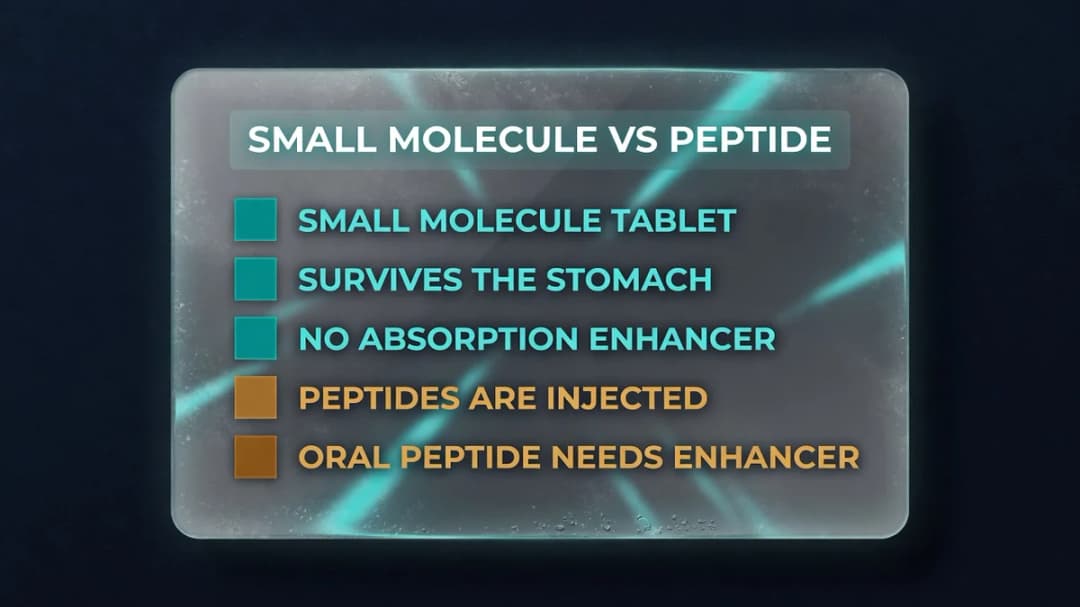
Semaglutide, tirzepatide and liraglutide are peptides. Peptides are destroyed by digestive enzymes, which is why they are injected. Oral semaglutide exists but requires an absorption enhancer, delivers around one percent of the dose, and comes with strict instructions about taking it fasted with a small sip of water and waiting before eating.
A small molecule has none of those problems. It is chemically robust enough to survive the stomach, absorbs like an ordinary tablet, and does not need an absorption enhancer or timing rituals. It is also cheaper to manufacture at scale, since chemical synthesis is less demanding than peptide production.
That combination, no injection, no absorption workaround, lower manufacturing cost, is what makes this class commercially significant regardless of whether any individual compound in it succeeds.
What the Trials Have Shown
Aleniglipron completed phase 2 in obesity and metabolic disease. Reported findings were consistent with what the class does: dose-dependent weight reduction over the treatment period, with gastrointestinal side effects, principally nausea, as the dominant tolerability issue.
We are deliberately not quoting a headline percentage. Phase 2 figures across this class vary considerably with trial length, titration schedule and population, and the numbers circulating for this compound are not consistent between sources. The reliable statement is that phase 2 results were sufficient to justify a phase 3 programme, which is a meaningful signal on its own.
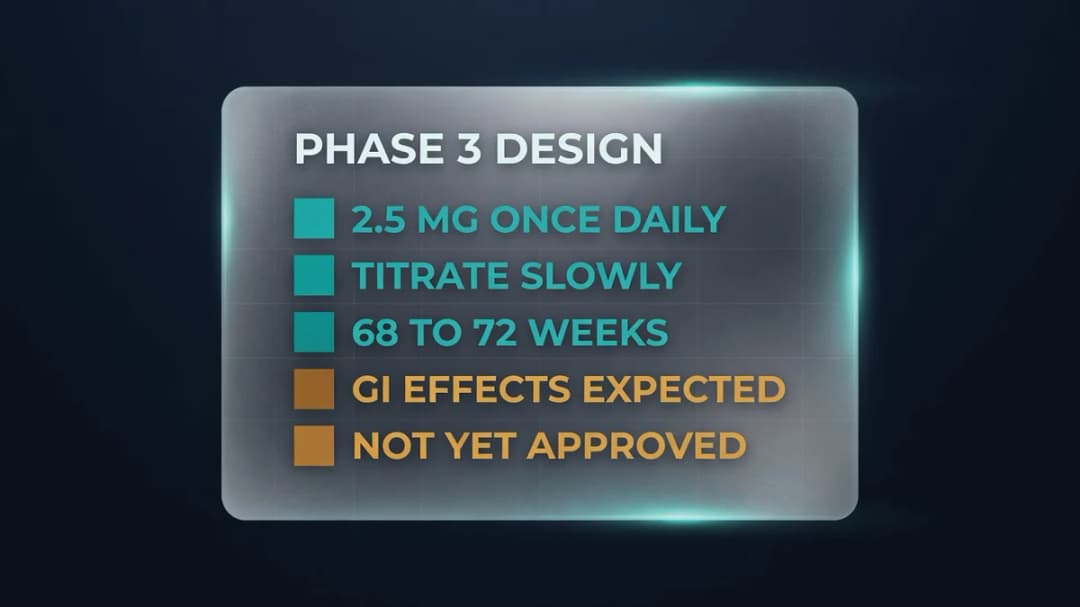
Phase 3 design was finalised with a starting titration dose of 2.5 mg once daily and escalation over a titration period, which reflects the same tolerability logic every drug in this class follows: go up slowly or people stop taking it.
Where Aleniglipron (GSBR-1290) Sits Among Oral GLP-1 Candidates
| Compound | Type | Route | Status |
|---|---|---|---|
| Aleniglipron (GSBR-1290) | Small molecule | Oral, once daily | Phase 3 |
| Orforglipron | Small molecule | Oral, once daily | Furthest advanced of the class |
| Oral semaglutide | Peptide with absorption enhancer | Oral, once daily | Approved |
| Semaglutide injection | Peptide | Weekly injection | Approved |
| Tirzepatide | Peptide | Weekly injection | Approved |
Orforglipron is the compound that will most likely define expectations for oral small molecule GLP-1 agonists, being furthest along. Aleniglipron is behind it, which has both a disadvantage and an advantage: less first-mover position, but the ability to learn from what happens to the leader on tolerability and dosing.
Our orforglipron vs retatrutide comparison covers the leading oral candidate, and new GLP-1 drugs tracks the wider pipeline.
Side Effects to Expect
Nothing about this compound suggests it escapes the class profile. Nausea, constipation, diarrhoea and reflux are the effects to expect, concentrated in the titration period and improving as the dose stabilises. That is why the phase 3 protocol starts at 2.5 mg rather than at a maintenance dose.
Whether oral administration changes the gastrointestinal experience relative to injection is an open question for the whole class. There are arguments in both directions and no settled answer.
Why the Oral Small Molecule Race Matters
The GLP-1 class has been shaped by a manufacturing constraint that has nothing to do with biology. Peptide synthesis at scale is difficult and expensive, and the sustained supply shortages of recent years came largely from that bottleneck rather than from any lack of demand. A tablet made by conventional chemical synthesis sidesteps it entirely.
That has three downstream effects worth understanding.
Supply becomes elastic. Chemical synthesis scales more readily than peptide manufacturing, so a successful oral small molecule is less likely to run into the shortages that have defined this category.
Access widens. A daily tablet removes the injection barrier, which is a real deterrent for a substantial group of people who would otherwise be candidates for treatment. It also removes cold chain requirements, which matters more in some healthcare systems than others.
Pricing pressure increases. More approved products competing in the same class does more for price than almost anything else, and cheaper manufacturing gives whoever holds the product more room to compete on it.
None of that depends on aleniglipron specifically succeeding. It depends on the class working, which is the reason to watch the whole group rather than any single compound in it.
What This Means Practically
It is not available. Aleniglipron is investigational. It cannot be prescribed, and any site offering to sell it is not selling an approved medicine. Anyone wanting access legitimately is looking at clinical trial enrolment.
Timelines are long. A phase 3 programme in obesity typically runs 68 to 72 weeks of treatment plus recruitment, analysis and regulatory review. Even on a smooth path, that is years rather than months.
The class matters more than the compound. Whether this specific molecule reaches market is less important than whether oral small molecule GLP-1 agonists work well enough to displace injections for a large share of patients. If they do, the access and cost picture for this whole category changes.
FAQ
Is aleniglipron a peptide?
No, and that is its defining feature. It is a small molecule GLP-1 receptor agonist, which is why it can be taken as an ordinary tablet rather than injected or paired with an absorption enhancer.
Is aleniglipron approved or available?
No. It is investigational, having completed phase 2 and entered phase 3. It cannot be prescribed and is not legitimately available for purchase.
How does aleniglipron compare to semaglutide?
They target the same receptor by different chemistry. Semaglutide is an established peptide drug with approved indications and years of outcome data. Aleniglipron is an unapproved small molecule whose advantage, if it succeeds, is oral dosing without the constraints that oral semaglutide carries.
What dose is being used in phase 3?
The phase 3 design starts at 2.5 mg once daily with escalation over a titration period. Final maintenance doses will depend on what the trial establishes for the balance between effect and tolerability.
Will an oral GLP-1 pill be cheaper than injections?
Small molecules are generally cheaper to manufacture than peptides, and oral dosing removes device and cold chain costs. Whether that translates into lower prices depends on market and pricing decisions rather than on manufacturing cost, so it is a reasonable expectation rather than a certainty. Our GLP-1 pill page covers the oral options that exist today.