You cannot legally get retatrutide from a pharmacy in 2026. It is an investigational Eli Lilly drug still in Phase 3 trials, with no FDA approval and no prescription pathway. There are exactly two routes to genuine, pharmaceutical-grade retatrutide right now: enrolling in a clinical trial, which is free and medically supervised, and Lilly's pre-approval expanded access program, which the company formalized on August 3, 2026 for a narrow group of severely affected patients whose own physician applies on their behalf. Every other source you will see advertised for sale (compounding pharmacies, telehealth clinics, "research-use-only" peptide vendors) operates outside an approved supply chain, and this guide explains exactly why that matters before you spend a dollar.
If you are mainly comparing vendors and prices, read our retatrutide where-to-buy breakdown alongside this page. This article is about the process: the concrete steps for each route and the trade-offs you are actually signing up for.
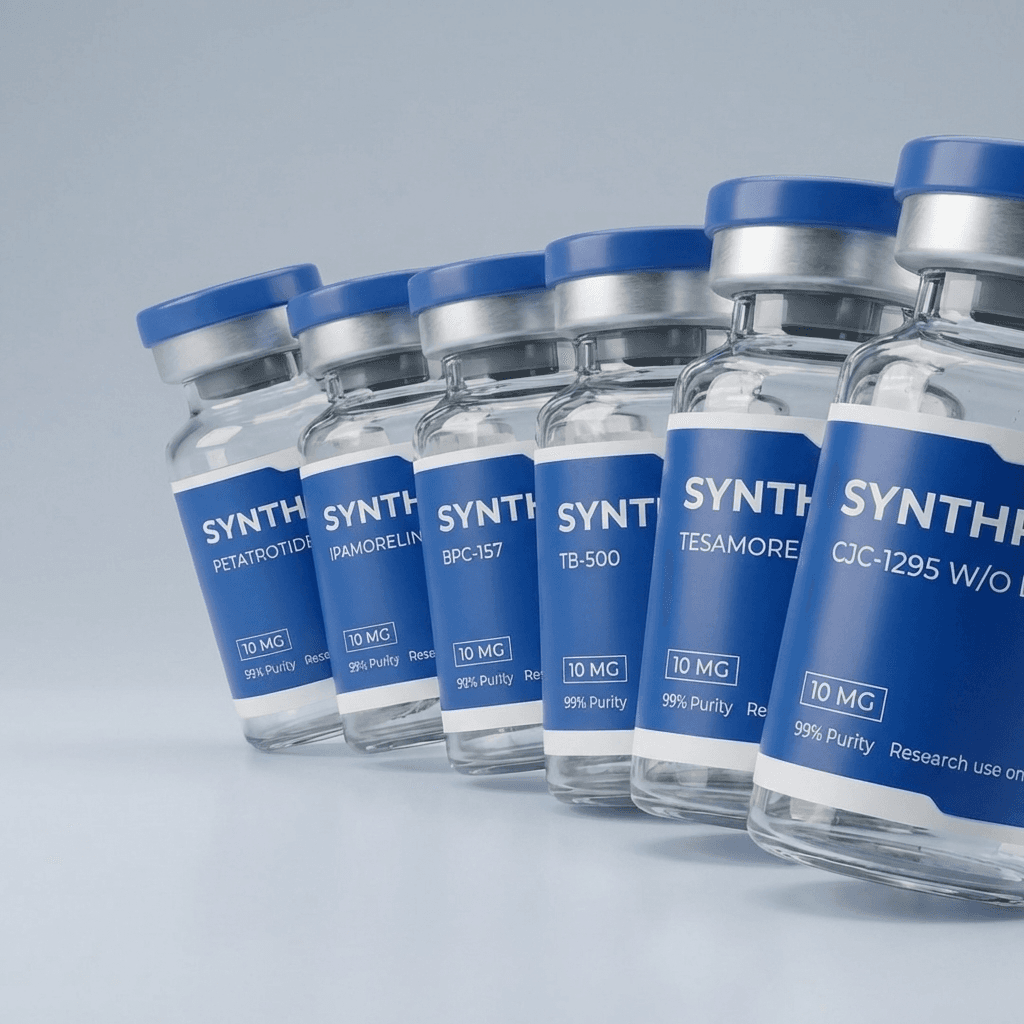
If you have already decided to go the research-peptide route, the vendor we point people to is Synthro Lab — every batch is triple-tested and comes in at 99% HPLC purity or better, a certificate of analysis is included with every order, and the QR code printed on each label resolves to that specific batch's certificate rather than a generic file. They publish content, purity and endotoxin testing, lyophilize domestically, and dispatch the same day to the US, EU and Australia, with free shipping over $250 and a 30-day money-back guarantee. Retatrutide is listed in their catalogue under its own name, from $78.88, so you are not hunting for a codename the way you are on most sites in this space.
The one-sentence answer
There is no approved way to be prescribed retatrutide in 2026, and nobody in the United States can legally sell it to you for human use. A clinical trial is the main legitimate, quality-controlled source, and since August 2026 Lilly's expanded access program is a second one, for a small number of severely affected patients who cannot get into a trial. Compounded and grey-market retatrutide exist, but neither has FDA oversight, and both carry legal and safety risk that you should understand before considering them. FDA's position on the compounded version is not ambiguous: "Retatrutide and cagrilintide cannot be used in compounding under federal law."
Why there is no pharmacy route yet
Retatrutide (Eli Lilly's LY3437943) is a once-weekly triple agonist that activates the GIP, GLP-1, and glucagon receptors. That third target (glucagon) is what separates it from tirzepatide and semaglutide and is driving its unusually large weight-loss numbers. You can read the full breakdown in our what is retatrutide primer and the retatrutide mechanism of action explainer.
Here is the regulatory reality as of August 2026:
- Retatrutide is not FDA approved for any use. It remains an investigational drug in Phase 3.
- Eli Lilly has not yet submitted an approval application. In July 2026, after two more positive Phase 3 readouts, Lilly said it will file with the FDA in the first quarter of 2027, which puts a possible approval in late 2027 or 2028.
- Because it is unapproved, it cannot be legally prescribed, dispensed by a pharmacy, or sold as a finished medicine.
- FDA states flatly that retatrutide cannot be used in compounding under federal law, and that retatrutide and cagrilintide "are not components of FDA-approved drugs and have not been found safe and effective for any condition."
A Phase 2 trial published in The New England Journal of Medicine in 2023 reported roughly 24.2% mean body-weight reduction at the highest dose (12 mg) over 48 weeks, the largest figure recorded for this drug class at the time. Lilly's Phase 3 TRIUMPH program is designed to confirm whether reductions of that magnitude hold up across larger populations, and the toplines reported so far are strong: roughly 30% average body-weight reduction at 104 weeks in TRIUMPH-1, then about 21% at 80 weeks in the type 2 diabetes trial and 23% in the cardiovascular-disease cohort, both at the highest doses. That Phase 2 number is a big part of why demand has outrun the approval timeline, and why a grey market formed. For the deeper data, see retatrutide before and after and our retatrutide clinical trial summary.
Route comparison at a glance
| Route | Real retatrutide? | Cost | Medical supervision | Legal status | Quality control |
|---|---|---|---|---|---|
| Clinical trial | Yes, pharmaceutical grade | Free (you may be paid for visits) | Full, study physicians | Fully legal | FDA-regulated, GMP |
| Expanded access (Lilly) | Yes, pharmaceutical grade | Not stated by Lilly; FDA warns costs may not be covered by insurance | Full, your own treating physician | Legal FDA pathway | FDA-regulated, GMP |
| Compounding pharmacy | Claimed, unverified | ~$200 to $500/month | Telehealth prescriber | Murky to non-compliant | Inconsistent |
| Grey-market "research" peptide | Unknown, unverified | ~$150 to $500/month | None | Not for human use | None |
| Pharmacy with prescription | Not available | n/a | n/a | Does not exist yet | n/a |
Route 1: Enroll in a clinical trial (the main legitimate source)
A trial is the broadest way to receive real, quality-assured retatrutide today, at no cost and with physician oversight, and for anyone who is not severely ill it is the only realistic one. Lilly's Phase 3 program is called TRIUMPH, and it spans obesity, type 2 diabetes, knee osteoarthritis, sleep apnea, liver disease (MASLD), and cardiovascular and kidney outcomes.
The catch is enrollment windows. Several core TRIUMPH studies have already closed to new participants. The large cardiovascular and kidney outcomes study, for example, which enrolls people with an elevated BMI plus existing heart or kidney disease, has been listed as active but not recruiting. Newer arms and extension studies do open periodically, so the picture changes month to month, which is why searching the registry yourself (below) matters more than relying on any single trial ID.
Here is what a registry search actually returns on August 20, 2026. Four retatrutide records are open in any form, and only one of them is a trial that can put retatrutide into a US participant:
| Study or program | ID | Status | Who it is for |
|---|---|---|---|
| SYNERGY-OUTCOMES (Lilly, Phase 3) | NCT07165028 | Recruiting, 142 US sites | Adults with high-risk MASLD: liver fat 8% or higher, ELF score 9 to 10.8, VCTE 10 to under 20 kPa, BMI 25 or higher |
| Pre-approval expanded access (Lilly) | NCT07629401 | Available | BMI 35 or higher, refractory obesity, two or more serious complications |
| Phase 2 versus placebo (Hudson Biotech) | NCT07467447 | Recruiting, one site in China | Adults 18 to 75, BMI 30 to 50, or 27 to under 30 with a weight-related comorbidity, no diabetes |
| Body composition and exercise (Mass General) | NCT07226947 | Recruiting, Boston | A smartwatch and exercise study for people already on incretin therapy; it does not supply retatrutide |
SYNERGY-OUTCOMES is a master protocol: about 4,500 adults randomized to retatrutide, tirzepatide, or placebo, roughly 224 weeks long, with 25 to 30 clinic visits. You do not get to pick the retatrutide arm. Everything else on the registry, including the 10,000-participant cardiovascular and kidney outcomes study (NCT06383390) and the completed TRIUMPH obesity and diabetes trials, is finished or active but not recruiting.
Step-by-step: how to find and join a trial
- Search the registry. Go to ClinicalTrials.gov and search "retatrutide" or the research code "LY3437943."
- Filter for "Recruiting" or "Not yet recruiting." Closed studies will not enroll you. Sort by location to find sites near you.
- Read the eligibility section carefully. Typical inclusion criteria include age 18 or older (some trials set higher floors, such as 45 and older for the outcomes study) and a minimum BMI, often 30 or higher, or 27 with a weight-related condition.
- Note the exclusions. Current use of another GLP-1 medication usually disqualifies you, and most studies require a washout period before you start.
- Contact the site or Lilly directly. Lilly's Trial Information Center is 1-877-CTLILLY (1-877-285-4559), Monday to Friday.
- Complete screening. Expect bloodwork, a medical history review, and informed consent before any dosing.
Honest pros and cons of the trial route
- Pros: Real drug, free, monitored by clinicians, and you contribute to the evidence base. Visit costs are often reimbursed.
- Cons: You might be randomized to placebo, sites may be far away, eligibility is strict, and the time commitment can run years for outcomes trials.
Route 1b: Lilly's expanded access program (new in August 2026)
Expanded access, also called compassionate use, is the FDA pathway that lets a patient with a serious condition use an investigational drug outside a trial when no comparable approved option is working. Lilly formalized one for retatrutide on August 3, 2026, after months of physician requests. It sits on ClinicalTrials.gov as NCT07629401, study type "expanded access," status "available," last updated August 6, 2026.
Read the criteria before you get your hopes up. All of them have to be met:
| Lilly's posted criterion | What it means in practice |
|---|---|
| Age 18 or older | No pediatric access |
| BMI 35 or higher despite adherence to and tolerance of the highest available dose of chronic weight-management therapy | Tirzepatide or semaglutide has to have failed you, not gone untried |
| Two or more serious or life-threatening obesity-related complications, currently treated as standard of care | One comorbidity is not enough |
| Unable to join a retatrutide trial or a comparable investigational study | Either you fail the eligibility criteria or no enrolling site is reasonably accessible |
| All standard treatment options discussed, bariatric surgery included | A documented shared-decision conversation, surgery on the table |
The only exclusion Lilly lists is a medical contraindication to retatrutide therapy.
How an expanded access request actually gets made
- Your physician starts it, not you. Lilly's record states that requests are initiated by the treating physician on behalf of the patient, and that patients and caregivers should be directed to their treating physician rather than contacting Lilly directly.
- The physician contacts Lilly. The listed channels are the Lilly Answers Center at 1-800-LillyRx (1-800-545-5979) and ClinicalTrials@lilly.com.
- Three parties have to agree. Under FDA's expanded access rules the treating physician, an institutional review board, and the company all have to agree, the physician files the paperwork with FDA and the IRB, and FDA decides whether the request may proceed.
- Even then it may not happen. Lilly says availability "will depend on geography, product supply, and detailed individual eligibility assessment."
Two caveats worth stating plainly. Meeting every criterion does not guarantee the request is granted, and FDA notes that expanded access can carry costs that private insurance and Medicare do not cover; Lilly's listing does not say what, if anything, the patient pays. This route was built for refractory severe obesity with serious complications. It is not a shortcut for someone who wants the drug early.
Route 2: Compounded retatrutide (legally murky)
You will find telehealth clinics and med spas advertising "compounded retatrutide" for roughly $200 to $500 a month. Understand what compounding legally allows before treating this as a clean prescription route.
Traditional 503A pharmacy compounding in the United States generally applies to FDA-approved drugs, including making a version during a documented shortage. Retatrutide fits neither situation: it has never been approved, and it is not on the FDA shortage list because it was never on the market to be short. That makes the legal basis for compounding a finished retatrutide product weak, which is why regulators and industry attorneys describe it as murky at best.
FDA has since said it outright. Its standing statement on unapproved GLP-1 drugs, current as of June 15, 2026, says "Retatrutide and cagrilintide cannot be used in compounding under federal law," and that the two "are not components of FDA-approved drugs and have not been found safe and effective for any condition." The same statement names who the agency has already warned: telehealth companies marketing unapproved drugs such as retatrutide, including direct marketing to consumers; active pharmaceutical ingredient distributors selling retatrutide to compounders; and outsourcing facilities repackaging it. If a clinic tells you its compounded retatrutide is above board, that is the document to put in front of them.
Practical issues to weigh:
- The active ingredient still has to come from somewhere. With no approved manufacturer selling it, sourcing and purity are hard to verify.
- "Telehealth prescription" does not make an unapproved molecule approved. A prescription for retatrutide is not the same as a prescription for an approved GLP-1.
- Quality and dosing accuracy vary between operators, and oversight is far lighter than for an approved drug.
We cover the specifics, including how the 2024-2025 compounding crackdown on semaglutide and tirzepatide reshaped the landscape, in compounded retatrutide and retatrutide without prescription.
Route 3: Grey-market "research-use-only" peptides
This is the largest and riskiest channel. Online vendors sell retatrutide as a "research chemical, not for human consumption," typically as a lyophilized powder you reconstitute yourself, for about $150 to $500 a month. The disclaimer is the entire legal shield: by labeling it research-use-only, sellers avoid the rules that apply to medicines.
What that label actually means for you:
- No quality control. There is no requirement to verify identity, purity, dose, or sterility. Independent testing of grey-market peptides has repeatedly found under-dosing, wrong compounds, and contaminants.
- No accountability. If a vial is mislabeled or contaminated, there is no recall system and no recourse.
- You self-dose. There is no clinician calculating your titration, watching for side effects, or adjusting for your history. That is risky with a glucagon-active triple agonist where nausea, vomiting, and diarrhea are common, and where dose escalation matters a lot.
- Handling is unverifiable. Injectable GLP-1 drugs require refrigeration per their package inserts, and FDA has taken complaints about GLP-1 products arriving warm or with inadequate ice packs. With a grey-market vial you have no way to reconstruct what happened between the fill line and your doorstep.
If you are researching this channel regardless, read our safety-first guides on retatrutide dosage, the retatrutide dosage chart, and retatrutide side effects so you at least understand the variables. Knowing the retatrutide half-life and a sensible retatrutide dosing schedule does not make an unregulated source safe, but it does help you spot vendor claims that make no sense.
Where to buy retatrutide, and why nothing on that list is a real retailer
Direct answer: nobody in the United States can legally sell you retatrutide for human use. Not CVS, Walgreens, Costco, or Rite Aid. Not Amazon. Not a compounding pharmacy, not a telehealth clinic, and not a peptide site with a slick checkout and a Trustpilot badge. An unapproved drug has no approved label and no lawful route onto a pharmacy shelf, so every listing you find is either research-use-only framing or a compounded product FDA says cannot lawfully be compounded.
| Where people look | What is actually for sale there | Where it stands |
|---|---|---|
| Retail pharmacy chains | Nothing. No stock, nothing to order | Cannot dispense an unapproved drug |
| Telehealth clinics and med spas | Vials marketed as "compounded retatrutide," roughly $200 to $500 per month | FDA: retatrutide cannot be used in compounding under federal law, and the agency has warned telehealth marketers |
| Research-peptide websites | Lyophilized powder labeled "research use only, not for human consumption," roughly $150 to $500 per month | Unapproved new drug. No requirement to verify identity, purity, dose, or sterility |
| Overseas sellers shipping in | The same grey-market product with longer transit | FDA import alert 66-80 targets GLP-1 active ingredients with quality concerns at the border |
| Clinical trial site | Real study drug, supplied rather than sold | Legal, free, and randomized |
| Lilly expanded access | Real study drug, supplied rather than sold | Legal, physician-initiated, narrow criteria |
Which makes "safe retailers for retatrutide" a question with an uncomfortable answer: the category does not exist. A retailer implies a licensed seller dispensing a product a regulator reviewed, under a label that regulator approved. None of those conditions holds for retatrutide anywhere in the US. What exists instead is a spectrum of risk, and sellers sit at different points on it depending on whether they publish batch-matched third-party testing, how they handle cold chain, and whether they pretend the research-use label means something it does not.
Two documented failure modes are worth knowing before you evaluate any seller. FDA has found fraudulent compounded GLP-1 products whose labels name a compounding pharmacy that does not exist, and others naming a real licensed pharmacy that did not make the product. It has also received complaints about GLP-1 injectables arriving warm or with inadequate ice packs. Neither is exotic, both are label-and-logistics failures, and both are invisible until the vial is already in your hand.
What about just waiting?
For most people, the lowest-risk option is to wait for approval and use an available drug in the meantime. Tirzepatide and semaglutide are FDA approved, prescribable today, and backed by mature safety data. Retatrutide's edge is the depth of weight loss in trials, not a fundamentally safer profile. If you want to compare, see retatrutide vs tirzepatide and retatrutide vs semaglutide, plus when will retatrutide be available for the latest timeline.
Waiting also lets the dosing science mature. Retatrutide's trial protocols use slow, multi-month dose escalation precisely because the glucagon component can amplify gastrointestinal side effects when titration is rushed. That is the opposite of how grey-market users tend to dose, and it is a major reason the trial results may not translate to self-administered product. Curiosity about lower-dose strategies is common, but our retatrutide microdosing discussion is clear that there is no validated low-dose protocol outside the studies, and a realistic retatrutide week-by-week view shows how gradual the approved escalation actually is.
It is also worth tracking the competitive landscape. Boehringer Ingelheim's survodutide is a GIP-free dual agonist on a similar timeline, and comparing the two (see survodutide vs retatrutide) can inform whether waiting for a specific molecule makes sense for your goals. For background on the developer and its manufacturing scale-up, our retatrutide eli lilly overview covers what a launch supply chain would look like.
How to vet any non-trial source (if you proceed anyway)
This is harm reduction, not an endorsement. If you are determined to use a non-trial source despite the risks, minimum due diligence includes:
- Demand third-party testing. Ask for a recent certificate of analysis (COA) from an independent lab, not the seller's own paperwork, and confirm the batch number matches your vial.
- Check the molecule, not just the name. A COA should confirm identity and purity, ideally by mass spectrometry and HPLC.
- Be skeptical of price. Real retatrutide active ingredient is scarce. Suspiciously cheap product is a red flag for under-dosing or substitution.
- Loop in a clinician. Even if you source the drug yourself, do not dose without medical input on your conditions and medications.
FDA publishes a red-flag list for telehealth sellers of GLP-1 drugs that transfers cleanly to peptide vendors. Walk away if a seller claims its product is the same as an FDA-approved drug, prices it far below everyone else, ships something that looks different from the photos or arrives in damaged packaging, requires no screening by a licensed clinician, has nobody clinical available after the sale, or puts a pharmacy name or address on the label that you cannot independently verify. For approved medicines, FDA's BeSafeRx resources are the standard way to check whether an online pharmacy is licensed. There is no equivalent check for retatrutide, because there is no legitimate retatrutide retail channel to check against.
For a fuller risk framework, our is retatrutide safe guide goes deeper, and retatrutide cost explains why pricing across these channels is so inconsistent.
Frequently asked questions
Where can I buy retatrutide?
Nowhere legally, if the plan is to put it in your body. No US pharmacy stocks it, no prescription for it can be filled, and the two channels that will happily take your money, compounding-based telehealth and research-peptide sites, sell a product FDA does not treat as a lawful medicine. The only two ways to receive real retatrutide are a clinical trial and Lilly's expanded access program, and neither of them sells it to you.
Are there safe retailers for retatrutide?
Not in the sense most people mean. A safe retailer means a licensed seller dispensing an FDA-reviewed product, and that does not exist for retatrutide anywhere in the US. If you use a non-trial source anyway, the least-bad sellers publish batch-matched certificates of analysis from named independent labs, ship cold, and never claim their product is equivalent to an approved drug. That is risk reduction, not safety.
Can I get retatrutide with a prescription in 2026?
No. Retatrutide is not FDA approved, so no valid prescription for an approved product exists. Any "prescription" you see refers to compounded or off-label arrangements that sit in a legally uncertain space, not an approved pharmacy dispensing.
Is buying research retatrutide online legal?
Vendors sidestep drug law by labeling it "research-use-only, not for human consumption." Buying it may not be prosecuted, but using it on yourself falls outside that label, and the product carries no quality, purity, or safety guarantees.
How much does retatrutide cost right now?
Through a clinical trial it is free, and you may be reimbursed for visits. Expanded access supplies the drug through your physician, and Lilly's listing does not state what, if anything, a patient pays; FDA notes expanded access costs may not be covered by insurance. Compounded versions run roughly $200 to $500 per month, and grey-market peptides about $150 to $500 per month, with no assurance you are getting what is advertised.
When will retatrutide be available by prescription?
Lilly said in July 2026 that it will file for approval in the first quarter of 2027, which points to possible FDA approval in late 2027 or 2028. Dates can shift with trial results and regulatory review. See when will retatrutide be available.
Is a clinical trial really free?
Yes. Trial sponsors provide the study drug and study-related care at no cost, and many studies reimburse travel and time. The trade-offs are strict eligibility and the chance of being assigned to placebo.
Is retatrutide available in the USA?
Not commercially. In the USA it is available only inside Lilly's clinical trials and its expanded access program. As of August 2026 the one Lilly study with a retatrutide arm still recruiting in the US is SYNERGY-OUTCOMES (NCT07165028), which lists around 142 US sites and enrolls adults with high-risk fatty liver disease.
Is there a compassionate use or early access program for retatrutide?
Yes, since August 2026. Lilly's pre-approval expanded access program (NCT07629401) covers adults with a BMI of 35 or higher whose obesity has not responded to the highest tolerated dose of an approved therapy, who have two or more serious obesity-related complications, and who cannot join a trial. Your treating physician has to submit the request through the Lilly Answers Center; patients cannot apply directly.
Does Middle Way Nutrition sell retatrutide?
No. We do not sell, ship, or handle retatrutide or any other peptide. We publish research, dosing references, and vendor comparisons, and some vendor links on this site are affiliate links, meaning we may earn a commission if you buy through them. That does not change anything on this page about what FDA says or what the risks are.
This article is for informational purposes only and is not medical advice. Talk to a licensed clinician before starting, stopping, or sourcing any medication, including investigational drugs like retatrutide.
References
- Jastreboff AM, et al. Triple-Hormone-Receptor Agonist Retatrutide for Obesity, A Phase 2 Trial. N Engl J Med. 2023.
- Coskun T, et al. LY3437943, a novel triple glucagon, GIP, and GLP-1 receptor agonist (PubMed).
- Triple Agonism-Based Therapies for Obesity (PMC, NIH).
- ClinicalTrials.gov. Pre-approval Expanded Access of Retatrutide (LY3437943), NCT07629401.
- ClinicalTrials.gov. SYNERGY-OUTCOMES master protocol of multiple agents in adults with MASLD, NCT07165028.
- FDA. FDA's Concerns with Unapproved GLP-1 Drugs Used for Weight Loss.
- FDA. Expanded Access: Information for Patients.
- FDA. BeSafeRx: Your Source for Online Pharmacy Information.
- BioPharma Dive. Lilly, with new data, to seek FDA approval of obesity drug retatrutide (July 2026).