
Incretins are hormones released by your gut after you eat that signal the pancreas to secrete insulin. The two main human incretins are GLP-1 and GIP, and together they drive most of your post-meal insulin response, an effect known as the incretin effect. The blockbuster weight-loss medicines of the past decade are engineered to copy these hormones.
What are incretins?
Incretins are a family of metabolic hormones secreted by specialized cells lining the small intestine in response to nutrients, especially carbohydrates and fats. The word comes from "INtestine seCRETion of INsulin." Their defining feature is that they amplify insulin release in a glucose-dependent way: they only push the pancreas to release insulin when blood sugar is actually elevated, which is why they rarely cause dangerous lows on their own.
The two main human incretins
There are two clinically important incretins in humans:
- GLP-1 (glucagon-like peptide-1) is produced by enteroendocrine L-cells located mainly in the distal small intestine and colon.
- GIP (glucose-dependent insulinotropic polypeptide, once called gastric inhibitory polypeptide) is produced by K-cells in the upper small intestine (duodenum and proximal jejunum).
According to a review in Diabetes, Obesity and Metabolism, both peptides are released within minutes of eating and are then rapidly broken down by the enzyme dipeptidyl peptidase-4 (DPP-4). Native GLP-1 has a circulating half-life of only about 1 to 2 minutes, which is a central reason drug developers had to chemically modify it to make a usable medicine. To understand the downstream signaling in more depth, see our explainer on what GLP-1 does in the body.
What is the incretin effect?
The incretin effect is the observation that glucose taken by mouth triggers far more insulin release than the same amount of glucose infused directly into a vein to produce identical blood-sugar levels. The difference is the work of incretins, which "pre-warn" the pancreas that nutrients are arriving.
Research summarized by the American Diabetes Association and in Diabetes Care attributes roughly 50 to 70 percent of the total insulin response to an oral glucose load to the incretin hormones in healthy people. In other words, gut hormones, not the pancreas sensing blood sugar directly, account for the majority of mealtime insulin.
Why incretins are "glucose-dependent"
Both GLP-1 and GIP only stimulate insulin secretion when glucose is elevated. As blood sugar normalizes, their insulinotropic signal fades. This safety feature is why GLP-1-based drugs carry a low risk of hypoglycemia compared with insulin or sulfonylureas when used alone.
How does GLP-1 differ from GIP?
Although both are incretins, GLP-1 and GIP have meaningfully different jobs in the body. The table below summarizes the contrasts most relevant to metabolism and weight.
| Feature | GLP-1 | GIP |
|---|---|---|
| Secreting cell | L-cells (distal gut) | K-cells (upper gut) |
| Stimulates insulin (glucose-dependent) | Yes | Yes |
| Effect on glucagon | Suppresses it | Tends to raise it |
| Slows stomach emptying | Yes, pronounced | Minimal |
| Appetite / satiety | Strongly reduces appetite | Weaker direct appetite effect |
| Action in type 2 diabetes | Largely preserved | Markedly blunted |
GLP-1's slowing of gastric emptying and its action on appetite centers in the brain are the main reasons GLP-1 mimics produce weight loss. GIP's role in weight is more nuanced and still debated, which is why scientists were initially surprised that adding GIP activity to a GLP-1 drug improved results. We cover that interaction in detail in our guide to GLP-1 and GIP.
Why is the incretin system broken in type 2 diabetes?
A defining metabolic abnormality in type 2 diabetes is a reduced or absent incretin effect. According to physiology reviews indexed on PubMed, the insulinotropic action of GLP-1 is largely preserved in type 2 diabetes, whereas the effect of GIP is greatly reduced, mainly through a loss of GIP's normal potentiation of insulin secretion.
This split is the key insight behind incretin therapy. Because GLP-1 still works in people with diabetes, supplying it at higher-than-natural (pharmacologic) doses can restore much of the lost incretin effect, improving blood sugar control while also reducing appetite.
What drives the impairment?
It is not fully settled whether the reduced incretin effect is a cause or a consequence of type 2 diabetes. Chronic high blood sugar (glucotoxicity) appears to worsen GIP-receptor signaling, and the defect tends to track with the degree of beta-cell dysfunction. The practical point for patients is consistent: the GLP-1 arm of the system remains responsive enough to be exploited therapeutically, which is exactly what modern drugs do.
How do incretin-based drugs leverage this system for weight loss?
Drug developers solved native GLP-1's two-minute half-life by re-engineering the molecule to resist DPP-4 breakdown and to bind to albumin, stretching its lifespan from minutes to roughly a week. The result is a class of long-acting GLP-1 receptor agonists. You can see the full lineup in our GLP-1 receptor agonist drug list.
Single, dual, and triple agonists
The field has rapidly evolved beyond pure GLP-1 drugs:
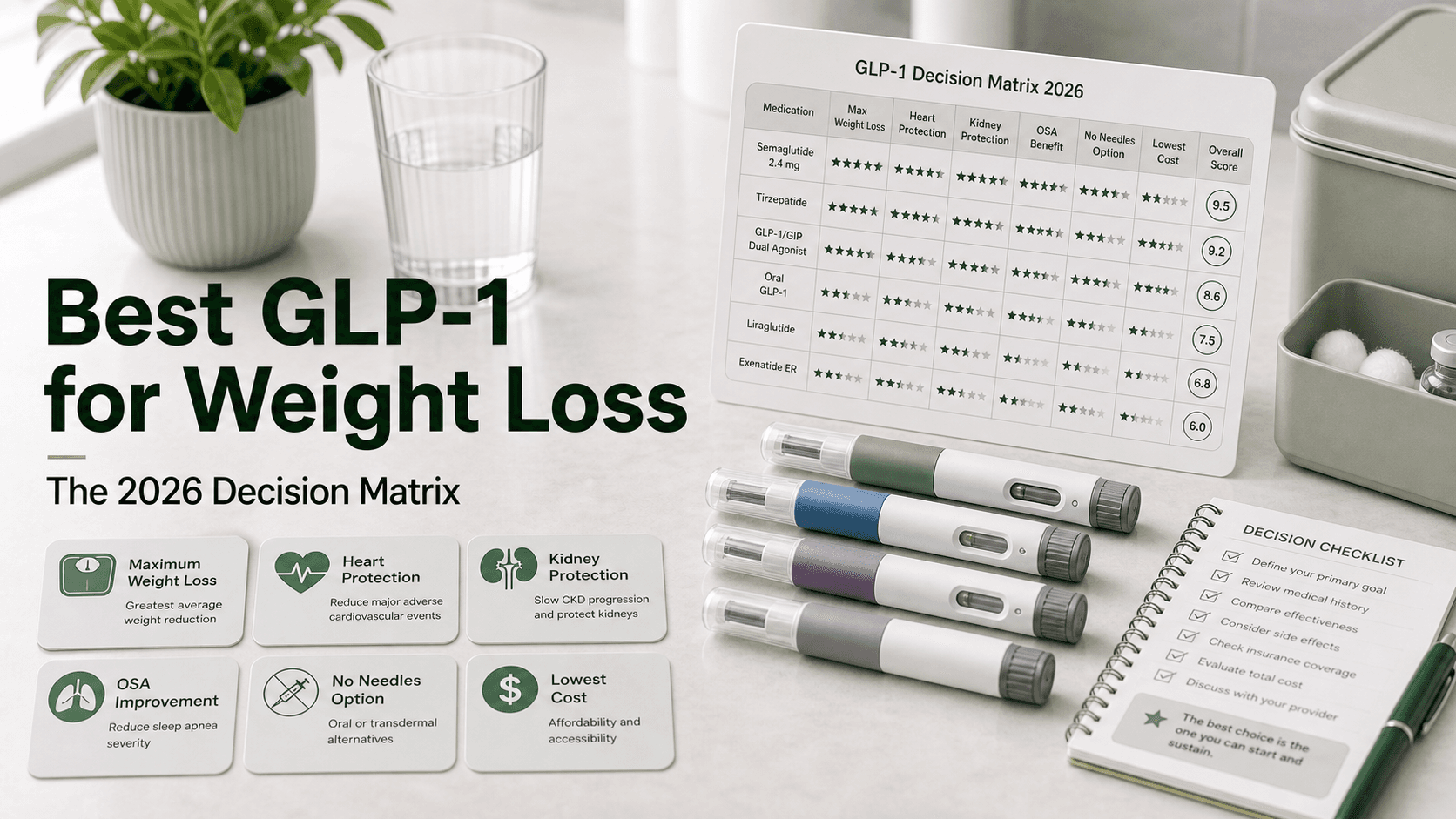
- GLP-1 only: Semaglutide is the leading example. In the STEP trials published in the New England Journal of Medicine, semaglutide 2.4 mg produced average weight loss of roughly 15 percent.
- GLP-1 + GIP (dual agonist): Tirzepatide activates both incretin receptors. In SURMOUNT-1, also in the New England Journal of Medicine, the highest dose produced about 21 to 22 percent weight loss. We compare the two in tirzepatide versus semaglutide.
- GLP-1 + GIP + glucagon (triple agonist): Investigational retatrutide adds glucagon-receptor activity for an extra metabolic boost. Learn more in our overview of retatrutide, the triple agonist.
Why incretin drugs cause weight loss, not just lower blood sugar
The weight-loss power of these drugs comes mostly from GLP-1 activity on the brain and gut: reduced appetite, increased fullness, slower stomach emptying, and dampening of "food noise." At pharmacologic doses these effects substantially lower calorie intake. Improved blood-sugar control is a parallel benefit driven by the glucose-dependent insulin boost and suppressed glucagon, rather than the main reason people lose weight.
What comes next for incretin science?
Combining incretin receptors with other metabolic targets (such as glucagon for energy expenditure, or amylin for satiety) is the frontier of obesity medicine. The underlying principle stays the same: harness the body's own nutrient-sensing hormones, then amplify and extend them far beyond what the gut produces naturally.
Beyond blood sugar and weight
Incretin biology reaches well past glucose control. As reviewed in Diabetes, Obesity and Metabolism, GLP-1 receptors are found in the heart, blood vessels, kidneys, and brain, which helps explain why GLP-1 drugs have shown cardiovascular and broader metabolic benefits in large outcome trials, not just appetite suppression. This wide tissue distribution is part of why the incretin system became such a productive drug target: a single hormone pathway touches glucose handling, appetite, gastric motility, and cardiometabolic risk all at once.
Frequently Asked Questions
Are incretins the same as insulin?
No. Insulin is made by the pancreas and directly lowers blood sugar by moving glucose into cells. Incretins are gut hormones that signal the pancreas to release insulin at the right time. They work upstream of insulin rather than replacing it.
Can you raise your incretins naturally?
Eating protein, fiber, and healthy fats stimulates some natural GLP-1 and GIP release, and these effects are real but modest and short-lived because the hormones are degraded within minutes. The exaggerated, sustained effect of prescription GLP-1 drugs cannot be matched by diet alone.
Is GIP good or bad for weight?
It is complicated. On its own GIP's role in weight is uncertain, but combining GIP activity with GLP-1 (as tirzepatide does) clearly improves weight loss in trials. Researchers are still working out exactly why.
Why were GLP-1 drugs developed before GIP drugs?
GLP-1's insulin-boosting action is preserved in type 2 diabetes while GIP's is blunted, so GLP-1 was the more obvious therapeutic target first. Restoring or adding GIP activity proved valuable only once it was paired with GLP-1.
This article is for general education and is not medical advice. Talk with a qualified healthcare professional before starting, stopping, or changing any medication.