Using Ozempic for weight loss produces meaningful but moderate results, roughly 5 to 8 percent of body weight at the doses Ozempic is licensed for, because the maximum Ozempic dose is 2 mg while the weight loss trials that produced the headline 15 percent figure used 2.4 mg. Anyone researching Ozempic for weight loss is really looking at semaglutide, and the dose on the label is what separates one result from the other.
Ozempic is approved for type 2 diabetes, not obesity. Wegovy is the same molecule licensed for weight management at a higher dose. Prescribing Ozempic off label for weight loss is common, largely for cost and coverage reasons, but it means accepting a ceiling that the weight loss trials did not have. Our guide on getting Ozempic without a prescription looks at the routes people ask about.
How Much Do People Actually Lose Using Ozempic for Weight Loss?
The honest answer is that it depends on the dose, the starting weight, and how long treatment continues. The diabetes trials and the obesity trials measured different populations, so the numbers below are not directly comparable, but they bracket the realistic range.
| Dose | Population studied | Typical mean loss | Trial programme |
|---|---|---|---|
| 0.5 mg weekly | Type 2 diabetes | Around 4 to 5 kg over about 30 weeks | SUSTAIN |
| 1.0 mg weekly | Type 2 diabetes | Around 5 to 6 kg over about 30 weeks | SUSTAIN |
| 2.0 mg weekly | Type 2 diabetes | Modestly more than 1.0 mg | SUSTAIN FORTE |
| 2.4 mg weekly | Obesity without diabetes | Close to 15 percent of body weight over 68 weeks | STEP 1 |
Two things are worth pulling out. First, weight loss in people with type 2 diabetes is consistently smaller than in people without it, across the whole GLP-1 class. Second, the jump from 2.0 mg to 2.4 mg does not explain the whole gap between the diabetes numbers and the STEP 1 number. Trial duration, population and study design account for a good part of it.

Individual variation is wide. A minority of people lose more than 20 percent. A comparable minority lose under 5 percent and are usually described as non responders. There is currently no reliable way to predict which group someone falls into before starting.
What Semaglutide Is Doing
Semaglutide is a GLP-1 receptor agonist. It mimics a gut hormone released after eating and acts on receptors in the pancreas, the stomach and the brain.
Three effects drive the weight change:
- Appetite signalling in the hypothalamus and brainstem is reduced, which people usually describe as food occupying less mental space
- Gastric emptying slows, so fullness after a meal arrives sooner and lasts longer
- Post meal glucose excursions flatten, which reduces the crash and rebound hunger pattern
The result is that intake falls without a sustained act of willpower. That is the mechanism's genuine advantage, and also the reason appetite returns when the drug clears.
A Month by Month Timeline
| Period | Dose stage | What typically happens |
|---|---|---|
| Weeks 1 to 4 | 0.25 mg | Adaptation dose. Appetite changes are often noticeable, scale changes usually are not |
| Weeks 5 to 8 | 0.5 mg | First consistent weight change, commonly 2 to 3 kg. Portions shrink without effort |
| Weeks 9 to 16 | 1.0 mg | Steadiest phase. Clothing fits differently. GI side effects usually settle |
| Months 4 to 8 | 1.0 to 2.0 mg | Loss continues but the weekly rate slows. This slowing is expected, not failure |
| Months 8 to 12 | 2.0 mg | Approaching the plateau for this dose. Maintenance becomes the actual task |
Titration exists to limit nausea, not to slow results deliberately. Moving up faster than the schedule allows generally produces more vomiting rather than more weight loss.
If the curve flattens well before month eight, our guide on what to do at a GLP-1 plateau covers the checks worth running before assuming the drug has stopped working.
Side Effects That Matter for the Weight Loss Question
Gastrointestinal effects dominate: nausea, diarrhoea, constipation and vomiting, worst during dose escalation and usually settling at a stable dose. Full detail is in the Ozempic side effects guide.
Two effects are specific to the weight loss context and deserve attention.
Lean mass loss is a real feature of rapid weight reduction, not a quirk of this drug. A substantial share of the weight lost during any large deficit is non fat tissue. Resistance training and adequate protein intake are the only interventions with reasonable evidence behind them, and both are worth starting on day one rather than after the fact.
Hair shedding is common after any fast weight loss and reflects telogen effluvium rather than a direct drug effect. It is usually temporary. Our GLP-1 hair loss guide goes into the timeline.
Rare but serious risks include pancreatitis and gallbladder disease. Semaglutide carries a boxed warning about thyroid C cell tumours observed in rodent studies, which rules it out for anyone whose own history, or a close relative's, includes medullary thyroid cancer or multiple endocrine neoplasia type 2.
Where Ozempic Sits Against the Alternatives
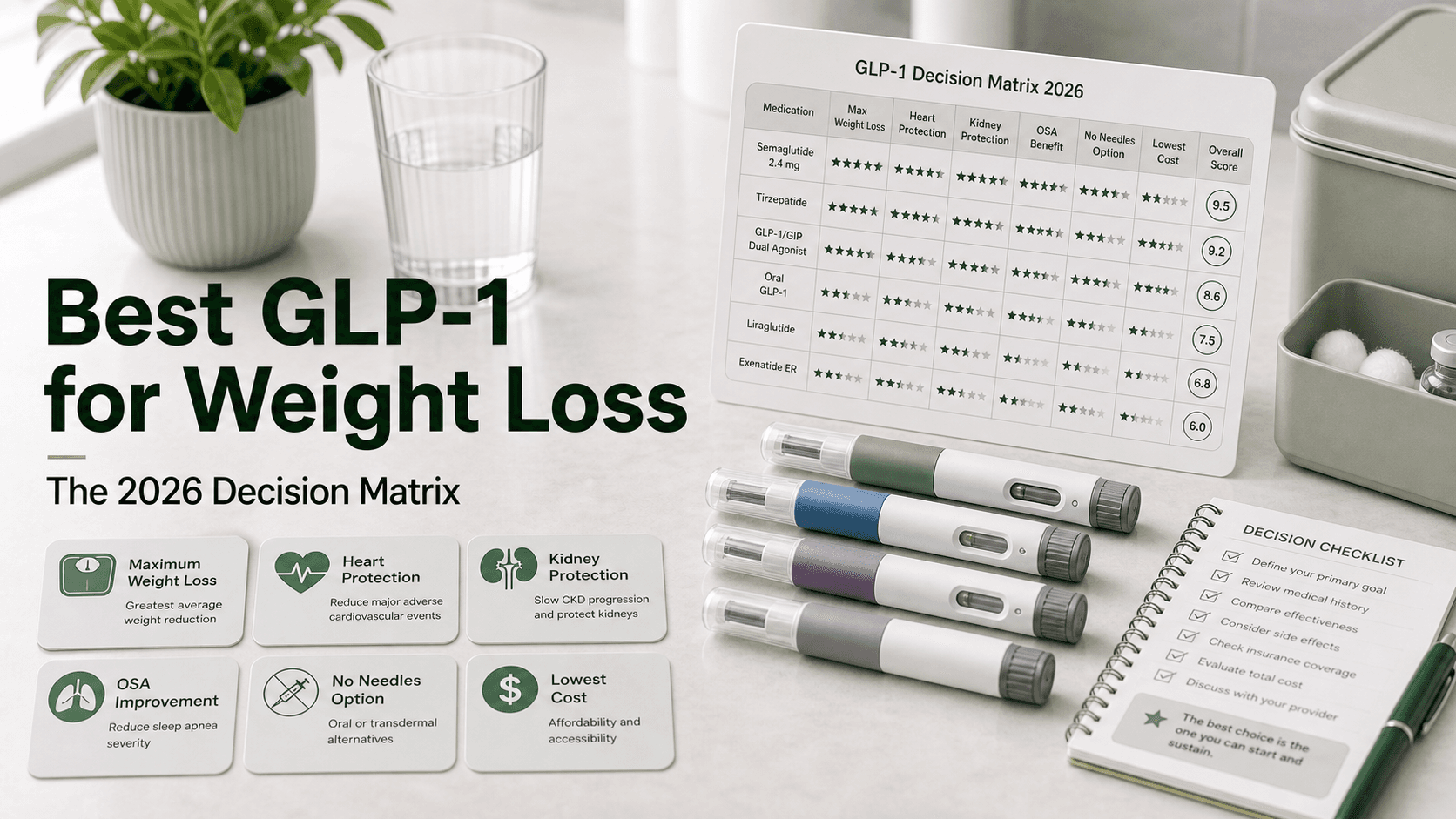
Semaglutide is no longer the most effective option by weight loss alone. Tirzepatide, a dual GIP and GLP-1 agonist, outperformed semaglutide in head to head testing. Retatrutide, a triple agonist, produced larger figures in phase 2 but is not approved and remains an investigational compound.
Effectiveness is not the only axis. Semaglutide has the longest real world safety record in this class and cardiovascular outcome data behind it, which matters more for some patients than the last few percentage points of weight. The tirzepatide versus semaglutide comparison sets the two side by side properly.
What Happens After Stopping
Semaglutide has a half life of roughly one week, so it takes about five weeks to clear after a final injection. Appetite returns over that window.
In the follow up to the STEP 1 trial, participants regained a large majority of the weight they had lost within a year of withdrawal, and cardiometabolic markers drifted back toward baseline alongside it. This is the single most reliably reproduced finding in the field, and it is why obesity is increasingly managed as a chronic condition rather than a course of treatment. Planning for the exit before starting is more useful than improvising it later.
FAQ
Does Ozempic have a licence for weight management?
No. Ozempic is licensed for type 2 diabetes. Wegovy is the semaglutide product approved for weight management. Doctors can prescribe Ozempic off label, and many do, but the maximum labelled dose is lower than the dose used in the obesity trials.
How fast does Ozempic work for weight loss?
Appetite changes are often noticeable within the first two weeks. Consistent scale movement usually begins around weeks five to eight once the 0.5 mg dose is reached. Reaching most of the achievable loss takes eight to twelve months of continuous use.
Can Ozempic be prescribed for weight loss if you do not have diabetes?
A clinician can prescribe it off label for that purpose. Insurance coverage is often the limiting factor, since coverage is typically tied to a diabetes diagnosis. Wegovy is the licensed route for weight management without diabetes.
Why am I not losing weight on Ozempic?
Common explanations include still being at an adaptation dose, intake creeping back up as nausea settles, or simply being in the lower responder group. Before concluding the drug has failed, check dose, duration, protein intake and whether weight has been measured consistently. Around one person in ten sees little response even at full dose.
Is there anything stronger than Ozempic?
Tirzepatide produced greater weight loss than semaglutide in direct comparison and is approved for weight management as Zepbound. Retatrutide showed larger figures in phase 2 trials but is not approved and should not be treated as an available option.