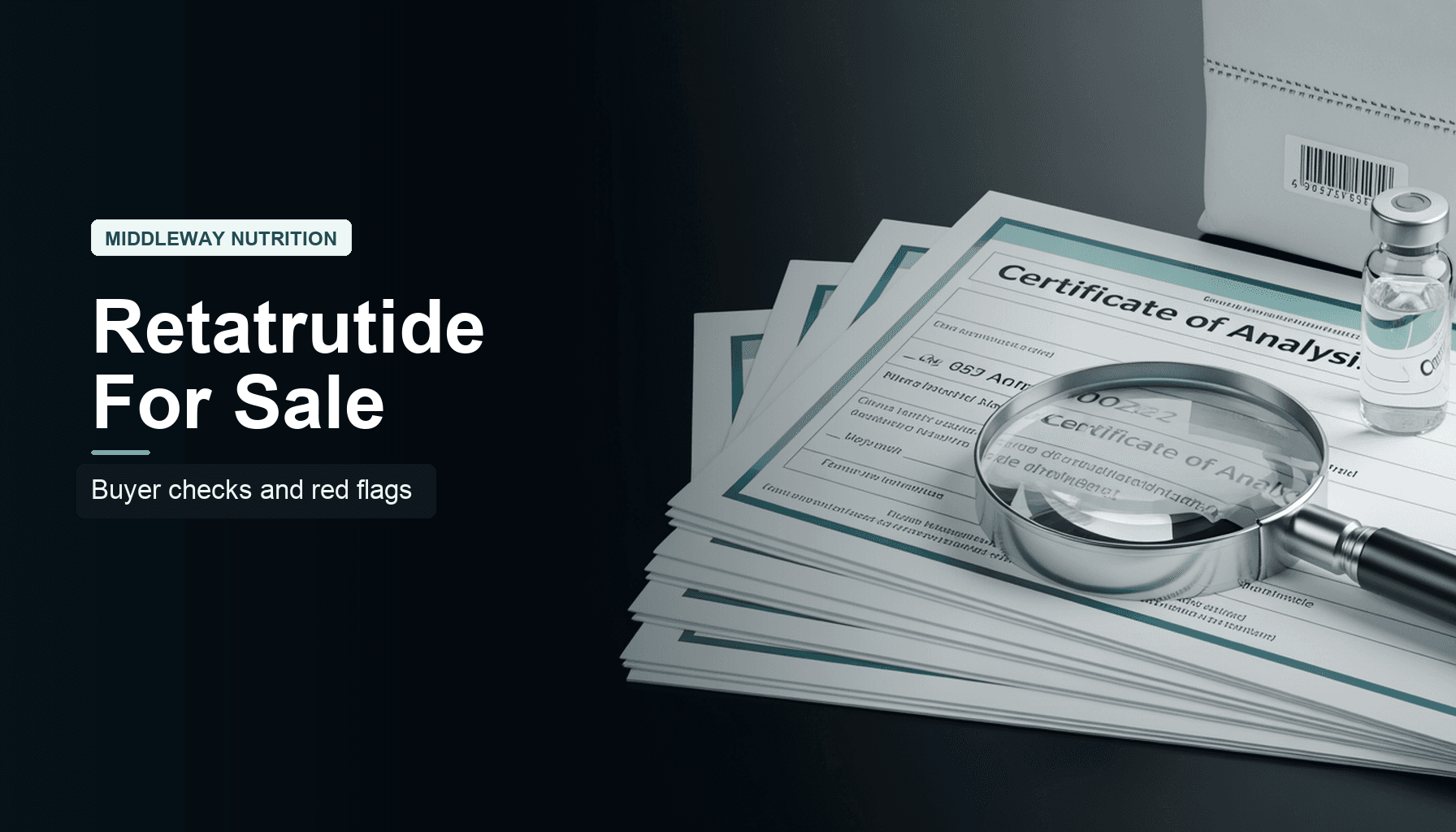
If you are searching for retatrutide for sale, the single most important fact to anchor on is this: retatrutide is an investigational drug that is not approved by the FDA or any other major regulator as of June 2026. Every listing you find online sells it as a "research-use-only" lyophilized powder, not as a prescription medicine. That status changes everything about how you should evaluate a seller, because there is no pharmacy chain of custody, no FDA quality oversight, and no guarantee that what is in the vial matches the label. This guide focuses on buyer protection: how to read a certificate of analysis (COA), confirm third-party testing, sanity-check pricing, and recognize the red flags that separate a documented product from an outright scam.
This article is informational and does not endorse buying, selling, or self-administering an unapproved drug. If you want to understand the science first, start with what retatrutide is and its mechanism of action.
Why "for sale" means something different with retatrutide
Approved GLP-1 medicines like semaglutide and tirzepatide reach you through a regulated chain: a manufacturer audited by the FDA, a licensed pharmacy, and a prescription tied to your medical record. Retatrutide has none of that. It is still working through the phase 3 TRIUMPH program run by Eli Lilly and has not received regulatory approval. You can read more about the maker and program here and when retatrutide might become available.
Because it is unapproved, the only legal commercial channel is the research peptide market, where products are sold for laboratory use and explicitly not for human consumption. That label is not a formality. It means:
- No regulator verifies purity, sterility, or dose accuracy.
- The seller, not a pharmacist, decides what testing to disclose.
- You carry the entire burden of vetting. There is no recall system protecting you.
This is why "what to check before you buy" matters more here than for almost any other product category. Your only protection is documentation and your own diligence.
The science is real, the supply chain is not
Retatrutide itself is a serious molecule with strong trial data, which is exactly why a gray market sprang up around it. According to Lilly's TRIUMPH-1 phase 3 topline results announced in May 2026 (a press release, not yet peer-reviewed) for a trial of 2,339 participants, average body weight loss at 80 weeks was 19.0% on the 4 mg dose, 25.9% on 9 mg, and 28.3% on 12 mg, versus 2.2% for placebo. In a pre-specified extension of participants with a baseline BMI of at least 35 who continued to 104 weeks, weight reduction reached 30.3% on the 12 mg dose. Those figures come from Lilly's topline announcement and remain subject to full peer-reviewed publication.
What is not real is any claim that an online vial replicates pharmaceutical quality. The trial drug was made under strict manufacturing controls. A research peptide is not. Keep the two separate in your mind. For the clinical detail, see our retatrutide clinical trial summary and how it stacks up in retatrutide vs tirzepatide.
The COA is your first and most important check
A certificate of analysis is a lab document describing what is actually in a specific batch. No COA, no purchase. But a COA is only useful if it is real, recent, and tied to the exact vial you are buying. Generic or stock COAs are nearly worthless because they do not describe your lot.
A legitimate retatrutide COA should include:
- Compound identity: Retatrutide, also designated LY3437943, CAS number 2381089-83-2.
- Lot or batch number that matches the number printed on your vial.
- A recent analysis date, ideally within the last six months and specific to that lot.
- HPLC purity, expressed as a percentage. For research-grade material, look for 98% or higher. Anything below 95% should be treated as unsuitable.
- Mass spectrometry identity confirmation. Retatrutide has a molecular weight of roughly 4,731 Da. Mass spec confirms the vial actually contains retatrutide and not a cheaper substitute.
- Physical description and storage guidance.
HPLC tells you how pure the sample is. Mass spectrometry tells you whether it is the right molecule at all. You want both. A purity number without an identity test cannot rule out that you are looking at semaglutide or tirzepatide dressed up as retatrutide.
Third-party testing: independent or it does not count
In-house testing means the seller graded its own homework. Independent third-party testing is the standard worth paying for. Reputable vendors send batches to analytical labs whose reports can be verified directly with the lab, not just downloaded as a PDF from the seller's site.
Labs commonly named in this market include Janoshik Analytical, MZ Biolabs, Peptide Test, and Lab4Tox. The lab name on the document is not enough by itself. Verify it.
| Verification step | What good looks like | Red flag |
|---|---|---|
| Contact the lab directly | Lab confirms the report number exists | Lab has no record of it |
| Match batch numbers | Vial number equals COA number | Numbers differ or vial is unlabeled |
| Check the date | Within ~6 months, lot-specific | Old, undated, or generic |
| Lab accreditation | ISO 17025 accredited facility | No credentials listed |
| Scope of test | Tested on the exact batch you buy | One COA reused for all products |
| Contaminant testing | Endotoxin via LAL test, target under 0.5 EU/mg | No sterility or endotoxin data |
Independent third-party testing typically costs around £300 and takes about two weeks, which is why some sellers skip it and why a vendor that invests in it is signaling something about its standards.
Pricing sanity check: too cheap is a warning, not a deal
Price ranges in the research market are wide. As a rough guide in 2026, retatrutide runs roughly $40 to $120 for a 5 mg vial and from about $95 up to $500 for a 10 mg vial, with per-milligram cost dropping as vial size increases. Promotional discounts of 50% or more appear regularly, which makes the "normal" price hard to pin down.
Use price as a signal, not a target:
- Suspiciously cheap (far below the rest of the market) often means underfilled vials, low purity, or the wrong molecule entirely. The cost of synthesizing real retatrutide sets a floor.
- Premium pricing alone guarantees nothing. A high price with no COA is just an expensive gamble.
- Per-mg math matters. A 10 mg vial usually costs less per milligram than two 5 mg vials, so compare on a per-mg basis rather than per vial.
For a fuller breakdown, see our retatrutide cost guide and the retatrutide where-to-buy overview. Both should be read alongside this one, because price and source mean little without the testing checks above.
What actually arrives: format and reconstitution kit
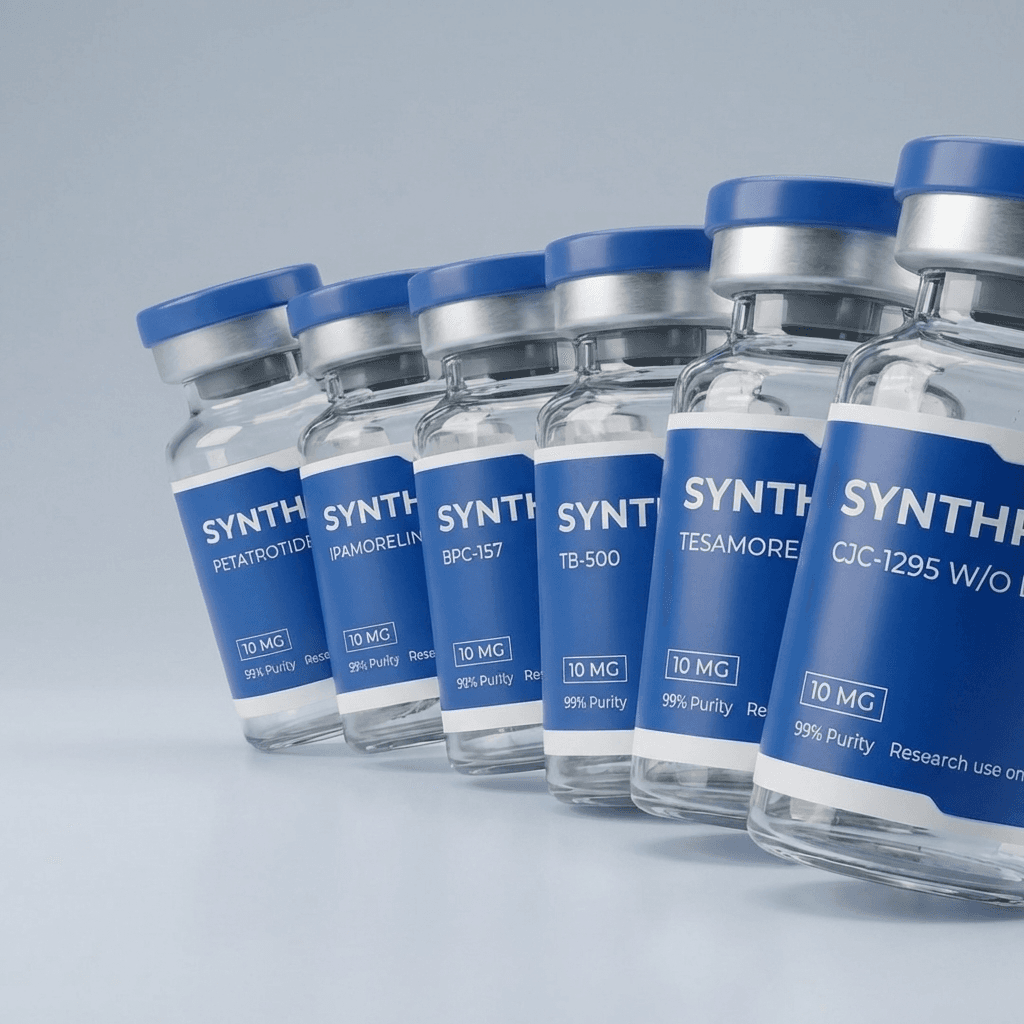
Research retatrutide ships as a lyophilized (freeze-dried) powder in a sealed glass vial. It is not pre-mixed. Some sellers offer a reconstitution bundle, but contents vary and are not standardized. A typical kit may include:
- The lyophilized retatrutide vial.
- Bacteriostatic water for mixing.
- Syringes for measuring.
Be skeptical of any seller that bundles "dosing instructions for personal use," because that blurs the research-use-only line the entire market officially operates under. If you want to understand how dosing is structured in the trials, see the retatrutide dosage guide, the dosage chart, and the dosing schedule. Note that these describe clinical protocols, not an endorsement to self-administer an unapproved drug.
Scam red flags to walk away from
Fraud in this space follows predictable patterns. Treat any one of these as a reason to stop:
- No COA offered, or only a generic one not tied to your batch.
- Photoshopped or fabricated lab reports. Always verify the report number with the lab itself.
- One COA reused across every product and batch.
- Outdated test dates with no recent lot-specific analysis.
- Mismatched product, for example a tirzepatide identity result presented as retatrutide. This is dangerous because retatrutide and tirzepatide are dosed differently, and using one at the other's dose can cause harm.
- Prices far below market with no explanation.
- Vague sourcing, no mass spec identity test, or a seller who cannot answer basic questions about methodology and traceability.
- No endotoxin or sterility data on an injectable-format product.
The mislabeling risk is the one that turns a financial loss into a safety event. Suppliers have been caught shipping semaglutide or tirzepatide labeled as retatrutide, and using a substitute at retatrutide dosing assumptions can lead to overdose. This is precisely why the mass spec identity line on a COA is non-negotiable.
The legal and safety reality
Retatrutide is not approved for human use, so buying it for personal consumption sits outside the regulated medical system. There is no FDA quality assurance, no pharmacist double-check, and no liability backstop if something goes wrong. The legitimate, lower-risk path is to wait for approval and a prescription. If you are weighing options, our pieces on is retatrutide safe, retatrutide without a prescription, and compounded retatrutide lay out the trade-offs more fully. You can also review the known side effects before making any decision.
Quick pre-purchase checklist
Before you buy anything, confirm you can answer yes to all of these:
- Does a lot-specific, recent COA exist for the exact vial?
- Does it show HPLC purity at 98% or higher?
- Does it include mass spec identity confirmation near 4,731 Da?
- Is the testing lab independent, accredited, and directly verifiable?
- Is there endotoxin or sterility data?
- Does the price fall within the normal market range, neither suspiciously cheap nor blindly premium?
- Does the batch number on the vial match the COA?
If any answer is no, the safest move is to walk away.
FAQ
Is retatrutide legal to buy?
Retatrutide is sold legally only as a research chemical for laboratory use, not as a medicine for human consumption. It is not FDA-approved as of June 2026, so there is no legal route to buy it as a prescription drug. Purchasing it for personal use falls outside the regulated medical system.
How can I tell if retatrutide is real?
Demand a lot-specific certificate of analysis that includes both HPLC purity (98% or higher) and mass spectrometry identity confirmation near 4,731 Da, then verify the report directly with the independent testing lab. Without mass spec identity data, you cannot rule out a cheaper substitute.
Why is some retatrutide so cheap?
Unusually low prices often signal underfilled vials, low purity, or a different, cheaper peptide sold under the retatrutide name. Real synthesis sets a cost floor, so a price far below the rest of the market is a warning sign rather than a bargain.
What labs test research peptides?
Independent labs frequently referenced in this market include Janoshik Analytical, MZ Biolabs, Peptide Test, and Lab4Tox. The value comes from being able to verify the report number with the lab itself and confirming the facility is accredited, ideally ISO 17025.
Can I get a prescription for retatrutide instead?
Not yet. Because retatrutide is still in phase 3 trials and unapproved, no clinician can write a standard prescription for it. See when retatrutide will be available for the expected timeline.
References
- Jastreboff AM, et al. Triple-Hormone-Receptor Agonist Retatrutide for Obesity — A Phase 2 Trial. New England Journal of Medicine, 2023. (The peer-reviewed trial data underlying retatrutide's reputation.)
- Eli Lilly and Company. Lilly's triple agonist, retatrutide, delivered powerful weight loss in pivotal Phase 3 obesity trial. May 2026. (Topline TRIUMPH-1 results: up to 28.3% mean weight loss at 80 weeks; not yet peer-reviewed.)
- U.S. Food and Drug Administration. Understanding the Risks of Compounded Drugs. (Why drugs outside the FDA-approved supply chain carry quality, sterility, and potency risks.)
This article is for informational purposes only and is not medical advice. Retatrutide is an investigational drug not approved for human use. Consult a qualified clinician before making any health decision.