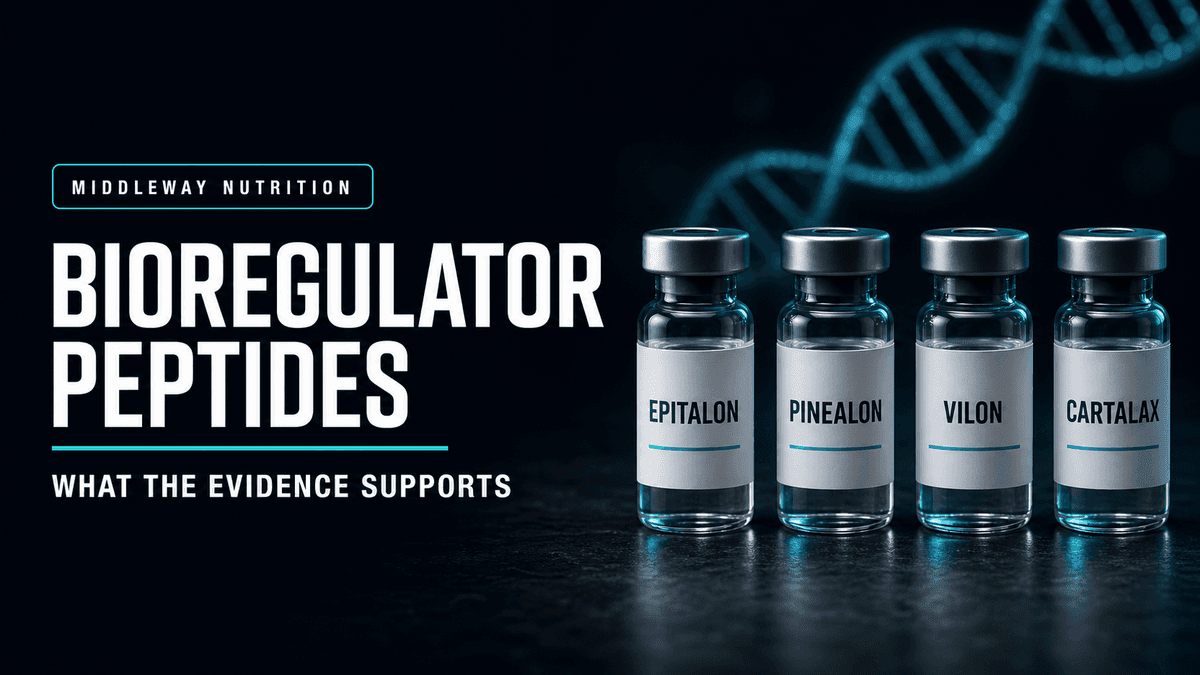
Bioregulator peptides for aging are very short sequences, typically two to four amino acids, proposed to act as tissue-specific regulators of gene expression rather than as hormones or signalling molecules in the usual sense. The case for bioregulator peptides for aging rests almost entirely on four decades of work from a single Russian research programme, and the central problem with the whole field is that independent replication outside that group remains limited.
That is not a dismissal. It is the single most important thing to understand before spending money on any of them.
Where They Come From
The work originated in Leningrad in the 1970s under Vladimir Khavinson and colleagues, later at the Saint Petersburg Institute of Bioregulation and Gerontology. The starting hypothesis was that extracts from specific organs could restore age-related decline in the corresponding tissue when administered back into an aged animal.
Early work used crude organ extracts, sometimes called cytomedins: preparations from pineal gland, thymus and brain cortex. When those showed activity, the group set about isolating the shortest sequences responsible, which produced the synthetic peptides sold today.
The theoretical mechanism is what makes the field distinctive. These peptides are proposed to interact with DNA and chromatin directly, influencing which genes are transcribed in a tissue-specific way, with published work from the group suggesting effects on promoter methylation. If correct, that would be a genuinely different mode of action from anything else in the peptide space.
Bioregulator Peptides for Aging: The Four Most Discussed
| Peptide | Associated tissue | Claimed effects | Evidence base |
|---|---|---|---|
| Epitalon, also spelled Epithalon | Pineal gland | Telomerase activity, melatonin rhythm, antioxidant effects | Animal work and small human studies, largely from one group |
| Thymalin | Thymus | Immune restoration, T cell function | Clinical use in Russia, limited Western data |
| Pinealon | Brain | Neuroprotection, cognitive function | Animal studies, minimal human data |
| Vilon | Thymus | Immune modulation, anti-inflammatory | Animal studies, minimal human data |
Epitalon receives the most attention because telomeres are the most marketable idea in longevity, and because it is the one with published human data attached, however limited.
What the Evidence Actually Shows
Published work from the originating group reports meaningful lifespan extension in rodent models with several of these preparations, alongside effects on immune parameters and circadian rhythm.
Three caveats are decisive.
Concentration in a single research programme. The overwhelming majority of positive findings come from one group over several decades. That is not evidence of error, but replication by independent laboratories is the mechanism by which science checks itself, and here it is thin.
Publication and language barriers. Much of the work appeared in Russian-language journals with limited Western indexing, which makes independent scrutiny harder and makes it correspondingly harder for a reader to assess quality.
Mechanism plausibility versus demonstration. The idea that a dipeptide or tripeptide reaches the nucleus of a target tissue and modulates transcription in a sequence-specific manner is a strong claim. It is not impossible, and it has not been established to the standard that would make it textbook biology.
The honest position: this is an interesting hypothesis with a large body of supporting work from one source and very little from anywhere else.
Protocols in Circulation
Reported protocols follow a cycle pattern rather than continuous use, typically a course of ten to twenty days repeated once or twice a year. Both injectable and oral capsule forms are sold, with oral forms marketed on the argument that very short peptides may survive digestion better than long ones. That argument is more plausible for a dipeptide than for a 29 amino acid chain, but it is still an argument rather than a measurement, and no bioavailability data exists for these products.
Doses circulating for Epitalon are commonly in the range of a few milligrams per day across a short course. These are conventions from the research chemical market, not validated human doses.
The Safety Picture
Reported side effects are minimal across this class: injection site reactions, occasional drowsiness in the first days of a course.
That apparently clean record deserves one qualification. These compounds are used by small numbers of people with no monitoring, no adverse event reporting system and no long-term follow-up. An absence of reported harm from an unobserved population is weaker evidence than it appears.
The specific concern with Epitalon is telomerase, covered in our Epithalon side effects article. Anything that promotes telomerase activity raises a theoretical cancer question, because cancer cells depend on telomerase to divide indefinitely. Reported animal work from the originating group actually described anti-tumour effects, but the sensible position with an active or recent malignancy remains avoidance.
How to Think About This Category
If you are drawn to it, a few points make the decision clearer.
The claims are not testable by the user. Unlike a GH secretagogue, where IGF-1 gives you an objective answer within weeks, there is no accessible marker that tells you whether a bioregulator is doing anything. Telomere length testing is commercially available and its reliability for tracking individual change over short periods is questionable.
Product identity is uncertain. Very short peptides are cheap to synthesise and easy to substitute, and a batch-specific third-party certificate of analysis is the only check available.
Nothing here is approved. All of these are unscheduled research compounds without regulatory approval for human use in Western markets.
For related reading, see our Epithalon guide, the Pinealon overview and our broader peptide therapy guide.
Frequently Asked Questions
What are bioregulator peptides?
They are very short peptides, usually two to four amino acids, proposed to act as tissue-specific regulators of gene expression. They were developed from organ extracts in a Russian research programme beginning in the 1970s, and the theory is that they nudge age-related gene expression in a target tissue back toward a younger pattern.
Do bioregulator peptides actually extend lifespan?
Published work from the originating research group reports lifespan extension in rodent models. Independent replication outside that group is limited, and there is no human trial demonstrating lifespan extension for any of them. The claim should be read as a hypothesis with supporting animal data from one source.
Which bioregulator peptide is best studied?
Epitalon, sometimes spelled Epithalon, has the most published work behind it, including small human studies, largely because its association with telomerase attracts the most interest. Thymalin has the longest history of clinical use in Russia. Neither has the kind of independent, multi-centre evidence base that would settle the question.
Are oral bioregulator capsules effective?
The argument is that a dipeptide or tripeptide is small enough to survive digestion better than a long peptide chain, which is more plausible than the same claim for larger molecules. It remains an argument rather than a measurement, since no bioavailability data has been published for these products.
Are bioregulator peptides safe?
Reported side effects are minimal, but they are used by small numbers of people without monitoring or adverse event reporting, so the record is weaker than it looks. None are approved for human use, and anyone with an active or recent cancer diagnosis should avoid compounds affecting telomerase activity.