If you have ever dealt with chronic gut issues, you already know the drill. You cut foods, take supplements, try elimination diets, maybe spend money on probiotics that do nothing. The problem persists. You start wondering if your insides just do not work right.
BPC-157 gets mentioned constantly in gut health circles. You have probably seen the claims. Stable gut lining. Reduced inflammation. Faster healing. It sounds almost too good. And the honest answer is that it very well might be, but not for the reasons most people think. This article is about what BPC-157 actually does in the gut, what the evidence supports, and whether it is worth your time and money.
Why Gut Healing Is Such a Hard Problem
Your gut lining is a remarkable piece of engineering. It is a single cell thick in most places, separating your bloodstream from everything inside your digestive tract. That barrier has to do two opposing things simultaneously: absorb nutrients from food while keeping bacteria, toxins, and undigested particles out.
That balancing act is called gut permeability. When it works, you are fine. When it breaks down, you get what people call leaky gut, where stuff that should stay inside your intestines slips through into your bloodstream. Your immune system notices and starts reacting. Inflammation follows. Symptoms follow inflammation. Bloating, cramping, food sensitivities, brain fog, skin issues. The list gets long.
The gut also houses the microbiome, trillions of bacteria that influence digestion, immune function, and even mood. Disrupt that ecosystem with antibiotics, stress, poor diet, or infection and you are not just fighting one problem. You are fighting a system that has become dysregulated.
The tissue itself is fragile. The intestinal lining renews itself every few days, which sounds like it should mean fast recovery. But when inflammation is constant, the repair mechanisms get overwhelmed. Blood flow to the gut lining decreases. New cells are produced more slowly. The damage outpaces the healing.
Most treatments address one piece of this puzzle. Anti-inflammatory diets reduce some inflammation. Probiotics add some beneficial bacteria. L-glutamine provides fuel for intestinal cells. These things can help. But they do not directly activate the repair machinery of the gut the way some peptides appear to do.
That is where BPC-157 comes in.
What BPC-157 Does in the Gut Specifically
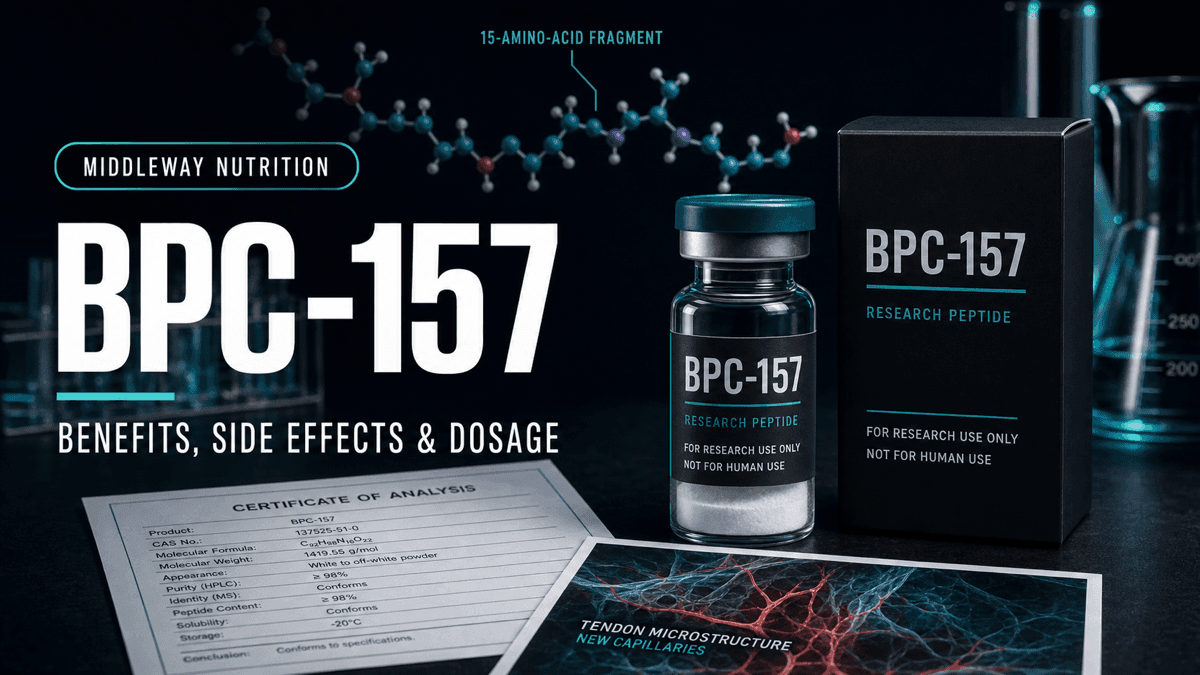
BPC-157 stands for Body Protective Compound-157. It is a peptide sequence derived from a protein found in human gastric juice. That origin matters because it suggests the body is already designed to use something like this in the gut.
Here is what the research has observed in tissue and animal studies.
First, it is a potent anti-inflammatory agent in the gastrointestinal tract. BPC-157 modulates several inflammatory signaling pathways, including NF-kB and COX-2. These are the same pathways that non-steroidal anti-inflammatory drugs inhibit, except BPC-157 does not come with the gut-damaging side effects that NSAIDs are notorious for. In fact, BPC-157 has been shown to protect against NSAID-induced damage to the stomach and intestinal lining in animal models.
Second, it promotes mucosal protection. BPC-157 increases the production of gastric mucus and stimulates the expression of growth factors in the gut lining. The mucus layer is your first line of defense in the GI tract. A thicker, more stable mucus layer means better protection against acid, bacteria, and irritants.
Third, it induces angiogenesis in the gut lining. Angiogenesis is the formation of new blood vessels. This is a big deal because the intestinal lining has one of the highest turnover rates of any tissue in the body. Fast repair requires good blood supply. BPC-157 has been shown to promote new capillary formation in damaged intestinal tissue in animal studies, which accelerates healing.
Fourth, it appears to stabilize the gut-brain axis and influence serotonin signaling. The gut contains the majority of the body's serotonin. BPC-157 has been shown to interact with the serotonergic system in ways that may explain its effects on gut motility and its apparent anti-anxiety and anti-depressive effects in animal models.
These mechanisms are not minor. They are fundamental to how the gut maintains and repairs itself.
What the Animal Evidence Shows
This is where BPC-157 gets interesting. The animal data is extensive, particularly in rats and mice.
In models of inflammatory bowel disease induced by chemical agents, BPC-157 reduced inflammation, improved gut barrier function, and accelerated healing of colonic lesions. The peptide was effective when given by injection or orally, which matters for how you might consider using it.
In studies of leaky gut, BPC-157 attenuated increases in gut permeability caused by various insults including alcohol, stress, and NSAIDs. The gut lining became less leaky. Markers of intestinal damage improved.
In wound healing models, BPC-157 accelerated the closure of intestinal fistulas and ulcers. It improved healing of gastric ulcers. It protected the liver from toxic damage. The common thread is tissue repair and blood vessel formation.
There are also studies showing BPC-157 protects against intestinal ischemia-reperfusion injury, meaning it helps gut tissue recover after blood flow is cut off and restored. That is relevant for anyone who has had gut surgery or experienced severe digestive disruption.
The animal literature spans decades and includes dozens of studies. Researchers have reproduced these effects across multiple laboratories. That does not make the human data stronger, but it tells you this is not a one-study phenomenon.
Human Evidence: Be Honest Here
Here is the part where you need to keep your expectations grounded.
There are no large-scale, placebo-controlled human trials for BPC-157 and gut healing. None. The peer-reviewed human evidence consists of case reports, small pilot studies, and a handful of trials that were not designed to FDA standards.
There are a couple of small trials in humans that suggested BPC-157 improved symptoms in patients with inflammatory bowel disease. A 2019 case series described successful treatment of Crohn's disease with BPC-157 in a few patients. There are reports of BPC-157 helping with NSAID-induced gut damage in humans.
These reports are not nothing. They suggest biological activity in humans. They suggest the peptide reaches gut tissue and does something. But they do not constitute proof of efficacy for any specific gut condition.
The honest position is this: BPC-157 has a strong mechanistic rationale for gut healing, consistent animal data across many models, and preliminary human signals that it is at least safe in the short term. That makes it worth exploring for some people. It does not make it a proven treatment for IBS, Crohn's, ulcerative colitis, or leaky gut syndrome.
If someone tells you BPC-157 cures gut disease based on human trials, they are wrong.
BPC-157 Capsules vs Injectable for Gut
This is where most people get confused.
Injectable BPC-157 goes into muscle tissue and distributes systemically. That is useful for tendon healing, joint pain, or systemic inflammation. But for gut-directed use, oral capsules may actually be the more targeted choice.
Here is why. BPC-157 is a peptide of 15 amino acids. When you take it orally, some portion survives stomach acid and gets absorbed into the gut-associated lymphoid tissue. That is the immune system embedded in your gut lining. Because the peptide originates from gastric juice, the gut appears to have transport mechanisms that allow it to be taken up by intestinal cells.
The result is that oral BPC-157 concentrates in the gastrointestinal tract at higher relative levels than injectable. You are essentially delivering the compound directly to the tissue you are trying to heal.
Injectable BPC-157 certainly reaches the gut too. But oral administration makes intuitive sense for gut-directed protocols. If you are using BPC-157 primarily for digestive health, oral capsules are worth considering as your primary route rather than an afterthought.
This is why some practitioners who work with peptides for gut health specifically prefer the capsule form for GI applications. Injectable BPC-157 might make more sense when you are also targeting musculoskeletal issues like tendonitis or joint pain. For gut-only protocols, capsules are a legitimate choice.
Leaky Gut Specifically
Is there evidence for BPC-157 and leaky gut?
Animal studies consistently show BPC-157 reduces intestinal permeability markers. In rat models, BPC-157 prevented or reversed increases in gut permeability caused by stress, alcohol, and NSAIDs. Tight junction proteins, which are the gatekeepers between intestinal cells, appear to be preserved or restored by BPC-157.
Human leaky gut is not a formally recognized medical diagnosis, despite what functional medicine clinics will tell you. There are no standardized tests with validated normal ranges. The concept is real in that increased intestinal permeability is objectively measurable, but the clinical significance of mildly elevated permeability in an otherwise healthy person is unclear.
The evidence from animal models suggests BPC-157 works on tight junction integrity. Whether that translates to clinically meaningful improvements in human gut function is unknown. There are anecdotes from people who have used BPC-157 and reported improved digestion and reduced food sensitivities. These are not data.
If you are dealing with confirmed increased intestinal permeability alongside chronic digestive symptoms, BPC-157 is more worth considering than if you are just curious about optimizing an already functional gut.
IBS and IBD
IBS, or irritable bowel syndrome, is a functional disorder. That means there is no visible damage to the gut lining in most cases. The problem is gut motility, nerve signaling, and the microbiome rather than tissue integrity.
There is no direct evidence that BPC-157 helps IBS specifically. However, IBS frequently involves low-grade inflammation, altered gut motility, and increased permeability. BPC-157 addresses those mechanisms. Whether that translates to symptom improvement in IBS is unstudied.
IBD, which includes Crohn's disease and ulcerative colitis, is different. There is clear tissue damage, significant inflammation, and measurable pathology. The animal data for BPC-157 in IBD models is compelling. The human case reports mention improvements in Crohn's patients.
If you have IBD, BPC-157 is worth discussing with your gastroenterologist as a complementary approach alongside your standard treatment. It should not replace prescribed medications for inflammatory bowel disease, but it may support healing as an add-on. Do not use it as a monotherapy for a serious inflammatory condition.
Dosage for Gut-Directed Use
Common BPC-157 protocols for gut health range from 250mcg to 1mg taken orally, two to three times daily. Some people cycle it, using it for 4 to 8 weeks followed by a break. Others use it daily for extended periods.
Injectable protocols for gut healing typically use 250mcg to 500mcg subcutaneously, once or twice daily. The same cycling principles apply.
These are ranges found in peptide community protocols, not physician-prescribed dosing standards. Start low. Assess tolerance. Adjust based on how you respond.
Here is a rough comparison of commonly discussed approaches.
| Approach | Dose | Frequency | Notes |
|---|---|---|---|
| Oral capsules (gut-only) | 250-500mcg | 2-3x daily | Targets gut tissue directly |
| Oral capsules (general) | 500mcg-1mg | 1-2x daily | Systemic effects, less targeted |
| Subcutaneous injection | 250-500mcg | 1-2x daily | Systemic distribution, good for gut + joints |
| Loading phase | 1mg | 1x daily | Short-term use to establish effects |
There is no universally accepted best protocol. Peptide practitioners tend to have strong preferences and the differences between approaches are not well-studied.
Natural Alternatives Worth Trying First
Before spending money on peptides, try the basics that have more established evidence.
L-glutamine is the most studied amino acid for gut integrity. It serves as a primary fuel source for intestinal cells and supports tight junction function. 5 to 10 grams daily is common. It is cheap, widely available, and the evidence for gut support is solid.
Bone broth provides collagen, glutamine, and other compounds that support the gut lining. Not a miracle, but genuinely nourishing for the GI tract.
Probiotics matter, though most commercial products are not particularly potent. Soil-based organisms and spore-forming bacteria tend to survive stomach acid better than many mainstream probiotic strains. Diversity in your microbiome matters more than any single strain.
Zinc carnosine supports gut lining integrity and has decent research behind it for protecting the stomach and intestinal lining.
Eliminating dietary triggers is not optional if you have active gut inflammation. Gluten, dairy, processed seed oils, and excess alcohol are common drivers of gut permeability. You do not have to be perfect, but if you are drinking alcohol nightly and wondering why your gut is not healing, the answer is obvious.
Fiber intake matters for microbiome health and butyrate production, which feeds colon cells. But if you have SIBO or significant dysbiosis, adding fiber before addressing the overgrowth can make things worse.
Sleep, stress management, and movement all influence gut permeability and the microbiome. Poor sleep increases gut permeability. Chronic stress disrupts the gut-brain axis. These are not sexy interventions but they are foundational.
Who Should Consider BPC-157 for Gut and Who Should Not
Consider it if you have tried standard approaches without adequate relief and have persistent gut symptoms that reduce your quality of life. Consider it if you have confirmed gut permeability issues alongside chronic inflammation. Consider it if you are already using peptides for other reasons and want to address gut health as part of your protocol.
Consider it alongside standard care if you have inflammatory bowel disease and want additional support for healing, with your gastroenterologist aware and supportive.
Do not consider it if you are pregnant or breastfeeding. Do not use it as a replacement for prescribed IBD medications without medical supervision. Do not use it if you have active cancer, as some evidence suggests BPC-157 may affect angiogenesis in ways that could theoretically influence tumor growth. Do not assume it is safe long-term just because early studies show short-term tolerability.
Do not buy the cheapest BPC-157 you can find. Peptide quality varies enormously between suppliers. If you are going to use it, source it from a reputable supplier who provides third-party testing. Impure or incorrectly dosed peptides are not minor quality issues, they are potentially harmful.
Frequently Asked Questions
Does BPC-157 actually work for gut healing? The mechanistic evidence is strong. The animal data is extensive. Human evidence exists but is preliminary and does not meet the standard of proof used for approved treatments. Whether it works for your specific gut condition is unknown and will remain unknown until proper human trials are conducted.
How long does it take to feel effects? Anecdotal reports suggest some people notice improvements within a few days to two weeks. Others take longer. There is no established timeline based on clinical data.
Can I take BPC-157 capsules instead of injections? Yes, and for gut-directed use specifically, oral capsules may be the more appropriate choice. They concentrate in the GI tract rather than distributing systemically first.
Is BPC-157 safe? Short-term use in the doses typically used appears safe based on available evidence. Long-term safety is unstudied in humans. Use it with awareness that unknowns exist.
Should I stack BPC-157 with other peptides for gut health? BPC-157 is commonly stacked with TB-500 for synergistic tissue healing effects. This combination is sometimes called the wound healing stack. For gut health specifically, some people add L-glutamine, zinc carnosine, or modify their microbiome protocol alongside BPC-157. If you are interested in the BPC-157 and TB-500 combination, read our wolverine stack guide before starting.
Can BPC-157 help with SIBO? SIBO involves bacterial overgrowth in the small intestine. BPC-157 does not have antimicrobial properties and is not a direct treatment for SIBO. However, if SIBO has damaged your gut lining, BPC-157 may support repair after the bacterial overgrowth is addressed.
Where can I get BPC-157 capsules? Our recommended supplier, Ascension Peptides, lists BPC-157 (10mg) at $49.00 USD, with every batch tested by an independent third-party lab. Check the listing for the format before ordering, because a 10mg research vial is not the same product as a capsule.
Bottom Line
BPC-157 is not a gut health miracle cure. The evidence does not support that claim. What it does have is a credible mechanism of action for gut healing, consistent animal data, and early human signals that suggest biological activity in the GI tract.
If you have chronic gut issues that have not resolved with standard approaches, BPC-157 is a reasonable thing to explore with appropriate expectations. It is not proven. It is not a substitute for medical care. But for a motivated person willing to research and source quality product, it may offer benefits that conventional treatments have not.
The peptide space has a lot of hype and very little rigor. BPC-157 is one of the more interesting compounds because the basic science actually holds up. That is more than you can say for most supplements marketed for gut health.
Ready to explore BPC-157? Browse BPC-157 at Ascension Peptides
References
- Sikiric P, et al. Stable Gastric Pentadecapeptide BPC 157 and Intestinal Anastomoses Therapy in Rats — A Review. Pharmaceuticals, 2024 (PMC/NCBI). (Preclinical evidence for gut-wound healing, angiogenesis; no large human trials.)
- Sikiric P, et al. Stable Gastric Pentadecapeptide BPC 157, Robert's Stomach Cytoprotection/Adaptive Cytoprotection/Organoprotection, and Selye's Stress Coping Response. Frontiers in Pharmacology (PMC/NCBI). (Cytoprotection and protection against NSAID-induced GI damage in animal models.)
This article is for general education and is not medical advice. BPC-157 is not an FDA-approved drug; the evidence summarized here is largely preclinical. Talk to a licensed clinician before using any peptide.